
Basu Chatterjee
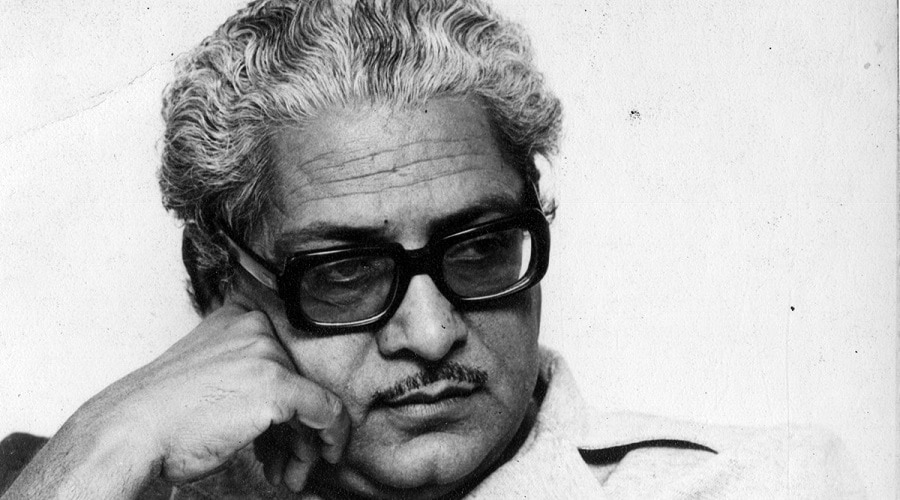
Basu Chatterjee (10 January 1927 – 4 June 2020) was an Indian film director and screenwriter whose work, spanning more than four decades and over forty films, came to define the gentle, observant register of what critics have called India's "middle cinema" or "middle-of-the-road cinema". Working primarily in Hindi, and later in Bengali, Chatterjee occupied a distinctive position between the commercial spectacle of mainstream Bombay cinema and the austere formal experimentation of the parallel film movement. His films chronicled the textures of ordinary middle-class life — the hesitations of courtship, the compromises of marriage, the cramped dignity of the salaried clerk — with a lightness of touch and a humane warmth that distinguished him from almost all of his contemporaries.
Alongside Hrishikesh Mukherjee and Basu Bhattacharya, with whom he is most often grouped, Chatterjee fashioned a cinema of recognisable people and modest circumstances. His best-known films — Sara Akash (1969), Piya Ka Ghar (1971), Rajnigandha (1974), Chhoti Si Baat (1975), Chitchor (1976), Swami (1977), Khatta Meetha (1978), and Baton Baton Mein (1979) — eschewed the conventions of song-and-dance melodrama in favour of slice-of-life storytelling shot, frequently, in the streets, offices, and tenements of Bombay. In doing so, he gave the urban Indian middle class a body of films in which it could see itself reflected without exaggeration or condescension.
Chatterjee's achievements were widely recognised. He won the Filmfare Best Director Award and the National Film Award for Best Popular Film Providing Wholesome Entertainment for Swami (1977); the Filmfare Critics Award for Best Movie for Rajnigandha (1975) and again for Jeena Yahan (1980); and the Filmfare Best Screenplay Award on several occasions, including for Sara Akash, Chhoti Si Baat, and Kamla Ki Maut. In 1992 he received the National Film Award for Best Film on Family Welfare for Durga, and in 2007 he was honoured with the IIFA Lifetime Achievement Award.
In the latter part of his career, Chatterjee turned with equal success to television, directing the enduringly popular Doordarshan serials Rajani and Byomkesh Bakshi, which extended his characteristic interest in everyday morality and middle-class life to the small screen. He also returned to his Bengali roots with a sequence of late films, several of them Indo-Bangladeshi co-productions. By the time of his death in 2020, Chatterjee had come to be regarded as the affectionate chronicler of the Indian middle class, the filmmaker who, more than any other, captured the romance and humour latent in the unremarkable rhythms of daily existence.
Life and Early Work
Basu Chatterjee was born on 10 January 1927 in Ajmer, in the princely province of Ajmer-Merwara in British India, into a Bengali family settled in Rajasthan. His upbringing was thoroughly middle class, and the values, anxieties, and small pleasures of that milieu — far removed from the glamour and spectacle that dominated popular Hindi cinema — would later become the abiding subject of his films. Growing up away from Bengal, in the Hindi- and Rajasthani-speaking heartland of north-western India, Chatterjee acquired the cultural bilingualism that would allow him to move with ease between Hindi and Bengali storytelling traditions throughout his career.
In the 1950s, Chatterjee moved to Bombay, the city that would become both his home and the recurring setting of his cinema. There he found work not in films but in journalism, joining the staff of the influential weekly tabloid Blitz, published by the crusading editor Russi Karanjia, where he worked as an illustrator and cartoonist. He remained at Blitz for some eighteen years. This long apprenticeship as a cartoonist was formative in ways that would later become evident on screen: it sharpened his eye for the telling social detail, the absurdities of bureaucratic and domestic life, and the comedy latent in ordinary human behaviour. The cartoonist's economy — the ability to capture character and situation in a few deft strokes — would translate directly into the unforced realism and gentle humour of his films.
Chatterjee's entry into cinema came relatively late and by way of his deep involvement in Bombay's film society culture, through which he absorbed the work of international masters and the emerging vocabulary of realist cinema. His decisive step came when he served as assistant director to Basu Bhattacharya on Teesri Kasam (1966), the Raj Kapoor and Waheeda Rehman film based on a story by Phanishwar Nath Renu, which went on to win the National Film Award for Best Feature Film. He subsequently assisted Govind Saraiya on Saraswatichandra (1968). This period of practical training, combined with his long immersion in journalism and the film society movement, equipped Chatterjee to make the transition from observer to author of the very middle-class world he had spent his working life depicting in print.
Filmmaking
Chatterjee made his directorial debut in 1969 with Sara Akash, an adaptation of Rajendra Yadav's Hindi novel. A spare, sensitive study of a young couple negotiating the strains of an arranged marriage within a joint family, the film announced a sensibility entirely distinct from the prevailing idiom of Bombay cinema. Shot with restraint and attentive to the psychological undercurrents of domestic life, Sara Akash earned Chatterjee the Filmfare Best Screenplay Award and established him, alongside Mani Kaul's Uski Roti released the same year, as part of a new generation reorienting Hindi cinema towards realism and interiority.
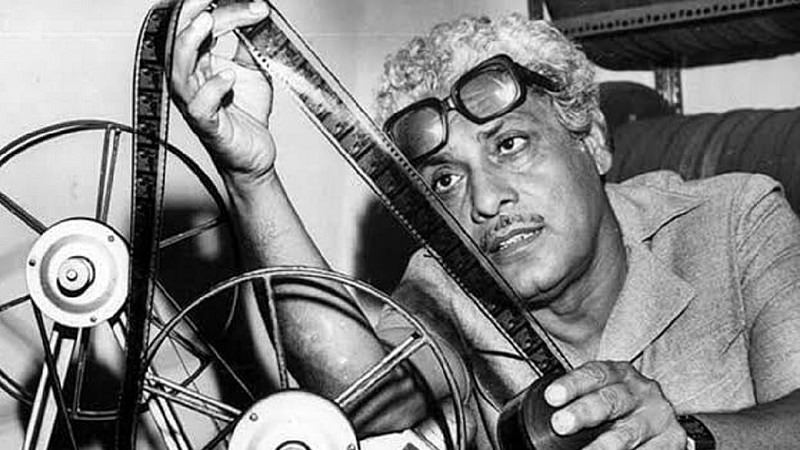
Through the early 1970s, Chatterjee refined the form that would become his signature. Piya Ka Ghar (1971), produced by Tarachand Barjatya of Rajshri Productions, took as its subject the difficulties of a newly married couple confined to the impossibly crowded quarters of a Bombay chawl, turning the city's chronic shortage of living space into the very fabric of its drama. Rajnigandha (1974), adapted from a story by Mannu Bhandari, was a landmark. A quiet, interior film about a young woman torn between a dependable present suitor and the memory of a former lover, it dispensed almost entirely with melodrama, relying instead on observation, voice-over, and the evocative songs of Salil Chowdhury. Rajnigandha won the Filmfare Critics Award for Best Movie and became an unexpected commercial success, proving that a modest, character-driven film could find a wide audience.
The films that followed consolidated Chatterjee's reputation as the pre-eminent chronicler of urban middle-class romance. Chhoti Si Baat (1975), produced by B. R. Chopra, was a beguiling comedy about a diffident young office worker who seeks the tutelage of a worldly mentor in order to win the woman he loves, and earned Chatterjee a Filmfare Best Screenplay Award. Chitchor (1976), again for Rajshri and based on a Bengali story by Subodh Ghosh, was a tender rural romance whose enduringly popular music by Ravindra Jain won the National Film Award for Best Male Playback Singer. Swami (1977), adapted from a story by Saratchandra Chattopadhyay, marked the apex of his critical recognition: a thoughtful study of a woman reconciling herself to marriage and self-determination, it brought Chatterjee the Filmfare Best Director Award and the National Film Award for Best Popular Film Providing Wholesome Entertainment.
The late 1970s and early 1980s were extraordinarily productive. Khatta Meetha (1978), a warm comedy about a late-life marriage uniting two large Parsi families, and Baton Baton Mein (1979), a featherlight romance set among Bombay's Goan Christian community and unfolding largely on the city's suburban trains, are among the most affectionately remembered films of their decade. Other notable works of the period include Priyatama (1977), Dillagi (1978), Jeena Yahan (1979) — which won him a second Filmfare Critics Award for Best Movie — Apne Paraye (1980), Man Pasand (1980), Hamari Bahu Alka (1982), and the comedy Shaukeen (1982).
Although the gentle social comedy was his natural register, Chatterjee periodically turned to weightier material. Ek Ruka Hua Faisla (1986), a faithful Hindi adaptation of Reginald Rose's Twelve Angry Men, confined its entire drama to a jury room and remains a celebrated demonstration of his command of ensemble performance and dramatic tension. Kamla Ki Maut (1989), produced by the National Film Development Corporation, confronted questions of sexual morality, family honour, and middle-class hypocrisy, and won Chatterjee another Filmfare Best Screenplay Award. Chameli Ki Shaadi (1986) offered a satirical comedy on caste and class, while Durga (1992) earned the National Film Award for Best Film on Family Welfare.
From the late 1990s, Chatterjee returned increasingly to Bengali-language cinema. Hothat Brishti (1998), an Indo-Bangladeshi co-production starring the Bangladeshi actor Ferdous Ahmed, proved a considerable success and initiated a series of cross-border collaborations including Chupi Chupi (2001) and Tak Jhal Mishti (2002), as well as the later Hochheta Ki (2008). He also wrote the screenplay for the Bangladeshi film Ek Cup Cha. In parallel with his feature work, he served on the jury of the 10th Moscow International Film Festival in 1977 and was a member of the International Film and Television Club of the Asian Academy of Film and Television.
It was in television, however, that Chatterjee reached perhaps his widest audience. For Doordarshan he created Rajani (1985), starring Priya Tendulkar as a fearless middle-class housewife who takes on civic corruption and everyday injustice, a series that struck a powerful chord with viewers across the country. He followed it with Darpan, Kakaji Kahin (1988), and, most enduringly, Byomkesh Bakshi (across two seasons in 1993 and 1997), the much-loved detective serial adapted from the stories of Saradindu Bandyopadhyay, which brought his characteristic restraint and attention to period detail to the small screen.
The Cinema of Basu Chatterjee
To watch a Basu Chatterjee film is to be returned to the ordinary. Where mainstream Hindi cinema trafficked in spectacle, larger-than-life heroes, and emotional excess, and where the parallel cinema of the same years frequently sought the stark and the tragic, Chatterjee occupied a middle ground that was entirely his own. His was a cinema of the recognisable: of clerks and stenographers, of cramped flats and crowded local trains, of tentative glances exchanged across an office or a tea stall. He found in these unremarkable lives not pathos alone but humour, warmth, and a quiet romantic possibility, and he rendered them with a realism that never curdled into bleakness.
This humane realism was the defining feature of his style. Chatterjee favoured location shooting over studio artifice, and Bombay itself — its trains, its streets, its chawls and offices — became a living presence in his films rather than a painted backdrop. His narratives unfolded at a measured, observational pace, attentive to the small gestures and hesitations through which his characters revealed themselves. He trusted understatement, allowing meaning to accumulate through detail rather than declaration, and he drew naturalistic performances from his actors that emphasised behaviour over theatricality.
Music, paradoxically for a director so committed to realism, was central to his art. Working with composers such as Salil Chowdhury, Rajesh Roshan, and Ravindra Jain, and with lyricists including Yogesh and Gulzar, Chatterjee integrated song into his films not as spectacle but as an extension of mood and interior life. The melodies of Rajnigandha, Chhoti Si Baat, and Chitchor remain among the most cherished in Hindi film music precisely because they feel inseparable from the gentle emotional worlds the films inhabit.
If his cinema had a guiding ethical conviction, it was a deep respect for the dignity of the ordinary person. Chatterjee neither romanticised poverty nor mocked the aspirations of the salaried class; he observed them with affection and a clear, unsentimental eye. His films suggested that meaning and feeling were not the preserve of the heroic or the tragic, but were woven into the most commonplace of lives — and that this, far from being a limitation, was a subject worthy of sustained artistic attention.
Key Themes
The Urban Middle Class. Chatterjee's enduring subject was the salaried, lower-middle and middle-class inhabitant of the modern Indian city. He gave cinematic form to a social stratum that mainstream cinema had largely ignored, dignifying its struggles over rent, employment, and marriage as fit material for serious and affectionate storytelling.
Romance and Courtship. Few directors have rendered the awkwardness and tenderness of courtship as delicately. From Rajnigandha to Baton Baton Mein, his films dwell on hesitation, misunderstanding, and the quiet negotiations through which ordinary people fall in love, finding drama in restraint rather than declaration.
Marriage and Domestic Life. Beginning with Sara Akash and continuing through Piya Ka Ghar and Swami, Chatterjee returned repeatedly to the interior life of marriage — its compromises, its slow accommodations, and the search for mutual respect within the constraints of family and circumstance.
Gentle Humour and Social Comedy. Trained as a cartoonist, Chatterjee possessed an unerring sense of the comedy latent in everyday life. His films deploy humour not for ridicule but for recognition, illuminating human foibles with warmth in works such as Chhoti Si Baat, Khatta Meetha, and Chameli Ki Shaadi.
The City as Lived Space. Bombay is omnipresent in his cinema — not as glamour but as a material reality of overcrowded housing, daily commutes, and economic pressure. The city's textures shape the lives and choices of his characters, making space itself a recurring dramatic force.
Moral and Social Conscience. In a strand of more serious work — Ek Ruka Hua Faisla, Kamla Ki Maut, and the television series Rajani — Chatterjee engaged questions of justice, conscience, and middle-class hypocrisy, demonstrating that his humane realism could accommodate moral seriousness as readily as comedy.
Selected Filmography
Sara Akash (1969)
Chatterjee's directorial debut, adapted from Rajendra Yadav's novel, is a sensitive study of a young couple struggling within an arranged marriage and a joint family. A foundational work of the new realism in Hindi cinema, it won him the Filmfare Best Screenplay Award and announced a major new sensibility.
Piya Ka Ghar (1971)
Produced by Rajshri, the film transforms the chronic housing shortage of Bombay into the substance of its drama, following a newly married couple as they adjust to life in an overcrowded chawl. It is among the purest expressions of Chatterjee's interest in middle-class domestic life.
Rajnigandha (1974)
Adapted from a Mannu Bhandari story, this quietly revolutionary film about a woman caught between past and present love dispensed with melodrama in favour of interior observation. A surprise commercial success, it won the Filmfare Critics Award for Best Movie and remains a touchstone of middle cinema.
Chhoti Si Baat (1975)
A charming romantic comedy about a timid office worker who learns the arts of confidence and courtship from a worldly mentor. Its wit and warmth earned Chatterjee the Filmfare Best Screenplay Award, and it endures as one of the most beloved comedies of its era.
Chitchor (1976)
A tender rural romance based on a Bengali story by Subodh Ghosh, distinguished by Ravindra Jain's memorable music, which won the National Film Award for Best Male Playback Singer. The film exemplifies Chatterjee's gift for gentle, unhurried storytelling.
Swami (1977)
Adapted from Saratchandra Chattopadhyay, this thoughtful drama of a woman reconciling marriage with self-respect brought Chatterjee his greatest critical acclaim, winning the Filmfare Best Director Award and the National Film Award for Best Popular Film Providing Wholesome Entertainment.
Baton Baton Mein (1979)
A featherlight romance set among Bombay's Goan Christian community and unfolding largely aboard the city's suburban trains. With its naturalistic charm and lived-in sense of place, it stands as a quintessential Chatterjee comedy of courtship.
Ek Ruka Hua Faisla (1986)
A faithful Hindi adaptation of Reginald Rose's Twelve Angry Men, confining its entire drama to a single jury room. A masterclass in ensemble performance and sustained tension, it is among the most admired chamber dramas in Hindi cinema.
Kamla Ki Maut (1989)
Produced by the NFDC, this serious-minded film examines sexual morality, family honour, and middle-class hypocrisy through the aftermath of a young woman's death. It won Chatterjee a further Filmfare Best Screenplay Award and revealed the moral depth beneath his lighter work.
Legacy
Basu Chatterjee's death in Mumbai on 4 June 2020, at the age of ninety-three, drew tributes from across the Indian film world and a widespread recognition that his passing marked the end of an era. He had outlived most of the contemporaries with whom he had built the middle cinema of the 1970s, and his films had, in the intervening decades, acquired the status of enduring classics — works returned to again and again for the comfort, humour, and recognition they offer.
His most significant contribution was to demonstrate that there existed a viable and valuable space between the commercial mainstream and the avant-garde. Together with Hrishikesh Mukherjee and Basu Bhattacharya, Chatterjee proved that films grounded in realism, modest in scale, and centred on ordinary people could be both critically esteemed and commercially successful. This middle path expanded the possibilities of Hindi cinema and created an audience for intelligent, humane storytelling that did not depend on spectacle.
The influence of his sensibility is visible in successive generations of Indian filmmakers who have taken the everyday lives of the urban middle class as their subject. The slice-of-life comedies and romances of later directors, and the broader turn towards naturalism and small-scale storytelling in Hindi cinema, owe a clear debt to the template Chatterjee established. His television work, particularly Byomkesh Bakshi and Rajani, shaped the early identity of Indian serial drama and remains fondly remembered by audiences who grew up with it.
His achievements were marked by numerous honours across his lifetime, among them the Filmfare Best Director Award and a National Film Award for Swami, two Filmfare Critics Awards for Best Movie, multiple Filmfare Best Screenplay Awards, the National Film Award for Best Film on Family Welfare for Durga (1992), and the IIFA Lifetime Achievement Award in 2007. A retrospective of his work was held at the Kala Ghoda Arts Festival in Mumbai in 2011, and in 2023 his career was the subject of a full-length critical study, Basu Chatterji and Middle-of-the-Road Cinema by Anirudha Bhattacharjee.
Ultimately, Chatterjee's legacy rests less on any single masterpiece than on the consistency and humanity of an entire body of work. He was the filmmaker who saw poetry and humour in the commute, the rented room, and the hesitant first conversation — who insisted that the lives of ordinary people were worthy of art, and who proved, film after film, that they were. In doing so, he secured for himself a permanent and affectionate place in the history of Indian cinema.