
T.V. Chandran
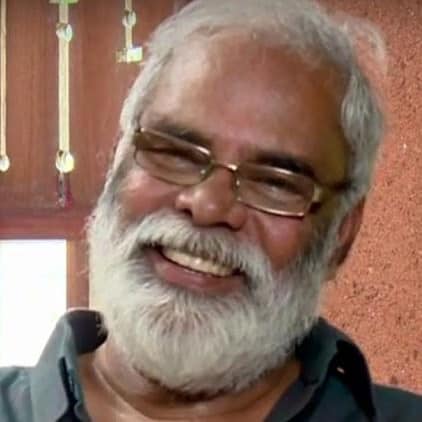
T.V. Chandran (born 23 November 1950) is among the most significant figures of the Malayalam parallel cinema movement, an auteur whose four-decade body of work has consistently fused historical consciousness, leftist political conviction, and a sustained attention to the interior lives of women. Emerging from the radical political and cultural ferment of Kerala in the 1970s, Chandran built a cinema that is at once intimate and panoramic, locating the private sorrows of ordinary individuals within the larger movements of twentieth-century history. Working primarily in Malayalam, with notable excursions into Tamil, he has remained an uncompromising independent voice, largely indifferent to the commercial mainstream while securing the highest recognition the Indian film establishment can offer.
Chandran came to prominence with Alicinte Anveshanam (1989), which represented India at the Locarno International Film Festival, and consolidated his reputation with Ponthan Mada (1993), the film for which he won the National Film Award for Best Director and which remains his most celebrated achievement. Over his career he has won six National Film Awards and ten Kerala State Film Awards, an exceptional record of sustained critical esteem. In 2023 he received the J. C. Daniel Award, the highest honour of Malayalam cinema, conferred for the year 2022 in recognition of his lifetime contribution.
A self-taught filmmaker who never attended a film school, Chandran absorbed his craft through close apprenticeship to the radical filmmakers P. A. Backer and John Abraham, and through his lifelong friendship with V. K. Pavithran. His films are distinguished by their refusal of melodramatic convention, their grave and elegiac tone, and their insistence that cinema bear witness to history. Whether reconstructing the feudal order of mid-century Malabar, the rise of the Communist movement in Kerala, or the trauma of the 2002 Gujarat violence, Chandran has used the medium as an instrument of memory and moral inquiry.
His cinema is also notable for its feminist sympathies. From Alicinte Anveshanam through Susanna, Paadam Onnu: Oru Vilapam, and Boomi Malayalam, Chandran returned repeatedly to the predicaments of women constrained by patriarchy, communal orthodoxy, and historical circumstance, drawing landmark performances from actresses such as Vani Viswanath and Meera Jasmine. Taken together, his films constitute one of the most coherent and politically engaged authorial projects in contemporary Indian cinema.
Life and Early Work
Chandran was born on 23 November 1950 in Thalassery (Telicherry), then part of the Malabar District of Madras State and today situated in the Kannur district of Kerala. He was the son of Narayanan and Karthyayini Amma, and grew up in the politically charged atmosphere of north Malabar, a region with a deep tradition of left-wing activism and labour militancy. This environment left a permanent imprint on his sensibility; the history of the Communist movement and the social struggles of Kerala would become recurring subjects of his films.
Chandran took an undergraduate degree at Christ College, Irinjalakuda, and subsequently completed his postgraduate studies at Farook College, affiliated to the University of Calicut. During his college years he was drawn to radical politics, sympathising with the Naxalite movement and maintaining a close association with the Communist Party. This early political formation was not incidental but foundational: it gave him both a worldview and a community of fellow travellers in the arts who would shape his entry into cinema. After completing his education he took up employment with the Reserve Bank of India, working as a bank employee before abandoning the security of that career for the uncertain vocation of filmmaking.
The decisive influence of these years was his friendship with the filmmaker V. K. Pavithran, which had begun when Chandran was barely fourteen. The two clandestinely shared an interest in the film medium, and Chandran later recalled that for Pavithran filmmaking was "an event of celebration," each production marked by the exciting participation of the masses. It was this association, Chandran said, that drew him into what he wryly described as the "condemned status" of a filmmaker. Crucially, Chandran had no formal training in cinema; his education in the medium came entirely through practice and proximity to other independent artists.
Chandran entered films as an actor, playing the lead role in P. A. Backer’s Kabani Nadi Chuvannappol (When the River Kabani Turned Red, 1975), a landmark of leftist political cinema produced during the Emergency. The film was adjudged Second Best Film at the Kerala State Film Awards, and Backer won the award for Best Director for his debut. Chandran then served as an assistant to Backer and to the avant-garde filmmaker John Abraham, two of the most uncompromising figures of Malayalam parallel cinema. This apprenticeship, alongside his bond with Pavithran, constituted his real film school, immersing him in a tradition of politically committed, formally austere, low-budget independent filmmaking that would define his own work. Filmmaking ran in the family: his brother Soman became an assistant who worked with Chandran from his very first film, and his son Yadavan Chandran later directed documentaries and assisted on many of his features.

Susanna (2000)
Filmmaking
Chandran made his directorial debut with Krishnan Kutty (1981), an experimental feature that proved both a critical and commercial failure and never received a wide public release. The film continued the idiom of independent, politically inflected cinema he had absorbed from P. A. Backer. Undeterred by this difficult start, Chandran next directed the Tamil feature Hemavin Kadhalargal (Hema’s Lovers, 1985), starring Delhi Ganesh and marking the debut of the actress Anuradha, who would go on to a substantial career in Tamil cinema. Though Hemavin Kadhalargal was a commercial success and attracted favourable reviews, it was with his third feature that Chandran achieved the breakthrough that established him as a major director.
Alicinte Anveshanam (The Search of Alice, 1989) followed a woman’s journey in search of her missing husband, using the framework of a mystery to explore themes of absence, female agency, and social constraint. The film was the official entry from India to the Locarno International Film Festival, where it received a nomination for the Golden Leopard, and it won the Kerala State Film Award for Second Best Film. International recognition transformed Chandran’s standing and inaugurated the most productive phase of his career.
In 1993 Chandran released Ponthan Mada, widely regarded as his finest achievement. Adapted from two short stories by C. V. Sreeraman, "Ponthan Mada" and "Sheema Thampuran," the film examined the feudal order of mid-century Malabar through the bond between a poor labourer and an aristocratic landlord. Chandran cast two of India’s most accomplished method actors, Mammootty and Naseeruddin Shah, and the film won Mammootty both National and State honours while earning Chandran the National Film Award for Best Director and the Kerala State Film Award for Second Best Film. The collaboration with Mammootty would prove one of the defining creative partnerships of his career.
His next film, Ormakal Undayirikkanam (Memories and Desires, 1995), starring Bharath Gopi, Mammootty, Nedumudi Venu and Sreenivasan, portrayed the rise of the Communists to power in 1957 and the Vimochana Samaram (Liberation Struggle) of 1959, anchoring private memory in the political history of Kerala. The film won the National Film Award for Best Feature Film in Malayalam and a State award, and the critic Kozhikodan later included it among the ten best Malayalam films of all time. Chandran sustained this momentum with Mangamma (1997), which he wrote and directed for the National Film Development Corporation; screened at the Zanzibar International Film Festival, it won the National Film Award for Best Feature Film in Malayalam and brought Chandran the Kerala State Film Award for Best Director.
The feminist dimension of Chandran’s work found its most provocative expression in Susanna (2000), a drama about a woman who lives simultaneously with five different men. Vani Viswanath delivered what is widely regarded as the finest performance of her career in the title role, and the film won a Kerala State Film Award (Special Jury Award). The dancer Mallika Sarabhai, originally cast as Susanna, withdrew owing to scheduling conflicts and was instead given a major role in Chandran’s next feature, Dany (2001). This comedy drama, his third collaboration with Mammootty, followed a mute protagonist who serves as a silent witness to the great historical events of the twentieth century. Chandran has described Mammootty’s work in Dany as the finest performance he has seen from any lead actor; the film won a National Film Award and three State Film Awards.
In Paadam Onnu: Oru Vilapam (Lesson One: A Wail, 2003), Chandran confronted the practices of child marriage and polygamy within traditional Muslim communities of Kerala. Meera Jasmine, playing a teenage Muslim girl, won the National and State Film Awards for Best Actress, and the film received the National Film Award for Best Film on Family Welfare. Its premiere provoked protests from a section of Islamic periodicals in Kerala, and the release was postponed more than once; Chandran narrowly missed a second Best Director National Award when, owing to a tie, the casting vote of the jury chairman went to the Bengali director Goutam Ghose.
With Kathavasheshan (The Deceased, 2004), co-produced by and starring Dileep, Chandran began his sustained engagement with the 2002 Gujarat violence. Structured as a murder mystery, the film tells the story of a civil engineer who takes his own life in protest against the riots, and it emerged the biggest winner at the Kerala State Film Awards with four honours, including Best Screenplay. The film also marked the end of Chandran’s long association with the composer Johnson, replaced by Issac Thomas Kottukapally. He continued his Gujarat sequence with Vilapangalkkappuram (Beyond the Wail, 2008), in which Priyanka Nair won a State award for her portrayal of a Muslim woman subjected to communal violence, and concluded the trilogy with Bhoomiyude Avakashikal (The Inheritors of the Earth, 2012), whose title was adapted from the celebrated short story by Vaikom Muhammad Basheer and whose protagonist, driven from Ahmedabad by the riots, withdraws into solitary communion with the insects and animals of a secluded house in Kerala.
Chandran also returned periodically to Tamil cinema and to acting. His Tamil psychological drama Aadum Koothu (2005), featuring Navya Nair, Cheran and Prakash Raj, won the National Film Award for Best Feature Film in Tamil though it was never released theatrically. In 2008 he returned to acting for the first time since his debut, playing a supporting role in M. G. Sasi’s Atayalangal. His Boomi Malayalam (The Mother Earth, 2009) returned to feminist themes through the linked stories of seven women across different historical periods, united by a common experience of fear; it won the Kerala State Film Award for Second Best Film and the John Abraham Award for Best Film. A brief foray into mainstream comedy fantasy, Sankaranum Mohananum (2011), in which Jayasurya appeared in twenty different guises, was poorly received. In later years Chandran directed Mohavalayam (2016), the first Indian film shot entirely in Bahrain, and Pengalila (Sister Leaf, 2019), a tender study of the bond between an eight-year-old girl and an elderly daily-wage worker. Alongside his features he has directed several tele-films and serials, including the award-winning tele-film Varum Varaykakal.

The Cinema of T. V. Chandran
Chandran’s cinema is governed by a single, encompassing conviction: that the lives of ordinary people are inseparable from the movement of history. His characters are rarely autonomous individuals pursuing private destinies; they are figures shaped, displaced, and often destroyed by the political forces of their time, whether feudalism, communalism, or the struggles of the labour movement. This historical imagination distinguishes him from many of his contemporaries and aligns his work with the great tradition of politically committed art cinema. Formally, his films favour a deliberate, contemplative pace, an elegiac restraint, and a refusal of the melodramatic excess that characterises commercial Malayalam cinema, even as he frequently cast its leading stars.
A second defining feature is his enduring engagement with the lives of women. Across his filmography, Chandran returns to female protagonists constrained by patriarchy, religious orthodoxy, and the indifference of history, treating their suffering not as spectacle but as moral testimony. His feminism is historical rather than abstract, locating the oppression of women within concrete social structures. Equally characteristic is his attention to the texture of memory: many of his films are structured as acts of remembrance, retrievals of a personal or collective past that the present is in danger of forgetting.
Key Themes
History as lived experience. Chandran consistently embeds individual lives within decisive historical moments—the feudal order of Malabar, the rise of Kerala Communism, the Gujarat violence of 2002—insisting that personal fate is the product of political circumstance.
The condition of women. From Alice’s search for her husband to the teenage bride of Paadam Onnu and the seven women of Boomi Malayalam, Chandran examines female lives constrained by patriarchy and communal orthodoxy, drawing landmark performances from his actresses.
Communalism and conscience. His Gujarat trilogy confronts the trauma of religious violence and the moral responsibility of the witness, treating the riots of 2002 as a wound on the national conscience.
Leftist politics and social struggle. Formed by the radical politics of north Malabar, Chandran returns to the history of the Communist movement and the dignity of labour, as in Ormakal Undayirikkanam and Ponthan Mada.
Memory and elegy. Many of his films are structured as acts of remembrance, recovering a personal or collective past in a grave, mournful register that resists nostalgia.
Selected Filmography
Alicinte Anveshanam (1989). Chandran’s breakthrough feature, following a woman’s search for her missing husband. India’s official entry to the Locarno International Film Festival, where it was nominated for the Golden Leopard, and winner of the Kerala State Film Award for Second Best Film. It established his reputation as a serious art-house director and announced his abiding concern with female experience.
Ponthan Mada (1993). Adapted from two short stories by C. V. Sreeraman and starring Mammootty and Naseeruddin Shah, this study of feudal Malabar is Chandran’s most acclaimed film. It won him the National Film Award for Best Director and earned Mammootty national and state honours, marking the high point of his collaboration with the actor.
Ormakal Undayirikkanam (1995). A historical drama tracing the rise of the Communists to power in 1957 and the Liberation Struggle of 1959. Winner of the National Film Award for Best Feature Film in Malayalam and later ranked by the critic Kozhikodan among the ten greatest Malayalam films, it exemplifies Chandran’s fusion of private memory and political history.
Mangamma (1997). Written and directed for the NFDC and screened at the Zanzibar International Film Festival, this film won the National Film Award for Best Feature Film in Malayalam and brought Chandran the Kerala State Film Award for Best Director, confirming his stature at the centre of Malayalam parallel cinema.
Susanna (2000). A provocative feminist drama about a woman who lives with five men, anchored by a career-defining performance from Vani Viswanath and honoured with a Kerala State Film Award (Special Jury Award). It represents Chandran’s most direct engagement with female autonomy and social transgression.
Dany (2001). A comedy drama, his third collaboration with Mammootty, following a mute man who is a silent witness to the major historical events of the twentieth century. Winner of a National Film Award and three State Film Awards, it contains what Chandran considers the finest lead performance he has ever directed.
Paadam Onnu: Oru Vilapam (2003). A searing account of child marriage and polygamy in a traditional Muslim community, for which Meera Jasmine won the National and State Awards for Best Actress. The film won the National Film Award for Best Film on Family Welfare and provoked protest for its unflinching treatment of religious orthodoxy.
Kathavasheshan (2004). The first film of his Gujarat trilogy, structured as a murder mystery around an engineer who takes his life in protest against the 2002 riots. The biggest winner at that year’s Kerala State Film Awards, with four honours including Best Screenplay.
Bhoomiyude Avakashikal (2012). The concluding film of the Gujarat trilogy, its title drawn from a story by Vaikom Muhammad Basheer. Its riot-displaced protagonist retreats into solitary communion with the natural world, distilling Chandran’s meditation on violence, exile and conscience into an austere, allegorical form.
Pengalila (2019). A late, tender work portraying the bond between a young girl and an elderly daily-wage labourer, demonstrating the continuity of Chandran’s humanism and his attention to the marginalised across four decades of filmmaking.
Legacy
V. Chandran occupies a central place in the history of Malayalam parallel cinema, standing alongside Adoor Gopalakrishnan, G. Aravindan and Shaji N. Karun as one of the principal architects of Kerala’s art-film tradition. Yet his sensibility is distinct: where Adoor refines an austere modernism and Aravindan pursues a lyrical mysticism, Chandran is the historian of the movement, the filmmaker most committed to reckoning with the political past and its consequences for ordinary lives. His inheritance from P. A. Backer, John Abraham and V. K. Pavithran connects him directly to the radical, Emergency-era roots of Malayalam independent cinema, and his persistence in that idiom across four decades has preserved a vital strand of politically engaged filmmaking.
His record of recognition is among the most distinguished in Indian cinema: six National Film Awards, ten Kerala State Film Awards, an array of honours at national and international festivals, and, in 2023, the J. C. Daniel Award for lifetime achievement, the highest distinction Malayalam cinema bestows. That this acclaim was won almost entirely outside the commercial mainstream—most of his films were modest performers at the box office even as they triumphed with critics and juries—testifies to the integrity of his artistic project and to the esteem in which the film establishment holds it.
Chandran’s influence extends beyond his awards. His insistence that cinema serve as a vehicle of historical memory and moral witness, his sympathetic and unsentimental portrayal of women, and his willingness to confront communal violence at a time of rising sectarian tension have made his work a touchstone for socially committed filmmakers in Kerala and beyond. His Gujarat trilogy in particular stands as one of Indian cinema’s most sustained artistic responses to the events of 2002. As a self-taught artist who built a major body of work through conviction rather than institutional training, he remains an example of the possibilities of independent cinema. In the longer history of Indian film, T. V. Chandran is assured of his place as a conscience-keeper of the parallel movement—a filmmaker who held fast to the belief that the camera must remember what society would prefer to forget.