
Aparna SEN
Aparna Sen is among the most accomplished and influential figures in modern Indian cinema, a director, screenwriter, and actress whose work has helped define the contours of Bengali art cinema in the decades following the towering generation of Satyajit Ray, Ritwik Ghatak, and Mrinal Sen. Working principally in Bengali and English, and occasionally in Hindi, she has across more than four decades behind the camera constructed a body of work distinguished by its psychological acuity, its sustained attention to the interior lives of women, and its willingness to confront the fault lines of class, communal tension, mental illness, and social convention in contemporary India. Born into one of Bengal’s most cultivated families, she came to filmmaking already steeped in the traditions of literature and cinema, and her authorial voice has from the outset been marked by an unusual combination of intellectual seriousness and emotional intimacy.

Sen first became known to audiences as an actress, making her debut at the age of sixteen in Satyajit Ray’s Teen Kanya (1961) and going on to become one of the leading stars of Bengali commercial and art cinema across the 1960s and 1970s. It was with her directorial debut, 36 Chowringhee Lane (1981), that she announced herself as a major creative force, winning the National Film Award for Best Direction for a film of rare tenderness about an ageing Anglo-Indian schoolteacher in Calcutta. The film established the thematic and tonal preoccupations — loneliness, dignity, the predicament of those left at the margins of a changing society — that would recur throughout her career.
Over the following decades Sen directed a sequence of widely acclaimed films, among them Paroma (1985), Sati (1989), Yugant (1995), Paromitar Ek Din (2000), Mr. and Mrs. Iyer (2002), 15 Park Avenue (2005), The Japanese Wife (2010), Iti Mrinalini (2010), and Goynar Baksho (2013). Her films have been honoured repeatedly at the National Film Awards — she has received nine across her careers as actress and filmmaker — as well as at the Filmfare Awards East, the Bengal Film Journalists’ Association Awards, and numerous international festivals. In 1987 the Government of India conferred upon her the Padma Shri, the country’s fourth highest civilian honour, in recognition of her contribution to Indian cinema.
Beyond her work in film, Sen has been a significant presence in Bengali public and cultural life: as the founding editor of the women’s magazine Sananda for nearly two decades, as a frequent juror at international film festivals, and as an outspoken commentator on social and political questions. Her career, spanning performance, direction, screenwriting, and editorship, makes her one of the most versatile and consequential women in the history of Indian cinema, and a central figure in any account of the post-Ray Bengali film tradition.
Life and Early Work
Aparna Sen was born Aparna Dasgupta on 25 October 1945 in Calcutta (now Kolkata), in what was then the Bengal Presidency of British India. Her family originally hailed from Cox’s Bazar in the Chittagong district of eastern Bengal, now in Bangladesh. She was born into a household of exceptional literary and artistic distinction. Her father, Chidananda Dasgupta, was one of India’s most respected film critics and a filmmaker in his own right, as well as a co-founder, with Satyajit Ray, of the Calcutta Film Society in 1947 — an institution that played a formative role in the emergence of serious film culture in Bengal. Her mother, Supriya Dasgupta, was a costume designer who, late in life, won the National Film Award for Best Costume Design for Chidananda’s film Amodini (1994). Sen was also a grand-niece of the celebrated Bengali poet Jibanananda Das, a lineage that situated her from birth within the heart of twentieth-century Bengali letters.
Sen spent her childhood between Hazaribagh, in present-day Jharkhand, and Calcutta. She was educated at Modern High School for Girls in Ballygunge, Calcutta, and went on to study English literature at Presidency College, one of the most prestigious institutions of higher learning in the city, though she did not complete her degree. Her early immersion in the cultural milieu cultivated by her father — the screenings of the Calcutta Film Society, the close friendship between her family and Satyajit Ray — provided an education in cinema that few of her contemporaries could match, and shaped both her sensibility as a performer and her later ambitions as a director.
Her entry into public life came early and somewhat unexpectedly: at the age of fifteen she was photographed by the New Zealand photojournalist Brian Brake for his celebrated 1960 Monsoon series, and the resulting image appeared on the cover of Life magazine, making her face internationally visible before she had embarked on any career. The following year, at sixteen, she made her film debut, cast by Satyajit Ray as Mrinmoyee in the “Samapti” segment of his anthology film Teen Kanya (1961), an adaptation of Rabindranath Tagore’s stories. The experience of working with Ray, a longtime friend of her father, was decisive in orienting her towards cinema.
Through the 1960s and 1970s Sen established herself as one of the foremost actresses of Bengali cinema, moving between the art films of the masters and popular commercial productions. She appeared in several further films for Ray, including Aranyer Din Ratri (1970), Jana Aranya (1976), and the short Pikoo (1980), and acted in Mrinal Sen’s Akash Kusum (1965). She also became a major box-office star in her own right, headlining popular successes such as Mem Saheb (1972) and Basanta Bilap (1973), and won repeated Best Actress honours from the Bengal Film Journalists’ Association and Filmfare Awards East. By the time she turned to direction she possessed an intimate, practical understanding of film craft acquired from inside the industry, and a reputation that lent her debut considerable visibility.
Filmmaking
Aparna Sen made her debut as a writer-director in 1981 with 36 Chowringhee Lane, an English-language film produced by the actor Shashi Kapoor and starring Jennifer Kendal in a now-celebrated performance as Violet Stoneham, an ageing Anglo-Indian teacher of English literature living in a dwindling community in Calcutta. The film, with its quiet study of loneliness, displacement, and the casual cruelty of those who exploit the vulnerable, was an immediate critical success. It won Sen the National Film Award for Best Direction as well as the National Film Award for Best Feature Film in English, and brought her international recognition, including the Grand Prix at the Manila International Film Festival. That a first-time director should produce so assured and humane a work, and in English rather than her native Bengali, signalled the arrival of a distinctive new sensibility in Indian cinema.
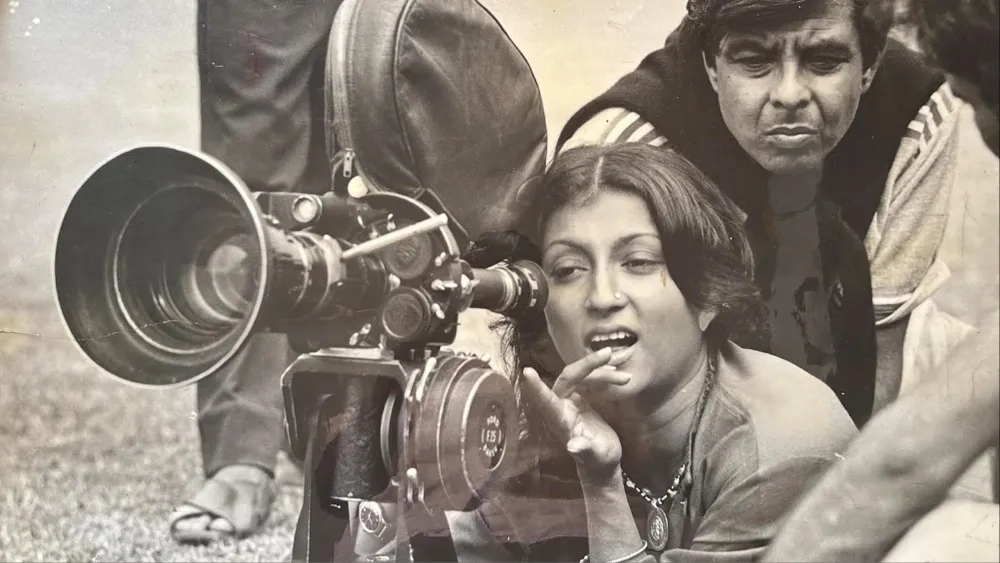

Sen returned to Bengali with Paroma (1985), a film that confirmed her preoccupation with the inner lives of women constrained by social convention. The film follows a conventional middle-class housewife whose encounter with a visiting photographer awakens in her a sense of selfhood beyond the roles of wife and mother, precipitating a crisis that the film treats with unusual candour and sympathy. Paroma won the National Film Award for Best Feature Film in Bengali and earned Sen the Filmfare Award East and the Bengal Film Journalists’ Association Award for Best Direction, establishing the feminist concerns that critics would come to regard as central to her work.
In Sati (1989), Sen cast Shabana Azmi as a mute orphan girl who, deemed inauspicious, is married to a tree in accordance with astrological prescription — a parable of patriarchal superstition and the silencing of women that demonstrated her capacity to fuse social critique with a poetic, almost mythic register. Yugant (1995), translated as What the Sea Said, examined the disintegration of a marriage between a dancer and an environmentalist across years and continents, and again won the National Film Award for Best Feature Film in Bengali. Paromitar Ek Din (2000), known in English as House of Memories, offered a tender study of the bond between a woman and her former mother-in-law, and likewise received the National Film Award for Best Feature Film in Bengali, with Sen herself appearing in a central role.
The international breadth of Sen’s reputation grew with Mr. and Mrs. Iyer (2002), perhaps her most widely seen film, an English-language drama set during an outbreak of Hindu–Muslim communal violence. The film follows a conservative Tamil Brahmin woman and a Muslim photographer thrown together on a disrupted bus journey, using their fraught intimacy to interrogate prejudice, identity, and the fragility of civility in a society riven by sectarian hatred. It won Sen National Film Awards for Best Direction and Best Screenplay, as well as the Nargis Dutt Award for Best Feature Film on National Integration, and travelled extensively on the international festival circuit. She continued in English with 15 Park Avenue (2005), a searching portrait of a young woman living with schizophrenia and of the family members who care for her, which won the National Film Award for Best Feature Film in English.
Sen’s later career has been marked by both prolific output and formal range. The Japanese Wife (2010) adapted Kunal Basu’s short story about a Bengali schoolteacher and his lifelong epistolary marriage to a Japanese woman he never meets. Iti Mrinalini (2010) — in which Sen acted alongside her daughter Konkona Sen Sharma — was co-written with the first-time screenwriter Ranjan Ghosh, marking the first occasion on which Sen collaborated with another writer, and notable as the first screenplay developed within an Indian film school, Whistling Woods International, to be produced. Goynar Baksho (2013), adapted from Shirshendu Mukhopadhyay’s novel, traced three generations of women through their relationship to a box of family jewellery and proved a major commercial and critical success. She went on to direct Arshinagar (2015), a Bengali musical adaptation of Romeo and Juliet; Sonata (2017), an English-language adaptation of Mahesh Elkunchwar’s play about three unmarried middle-aged women, in which Sen appeared with Shabana Azmi and Lillete Dubey; and Ghawre Bairey Aaj (2019), a contemporary reworking of Tagore’s Ghare Baire. In 2021 she directed her Hindi-language film The Rapist, starring Konkona Sen Sharma and Arjun Rampal, a hard-hitting drama examining the social conditions that produce sexual violence, which was selected to compete for the Kim Jiseok Award at the Busan International Film Festival and won her the Best Director award at the Indian Film Festival of Melbourne in 2022.
The Cinema of Aparna Sen
The cinema of Aparna Sen is, above all, a cinema of women — of their interior lives, their constrained choices, and their often unspoken capacities for resistance and self-definition. Where the great male auteurs of Bengali cinema frequently approached women as figures within larger social or historical narratives, Sen placed female subjectivity at the very centre of her films, examining with patience and precision the textures of domestic life, the negotiations of marriage and motherhood, and the slow, difficult emergence of agency within structures designed to suppress it. Critics have noted that her protagonists consistently move towards forms of self-reliance and self-fulfilment, enacting what one scholar has described as a “strategic feminism” grounded in the specific social world of urban Bengal.
Sen’s formation outside the institutions of film education, and within the literary and cinephilic culture of her family, gives her work a distinctive character. Her films are frequently literary in origin — drawn from novels and short stories by Shirshendu Mukhopadhyay, Kunal Basu, and others, or from the dramatic and poetic canon of Tagore and Shakespeare — yet they are never merely illustrative adaptations. She uses literary material as a means of access to psychological complexity, building her films around carefully observed characters whose dilemmas resist easy resolution. This literary sensibility coexists with a strong actor’s instinct: having worked for decades before the camera, Sen draws performances of remarkable subtlety from her casts, and the relationship between performer and director is among the most consistently praised dimensions of her cinema.
Thematically, her work returns again and again to the marginal and the misunderstood: the ageing Anglo-Indian woman stranded by history in 36 Chowringhee Lane, the silenced girl in Sati, the woman with schizophrenia in 15 Park Avenue, the carers and family members whose labour goes unrecognised. This attention to those who fall outside the categories of social legibility — by virtue of age, gender, illness, religion, or community — gives her cinema a sustained ethical seriousness. Yet she resists sentimentality, refusing to reduce her characters either to victims or to symbols, and insisting instead on their full, contradictory humanity. Her treatment of communal violence in Mr. and Mrs. Iyer exemplifies this method: the film locates the great political catastrophe of sectarianism within the small, concrete gestures of two individuals learning, haltingly, to see past inherited prejudice.
Formally, Sen is an unobtrusive but precise stylist, favouring a realist register attentive to the spaces of domestic and urban life — the apartments, streets, and interiors of Calcutta recur throughout her work as more than backdrop, functioning as expressions of the social worlds her characters inhabit. She has spoken of the influence of the veteran director Tapan Sinha on her filmmaking, and her cinema shares with the broader Bengali art tradition a commitment to humanist observation over spectacle. At the same time, she has shown a willingness to experiment, moving between languages, adapting across cultures, and in films such as Arshinagar incorporating song and stylisation into her predominantly naturalistic idiom.
Key Themes
The Lives of Women Sen’s defining preoccupation is the inner experience of women navigating marriage, family, and social expectation. Her films chart the often invisible processes by which her protagonists come to recognise themselves as subjects rather than as the roles assigned to them.
Loneliness and Marginality From the isolated schoolteacher of 36 Chowringhee Lane to the institutionalised young woman of 15 Park Avenue, Sen returns repeatedly to those stranded at the edges of society, treating loneliness as a profound and dignifying human condition rather than a mere narrative circumstance.
Communal and Social Division Her cinema confronts the fractures of Indian society — religious sectarianism, class hierarchy, and prejudice — most directly in Mr. and Mrs. Iyer, locating large political violences within the texture of individual relationships.
Mental Illness and Care In 15 Park Avenue and Paromitar Ek Din, Sen offers nuanced portrayals of illness, disability, and the largely unacknowledged labour of those who care for the vulnerable, insisting on the dignity of both the cared-for and the carer.
Memory and Generational Inheritance Films such as Goynar Baksho and Iti Mrinalini examine how memory, family history, and the bonds between generations of women shape identity, often using objects and houses as repositories of the past.
Tradition and the Modern Self Across her work Sen explores the tension between inherited social convention and the emergent aspirations of the modern individual, refusing to resolve the conflict simply, and finding drama in the negotiation between the two.

Selected Filmography
36 Chowringhee Lane (1981)
Sen’s directorial debut, written and directed by her and produced by Shashi Kapoor, with Jennifer Kendal as an ageing Anglo-Indian schoolteacher in a vanishing Calcutta community. A tender study of loneliness and exploitation, it won the National Film Award for Best Direction and Best Feature Film in English and the Grand Prix at the Manila International Film Festival.
Paroma (1985)
A landmark of Sen’s feminist cinema, following a conventional housewife whose awakening to her own selfhood through an extramarital encounter precipitates a crisis of identity. Treated with candour and sympathy, the film won the National Film Award for Best Feature Film in Bengali.
Sati (1989)
Starring Shabana Azmi as a mute orphan married to a tree under astrological compulsion, this poetic parable of patriarchal superstition and the silencing of women fused social critique with a near-mythic visual register.
Yugant (1995)
Also known as What the Sea Said, the film traces the disintegration of a marriage between a dancer and an environmentalist across years and continents, and won the National Film Award for Best Feature Film in Bengali.
Paromitar Ek Din (2000)
Translated as House of Memories, an intimate study of the enduring bond between a woman and her former mother-in-law. Sen appeared in the film, which won the National Film Award for Best Feature Film in Bengali.
Mr. and Mrs. Iyer (2002)
Sen’s most internationally seen film, an English-language drama set amid Hindu–Muslim communal violence, following a Tamil Brahmin woman and a Muslim photographer on a disrupted journey. It won National Film Awards for Best Direction and Best Screenplay and the Nargis Dutt Award for National Integration.
15 Park Avenue (2005)
A searching portrait of a young woman living with schizophrenia and the family that cares for her. The film won the National Film Award for Best Feature Film in English and screened at numerous international festivals.
Goynar Baksho (2013)
Adapted from Shirshendu Mukhopadhyay’s novel, a richly comic and poignant chronicle of three generations of women bound to a box of family jewellery. A major critical and commercial success that ran to packed houses.
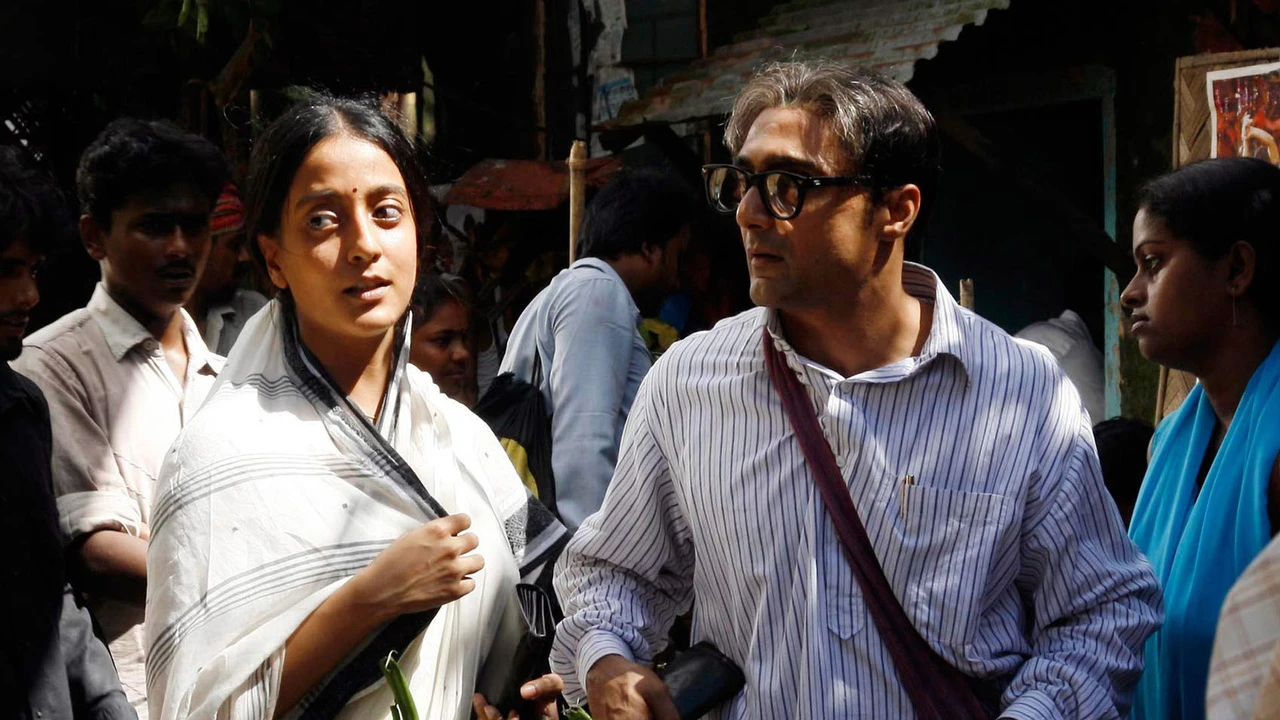
Legacy
Aparna Sen occupies a singular place in the history of Indian cinema as the foremost woman director of the Bengali art tradition and one of the most significant filmmakers — of any gender — to emerge in the decades after Satyajit Ray. At a time when direction in India remained overwhelmingly a male profession, she built across more than forty years a substantial and internationally recognised body of authored work, demonstrating that the concerns of women’s lives could sustain serious cinema of the highest order. Her films have been credited with opening space for subsequent generations of women filmmakers in India, and her influence is visible in the work of directors who have followed her in placing female experience at the centre of the frame.
Her contribution has been honoured extensively. She has received nine National Film Awards across her work as actress, director, and screenwriter, alongside six Filmfare Awards East and thirteen Bengal Film Journalists’ Association Awards, as well as numerous lifetime achievement honours. In 1987 she was awarded the Padma Shri by the Government of India. She has served on the juries of major international festivals, including the Moscow International Film Festival and the Asia Pacific Screen Awards, and her cinema has been the subject of scholarly study, including Shoma A. Chatterji’s monograph Parama and Other Outsiders: The Cinema of Aparna Sen.
Sen’s legacy extends beyond the screen into the broader cultural life of Bengal. As the founding editor of the women’s magazine Sananda from 1986 to 2005, she shaped popular discourse on women’s lives across West Bengal and Bangladesh, and she has remained an articulate public voice on social and political questions. The artistic dynasty she has helped sustain — her daughter, the actress and director Konkona Sen Sharma, has become a major figure in her own right — testifies to the continuity of the creative tradition into which Sen was born and which she has so substantially enriched.
More than four decades after 36 Chowringhee Lane, Aparna Sen’s standing as a central figure in Indian cinema is secure. Her achievement lies not only in the individual distinction of her films but in the consistency of a vision that has, across changing decades and idioms, insisted on the dignity, complexity, and interior depth of those whom cinema has too often overlooked. In doing so she has expanded the very subject matter of Indian film, and earned a permanent place among its most important artists.