
Jabbar Patel
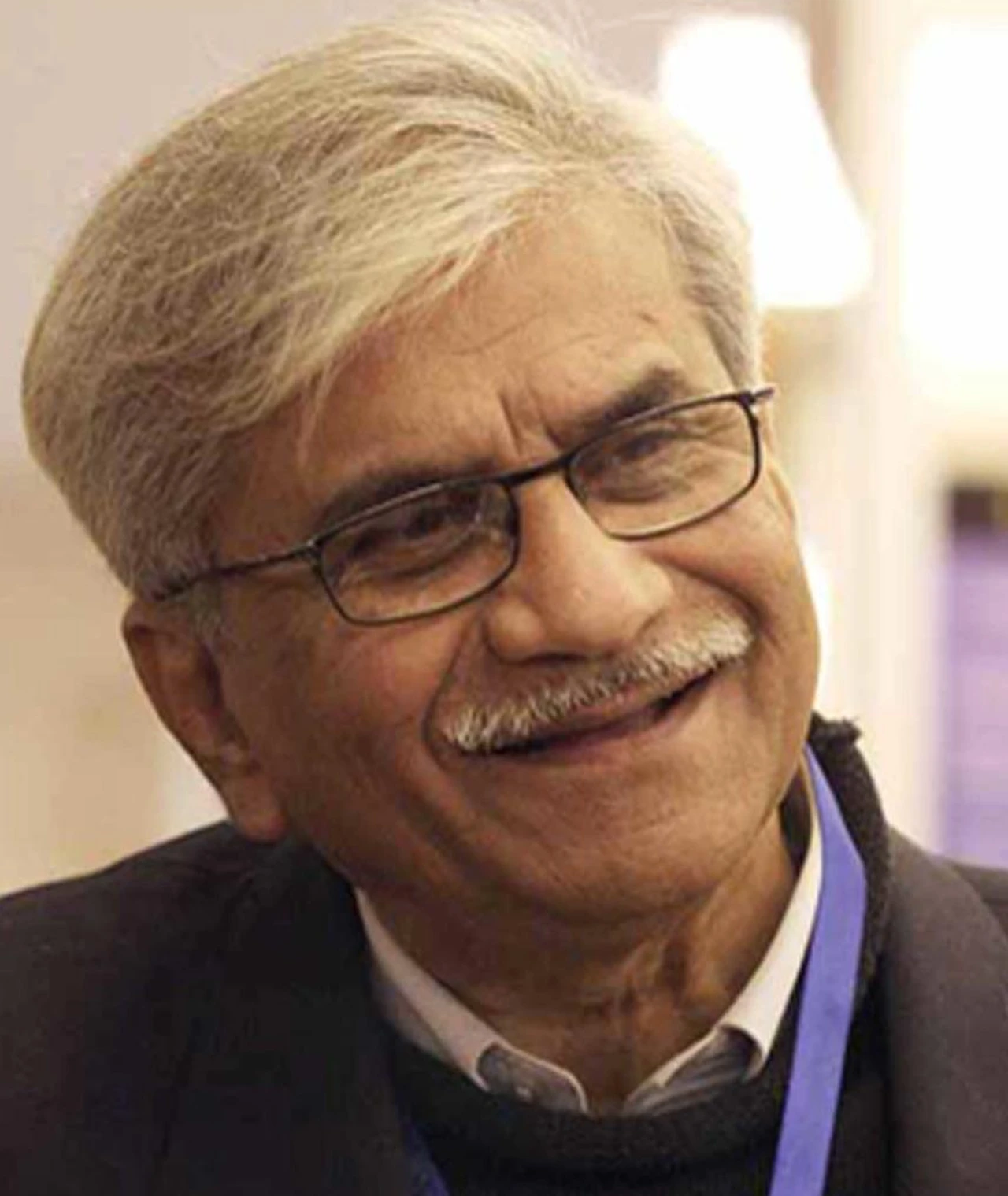
Dr. Jabbar Razak Patel (born 23 June 1942) is among the most significant figures of the parallel cinema movement in Marathi, an artist whose career has bridged the experimental Marathi stage and a body of feature films distinguished by their political seriousness, formal ambition, and humanist sympathies. Trained originally as a paediatrician, Patel came to direction through the theatre, and his most celebrated stage work, the 1973 production of Vijay Tendulkar’s Ghashiram Kotwal, is regarded as a landmark of modern Indian theatre. The same restless intelligence that animated his stagecraft carried into the cinema, where, across a relatively small but unusually weighty filmography, he reshaped the expressive possibilities of Marathi film.
Patel’s reputation rests on a sequence of films that engaged directly with the political and social life of Maharashtra and of India more broadly. His debut feature, Samna (1974), a study of power in the state’s sugar co-operatives, was selected for the Berlin International Film Festival and announced the arrival of a director willing to confront the machinery of provincial politics. The films that followed—Jait Re Jait (1977), Sinhasan (1979), and Umbartha (1982)—consolidated his standing as a filmmaker of conscience, each attentive to a different register of Indian experience: tribal life and myth, the corrosions of electoral politics, and the awakening of a woman seeking a vocation beyond the household.
Working frequently with the writer Vijay Tendulkar and with a remarkable company of actors that included Smita Patil, Mohan Agashe, Nilu Phule, Shriram Lagoo and a young Nana Patekar, Patel cultivated an ensemble idiom in which performance, music and political argument were tightly interwoven. His later career turned increasingly toward biography and cultural documentation, culminating in the monumental English-language feature Dr. Babasaheb Ambedkar (2000), with Mammootty in the title role, a project of national scope that won the National Film Award for Best Feature Film in English.
Among the many honours Patel has received are seven National Film Awards, the Sangeet Natak Akademi Award (1978), and the Padma Shri (1982), India’s fourth-highest civilian decoration; in 2005 he was conferred the V. Shantaram Award, Maharashtra’s highest honour in cinema. Beyond his own films, he has been a tireless institution-builder, founding the Pune International Film Festival in 2002 and serving as its festival director, thereby shaping the wider ecology of film culture in western India.
Life and Early Work
Jabbar Patel was born on 23 June 1942 in Pandharpur, in the Bombay Presidency of British India, in what is today the state of Maharashtra. His father was employed with the Indian Railways, and the family—by Patel’s own recollection the only Muslim household in a predominantly Hindu and Brahmin neighbourhood of Solapur—lived amid a closely knit community whose festivals and rituals formed part of his earliest experience. He has spoken of how his family’s courtyard was used for Ganesh festival celebrations, an emblem of the syncretic milieu in which he was raised and which would later inform the cultural breadth of his work.
Patel received his early schooling at the Haribhai Deokaran High School in Solapur. During these years he lodged in the home of Shriram Pujari, an influential local personality whose residence was a gathering place for figures from the Marathi theatre world. Exposure to these visitors gave the young Patel an early and intimate acquaintance with the practice of drama. He began acting while still in elementary school, and his performances—in a high-school staging concerning the Chapekar brothers, in the silent drama Hadacha Zunzar Aahes Tu, and as Shyam in Tujha Aahe Tujpashi during his college years—were widely appreciated.
Patel pursued medicine rather than the arts as his formal profession, qualifying as a doctor with a specialisation in paediatrics from the B. J. Medical College in Pune. Together with his wife, a gynaecologist, he ran a clinic in Daund, near Pune, and the couple have two daughters. That Patel sustained a medical practice alongside, and at times in tension with, his theatrical and cinematic vocation lends his career a distinctive doubleness; he remained, in the public imagination, “Dr. Jabbar Patel,” the physician who became one of the conscience-keepers of Marathi art.
His decisive entry into serious theatre came through the Progressive Dramatic Association (PDA) of Pune, the experimental company founded by Bhalba Kelkar. Within the PDA, Patel both acted and directed, and his staging of Vijay Tendulkar’s Ashi Pakhare Yeti proved a notable commercial success. In 1972, however, Patel and a group of collaborators—among them the actor Mohan Agashe and the playwright Satish Alekar—broke away from the PDA over differences concerning the staging of a new and incendiary production, Tendulkar’s Ghashiram Kotwal. The dissidents founded a new collective, the Theatre Academy, which would become one of the most consequential theatre groups of post-independence India.
Patel’s 1973 production of Ghashiram Kotwal, a savage parable of power, complicity and political manipulation set in the Peshwa court of eighteenth-century Pune, fused folk performance idioms—particularly the rhythms of the Maharashtrian devotional and dramatic traditions—with a sharply modern political vision. The production drew controversy as well as acclaim and is today regarded as a classic of modern Indian theatre. The Theatre Academy followed it with Teen Paishacha Tamasha (1974), an adaptation of Bertolt Brecht’s The Threepenny Opera that translated Brechtian technique into the indigenous tamasha form. This grounding in politically engaged, formally adventurous theatre would prove the seedbed of Patel’s cinema.
Filmmaking
Patel made his transition to cinema in 1974 with Samna (“Confrontation”), written by Vijay Tendulkar and starring Nilu Phule, Shriram Lagoo, Mohan Agashe and Smita Patil. Set among the sugar co-operatives of rural Maharashtra—institutions that doubled as the power base of the state’s political establishment—the film staged a moral and ideological duel between a cynical, all-powerful local boss and an idealistic, dishevelled outsider. Samna was selected for the 25th Berlin International Film Festival, a rare international distinction for a Marathi film of its era, and it won the National Film Award for Best Feature Film in Marathi. Its arrival signalled that Marathi cinema could sustain a politically literate art cinema of the first rank.
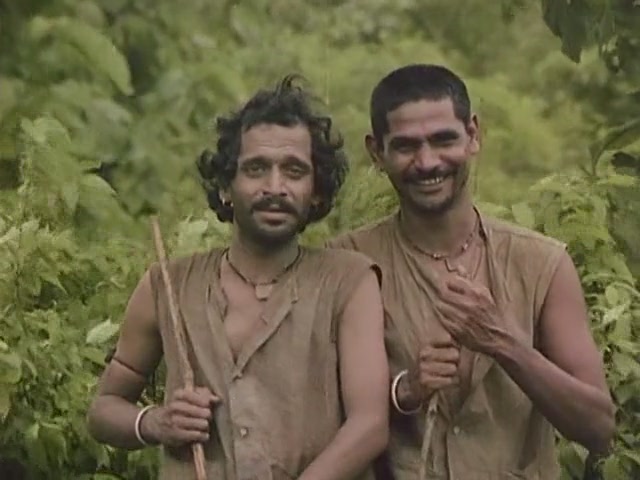
In 1977 Patel directed Jait Re Jait (“Conquer, O Conqueror”), a film of strikingly different texture. Adapted from the literary material of the poet N. D. Mahanor and scored by Pandit Hridaynath Mangeshkar, it told the story of the Thakar tribe of Maharashtra through the figure of a honey-gatherer drawn to a hive at the summit of a mountain, his quest interwoven with desire, ritual and the rhythms of tribal life. With its large complement of songs—often cited as among the richest musical sequences in Indian cinema—the film achieved a rare synthesis of ethnographic attention and lyrical abstraction. It too was honoured with the National Film Award for Best Feature Film in Marathi and remains a milestone of the Indian musical film. Mohan Agashe and Smita Patil played the central roles.
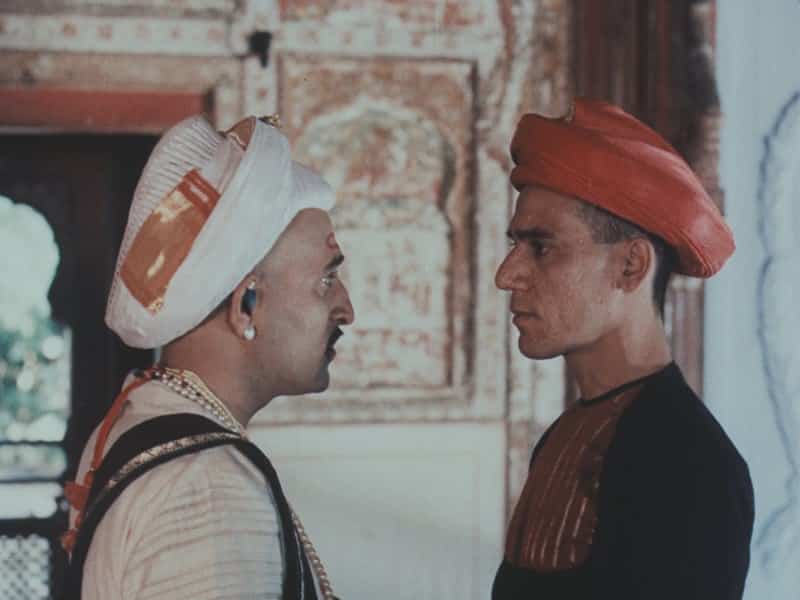
Patel returned to the terrain of politics with Sinhasan (“Throne,” 1979), adapted from two novels by the journalist Arun Sadhu. A panoramic study of political corruption, factionalism and the contest for the chief-ministership of Maharashtra, the film deployed a montage-driven structure and an enormous cast—reportedly some thirty-five characters—to render the dizzying churn of state politics as seen partly through the eyes of a journalist sliding toward breakdown. Featuring Nilu Phule, Shriram Lagoo, Reema Lagoo and a young Nana Patekar, Sinhasan has often been described as Marathi cinema’s own drama of thrones, and it won the Maharashtra State Film Award for Best Film.
His next major work, Umbartha (“The Threshold,” 1982), is among his most enduring achievements. Smita Patil played Sulabha, a woman who leaves her settled domestic life to take up the superintendency of a women’s reform home, only to confront institutional rot, social hostility and the personal cost of her independence. Girish Karnad appeared opposite her. The 29th National Film Awards recognised it as the Best Feature Film in Marathi, citing it as a sincere cinematic statement on a woman seeking to establish her identity through a career even at the risk of estrangement from her family. Released in a Hindi version as Subah, the film became a touchstone of feminist cinema in India and one of the defining performances of Patil’s career.
Patel worked in Hindi with Musafir (1986) and continued through the following decade with films that retained his characteristic moral seriousness. Ek Hota Vidushak (“There Was a Jester,” 1992), developed in collaboration with the celebrated writer and humourist P. L. Deshpande, examined the life and compromises of a tamasha performer, drawing once more on Maharashtra’s folk-performance traditions; it received the National Film Award for Best Feature Film in Marathi. Mukta (1994) confronted questions of caste and reconciliation and was awarded the Nargis Dutt Award for Best Feature Film on National Integration.
The most ambitious undertaking of Patel’s later career was Dr. Babasaheb Ambedkar (2000), a large-scale English-language biographical feature on the jurist, social reformer and principal architect of the Indian Constitution. Mammootty took the title role, with Nitin Chandrakant Desai as art director. Jointly funded by the Ministry of Social Justice and Empowerment and the Government of Maharashtra and produced through the National Film Development Corporation, the film was made on a substantial budget and subsequently dubbed into several Indian languages to reach the widest possible audience. It won the National Film Awards for Best Feature Film in English, Best Actor for Mammootty, and Best Art Direction, and stands as one of the most significant attempts in Indian cinema to render the life of Ambedkar on screen.
Alongside his features, Patel built a substantial body of non-fiction and biographical film. He directed documentaries on political and cultural figures and subjects of Maharashtra, and in his later years turned to portraits of musicians and statesmen, including Hans Akela, a film on the vocalist Kumar Gandharva that received the National Film Award for Best Biographical Film, and Antardhwani, on the santoor maestro Pandit Shivkumar Sharma. His feature Yashwantrao Chavan: Bakhar Eka Vaadalaachi (2014) returned to the political biography, chronicling the life of the Maharashtrian statesman Yashwantrao Chavan. Across these projects, Patel also contributed as a lyricist, having written the words to a song in Samna, and remained a guiding presence in the institutions of Indian film.
The Cinema of Jabbar Patel
The cinema of Jabbar Patel is best understood as an extension of his theatre: politically committed, ensemble-driven, and formally exploratory. Where much of popular Indian cinema sought escape, Patel’s films turned insistently toward the structures of power—co-operative, electoral, patriarchal, and caste-based—that govern ordinary lives. His collaborations with Vijay Tendulkar gave his early work a dramaturgical density rare in Indian film, while his long association with actors such as Smita Patil, Mohan Agashe, Nilu Phule and Shriram Lagoo lent his films a continuity of performance style rooted in the rigour of the modern Marathi stage.
Patel’s formal choices were never merely decorative. The montage architecture of Sinhasan, the lyrical, song-saturated structure of Jait Re Jait, and the spare, observational realism of Umbartha each answered to the specific demands of their subject. He drew freely on Maharashtra’s folk and devotional performance traditions—tamasha, the rhythms of kirtan and lavani—integrating them not as spectacle but as expressive resource. In this synthesis of indigenous form and modern political consciousness lies much of his originality.
Key Themes
The Anatomy of Power. From the sugar-co-operative boss of Samna to the warring factions of Sinhasan and the manipulations of Ghashiram Kotwal on stage, Patel returned repeatedly to the mechanics of political power—how it is accumulated, performed, corrupted and resisted. His films treat provincial and state politics not as backdrop but as the central drama of modern Indian life.
Women’s Autonomy. In Umbartha above all, Patel placed at the centre of his cinema a woman’s struggle for vocation, dignity and self-definition against the pressures of family and society. The film became a landmark of feminist cinema in India, and the theme of female agency recurs as one of his most humane preoccupations.
Caste, Marginality and Social Justice. Whether through the tribal world of Jait Re Jait, the questions of caste and integration in Mukta, or the monumental life of B. R. Ambedkar, Patel’s cinema gave sustained attention to those at the margins of Indian society and to the constitutional and moral struggle for their emancipation.
Folk Tradition and Modernity. Patel consistently drew on Maharashtra’s living traditions of performance—tamasha, devotional music, tribal song—and set them in dialogue with modern, often Brechtian, dramatic technique, producing a cinema at once rooted and contemporary.
Biography and Cultural Memory. In his later career Patel turned to the documentation of lives that shaped Indian public and cultural life—Ambedkar, Kumar Gandharva, Shivkumar Sharma, Yashwantrao Chavan—treating biography as an act of national and regional remembrance.
Selected Filmography
Samna (1974) — Patel’s debut feature, written by Vijay Tendulkar, a confrontation between a corrupt sugar-co-operative strongman and an idealistic outsider. Selected for the Berlin International Film Festival and awarded the National Film Award for Best Feature Film in Marathi, it inaugurated his political cinema.
Jait Re Jait (1977) — A musically luxuriant study of the Thakar tribe centred on a honey-gatherer’s mountain quest, scored by Pandit Hridaynath Mangeshkar. A milestone of the Indian musical film and winner of the National Film Award for Best Feature Film in Marathi.
Sinhasan (1979) — Adapted from Arun Sadhu’s novels, a montage-driven panorama of political corruption and the contest for Maharashtra’s chief-ministership, with a vast ensemble cast. Winner of the Maharashtra State Film Award for Best Film.
Umbartha (1982) — Smita Patil as a woman who leaves home to run a women’s reform institution, confronting social hostility and personal cost. Best Feature Film in Marathi at the National Film Awards and a defining work of feminist cinema; released in Hindi as Subah.
Ek Hota Vidushak (1992) — Developed with the writer P. L. Deshpande, a portrait of a tamasha jester and the compromises of an artist’s life. National Film Award for Best Feature Film in Marathi.
Mukta (1994) — A drama engaging questions of caste and reconciliation, awarded the Nargis Dutt Award for Best Feature Film on National Integration.
Dr. Babasaheb Ambedkar (2000) — An epic English-language biographical feature with Mammootty as the constitutional architect and social reformer. Winner of National Film Awards for Best Feature Film in English, Best Actor and Best Art Direction.
Hans Akela (2006) — A biographical film on the classical vocalist Kumar Gandharva, recipient of the National Film Award for Best Biographical Film.
Yashwantrao Chavan: Bakhar Eka Vaadalaachi (2014) — A late biographical feature chronicling the life of the Maharashtrian statesman Yashwantrao Chavan.
Legacy
Jabbar Patel occupies a central place in the history of Marathi cinema and of the broader Indian parallel-cinema movement. At a moment when serious, socially engaged filmmaking was reshaping Indian cinema through figures such as Shyam Benegal, Govind Nihalani and Mrinal Sen, Patel gave Marathi film a national and international visibility it had rarely enjoyed since the era of V. Shantaram. Films such as Samna, Sinhasan and Umbartha demonstrated that a regional cinema could engage the largest questions of Indian public life without sacrificing artistic ambition.
His influence extends well beyond his own filmography. Through the Theatre Academy and his landmark production of Ghashiram Kotwal, he helped define the trajectory of modern Indian theatre and nurtured a generation of actors and writers. His enduring partnership with Smita Patil produced some of the most resonant performances in Indian cinema, and his ensemble of collaborators carried his methods into the wider currents of Marathi and Hindi film. As founder and festival director of the Pune International Film Festival from 2002 and as chairman of the Pune Film Foundation, he has shaped the institutional life of cinema in western India, fostering audiences and filmmakers alike.
Patel’s contribution has been recognised with the highest honours available to an Indian artist. He has received seven National Film Awards across his career, the Sangeet Natak Akademi Award (1978) for his work in theatre, and the Padma Shri (1982) from the Government of India. In 2005 he was awarded the V. Shantaram Award, Maharashtra’s highest cinematic honour, and he was later conferred the Filmfare Marathi Lifetime Achievement Award. These distinctions reflect not only the individual excellence of his films but his stature as a custodian of Marathi cultural life.
Assessed as a whole, Patel’s achievement lies in his fusion of the physician’s moral seriousness, the theatre director’s command of performance, and the political intellectual’s engagement with power and justice. He brought to Marathi cinema a conscience and a craft that expanded its horizons, and in doing so secured for himself a lasting place among the foremost Indian filmmakers of the parallel-cinema generation. His films remain reference points for students of Indian cinema, frequently revisited as classics that continue to illuminate the political and social fabric of the country.