ALBERT PINTO KO GUSSA KYOON AATA HAI [What Makes Albert Pinto Angry?]
Saeed Akhtar Mirza
India. Hindi. 1980. 110 min
Cast : Naseeruddin Shah, Shabana Azmi, Smita Patil
Introduction
The title asks a question, and the film declines to answer it in the terms its hero would accept. Albert Pinto, a garage mechanic in the Bombay of the late 1970s, is angry from the first reel. His anger points the wrong way. He is furious with the mill workers who down tools, with the union men who organise them, with the shabbiness of the chawl where his family lives, and with everything except the arrangement of power that produces that shabbiness. Saeed Akhtar Mirza's second feature takes that misdirected fury and follows it, without hurry, until it turns to face its cause. The film was certified in Bombay on 6 May 1980 under certificate U-93532, seven reels of 35mm colour stock running 3,116 metres. It lasts 110 minutes.
Made while the mills of central Bombay were sliding towards the strike of January 1982, the film reads the mood of Girangaon through a single household. Its subject is the slow work of persuasion that a labour dispute performs on the mind of a man who begins by despising it. Mirza gave the part to Naseeruddin Shah, who plays Albert as a man permanently braced for insult, combing his hair with the care of someone who believes grooming can buy him entry to a class that will never admit him. Around that performance the director builds a study of aspiration as a form of self-harm. The harder Albert works to resemble his wealthy customers, the more thoroughly he betrays the people who share his conditions. The film holds that argument without turning its hero into a lesson.
Cast
- Naseeruddin Shah - Albert Pinto
- Shabana Azmi - Stella D'Costa
- Smita Patil - Joan Pinto
- Dilip Dhawan - Dominic Pinto
- Sulabha Deshpande - Mrs. Pinto, Albert's mother
- Arvind Deshpande - Mr. Pinto, Albert's father
- Rohini Hattangadi - Vivek's wife
- Achyut Potdar - Chandumal Potdar (mill owner)
- Mushtaq Khan - The Lecherous Shopper
- Om Puri - Madhu (mechanic)
Crew
- Direction - Saeed Akhtar Mirza
- Story - Saeed Akhtar Mirza
- Cinematography - Virendra Saini
- Music - Bhaskar Chandavarkar, Manas Mukherjee
- Editing - Renu Saluja
- Production - Saeed Akhtar Mirza

Background and Production
Mirza was born in Bombay on 30 June 1943, the son of Akhtar Mirza, who wrote Naya Daur (1957) and Waqt (1965). He worked in advertising before joining the Film and Television Institute of India in Pune, from which he graduated in direction in 1976. Ritwik Ghatak taught there, and his sense of cinema as a public argument marked the younger man. Mirza spent his first two years out of the institute on short documentaries, among them Slum Eviction (1976) and Urban Housing (1977). His first feature, Arvind Desai Ki Ajeeb Dastaan (1978), examined the paralysis of a rich trader's idle son and won the Filmfare Critics Award for Best Movie. Albert Pinto turned the camera the other way, towards a poor man's striving son.
Mirza produced the film under his own banner, Saeed Mirza Productions, with backing from the Film Finance Corporation, the state body that funded much of the parallel movement before it was folded into the National Film Development Corporation in 1980. The writing credit is disputed. IMDb lists Hriday Lani and Kundan Shah alongside Mirza; the Cinemaazi record maintained by the Indian Cinema Heritage Foundation names Mirza alone as writer, with dialogue by Madhosh Bilgrami and lyrics by Bilgrami and Lani. Virendra Saini shot the film. Renu Saluja cut it. Manas Mukherjee wrote the score, Vinay Shrivastava and Jagmohan Anand recorded the sound, with Mangesh Desai on the mix. Ad-Labs processed the negative. Shooting took place in Bombay.
The cast reads now like a register of the parallel movement at its height. Shabana Azmi plays Stella D'Costa, the girlfriend who wants Albert to grow up. Smita Patil plays his sister Joan, whose disability and the leering she meets across a shop counter run alongside her brother's humiliations. Dilip Dhawan plays the younger brother Dominic, who drifts into a gang. Sulabha Deshpande and Arvind Deshpande, both from the Marathi stage, play the parents. Om Puri appears as Madhu, a fellow mechanic, Achyut Potdar as the mill owner Chandulal Potdar, and Rohini Hattangadi as the wife of the businessman Vivek. Mirza set the story inside Bombay's Catholic working class and later explained the choice with unusual candour: at that stage of his career he did not have the courage to put his questions about Indian minorities to the Muslim community he knew best. He came to that nine years later with Salim Langde Pe Mat Ro.

Story
Albert repairs cars for the rich and has absorbed their view of the world along with their business. His clients tell him that good workers never strike, that agitation is the trade of idlers, and he believes them because belief flatters his hope of rising. He dreams of a garage of his own and dresses with fastidious pride. His father works in a textile mill and is committed to the union. Joan sides with the father. Dominic is arrested by the police and afterwards refuses Albert's offer of help in finding work. A visit to the house of the businessman Vivek, whom Albert counts as a friend, shows him precisely where he stands. The plot supplies no grand turning point, only an accumulation of pressure.
The break comes when goons hired by the mill owners send his father home injured one night. Albert's borrowed opinions give way. In a cinema soon afterwards, a filmed address by a prominent businessman repeats the lies Albert has been living on, and he shouts the screen down until the ushers throw him out of the hall. His father tells him about the long years of keeping quiet about the misery around him, in the belief that silence was the road to a better life, and about the point at which he had to speak. The mill owners keep up the pressure and the workers hold out. By the close Albert is no calmer than he was at the start. His fury has found its target.
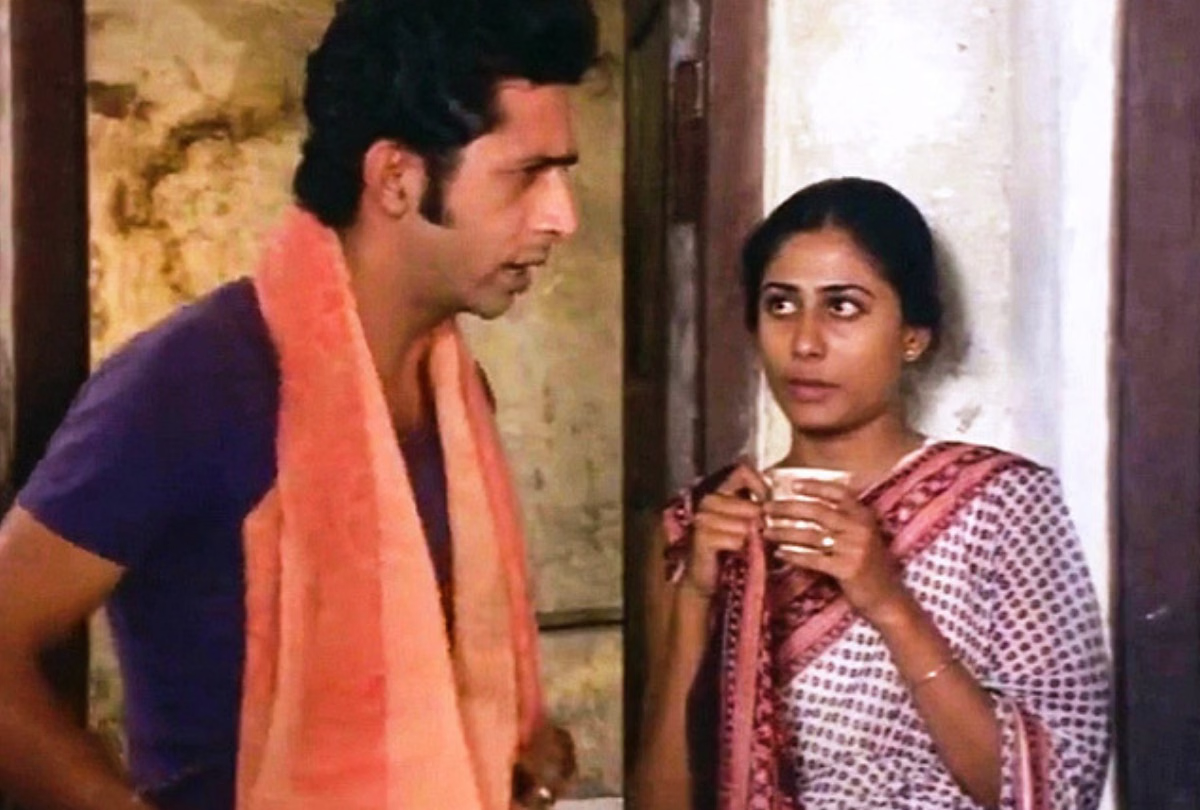
Naseeruddin Shah and Smita Patil in Albert Pinto Ko Gussa Kyoon Aata Hai? (1980)
What the film examines beneath the story is the manufacture of consent. Albert's contempt for strikers is not native to him. It has been supplied, drip by drip, by employers who profit from his believing it. Mirza shows how the poor can be recruited to police one another, and how the promise of advancement keeps a man loyal to those who exploit him. The anger of the title is a moral instrument rather than a temperament. It is real from the first scene and ignorant, and the film's business is to educate it.
Running alongside that argument is a study of belonging. As a Catholic in a Hindu-majority city, Albert already stands slightly outside the national story, and his craving to assimilate upward is bound to a craving to be seen as respectable. Stella's family talks of Canada. Their disillusionment with India is the same wound as Albert's, dressed differently: they plan to leave, he plans to climb. The household's Catholicism, its statues and its Sunday clothes, is filmed from the inside, as lived texture. Class and faith are held in one frame, each sharpening the other.

Direction and Craftsmanship
Mirza directs with a documentarian's patience and a polemicist's clarity of aim. He lets scenes run at the pace of ordinary talk, then lands a point without underlining it. The garage and the chawl are real places with weather and noise in them, and so is the road outside the mill gates. Virendra Saini's photography keeps to available light and unfussy framing, so that Shah's face, forever adjusting itself for an audience of employers, does most of the expressive work. Renu Saluja's cutting resists the temptation to hurry towards the father's beating. The film earns its climax by staying a long time inside Albert's complacency first.
The performances anchor everything. Shah gives Albert a physical vocabulary of pride and unease: the flick of the comb, the too-eager handshake, the smile held a beat too long. Azmi plays Stella as the film's principle of reality, impatient with his fantasies because she wants him awake. Patil has fewer scenes and uses them hard, and Joan takes a shopper's leering with a flatness that says she has done it a hundred times before. The Deshpandes bring the weight of the Marathi stage to the parents. Manas Mukherjee's score is used sparingly, and the traffic and machinery of Bombay carry most of the atmosphere. The cinema-hall scene is the best single piece of construction in the film, because the lie Albert finally cannot swallow reaches him in the one place he goes to be flattered.

The Cinema of SaEED AKHTAR MIRZA
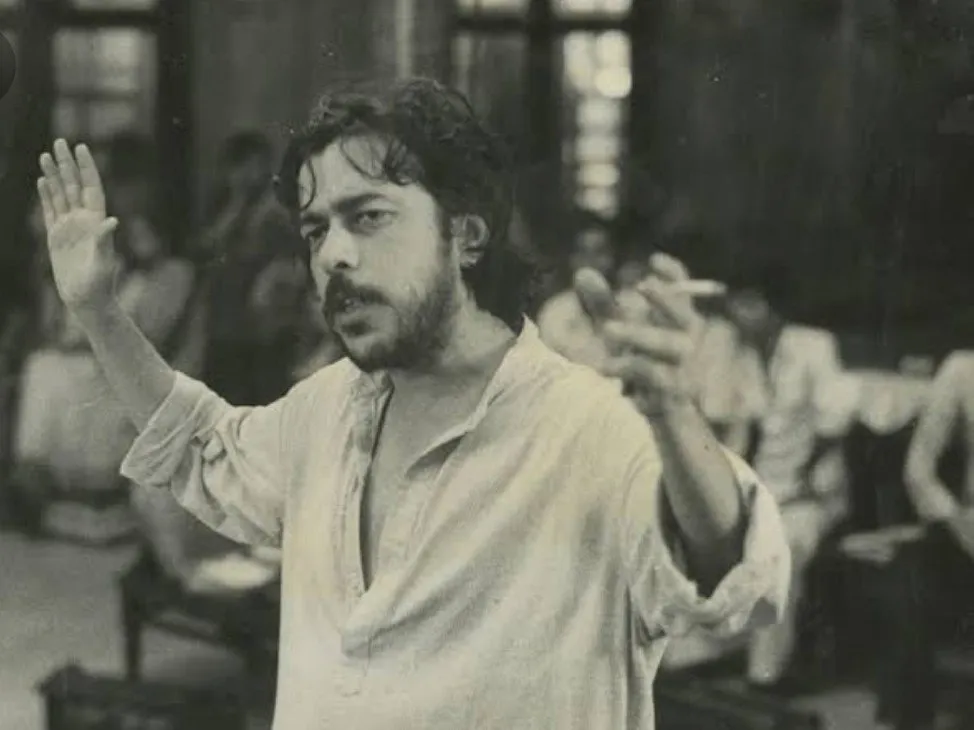
Albert Pinto belongs to a body of films unusually consistent in its concerns. Across four decades Mirza returned to the Indian city as a place of exclusion. Arvind Desai Ki Ajeeb Dastaan had dissected the guilt of privilege, and Albert Pinto answered it from below. Mohan Joshi Hazir Ho! (1984) turned to the courts and the attrition of two old tenants fighting a landlord, and won the National Film Award for Best Film on Family Welfare. Salim Langde Pe Mat Ro (1989) followed a young Muslim petty criminal, played by Pawan Malhotra, through a Bombay hardening along communal lines, and took the National Film Award for Best Feature Film in Hindi. Naseem (1995), set in the months between June and December 1992, put Kaifi Azmi opposite Mayoori Kango as a dying grandfather and his granddaughter while the family watches the Babri Masjid crisis on television, and brought Mirza National Film Awards for direction and screenplay.
Mirza's method separates him from the mainstream of the parallel cinema even where he shares its politics. Shyam Benegal built classical dramas of feudal power. Mani Kaul pursued a rarefied formalism. Mirza worked closer to reportage, with the argumentative energy of a pamphlet behind him, and he was never afraid of didacticism. His best films escape it through the specificity of their characters. After Naseem he stopped making features for a long stretch, travelled around India with a video camera, and wrote the autobiographical Ammi: Letter to a Democratic Mother, published in 2008. His account of the break is blunt. "The demolition of the Babri Masjid was the last straw," he said. "Naseem was almost like an epitaph. After the film, I had really nothing to say." Albert Pinto sits near the head of that career because it states the abiding theme in its plainest form.
Reception and Legacy
The film won the Filmfare Critics Award for Best Movie, presented in 1981 for the films of 1980, the second such prize in a row for Mirza after Arvind Desai Ki Ajeeb Dastaan. It reached its audience through film societies and institutional screenings, and only lightly through the commercial circuit. Its reputation grew over the following decades. On 18 January 1982, twenty months after the film was certified, some 250,000 workers in sixty-five Bombay textile mills stopped work under the leadership of Datta Samant. The stoppage dragged on into October 1983 and left more than 150,000 people without jobs as mills closed or moved out of the city. Albert Pinto was finished before that collapse and reads now as a report on the mood that produced it.
The title passed into common speech as shorthand for principled fury, quoted and parodied well beyond the audience that saw the film. Soumitra Ranade directed an official remake under the same title, with Manav Kaul, Nandita Das and Saurabh Shukla in the leads; it premiered at the first Singapore South Asian Film Festival in September 2017 and reached Indian cinemas on 12 April 2019. Few films of the parallel movement have been revived that way. Kireet Khurana and Padmakumar Narasimhamurthy made a documentary portrait of the director, Saeed Mirza: The Leftist Sufi, released in 2016. The 1980 film can be watched in full on YouTube.
Commentary
More than forty years on, the central perception holds, because the mechanism the film describes has only grown more efficient. Albert is persuaded to identify upward, to see his own interests in the mirror of his employers instead of in the faces of the men beside him at the garage. That persuasion is the ordinary condition of aspiration in an unequal society. The film neither flatters its hero nor condescends to him. It grants that his hunger for a better life is legitimate, and it locates the tragedy in that hunger's capture by people who mean him no good.
The weakness lies in the machinery of the conversion. Albert's education arrives by way of a beating administered to his father, which is to say the film reaches for a physical assault at the moment when its own argument concerns something quieter and much harder to stage, the daily manufacture of belief. Everything before the beating is patient and observed. The turn itself is a plot device, and Mirza leans on it because he has not yet found a form for the slower change he actually believes in. Salim Langde Pe Mat Ro handles that problem better nine years later. The dialogue in the last third also tips towards the lecture, and the father's speech about his years of silence is addressed past the son, to the audience.
What keeps the film alive is its refusal of consolation. Albert's awakening changes nothing in the balance of power. The mills will close, the owners will prevail, and his fury, now clear-eyed, has no obvious outlet. Mirza declines to pretend otherwise, and that honesty is the source of the film's seriousness. It offers a clarification, and a clarification is a small and durable thing to be given. In a cinema much devoted to wish-fulfilment, Albert Pinto Ko Gussa Kyoon Aata Hai holds that the beginning of dignity is understanding what has been done to you and by whom.
Awards & Honours
- Won, Best Movie, Filmfare Critics Award, presented 1981 for the films of 1980
Reference
- Albert Pinto Ko Gussa Kyoon Aata Hai (1980 film) – Wikipedia
- Albert Pinto Ko Gussa Kyoon Aata Hai (1980), film record with credits, censor certificate and synopsis – Cinemaazi, Indian Cinema Heritage Foundation
- Albert Pinto Ko Gussa Kyon Ata Hai (1980), full cast and crew – IMDb
- Albert Pinto Ko Gussa Kyon Aata Hai (Saeed Akhtar Mirza) 1980 – Indiancine.ma
- Saeed Akhtar Mirza – Wikipedia
- Saeed Akhtar Mirza, profile by Karan Bali – Upperstall.com
- Albert Pinto Ko Gussa Kyon Aata Hai / What Makes Albert Pinto Angry, Look Back In Anger – Movie Mahal, 23 December 2010
- Albert Pinto Ko Gussa Kyoon Aata Hai (2019 film) – Wikipedia
- Great Bombay textile strike – Wikipedia
- Naseem (film) – Wikipedia