
Prakash Jha
- Role
- Filmmaker
- Works in
- Hindi
- Born
- 27 February 1952Bettiah
- On Art House Cinema
- No films yet
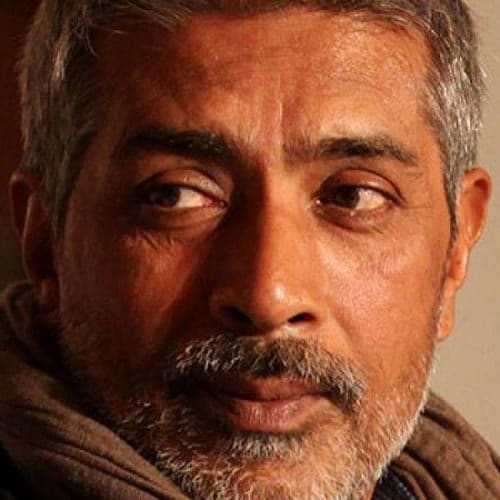
Prakash Jha has spent forty years filming the politics of Bihar, first in documentaries and spare early features and later in Hindi dramas built around stars. His second feature, Damul (1984), won the National Film Award for Best Feature Film. It is about a bonded labourer in a Bihar village. Two decades later Gangaajal (2003) and Apaharan (2005) went after police violence and the kidnapping trade in the same state, and Raajneeti (2010) retold the Mahabharata as an election campaign.
His National Film Awards are spread across fiction and non-fiction. He won Best Non-Feature Film for Faces After the Storm and for Sonal (2002), Best Arts/Cultural Film for Kudiattam, Best Film on Other Social Issues for Gangaajal and Best Screenplay for Apaharan. He has produced other directors' films, among them Lipstick Under My Burkha (2017). Since 2020 his largest audience has come from Aashram, the streaming series he created and directed.
Life and Early Work
Jha was born on 27 February 1952 in Bettiah, in the West Champaran district of Bihar, and grew up on the family farm at Barharwa. His parents were Tej Nath Jha and Vijaya Jha. Champaran is the district where Gandhi began his first satyagraha in India in 1917, and the title of Jha's 2013 film borrows the word. He was sent to Sainik School Tilaiya and then to Kendriya Vidyalaya No. 1 in Bokaro Steel City. He began a BSc (Honours) in Physics at Ramjas College, Delhi. He left after a year.
He went to Bombay meaning to be a painter and was preparing for the Sir J. J. School of Art when he happened to watch a day's shooting of Dharma (1973). That was enough to change his plans. He finished a degree at K. C. College in Mumbai and in 1973 joined the Film and Television Institute of India in Pune to study editing. A student agitation closed the institute for a time, and rather than wait he went back to Bombay. He never completed the course.
From 1974 he worked independently, and his first documentary, Under the Blue, followed in 1975. Faces After the Storm, about the communal riots at Bihar Sharif, was banned within days of its release. It then won the National Film Award for Best Non-Feature Film at the 1984 awards. Aarakshan would run into a similar official objection twenty-seven years later.
Filmmaking
His first feature, Hip Hip Hurray (1984), was a school sports drama written by Gulzar, with Raj Kiran and Deepti Naval. Jha married Deepti Naval in 1985. They divorced in 2002.
Damul, released the same year, made his name. Its labourer is bound to a landlord by a debt he cannot clear, and the landlord treats his vote as part of the debt. The film won the National Film Award for Best Feature Film and the Filmfare Critics Award for Best Film in 1985. Parinati, adapted from a story by the Rajasthani writer Vijaydan Detha, won the National Film Award for Best Costume Design in 1988. Through the late 1980s he kept making documentaries. Kudiattam, on Kerala's Sanskrit theatre tradition, won Best Arts/Cultural Film in 1987, and Looking Back won Best Industrial Documentary in 1988. He also directed the television comedy Mungerilal Ke Haseen Sapne (1989).
He moved into the mainstream in the late 1990s. After Bandish (1996) came Mrityudand (1997), with Madhuri Dixit and Shabana Azmi as village women who defy the men who run their lives. Dil Kya Kare (1999) and Rahul (2001) followed.
Gangaajal (2003) began his run of Bihar thrillers with Ajay Devgn. It drew on the Bhagalpur blindings of 1979 and 1980, in which police poured acid into the eyes of men held in custody. It won the National Film Award for Best Film on Other Social Issues. Loknayak (2004) was a film on the socialist leader Jayaprakash Narayan. Apaharan (2005), with Devgn and Nana Patekar, followed a young man pulled into the kidnapping business. Jha shared its National Film Award for Best Screenplay with Manoj Tyagi and Shridhar Raghavan and won the Filmfare Award for Best Dialogue.
The big-cast political films followed. Raajneeti (2010) put Ranbir Kapoor, Ajay Devgn, Nana Patekar and Katrina Kaif into a family feud over control of a party, with the epic's plot underneath. Aarakshan (2011), with Amitabh Bachchan, took on caste reservations in education, and it ran straight into state governments. Uttar Pradesh suspended its screening for two months on 10 August 2011, and Punjab and Andhra Pradesh followed a day later. Both of those states lifted their bans within days after review committees saw the film, and Jha took the Uttar Pradesh order to the Supreme Court. Chakravyuh (2012) moved to the Maoist insurgency and Satyagraha (2013) to the anti-corruption protests of 2011.
In Jai Gangaajal (2016) he cast himself as a compromised police officer, Bhola Nath Singh, opposite Priyanka Chopra. Pareeksha, released on ZEE5 on 6 August 2020, returned to the schooling question on a smaller scale, with Adil Hussain as a Ranchi cycle-rickshaw driver trying to get his son into a private school. Jha has also acted for other directors, as the patriarch Rattan Singh Tomar in Saand Ki Aankh (2019) and as a daily-wage labourer in Matto Ki Saikil (2022). Aashram began on MX Player in 2020, with Bobby Deol as a godman. It ran for several seasons. As a producer he backed Lipstick Under My Burkha, which the censor board refused to certify before an appeals tribunal cleared it for release.
Away from film he has stood for the Lok Sabha three times: from Bettiah as an independent in 2004, and from Paschim Champaran for the Lok Janshakti Party in 2009 and for the Janata Dal (United) in 2014. He lost each time. He chairs Anubhooti, a Bihar society working since 1991, which ran relief after the Kosi floods of 2008.
The Cinema of Prakash Jha
Key Themes
Who holds power. Jha's films are about the people who run a district and the people they run. In Damul it is a landlord. In Raajneeti it is a party family, and in Apaharan a politician who also runs a kidnapping gang.
Caste and land. From the bonded labourer of Damul to the reservation quarrel of Aarakshan, caste decides who owns land and who may study.
The police and the law. Gangaajal and Jai Gangaajal both turn on officers deciding whether to break the law to enforce it. In Gangaajal the townspeople back the officers who blind suspects. The film lets the audience feel that pull before it questions it.
Bihar on screen. Most of his features are set in Bihar or in small towns very like it. His films use Bihar's elections and its gangs as working material, and Loknayak goes back to the 1970s movement led by Jayaprakash Narayan from Patna.
Selected Filmography
Damul (1984)
A bonded labourer in rural Bihar is trapped by debt and by the landlord who controls his vote. It won the National Film Award for Best Feature Film.
Mrityudand (1997)
Madhuri Dixit and Shabana Azmi play women who resist the men who rule a feudal village. It put his village politics into a star vehicle.
Gangaajal (2003)
An honest police officer takes charge of a lawless Bihar district, where his men begin blinding suspects. It won the National Film Award for Best Film on Other Social Issues.
Apaharan (2005)
A young man rejected by the system joins a politician's kidnapping racket. It won Jha a National Film Award for Best Screenplay, shared with two co-writers.
Raajneeti (2010)
The Mahabharata recast as a fight over a political party, with a large star cast. It was one of his biggest hits.
Aarakshan (2011)
A college principal is caught in the fight over caste reservations and private coaching. Amitabh Bachchan plays him. Three state governments suspended its screening in August 2011, two of them only for a few days.
Legacy
Jha's achievement is to have carried the subject matter of the 1970s parallel cinema into the multiplex. He started where that movement worked, with documentaries and a bonded-labour film. When he moved to stars and songs, he kept its subjects. The three governments that suspended Aarakshan in 2011 treated a star vehicle as a political event. The films themselves made bonded labour, custodial violence and caste quotas topics of mainstream Hindi cinema, which had mostly avoided them.
His National Film Awards run from Best Industrial Documentary to Best Feature Film. As a producer he has used his position to back smaller films by other directors. Aashram, begun when he was 68, found him viewers born long after Damul.


