
Rituparno Ghosh
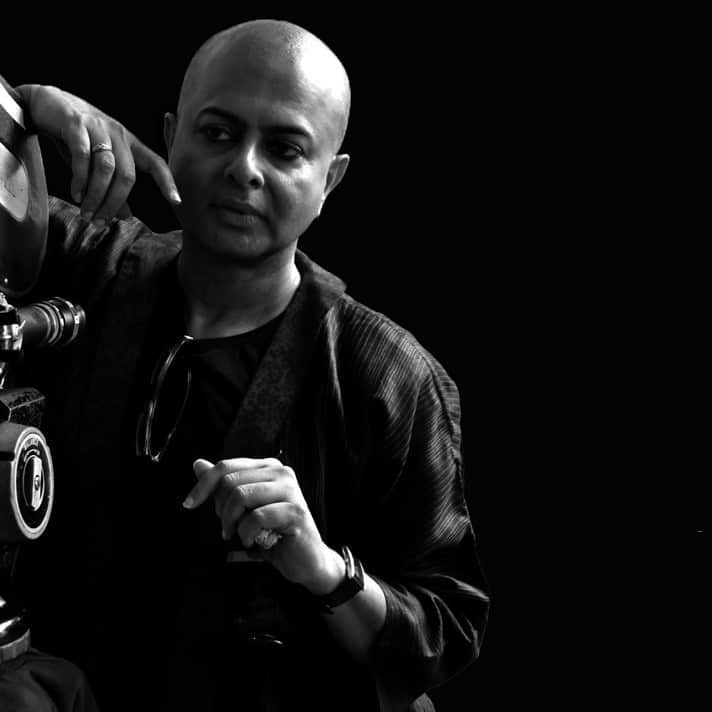
Rituparno Ghosh (1963–2013) was among the most distinguished and influential filmmakers of post-Satyajit Ray Bengali cinema, a writer-director whose elegant, literate, and emotionally exacting films restored the prestige of the regional art film and brought the educated Bengali middle class back into the cinema hall. Across roughly two decades and more than a dozen features in Bengali, Hindi, and English, he fashioned an intimate cinema of chamber drama and interior life, attentive above all to the textures of domesticity, the constraints of patriarchy, and the unspoken negotiations that structure familial and conjugal relationships. Working in the shadow of the great Bengali masters—Ray, Ritwik Ghatak, and Mrinal Sen—Ghosh nonetheless carved a distinctive idiom of his own, one that married the literary inheritance of Rabindranath Tagore to a thoroughly contemporary sensibility.
Ghosh emerged in the early 1990s, at a moment when Bengali cinema appeared to be in commercial and artistic decline, and is widely credited with engineering its revival. Beginning with the children’s film Hirer Angti (1992) and achieving national prominence with Unishe April (1994), he produced a remarkable succession of critically celebrated works—Dahan (1997), Bariwali (1999), Utsab (2000), Chokher Bali (2003), Raincoat (2004), Dosar (2006), The Last Lear (2007), and Abohomaan (2010), among others. These films won him an extraordinary tally of National Film Awards, including honours for Best Feature Film and Best Direction, and brought Bengali cinema renewed recognition at international festivals in Berlin, Locarno, Chicago, and Karlovy Vary.
Beyond his achievements as a director, Ghosh was a public intellectual and cultural figure of rare visibility. He edited the influential Bengali film magazine Anandalok and later the literary supplement Robbar, hosted celebrated television chat shows, and used his fame to articulate questions of gender and sexuality that Indian popular culture had long suppressed. In the final phase of his career he became one of the very few openly queer figures in Indian cinema, embodying in his own person, performances, and films an unapologetic exploration of androgyny, same-sex love, and the fluidity of gender. By the time of his sudden death at the age of forty-nine, he had become an icon of India’s queer community and a touchstone for a generation of filmmakers who looked to him as proof that serious, personal cinema could still command a devoted audience.
Life and Early Work
Rituparno Ghosh was born into a Bengali family in Kolkata on 31 August 1963; his birth name was Souranil Ghosh. He grew up in a household steeped in the visual and literary arts: his father, Sunil Ghosh, was a documentary filmmaker and painter, and the young Rituparno absorbed early an aesthetic education that would later inform the painterly composition and literary density of his own work. He was schooled at South Point School in Kolkata and went on to study at Jadavpur University, where he took both a bachelor’s and a master’s degree in economics—an academic formation that, while distant from filmmaking, sharpened the analytical intelligence that contemporaries would recognise in his scripts and interviews.
Ghosh’s professional life began not in cinema but in advertising. He joined the Kolkata firm Response India, where he established himself as an exceptionally gifted copywriter during the 1980s. At a time when the prevailing practice was simply to translate English and Hindi national campaigns into Bengali, Ghosh distinguished himself by conceiving advertisements directly in Bengali, crafting succinct and memorable slogans rooted in the cadences of the language and the sensibility of his middle-class audience. This apprenticeship in concision and emotional address—learning how to capture an idea and a mood in a few well-chosen words and images—proved a formative discipline, and the precision of his later cinema owed much to it.
His first move toward the moving image came at the end of the decade. In 1990 his own agency, Tele-Response, part of the Response family of companies, was commissioned to make a documentary on “Vande Mataram” for Doordarshan, the national broadcaster, giving Ghosh his earliest experience behind the camera. From this base in advertising and documentary, and nourished by a lifelong immersion in the literature of Rabindranath Tagore and the films of Satyajit Ray, he made the decisive leap into narrative filmmaking in the early 1990s—entering an industry that many had written off, and which he would do much to reinvent.

Filmmaking
Ghosh made his directorial debut in 1992 with Hirer Angti (The Diamond Ring), a children’s feature adapted from a novel by Shirshendu Mukhopadhyay. Although a modest beginning, it announced his interest in literary adaptation and his ease with actors. National recognition arrived two years later with his second film, Unishe April (1994), a taut chamber drama about the strained relationship between an acclaimed dancer and her neglected daughter, played by Aparna Sen and Debashree Roy. The film won the National Film Award for Best Feature Film and the Best Actress award, and it established at a stroke the template of much of Ghosh’s subsequent work: an intimate, dialogue-driven study of women, family tension, and the slow excavation of buried resentments.
Through the late 1990s Ghosh consolidated his reputation with a string of acclaimed films. Dahan (1997), based on a novel by Suchitra Bhattacharya, dramatised a single incident of public molestation on the streets of Kolkata and its aftermath in the lives of two women—the victim and the bystander who comes to her aid—mounting a searching critique of patriarchy and social hypocrisy; it won National Film Awards for Best Screenplay and Best Feature Film in Bengali. Bariwali (1999), the story of a lonely landlady whose life is disrupted by a film crew, earned a National Film Award for Best Actress for Kirron Kher and a NETPAC award at the Berlin International Film Festival, while Asukh (1999) won the National Film Award for Best Feature Film in Bengali. Utsab (2000), an ensemble drama of a fractured family reuniting in an ancestral home during the Durga Puja festival, brought him the National Film Award for Best Direction.
The new century saw Ghosh broaden his canvas and his language. Chokher Bali (2003), an opulent adaptation of Tagore’s novel starring Aishwarya Rai as a widow whose desire disrupts a Bengali household, won the National Film Award for Best Feature Film in Bengali and was nominated for the Golden Leopard at Locarno. The following year he directed his first Hindi feature, Raincoat (2004), a chamber two-hander loosely drawn from O. Henry’s “The Gift of the Magi” and starring Ajay Devgn and Aishwarya Rai, which won the National Film Award for Best Feature Film in Hindi. Antarmahal (2005), set in a nineteenth-century zamindari household, and Dosar (2006), a delicate black-and-white study of marital infidelity and reconciliation that brought Prosenjit Chatterjee a National Award Special Jury mention, extended his range further. In 2007 he made The Last Lear, an English-language film with Amitabh Bachchan as an ageing Shakespearean actor, which won the National Film Award for Best Feature Film in English.
Ghosh’s late period was at once his most prolific and his most personal. Shob Charitro Kalponik (2009), starring Bipasha Basu and Prosenjit Chatterjee, won the National Film Award for Best Feature Film in Bengali, while Abohomaan (2010), a reflexive drama about a filmmaker, his muse, and his family, won him a further National Film Award for Best Direction. In these same years he turned increasingly to questions of gender and sexuality, not only as a director but as a performer. He acted in Kaushik Ganguly’s Arekti Premer Golpo (Just Another Love Story, 2010) and in Memories in March (2010), and then directed and starred in Chitrangada: The Crowning Wish (2012), a loose reworking of Tagore’s dance-drama that interrogated gender identity and the longing for transformation; it received a Special Jury Award at the National Film Awards. His engagement with Tagore was sustained and deliberate: he adapted the poet’s fiction directly in Chokher Bali, Noukadubi (2011), and Chitrangada, and in 2012 made the documentary Jeevan Smriti on Tagore’s life for the Government of India’s Ministry of Culture. At the time of his death he had completed work on the detective film Satyanweshi, based on Saradindu Bandyopadhyay’s Byomkesh Bakshi stories, which was released posthumously.

The Cinema of Rituparno Ghosh
The cinema of Rituparno Ghosh is, before all else, a cinema of interiors—both architectural and emotional. His preferred setting is the domestic space of the educated Bengali middle class, the bhadralok household with its book-lined rooms, its verandahs and inner chambers, and his preferred dramatic mode is the chamber piece, in which a small number of characters confined to such a space slowly reveal the fault lines running through their relationships. Eschewing spectacle and incident, Ghosh built his films around conversation, silence, and the charged glance, trusting performance and dialogue to carry meaning. The influence of Satyajit Ray is evident in this restraint and in the literary refinement of his sensibility, yet Ghosh’s films are distinctly his own: more openly emotional than Ray’s, more preoccupied with the inner lives of women, and increasingly willing to make the unspeakable speak.
If a single thread unifies his diverse body of work, it is a sustained and sympathetic attention to those whom conventional society marginalises or silences—neglected daughters, lonely widows, betrayed wives, and, in his later films, queer subjects whose desires lie outside the heterosexual norm. Rooted firmly in middle-class values and aspirations, his films are nonetheless deeply critical of the hetero-patriarchal structures that organise that world, and the feminist sensibility evident from the outset of his career gradually broadened into an explicit and radical politics of gender and sexuality. The critic Saibal Chatterjee observed that Ghosh mixed the literary traditions of Bengal with a modern-day sensibility, transcending the confines of region, and praised the brave and empathetic treatment of alternative sexuality in his late work.
Key Themes
Family and the domestic interior. Ghosh returned again and again to the family as a site of both intimacy and confinement. Films such as Unishe April, Utsab, and Abohomaan dissect the resentments, obligations, and unspoken histories that bind parents to children and husbands to wives, locating high drama in the ordinary spaces of the home.
Women’s inner lives and the critique of patriarchy. From the dancer-mother of Unishe April to the molestation survivor of Dahan and the desiring widow of Chokher Bali, Ghosh placed women’s subjectivity at the centre of his cinema, exposing the social hypocrisies and patriarchal constraints that shape their choices with a rare empathy and precision.
Gender, sexuality, and queer identity. In his final phase Ghosh made the fluidity of gender and the legitimacy of same-sex love explicit subjects of his art. Through Arekti Premer Golpo, Memories in March, and Chitrangada, and through his own androgynous public persona, he insisted that queer relationships possess the same soulfulness and pathos as heterosexual ones.
The Tagorean inheritance. A lifelong reader and researcher of Rabindranath Tagore, Ghosh adapted the poet’s fiction in Chokher Bali, Noukadubi, and Chitrangada, invoked his presence in Asukh, and documented his life in Jeevan Smriti, weaving Tagore’s humanism and his attention to women into the fabric of his own work.
Literary adaptation and the prestige of the regional film. Drawing repeatedly on Bengali and world literature, Ghosh fashioned a cinema of literary density and visual elegance that reclaimed the art film for a middle-class audience, restoring to Bengali cinema a cultural prestige it had seemed to lose.
Selected Filmography
Unishe April (1994). A chamber drama of the fraught relationship between a celebrated dancer and her estranged daughter. Winner of the National Film Award for Best Feature Film, it established Ghosh’s reputation and the intimate, women-centred mode that would define his career.
Dahan (1997). Adapted from Suchitra Bhattacharya’s novel, the film follows a public assault and its aftermath in the lives of two women, mounting an unflinching critique of patriarchy and social hypocrisy. It won National Film Awards for Best Screenplay and Best Feature Film in Bengali.
Bariwali (1999). The poignant story of a lonely landlady whose existence is upended by a visiting film crew. It earned Kirron Kher a National Film Award for Best Actress and won the NETPAC Award at the Berlin International Film Festival.
Utsab (2000). An ensemble drama of a divided family reunited in their ancestral home during Durga Puja, surfacing buried tensions and longings. The film won Ghosh the National Film Award for Best Direction.
Chokher Bali (2003). A lavish adaptation of Tagore’s novel, starring Aishwarya Rai as a widow whose desire disrupts a household. It won the National Film Award for Best Feature Film in Bengali and competed for the Golden Leopard at Locarno.
Raincoat (2004). Ghosh’s first Hindi feature, a chamber two-hander adapted from O. Henry, starring Ajay Devgn and Aishwarya Rai. It won the National Film Award for Best Feature Film in Hindi.
Dosar (2006). A delicate black-and-white study of infidelity, guilt, and marital reconciliation, for which Prosenjit Chatterjee received a National Award Special Jury mention. It is among Ghosh’s most formally austere and emotionally precise works.
The Last Lear (2007). An English-language drama with Amitabh Bachchan as an ageing Shakespearean actor confronting the cinema. It won the National Film Award for Best Feature Film in English.
Abohomaan (2010). A reflexive drama about a filmmaker, his muse, and the disintegration of his family, which won Ghosh a further National Film Award for Best Direction and stands as a summation of his preoccupation with art and domestic life.
Chitrangada: The Crowning Wish (2012). A loose reworking of Tagore’s dance-drama, directed by and starring Ghosh, exploring gender identity and the desire for transformation. It received a Special Jury Award at the National Film Awards and was his last film released in his lifetime.
Legacy
Rituparno Ghosh died at his Kolkata residence on 30 May 2013, following a heart attack, at the age of forty-nine. His death cut short a career still in full flow and was mourned across India as the loss of one of the country’s foremost filmmakers. Over barely two decades he had accumulated one of the most decorated records in Indian cinema, winning numerous National Film Awards—for Best Feature Film, Best Direction, Best Screenplay, and across the Bengali, Hindi, and English categories—alongside recognition at international festivals including Berlin, Locarno, Chicago, and Karlovy Vary. The veteran director Mrinal Sen remarked that whenever he thought of direction the name that came to mind was Rituparno Ghosh, and predicted that his contribution to Indian cinema would be remembered forever.
Ghosh’s most consequential achievement was the revival of Bengali art cinema. Inheriting an industry widely thought to be in terminal decline, he reclaimed the educated middle-class audience for serious, literate filmmaking and, with contemporaries such as Aparna Sen and Goutam Ghose, ushered in a renaissance of Bengali cinema. He opened a new chapter in the experience of the regional film for the Bengali bhadralok, demonstrating that intimate, intelligent cinema rooted in literature and emotion could be both critically and commercially viable. A whole generation of Bengali filmmakers who followed worked in the space he had reopened.
His cultural significance extends well beyond his films. As editor of Anandalok and Robbar and as the host of popular television chat shows, he was a shaping presence in Bengali public life; and in his later years he became one of the most visible openly queer figures in Indian culture. By living and working without concealment, and by treating same-sex love and gender fluidity with dignity and seriousness in films such as Arekti Premer Golpo, Memories in March, and Chitrangada, he became an icon of India’s queer community and an early, courageous voice for sexual minorities in a deeply conservative public sphere. In this fusion of aesthetic refinement, literary depth, feminist conviction, and queer self-assertion lies the enduring importance of Rituparno Ghosh, who stands as one of the most significant Indian filmmakers of the post-Ray generation and a lasting influence on the cinema and culture of Bengal.