
Girish Karnad
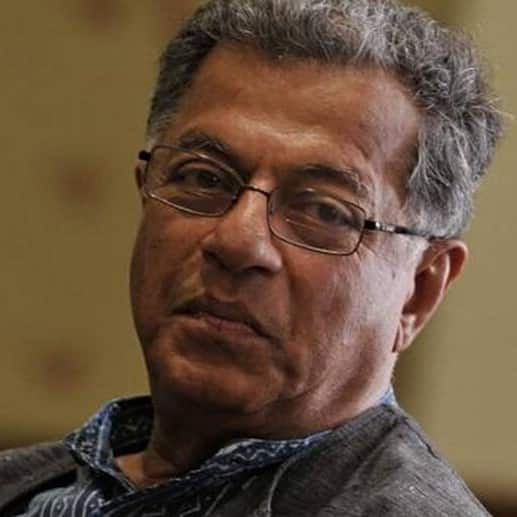
Girish Raghunath Karnad (19 May 1938 – 10 June 2019) was one of India's most versatile and consequential creative figures — a playwright, screenwriter, actor, and film director whose work reshaped both modern Indian theatre and the Kannada New Wave cinema. Over a career spanning six decades, Karnad forged a singular artistic vision rooted in the encounter between mythology, history, and the lived tensions of post-independence India.
Born into a family with deep appreciation for the performing arts, Karnad came of age in the cultural milieu of Karnataka, where his early exposure to Yakshagana and travelling Natak Mandalis formed the imaginative bedrock of his later work. A Rhodes Scholar at Oxford, he returned to India not as a filmmaker by training, but as a writer and intellectual whose theatre practice provided the formal and thematic scaffolding for his cinema.
His films — Vamsha Vriksha, Kaadu, Tabbaliyu Neenade Magane, and Ondanondu Kaladalli — are central texts of the Kannada New Wave, celebrated for their literary ambition, formal intelligence, and willingness to interrogate caste, gender, and power without melodrama or comfort. Together with B.V. Karanth and Girish Kasaravalli, Karnad formed what critics have called the "three Ks" of Kannada parallel cinema, a generation that transformed a regional industry into a major site of Indian art cinema.
Recipient of the Jnanpith Award (1998) — India's highest literary honour — as well as the Padma Shri, Padma Bhushan, and multiple National Film Awards, Karnad remains an indispensable figure in the study of Indian cultural modernity. He died in Bengaluru in 2019, leaving behind a body of work that continues to animate scholarly and artistic conversation.
Life and Early Work
Girish Raghunath Karnad was born on 19 May 1938 in Matheran, in the then Bombay Presidency, into a Saraswat Brahmin family with Konkani cultural roots. His father, Dr. Raghunath Karnad, was a medical doctor, and his mother Krishnabai was a woman of literary sensibility. His early schooling was conducted in Marathi, though the family subsequently relocated to Sirsi in Karnataka, and later to Dharwad, where Karnad would spend his formative years. It was in Dharwad that he encountered the Natak Mandalis — travelling theatre troupes — which his parents actively patronised, and developed a lifelong admiration for Yakshagana, the classical dance-drama form of coastal Karnataka.
Karnad completed his Bachelor of Arts in Mathematics and Statistics from Karnatak Arts College, Dharwad (Karnataka University) in 1958. The following year, he was awarded a prestigious Rhodes Scholarship and traveled to England to study at Lincoln and Magdalen Colleges, Oxford, graduating with a Master of Arts degree in Philosophy, Politics, and Economics in 1963. The years at Oxford proved formative in ways that exceeded academic formation: exposure to Western dramatic traditions — particularly the works of Brecht and the European theatre of the absurd — gave Karnad critical frameworks through which to re-examine the mythological and historical materials of his own cultural inheritance.
Upon returning to India in 1963, Karnad joined the Oxford University Press in Madras (now Chennai), where he worked for seven years while simultaneously becoming deeply involved with the city's amateur theatre scene, particularly The Madras Players. It was during this period that his first major plays were written and staged. Yayati (1961), composed while Karnad was only twenty-three, reworked characters from the Mahabharata to explore the ethics of self-interest and sacrifice. The play was immediately translated and performed across several Indian languages. Tughlaq (1964), his most celebrated play, used the reign of the fourteenth-century Sultan Muhammad bin Tughluq as an allegory for post-Nehruvian disillusionment, and established Karnad as one of the most significant playwrights of his generation. In 1970, he resigned from the Oxford University Press to devote himself entirely to writing, a decision that also marked his entry into cinema.
Filmmaking
Karnad's engagement with cinema began not as a director but as an actor and screenwriter. In 1970, he wrote the screenplay for and played the lead role in Samskara, directed by Pattabhirama Reddy and based on U.R. Ananthamurthy's landmark Kannada novel. The film, a scathing critique of Brahminical orthodoxy and caste hierarchies, won the first President's Golden Lotus Award for Kannada cinema and is widely recognised as the inaugural text of the Kannada New Wave. Karnad's contribution to Samskara — both his screenplay and his performance — signalled the arrival of a new kind of intellectual seriousness in Kannada cinema.
His directorial debut, Vamsha Vriksha (1971), co-directed with B.V. Karanth and based on S.L. Bhairappa's Kannada novel, examined the moral and psychological tensions within a Brahmin household across generations. The film won the National Film Award for Best Direction and demonstrated Karnad's capacity to bring literary complexity to the screen without sacrificing cinematic vitality.
Kaadu (The Forest, 1973) consolidated his reputation as a major director. Adapted from Krishna Alanahalli's novel, the film used a plague outbreak in a Karnataka village as the setting for an exploration of human cruelty, social violence, and innocence. Narrated through the perspective of a young boy unable to comprehend the atrocities unfolding around him, Kaadu achieved a rare balance of emotional restraint and moral urgency, and is credited alongside Chomana Dudi and Ghatashraddha as one of the defining works of the Kannada New Wave.
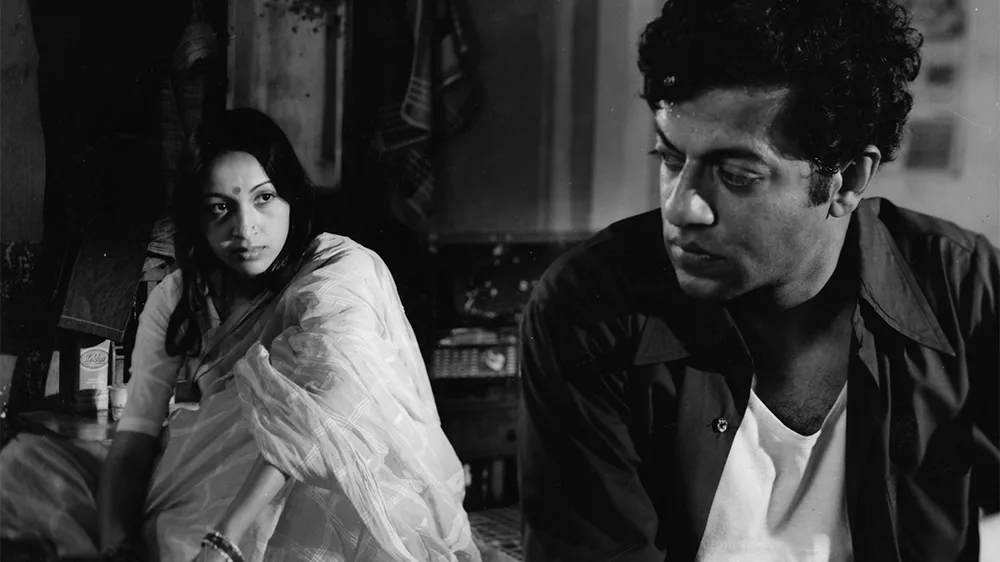
Tabbaliyu Neenade Magane (1977), adapted from Gopalakrishna Adiga's novel, explored the relationship between an aging father and his children against a backdrop of changing social values, while the same year saw Karnad acting in Manthan (directed by Shyam Benegal) and Swami, both of which extended his engagement with progressive Hindi cinema.
Ondanondu Kaladalli (1978) — literally "Once Upon a Time" — marked a significant formal departure. A medieval martial arts film set in the Hoysala period of Karnataka, it drew openly on Akira Kurosawa's samurai cinema, particularly the grammar of Seven Samurai, while embedding its action sequences within a distinctly Kannadiga historical and ethical landscape. The film won the National Film Award for Best Feature Film in Kannada and launched the careers of Shankar Nag and Kavita Krishnamurthy. Far from a mere homage, Ondanondu Kaladalli complicated its Kurosawa inheritance with nuanced questions of loyalty, masculinity, and generational conflict that were rooted in a specifically South Indian historical imagination.
Beyond his Kannada films, Karnad directed Utsav (1984) in Hindi, an adaptation of the fourth-century Sanskrit play Mrichchakatika (The Little Clay Cart) by Shudraka, demonstrating his sustained interest in classical Indian literary texts as living dramatic material. He also wrote the screenplays for Shyam Benegal's Nishant (1975) and Bhumika (1977), for which he won the National Film Award for Best Screenplay. In later years, he directed Cheluvi (1992), Kanooru Heggadithi (1999), based on Kuvempu's novel, and the documentary Kanaka Purandara (1988), expanding his commitment to Kannada cultural heritage.
His career as a cultural administrator ran parallel to his creative work: he served as Director of the Film and Television Institute of India, Pune (1974–75) and as Chairman of the Sangeet Natak Akademi (1988–93), and later as Director of the Nehru Centre and Minister of Culture at the Indian High Commission in London (2000–03).
The Cinema of Girish Karnad
To understand Girish Karnad's cinema is to understand a body of work produced at the intersection of literature, theatre, and film — one that consistently refused to treat any of these as subordinate to the others. Unlike filmmakers who came to cinema through the institutions of film education, Karnad arrived as a playwright and intellectual, and his films bear the imprint of that formation: they are always, in some fundamental sense, dramas of ideas, though rarely at the expense of concrete human experience.
What distinguished Karnad from contemporaries in the Indian New Wave was his particular relationship to tradition. Where other parallel cinema directors looked to Italian neorealism or the French New Wave for formal inspiration, Karnad turned equally to the inherited narrative and performative forms of India — mythology, folk theatre, the oral tradition of Yakshagana — and asked what cinema could do with them. His plays had already demonstrated this method: Hayavadana (1971) used the folk theatre convention of the bhagavata to explore questions of identity and incompleteness; Naga-Mandala (1988) drew on oral folk tales to examine the position of women within patriarchal marriage. In cinema, this impulse translated into an attention to how stories are told, who tells them, and what the act of narration conceals as much as it reveals.
Karnad's films are also distinguished by their sustained engagement with caste and its violences — most explicitly in Samskara, but present as a structuring concern throughout his work. His willingness to adapt Ananthamurthy's fiercely anti-Brahminical novel, and to embody its protagonist, was a statement of artistic and political commitment at a time when such materials were neither commercially attractive nor institutionally safe. Kaadu extended this concern into the domain of class and community violence, while Vamsha Vriksha examined how caste norms operated within the interior life of a family across generations.
Yet Karnad was not a filmmaker of simple polemics. His cinema is consistently marked by an awareness of moral ambiguity and the limits of individual agency within social structures. His characters are rarely free agents in any simple sense; they are embedded in histories, obligations, and community expectations that shape their choices in ways they often cannot fully apprehend. This produces a cinema of ethical density rather than ethical certainty — one that asks its audience to think alongside characters rather than simply to judge them.
Formally, Karnad was an intelligent and eclectic stylist. Ondanondu Kaladalli demonstrated his capacity to absorb and reframe international cinematic influences without subordinating his own cultural materials to them. His work with cinematographers and composers — including Bhaskar Chandavarkar, whose music for Kaadu and Ondanondu Kaladalli was itself a significant contribution to Indian film music — produced films with a distinctively textured sensibility, alert to landscape and sound as bearers of meaning rather than mere backdrop.
His films consistently foregrounded the relationship between the past and the present — not as nostalgia, but as a critical dialogue. The historical period setting of Ondanondu Kaladalli, the mythological resonances of Samskara, the generational memory embedded in Vamsha Vriksha and Kanooru Heggadithi: all are occasions for Karnad to ask what the past demands of the present, and what the present is capable of understanding about the past. This was, at root, the same question his theatre had always posed.
Key Themes
Mythology and History as Critical Resources Karnad consistently drew on India's mythological and historical inheritance not to affirm received values, but to subject them to critical interrogation. History and myth provided distance from which contemporary contradictions could be examined with greater precision and depth.
Caste, Orthodoxy, and Social Violence From Samskara onwards, caste hierarchies and their psychological and communal violences form a central preoccupation. Karnad treated caste not as an aberration from an otherwise functioning social order, but as constitutive of that order.
The Individual within Community His films rarely allow characters the luxury of purely individual choice. The self is always entangled in community, obligation, and historical inheritance — and the drama emerges from the friction between inner life and social structure.
Gender and Patriarchal Authority Across his plays and films, the position of women within patriarchal institutions — marriage, caste, family — receives sustained attention. Female experience is rarely marginal; it is often the site where the contradictions of social order become most visible.
The Ethics of Loyalty and Violence Ondanondu Kaladalli in particular examines what loyalty means in conditions of feudal violence, and what codes of honour look like when stripped of their social justifications.
Tradition and Modernity Rather than positing tradition and modernity as opposed, Karnad's work insists on their entanglement. The modern Indian subject carries the past within, whether consciously or not, and is shaped by forces whose origins predate the conditions of the present.
Selected Fimography
Vamsha Vriksha (1971)
Co-directed with B.V. Karanth, Karnad's directorial debut adapted S.L. Bhairappa's novel to examine generational conflict and moral authority within a Brahmin household. The film won the National Film Award for Best Direction and established the literary seriousness that would characterise his subsequent work.
Kaadu (1973)
Set against the backdrop of a cholera epidemic in a Karnataka village, Kaadu is among the defining texts of the Kannada New Wave. Narrated through the bewildered eyes of a young boy, the film achieves a rare moral and aesthetic equilibrium — documenting human cruelty without sensationalising it, and finding in landscape and silence a grammar adequate to its subject.
Tabbaliyu Neenade Magane (1977)
An intimate study of familial obligation and emotional withdrawal, adapted from Gopalakrishna Adiga's novel. The film traces the quiet desolation of an aging man whose children have moved beyond the world that formed him, examining how social change is experienced at the level of the body and daily life.
Ondanondu Kaladalli (1978)
Karnad's most formally adventurous film, set in medieval Karnataka and inflected by the grammar of Kurosawa's samurai cinema. The film uses its period framework to examine the ethics of violence, loyalty, and masculine honour, while remaining rooted in a distinctly Kannadiga historical imagination. Winner of the National Film Award for Best Feature Film in Kannada, it launched the careers of Shankar Nag and Kavita Krishnamurthy.
Utsav (1984)
A Hindi-language adaptation of Shudraka's fourth-century Sanskrit play Mrichchakatika, demonstrating Karnad's sustained engagement with classical Indian dramatic literature and his conviction that ancient texts could be reimagined as living cinema.
Cheluvi (1992)
A lyrical ecological fable, adapted from Karnad's own play, that won the National Film Award for Best Film on Environment. The film's concern with the destruction of the natural world is woven into a narrative of folk mythological resonance.
Kanooru Heggadithi (1999)
Based on Jnanpith laureate Kuvempu's epic novel, this film traces the life of a woman navigating the social world of a feudal Karnataka household in the early twentieth century. One of Karnad's most sustained engagements with female subjectivity, the film won the National Film Award for Best Feature Film in Kannada.
Legacy
Girish Karnad's death in June 2019 marked the passing of one of Indian culture's most formidable and irreplaceable presences. His legacy is inseparable from the multiple registers in which he worked: as a playwright who modernised Kannada drama and gave it international currency; as a filmmaker who helped define the aesthetic and ethical ambitions of parallel cinema; as a screenwriter who brought literary intelligence to Hindi New Wave cinema; and as a cultural administrator and public intellectual who took seriously the obligation to participate in civic life.
In theatre, his influence is pervasive. His rise as a playwright in the 1960s marked for Kannada what Badal Sarkar achieved in Bengali, Vijay Tendulkar in Marathi, and Mohan Rakesh in Hindi — the coming of age of a distinctly modern regional dramatic literature. Plays such as Tughlaq, Hayavadana, Naga-Mandala, and Taledanda have entered the permanent repertoire of Indian theatre and continue to be staged, studied, and translated across the country and internationally.
In cinema, his contribution to the Kannada New Wave helped establish the conditions within which a generation of filmmakers — including Girish Kasaravalli, T.S. Nagabharana, and others — could work with ambition and integrity. His films remain essential objects of study for scholars of Indian cinema, not only for what they achieved individually, but for what they demonstrated collectively: that regional language cinema could sustain a level of formal and intellectual seriousness commensurate with the great international cinemas of the post-war period.
Among the honours he received were the Sangeet Natak Akademi Award (1972), the National Film Award for Best Direction for Vamsha Vriksha (1972), the National Film Award for Best Screenplay for Bhumika (1978), the Padma Shri (1974), the Padma Bhushan (1992), and the Jnanpith Award (1998) — India's highest literary honour. He also received more than twenty Filmfare and Karnataka State Film Awards across his career.
Karnad was, above all, an artist who understood that culture is not ornament but argument — that stories, plays, and films participate in the ongoing negotiation of what a society is, what it has been, and what it might become. That conviction animated every dimension of his work, from the earliest plays written in Dharwad to the films made in the final decades of his life. It is this commitment, as much as any individual achievement, that secures his place among the most significant figures in Indian cultural history.