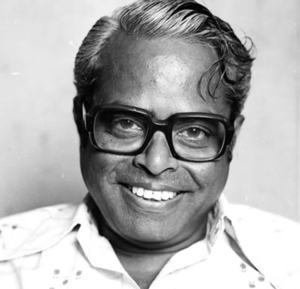
Ashwiny Iyer Tiwari came to cinema late, and by an unusual route. Born in Mumbai on 15 October 1979 into a Tamil-speaking family, she spent about fifteen years in advertising and rose to Executive Creative Director at Leo Burnett India before leaving the agency in October 2013 to make films. Her first feature, Nil Battey Sannata, reached Indian cinemas on 22 April 2016. It concerns a domestic worker in Agra who enrols in her own daughter’s school class in order to shame the girl into studying. The film won Tiwari the Filmfare Award for Best Debut Director.
Four more features have followed. Bareilly Ki Barfi (2017), adapted from Nicolas Barreau’s novel The Ingredients of Love and moved to a small city in western Uttar Pradesh, took over 60 crore rupees worldwide and brought her the Filmfare Award for Best Director. Panga (2020) put Kangana Ranaut in the tracksuit of a former India kabaddi captain who goes back to the mat at thirty-two. In December 2022 came Faadu: A Love Story, a series for SonyLIV about a boy from a Mumbai ghetto who wants to be rich and a girl from the Konkan coast who writes poetry. The legal drama System went out on Amazon Prime Video on 22 May 2026.
The territory has stayed constant. Tiwari films women in Indian towns and in households that count money carefully, then gives them a want the household has no vocabulary for: a school certificate, or a place in a national side. She shoots on location, casts character actors in leading parts and keeps the register domestic. Her films belong to the Hindi commercial cinema and not to any art-house tradition, and they are sold as comedies. They are also, more often than not, about work.
She produces as well. Earthsky Pictures, founded in March 2018 with the director Nitesh Tiwari, her husband, has made the short film Ghar Ki Murgi and the tennis documentary series Break Point. Her first novel, Mapping Love, appeared in 2021.
Life and Early Work
Ashwiny Iyer grew up in Mulund, a north-eastern suburb of Mumbai. The family was Tamil-speaking, and she was schooled in English at St Mary’s Convent High School in Mulund before going on to SIES College of Commerce and Economics. She then took a gold medal in applied arts at Sophia Polytechnic. There was no film school. What she learnt instead was layout and the discipline of making a single image carry a claim, and that grounding accounts for a good deal in her later work, including its limits.
Leo Burnett hired her, and she stayed about fifteen years, ending as Executive Creative Director of the Indian agency. Along the way she won a Cannes Lion and collected awards at the New York Festivals, the One Show, Promax and Goafest. Advertising taught her compression. A thirty-second commercial has to establish a household and a want before the product appears, and something of that arithmetic survives in the opening ten minutes of each of her films, where the situation is laid out with almost brutal economy and the audience is never in doubt about who wants what.
She left the agency in October 2013, at thirty-four, with no film to go to. The Mumbai trade press gave the departure a paragraph.
Before the exit she had made a short, What’s for Breakfast, which different accounts date to 2012 and to 2013. The idea for the first feature arrived from television. A contestant on Kaun Banega Crorepati, the quiz programme hosted by Amitabh Bachchan, gave her the situation she wanted, and the finished film keeps something of the flavour of a story told on a stage in front of an audience: a woman with almost nothing announcing an ambition, and being laughed at for it. Aanand L Rai’s Colour Yellow Productions agreed to make it.
Filmmaking
Nil Battey Sannata was shot in Agra, in the lanes behind the tourist city, and the Taj Mahal appears only at a distance, over a ghat, while a mother lectures a daughter who has stopped listening. The title is an old Hindi idiom for nought divided by nought, which is what teachers call the back benchers. Nothing in it is lit for glamour. Swara Bhaskar plays Chanda, a widow who cleans house for an employer played by Ratna Pathak Shah and takes factory shifts to pay for her daughter’s schooling. Riya Shukla is the daughter, Apeksha, who has worked out the family arithmetic and states it flatly: a driver’s son becomes a driver, so a maid’s daughter becomes a maid. Pankaj Tripathi is the principal, chest out, pacing the classroom, taking sarcastic shots at the back row. Colour Yellow Productions made the film with JAR Pictures and Opticus Inc., and Eros International presented it.
The film travelled before it opened at home. It premiered at the Silk Road International Film Festival in Fuzhou in September 2015, where Bhaskar won the best actress prize, and it played the BFI London Film Festival the following month under the English title The New Classmate. The Indian release, on 22 April 2016, ran into the National Commission for Protection of Child Rights, which objected that the film depicted corporal punishment in a classroom. Shoma A Chatterji, writing in Upperstall, disputed that any such punishment appears in it, and rejected the description of the film as a women’s film on the ground that it takes in everyone shut out of a normal existence in a society where others move about in fancy cars. Takings were modest, about 6.9 crore rupees, and Box Office India lists the film as a failure. The 62nd Filmfare Awards gave Tiwari the prize for Best Debut Director, and Riya Shukla took the Screen Award for Best Child Artist.
Dhanush pressed her to remake it in Tamil. Amma Kanakku followed on 24 June 2016, with Amala Paul in Chanda’s part. Directing the same script twice inside a year, in a language she had grown up hearing but had never worked in, was an odd sort of apprenticeship.
Bareilly Ki Barfi (2017) made her commercially reliable. Barreau’s novel supplied the premise, which is that a young woman finds a book that appears to have been written about her and goes looking for its author. Kriti Sanon plays Bitti, who refuses to be married off and recognises herself on the page. Ayushmann Khurrana is Chirag Dubey, the printer who wrote the book and published it under a borrowed name, and Rajkummar Rao is Pritam Vidrohi, the meek man Chirag bullies into posing as the author. Devesh Sharma of Filmfare gave it four stars out of five and wrote that it will give you ample laughs throughout. The film took over 60 crore rupees worldwide, and in January 2018 Tiwari won the Filmfare Award for Best Director.
Panga was announced in August 2018 and released on 24 January 2020. Kangana Ranaut plays Jaya Nigam, once captain of the India women’s kabaddi team, now selling tickets at a railway counter in Bhopal and raising a son. Richa Chadha is Meenu, a former teammate turned coach who talks her back onto the mat. Neena Gupta plays Jaya’s mother and Jassie Gill her husband, Prashant Shrivastava. The story is credited to Nikhil Mehrotra and Tiwari, with a screenplay by Nitesh Tiwari, and Fox Star Studios produced. The reviews were warm and the returns were not: against a budget reported at 49 crore rupees the film took about 41.71 crore, though that was enough to place it tenth among Hindi releases in a year cut short by the closure of cinemas.
Earthsky Pictures, set up in March 2018, gave her a second base. Its short film Ghar Ki Murgi, with Sakshi Tanwar as a housewife whose labour nobody in the household can see until she leaves it, went out on SonyLIV in 2020. The following year Tiwari and Nitesh Tiwari directed Break Point, a documentary series on the partnership and rupture of the tennis players Leander Paes and Mahesh Bhupathi. She also contributed a segment to Ankahi Kahaniya, the Netflix anthology released on 17 September 2021 alongside shorts by Abhishek Chaubey and Saket Chaudhary. Her episode, with Abhishek Banerjee as a lonely shop assistant, drew the mildest notices of the three.
Faadu: A Love Story arrived on SonyLIV on 9 December 2022. Pavail Gulati plays Abhay, who shares a cramped Mumbai house with an autorickshaw-driving father, a dying mother and a drunk brother, and who intends to be rich. Saiyami Kher plays Manjiri, raised in a Konkan village and writing poetry. It was the first time Tiwari had worked at length with a man’s ambition rather than a woman’s, and the first time she had let a script run to twelve episodes. Nandini Ramnath, reviewing it for Scroll.in, called the result a soaring tale of vaulting ambition.
System came six years after her last theatrical feature, and went straight to Amazon Prime Video on 22 May 2026. Baweja Studios produced, Rangarajan Ramabadran shot it and Charu Shree Roy cut it to 124 minutes. Sonakshi Sinha plays Neha Rajvansh, a public prosecutor who has never won a case and is dared by her father, a successful defence lawyer played by Ashutosh Gowariker, to win ten in a row. Jyothika is Sarika Rawat, the court stenographer who feeds her the evidence that makes the winning possible, and whose motives turn out to be the real subject. The response split. Archika Khurana in The Times of India and Kartik Bhardwaj in The New Indian Express each gave it three stars, Shubhra Gupta in The Indian Express gave two and a half and wrote that the film starts with promise and ends with an eye-roll, and Rahul Desai in The Hollywood Reporter India dismissed it outright.
Alongside the films she has published fiction. Mapping Love, her first novel, came out in 2021. She has also spoken since 2020 about a film on N R Narayana Murthy and Sudha Murty, which she has described as difficult to write.
The Cinema of Ashwiny Iyer Tiwari
Tiwari’s method is easy to describe and harder to execute. She takes a household in an Indian town, establishes what it can afford, and then introduces a want that the household budget does not cover. The want is usually a woman’s. From there the film proceeds by comedy, because comedy is what keeps an audience in the seat for a story about school fees, and the hardship is delivered inside the joke rather than instead of it. Her camera stays at eye level and indoors. She has no interest in the long take, and her scenes are cut to the beat of dialogue, which is where the advertising training is most obvious.
Her weakness is the third act. The situations she builds are observed with care and the resolutions tend to be granted rather than earned, and reviewers have said so consistently, from the collector who arrives to solve things in Nil Battey Sannata to the confession that unlocks System. Bollywood Hungama, rating the latter three out of five, put it as the writing getting too convenient after a point. The complaint is fair. It is also the price of working inside a commercial form that requires its endings to be legible.
Key Themes
The mother who wants something for herself. Chanda sits down in her daughter’s classroom. Jaya Nigam returns to the mat at thirty-two, having been told for a decade that the question was settled. In both films the ambition is treated by the family as a nuisance long before it is treated as a hope, and Tiwari gives the nuisance its full weight: Apeksha is humiliated by her mother’s presence at school and says so, at length, over a plate of chow mein.
Work, counted. The women are shown at their jobs and the jobs are exact. Chanda moves between a masala factory, a shoe factory and a laundry. Jaya sells tickets at a railway counter. Chirag Dubey owns a printing press in Bareilly, and the press is where the deception at the centre of the film is physically manufactured, in ink, one signature at a time.
The small city on its own terms. Agra without the monument, Bareilly, Bhopal. Tiwari does not use these places as shorthand for backwardness or for authenticity. In Nil Battey Sannata the Taj Mahal is a smudge on the horizon behind two people arguing about mathematics, which is roughly what it is to the people who live near it.
Education as a ledger. Apeksha’s argument that a maid’s daughter becomes a maid is the clearest statement of class in Tiwari’s work, and the film does not refute it with a speech. It refutes it with a mother learning long division at the back of a classroom, badly, in front of children who laugh at her.
The joke as delivery mechanism. Pankaj Tripathi’s principal is funny. He is also the instrument through which a government school informs poor children of their market value, and the film lets both facts stand in the same scene without arbitrating between them.
Selected Filmography
Nil Battey Sannata (2016)
Her debut. A widow in Agra enrols in her daughter’s tenth-standard class. Premiered at the Silk Road International Film Festival in Fuzhou in September 2015 and shown at the BFI London Film Festival as The New Classmate. It lost money and won her the Filmfare Award for Best Debut Director, and it remains the film her reputation rests on.
Amma Kanakku (2016)
The Tamil remake of her own debut, made at Dhanush’s urging, with Amala Paul in the lead. Released on 24 June 2016, two months after the Hindi original.
Bareilly Ki Barfi (2017)
A romantic comedy from Nicolas Barreau’s The Ingredients of Love, with Kriti Sanon, Ayushmann Khurrana and Rajkummar Rao. Her commercial breakthrough at over 60 crore rupees worldwide, and the film that won her the Filmfare Award for Best Director.
Panga (2020)
Kangana Ranaut as a retired kabaddi international attempting a comeback from a railway ticket counter in Bhopal. Well reviewed, and short of its 49 crore rupee budget at the box office.
Ghar Ki Murgi (2020)
A short film for SonyLIV, produced under Earthsky Pictures, with Sakshi Tanwar as a housewife who walks out of a home that has stopped registering her.
Break Point (2021)
A documentary series co-directed with Nitesh Tiwari on Leander Paes and Mahesh Bhupathi, and her only work to date outside fiction.
Ankahi Kahaniya (2021)
Her segment of a three-part Netflix anthology, with Abhishek Banerjee. The least remarked of her projects.
Faadu: A Love Story (2022)
Twelve episodes for SonyLIV, with Pavail Gulati and Saiyami Kher, following a man’s climb out of a Mumbai ghetto and the poet who watches him do it. Her first long-form work and her first male protagonist.
System (2026)
A legal drama for Amazon Prime Video with Sonakshi Sinha, Jyothika and Ashutosh Gowariker. Divided the critics, several of whom preferred its performances to its plotting.
Legacy
Two Filmfare awards in two years, for a debut and then for direction, put Tiwari among a small group of women directing mid-budget Hindi features with wide theatrical release. That group was smaller in 2016 than it is now. The commercial argument she made was specific: Bareilly Ki Barfi demonstrated that a film centred on a small-town woman’s refusal to be married off could take 60 crore rupees, which is the sort of number that changes what a studio will greenlight. Producers noticed. Others have since worked the same ground with more money behind them.
Nil Battey Sannata has had the longer afterlife of the two. It failed in cinemas and has been written about at every anniversary since, and the reason is Riya Shukla’s performance opposite Swara Bhaskar, which refuses the sentimentality the premise invites. The film is now the usual reference point when Hindi cinema and state schooling are discussed together.
The reservation is about what came after. Since Panga her work has moved to streaming platforms and, with it, away from the observational exactness of the Agra film. Faadu is her most ambitious project and also her loosest. System was received as competent and derivative, and Rahul Desai’s notice in The Hollywood Reporter India was severe. A director who once built a whole film out of a mother failing at long division has spent the last few years on premises that arrive pre-assembled.
She has been at it for a decade. The Murthy film has been in development since at least 2020, and a further feature has been reported without confirmation. Whether the later work recovers the exactness of that first Agra film is the open question of her career, and there is no reason yet to assume it will not.