Films with Anil Chatterjee on Art House Cinema


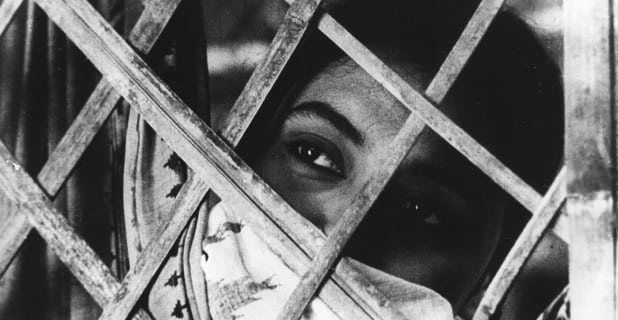
Anil Chatterjee was born on 25 October 1929 and died on 17 March 1996 in Calcutta, aged 66. His family name is also written Chattopadhyay, and he acted in Bengali cinema for more than four decades, from a small part in 1953 to films released in the year of his death. Estimates of his output run from about 150 films to more than 200.

Between 1958 and 1963 he worked for Ritwik Ghatak, Satyajit Ray and Tapan Sinha. For Ritwik Ghatak he played Shankar, the singer brother in Meghe Dhaka Tara (1960), and Rishi in Komal Gandhar (1961). For Satyajit Ray he played the postmaster in Teen Kanya (1961) and the husband who loses his job in Mahanagar (1963). Tapan Sinha cast him again and again, from Louha Kapat (1958) to Ek Doctor Ki Maut (1991).
He was mostly a supporting actor, though he carried leads when they came. He also led a union of film technicians and sat in the West Bengal Legislative Assembly.
Life and Early Work
Sources disagree on where he was born, and one Bengali reference work gives the year as 1928. He finished school in Delhi and then came to Calcutta to study economics at St. Xavier's College.
The theatre found him there, when Utpal Dutt, a former student of the college, was staging plays with amateur actors and took him in. He acted in a number of Dutt's productions while still at college. That was his apprenticeship as an actor.
He did not begin in front of the camera. After college he worked as an assistant to the directors Pinaki Mukhopadhyay and Ardhendu Mukhopadhyay. Both later gave him work as an actor, and Ardhendu would direct him in the title role of Deshbandhu Chittaranjan nearly two decades on.
On Stage and Screen
His first screen role was a small one in Pinaki Mukhopadhyay's Jog Biyog (1953), opposite the comedian Tulsi Chakraborty, and more small parts followed in Moyla Kagaj (1954) and Sajghar (1955). His first substantial role came in Ulka (1957).
In 1958 he worked with both Ghatak and Sinha. He was in the cast of Ajantrik, Ghatak's film about a taxi driver and his old car, and of Sinha's Louha Kapat. Two years later Ghatak gave him Shankar in Meghe Dhaka Tara, released on 14 April 1960, which became the director's biggest commercial success in India. The same year Ray cast him in Devi as Bhudeb, a friend of Soumitra Chatterjee's character in Calcutta.
The next three years were the busiest of his career in art cinema. Komal Gandhar opened on 31 March 1961 and Teen Kanya on 5 May, five weeks apart. In Ray's Kanchenjungha (1962), the director's first film in colour and his first original screenplay, he played Anil, the son of a rich family on holiday in Darjeeling. Mahanagar followed in September 1963, and Ray won the Silver Bear for Best Director at Berlin the next year. In between came a lead for Sinha in Nirjan Saikate (1963), as a writer who takes a train to Puri to get away from his routine.
Commercial Bengali cinema kept him busy at the same time. In Sinha's Jatugriha (1964) he played Supriyo, with Uttam Kumar and Arundhati Devi as the separated couple at its centre.
In 1970 he played Chittaranjan Das, the barrister and nationalist leader, in Deshbandhu Chittaranjan. Das had died in 1925. His widow, Basanti Devi, praised the performance. That year he also acted with Dilip Kumar in Sinha's Sagina Mahato, set among tea-estate workers under British rule. It won him the Bengal Film Journalists' Association award for Best Actor in a Supporting Role in 1971. He was in Sagina (1974), the Hindi version, as well.
Later work took him to a new generation of directors. He acted in Utpalendu Chakrabarty's Chokh, Aparna Sen's Paroma, Goutam Ghose's Paar and Amol Palekar's Hindi film Ankahee (1985). On television he had the lead in the Doordarshan serial Naqab. For Mrinal Sen he played Arunbabu in Ek Din Achanak (1989). His last released film was Himghar (1996).
The Art of Anil Chatterjee
Signature Roles
Meghe Dhaka Tara (1960). Shankar is the elder brother of Nita, played by Supriya Choudhury, in a refugee family on the edge of Calcutta. He believes his singing has to be perfect before it can earn money, so the household's keep falls on his sister. He is away for most of the film, and before the end his one real moment of tenderness is the Tagore song he sings to her. At the end he is the only one who still cares for her, and she throws herself into his arms with her last words: "Dada, I want to live."
Komal Gandhar (1961). Ghatak built the film around two rival theatre groups, a thinly veiled picture of the split in the Indian People's Theatre Association in Bengal after Partition. Chatterjee played Rishi, a theatre worker, with Supriya Choudhury again in the lead as Anusuya. He had come to film from amateur theatre himself.
Teen Kanya (1961). In "The Postmaster", the first of Ray's three Tagore stories, he is Nandalal, a young man from the city posted to a small village. Bored, he teaches Ratan, the orphan girl who keeps house for him, to read and write, and she later nurses him through malaria. When he resigns and offers her money as he leaves, she refuses it. The part asks him to be kind and still not see what he means to the child.
Mahanagar (1963). Subrata Mazumdar is a bank clerk who lets his wife Arati, played by Madhabi Mukherjee, take a job selling door to door. His parents object, and then his bank collapses in the Calcutta bank crashes and he is the one at home. He finds lipstick in her bag, hears her describe him as a businessman and goes to see her employer. In the last scene she has resigned, and he praises her courage instead of mentioning that one of them now has to find work.
Deshbandhu Chittaranjan (1970). Chittaranjan Das was a Calcutta barrister who became a leader of the national movement and died in 1925. Chatterjee played him in a biographical film directed by Ardhendu Mukhopadhyay, one of the two men he had first assisted. Basanti Devi, Das's widow, praised what he did with her husband. It was a rare title role for him.
Craft
Ordinary men. His best parts are men of the Calcutta middle class who fall short. Shankar waits on his talent while his sister keeps the family. Subrata loses his job and then his footing at home. Nandalal leaves a child behind without understanding what he has done. He did not play them as weak men: each one is decent, and each one fails someone close to him.
Stage first. He came to film from Utpal Dutt's amateur productions at St. Xavier's, not from the studios. Ghatak used that background directly in Komal Gandhar, where he plays a member of a theatre troupe on tour.
Both sides of the camera. He learned film as an assistant director before he acted in one. In later life he led the Federation of Film Technicians of Eastern India, the union of the people he had first worked beside.
Selected Filmography
Meghe Dhaka Tara (1960)
As Shankar. Ghatak's film about a refugee family in Calcutta was the first of his three films on the aftermath of Partition.
Devi (1960)
As Bhudeb. Ray adapted the story of a young wife whose father-in-law decides she is the goddess Kali.
Komal Gandhar (1961)
As Rishi. The second of Ghatak's Partition films follows a troupe of actors on a journey to Lalgola, on the Padma river near the new border.
Teen Kanya (1961)
As Nandalal. "The Postmaster" opens Ray's anthology of three Tagore stories, with Chandana Banerjee as Ratan.
Kanchenjungha (1962)
As Anil. The story plays out over one afternoon in Darjeeling, close to the length of the film itself.
Mahanagar (1963)
As Subrata Mazumdar. Ray's film about a Calcutta wife who goes out to work won him the Silver Bear for Best Director at Berlin in 1964.
Nirjan Saikate (1963)
As the writer. Tapan Sinha's film sends its narrator to Puri, where he meets four widows and their niece, played by Sharmila Tagore.
Ek Din Achanak (1989)
As Arunbabu. Mrinal Sen's Hindi film begins when a professor walks out into the rain one evening and never comes home.
Legacy
Outside the studios he served the people who worked in them. He was president of the Federation of Film Technicians of Eastern India. In politics he stood as an independent backed by the Left Front in a by-election for the Chowringhee seat in central Calcutta, and won it to enter the West Bengal Legislative Assembly.
His screen career is easy to undervalue because he so often stood beside the star. After Ghatak's death his films reached far wider audiences through festivals and DVD releases in India and Europe, and Shankar went with them. In Meghe Dhaka Tara it is Shankar who hears Nita's last cry. In Mahanagar it is Subrata who has to accept that his wife can earn the family's living and he cannot.
He went on working into his sixties. Himghar, one of his last films, reached cinemas in 1996, the year he died in Calcutta.