
Hrishikesh Mukherjee
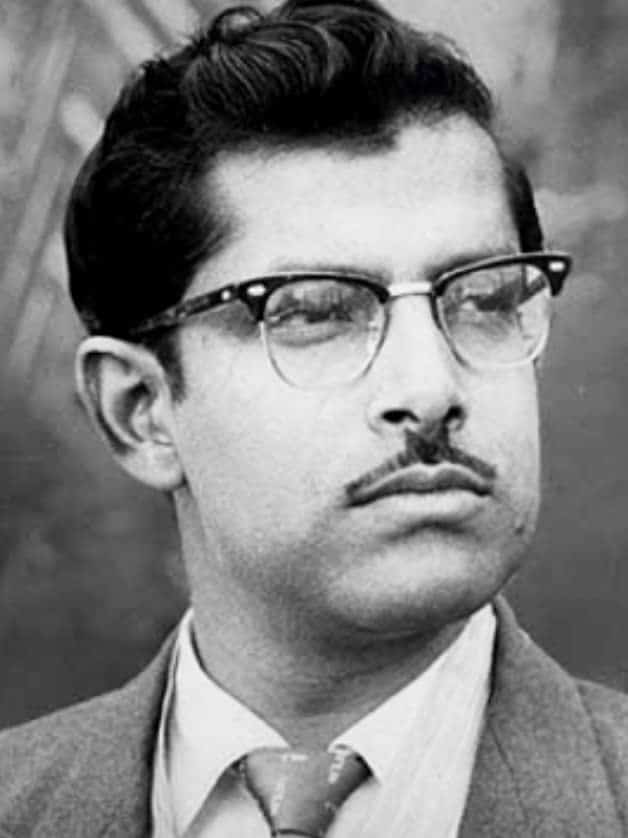
Hrishikesh Mukherjee (30 September 1922 – 27 August 2006) stands as one of the most significant and enduring figures in the history of Hindi cinema. Popularly known as Hrishi-da, he directed forty-two feature films over a career spanning more than four decades, carving what critics and scholars have described as a definitive middle path between the extravagance of mainstream commercial cinema and the uncompromising austerity of the parallel art film movement. His films — rooted in the domestic lives, moral tensions, and quiet aspirations of India’s urban and semi-urban middle class — achieved a rare synthesis of popular appeal and genuine artistic distinction, earning him both the devotion of mass audiences and the sustained regard of critics and film historians.
Working almost exclusively in Hindi, Mukherjee left an indelible mark on Indian cinema through films that include Anari (1959), Anuradha (1960), Anupama (1966), Aashirwad (1968), Satyakam (1969), Anand (1971), Guddi (1971), Bawarchi (1972), Abhimaan (1973), Chupke Chupke (1975), and Gol Maal (1979). Each of these works illuminated the textures of everyday Indian life with a combination of warmth, irony, and moral seriousness that proved consistently distinctive. His collaboration with the leading actors of his era — Raj Kapoor, Balraj Sahni, Dharmendra, Rajesh Khanna, Amitabh Bachchan, and Jaya Bhaduri, among many others — produced performances that remain benchmarks of naturalistic Hindi film acting.
The honours accorded to Mukherjee over the course of his career reflect the breadth of his achievement. He received multiple National Film Award certificates and medals, including the President’s Gold Medal for Anuradha in 1960, and President’s Silver Medals for Anari, Anupama, Aashirwad, Satyakam, and Anand. The Government of India conferred upon him the Dadasaheb Phalke Award — the highest honour in Indian cinema — in 1999, and the Padma Vibhushan, the second highest civilian decoration, in 2001. He also received the NTR National Award in 2001 and the Rashtriya Kishore Kumar Samman from the Government of Madhya Pradesh. At the 11th Berlin International Film Festival in 1961, Anuradha was nominated for the Golden Bear, marking one of the early international recognitions of his work. The International Film Festival of India honoured him with a retrospective of his films in November 2005, only months before his death.
Mukherjee’s significance extends beyond his individual achievements as a director. As the founder of what has come to be termed ‘middle cinema’ in India — a form that drew on the social consciousness of the parallel cinema movement while retaining the emotional directness and commercial accessibility of popular Hindi film — he created a distinct cinematic idiom that influenced subsequent generations of filmmakers and helped define the cultural aspirations of post-Independence Indian audiences. His sensitivity to the comedy and pathos of ordinary existence, his economy of means, and his abiding faith in the decency of his characters constituted a coherent and deeply humanist artistic vision.
Life and Early Work
Hrishikesh Mukherjee was born on 30 September 1922 in the city of Calcutta — the cultural capital of Bengal and, at that time, one of the great metropolitan centres of British India — into a Bengali Brahmin family. The intellectual and artistic climate of Calcutta in the early decades of the twentieth century was exceptional: the city was home to a thriving literary tradition, an active theatrical culture, and, increasingly, a nascent film industry centred on the studios of New Theatres, which had been established in 1930 by Birendra Nath Sircar and had become the most technically advanced and artistically ambitious film production company in India. Into this environment Mukherjee was born and educated.
He pursued his formal education in the sciences, graduating in chemistry from the University of Calcutta. The scientific cast of mind — analytical, precise, attentive to structure — would, by many accounts, find its expression in his later work as a film editor, a discipline in which he excelled before turning to direction. Following his graduation, he worked briefly as a teacher of mathematics and science, an occupation that, though short-lived, may have reinforced those habits of patience and systematic thinking that distinguished his approach to filmmaking throughout his career.
The decisive turn in Mukherjee’s life came when he sought employment in the film industry. He joined New Theatres in the late 1940s, initially working as a cameraman and subsequently as a film editor under the tutelage of Subodh Mitter, a respected editor known affectionately within the industry as ‘Kenchida’. The New Theatres studio was, at this period, in relative decline from its earlier dominance — the partition of Bengal in 1947, combined with the migration of talent to Bombay, had diminished its preeminence — but it remained a serious institution with rigorous professional standards. The training Mukherjee received there, both technical and aesthetic, laid the foundations of his mature practice as a filmmaker.
It was, however, his subsequent association with Bimal Roy that proved most formative. In 1951, Mukherjee relocated to Bombay and joined Roy’s production unit as a film editor and assistant director. Bimal Roy was, by this point, one of the outstanding directors in Hindi cinema, a filmmaker of austere social commitment whose work drew on Italian neorealism and on the tradition of socially conscious Bengali literature. Working on landmark productions such as Do Bigha Zamin (1953) and Devdas (1955), as well as later on Roy’s celebrated production Madhumati (1958) — for which Mukherjee won his first Filmfare Best Editing Award — he absorbed the principles of disciplined, emotionally intelligent filmmaking that would characterise his own directorial voice. The proximity to Roy instilled in Mukherjee a conviction that cinema could and should speak honestly about the conditions of ordinary life, that melodrama need not be the exclusive language of popular Indian film, and that simplicity of form was compatible with, indeed conducive to, emotional depth.
Filmmaking
Hrishikesh Mukherjee made his debut as a director with Musafir (1957), a multi-protagonist narrative featuring Dilip Kumar, Kishore Kumar, Suchitra Sen, and Usha Kiran. Though the film received a Certificate of Merit at the 5th National Film Awards — a recognition of its technical and artistic ambition — it was not a commercial success, and Mukherjee found himself obliged to demonstrate the commercial viability of his directorial instincts before he could establish himself as a filmmaker of the first rank. His second film provided that demonstration decisively.
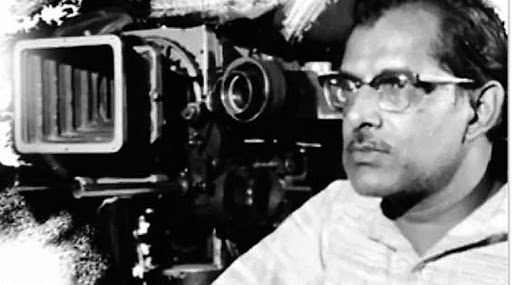
Anari — the preceding word is the film title — Anari (1959), starring Raj Kapoor and Nutan, was a critical and commercial triumph. The film won five Filmfare Awards and received the President’s Silver Medal at the 7th National Film Awards for Best Feature Film in Hindi. Notably, the only award Mukherjee did not win that evening was the Best Director Award, which went to his mentor, Bimal Roy. The irony was not lost on the industry: the student had come within a vote of eclipsing the master. Anari established Mukherjee’s characteristic tone — the collision of innocence with a world of compromises, rendered with lightness and moral warmth rather than heavy-handed didacticism.
The following year brought Anuradha (1960), starring Balraj Sahni and Leela Naidu, a film that earned the President’s Gold Medal for Best Feature Film at the 8th National Film Awards — the highest cinematic honour then available — and a nomination for the Golden Bear at the 11th Berlin International Film Festival. The film’s portrait of a gifted woman sacrificing her musical ambitions to the demands of domestic life combined lyrical grace with social observation, and demonstrated that Mukherjee’s idiom could accommodate genuine pathos alongside its characteristic warmth.
Through the 1960s, Mukherjee built his reputation with a succession of films that explored the interior lives of middle-class Indians with growing assurance. Anupama (1966), starring Dharmendra and Sharmila Tagore, won the President’s Silver Medal at the 14th National Film Awards and has been regarded by critics as one of the most beautifully composed Hindi films of its era; its portrait of a withdrawn, misunderstood young woman, played with remarkable inwardness by Tagore, drew on the finest traditions of Bengali literary sensibility. Aashirwad (1968), featuring Ashok Kumar and Sanjeev Kumar, received the President’s Silver Medal at the 16th National Film Awards, and is remembered in part for Ashok Kumar’s extraordinarily nuanced central performance as an elderly man navigating the disappointments and small consolations of old age.
Satyakam (1969), which Mukherjee consistently identified as his finest achievement, received the President’s Silver Medal at the 17th National Film Awards and featured Dharmendra, Sharmila Tagore, Sanjeev Kumar, and Ashok Kumar in its cast. The film was a rigorous moral fable about a young idealist in post-Independence India confronting the gap between the promise of freedom and the reality of systemic corruption and social compromise. Its unflinching portrayal of post-colonial disillusionment, and its refusal of consoling resolutions, gave it a gravity unusual in mainstream Hindi cinema and aligned it, in spirit if not in formal strategy, with the parallel cinema movement that was then beginning to emerge.
The early 1970s marked the peak of Mukherjee’s creative achievement. Anand (1971), starring Rajesh Khanna and Amitabh Bachchan, is widely considered his masterwork. The film — a meditation on mortality, friendship, and the irreducible value of the fully lived life — brought Mukherjee the Filmfare Best Movie Award, Best Editing Award, and Best Story Award in 1972, and the President’s Silver Medal at the 18th National Film Awards. It also gave Amitabh Bachchan the role that, alongside Prakash Mehra’s Zanjeer two years later, launched his career as a major star. The same year saw the release of Guddi, in which Jaya Bhaduri made her screen debut — Mukherjee had introduced her to Hindi cinema, just as he would later be credited with giving Amitabh Bachchan his breakthrough. Guddi‘s exploration of film fandom and the dangers of confusing cinematic illusion with reality was characteristically playful in surface while serious in implication.
Bawarchi (1972) and Abhimaan (1973) extended the range of his preoccupations. Bawarchi, a comedy featuring Rajesh Khanna and Jaya Bhaduri, addressed themes of social inclusivity, class relations, and the fragility of family cohesion with deceptive lightness. Abhimaan, starring Amitabh Bachchan and Jaya Bhaduri as a married couple whose relationship is tested by professional rivalry, explored marital tensions with a candour and psychological acuity rare in Hindi film. Namak Haraam (1973), again featuring Khanna and Bachchan, returned to the theme of friendship under pressure — its examination of class difference, loyalty, and betrayal constituting one of Mukherjee’s most politically resonant works.
The comedy Chupke Chupke (1975), an adaptation of Upendranath Ganguly’s Bengali play, featured Dharmendra — whom Mukherjee was the first to cast in a comic role — alongside Amitabh Bachchan, Sharmila Tagore, and Jaya Bhaduri. Its brilliant manipulation of linguistic register and social pretension gave it a wit that was both farcical and satirical. Gol Maal (1979), starring Amol Palekar and Utpal Dutt, is regarded as one of the finest Hindi comedies ever made; its examination of unemployment, institutional hypocrisy, and the performance of social identity operated through a precision of comic plotting that recalled the best traditions of theatrical farce. Khubsoorat (1980), starring Rekha and Ashok Kumar, returned to the territory of family dynamics and the disruptive effects of spontaneity in conventional households, winning the Filmfare Best Movie Award in 1981.
In the later years of his career, as the commercial Hindi film industry shifted decisively toward action spectacle and the ‘angry young man’ persona that Bachchan had made synonymous with popular cinema, Mukherjee’s gentle, character-centred idiom found diminishing commercial resonance. His later films, including Rang Birangi (1983), Kissi Se Na Kehna (1983), and Bemisal (1982), continued to demonstrate his technical mastery and his empathy for his characters, but reached smaller audiences. He turned briefly to television direction, working on serials including Talaash (1992). His final theatrical feature, Jhooth Bole Kauwa Kaate (1998), was made after a long hiatus and represented a late, if modestly received, return to the screen.
The Cinema of Hrishikesh Mukherjee
Any serious assessment of Hrishikesh Mukherjee’s contribution to Indian cinema must begin with a precise understanding of the cultural and industrial position he occupied. His career unfolded in the space between two dominant modes of Hindi filmmaking: on one side, the mainstream commercial cinema with its reliance on melodramatic excess, fantasy spectacle, and the amplified emotions of the song-and-dance form; on the other, the parallel cinema or New Indian Cinema of the 1970s and beyond, characterised by rigorous social realism, long-take aesthetics, non-professional casting, and a programmatic resistance to the conventions of entertainment. Mukherjee inhabited neither of these positions exclusively, and his achievement was precisely the construction of a third space — what critics have termed ‘middle cinema’ — in which popular pleasure and moral seriousness could coexist.
His formation as a film editor was, it seems clear, fundamental to his directorial sensibility. The editor’s discipline — the understanding that meaning is produced in the relationship between shots, that restraint and ellipsis can be more powerful than display — informed every aspect of his filmmaking. His camera was typically unobtrusive; his editing rhythms were calibrated to the emotional needs of the scene rather than to any desire for formal display; his handling of actors, which was consistently superb, proceeded through a patient attentiveness to internal states rather than through the encouragement of theatrical gesture. In this he shared much with the tradition of humanist cinema associated with Jean Renoir, whose visit to India and whose film The River (1951) had influenced a generation of Indian filmmakers, though Mukherjee’s work remained firmly and distinctively Indian in its sensibility and reference.
The critical scholarship on Mukherjee’s cinema has identified three thematic complexes as especially central to his work: the ethical individual in conflict with a compromised social order; the dynamics of family and conjugal life, including the tensions between individual fulfilment and domestic obligation; and the comedy of social identity, particularly as it relates to class, language, and the performance of respectability. These themes were not treated in isolation but were consistently interwoven, so that even his most purely comedic films carried an undertow of social observation, and his most apparently serious films were rarely without the humanising inflection of humour.
Key Themes
The Moral Individual and Social Compromise. Across his career, Mukherjee returned repeatedly to the figure of the idealist — the person of integrity placed under pressure by a social environment that rewards cynicism and punishes principle. This figure, present in Anari, Satyakam, and Anand (where the protagonist’s dying acceptance of life itself constitutes a form of moral protest against despair), carries the weight of Mukherjee’s social philosophy: a post-Independence disillusionment that nevertheless refuses nihilism, insisting on the possibility and value of individual moral dignity.
Family, Domesticity, and the Comedy of Kinship. The family — in its idealised form a site of warmth and mutual support, in its actual existence a theatre of conflict, misunderstanding, and competing needs — is the primary social unit in Mukherjee’s cinema. Films such as Bawarchi, Khubsoorat, Abhimaan, and Kissi Se Na Kehna explore the family as a microcosm of the social, where questions of authority, freedom, generosity, and self-assertion are played out on the smallest and most intimate scale.
Class, Language, and Social Performance. Mukherjee was acutely sensitive to the ways in which class identity is constructed and policed through cultural markers, above all through language. Chupke Chupke‘s comedy turns on the satirical exposure of linguistic snobbery; Gol Maal‘s protagonist is forced into an elaborate performance of social identity to secure employment in a world that judges people by appearance rather than merit. The comedy in these films is not merely farcical but functions as a form of social critique, exposing the arbitrariness of the hierarchies that structure Indian middle-class life.
Martyrdom, Illness, and the Affirmation of Life. A recurrent motif in Mukherjee’s work is the figure of the dying or terminally ill character whose confrontation with mortality produces not despair but an intensified commitment to life and human connection. Anand‘s eponymous hero, dying of cancer, constitutes the clearest expression of this theme; Mili (1975) treats similar material with equivalent sensitivity. These films draw on a tradition of sentimental narrative while transforming it through the specificity and warmth of their characterisation.
Humour as Moral Instrument. Mukherjee’s comedy was never purely escapist. Rather, humour served him as a mode of social inquiry, a way of approaching uncomfortable truths with a lightness of touch that made them bearable. The comic situations in his films — of mistaken identity, of social pretension deflated, of innocence encountering worldly cunning — consistently illuminate the gap between social appearance and human reality, between what people claim to be and what they are.
Selected Filmography
Musafir (1957)
Mukherjee’s debut feature, starring Dilip Kumar, Kishore Kumar, and Suchitra Sen, tells three interconnected stories set within a single house over time. Though it did not achieve commercial success, it received the Certificate of Merit at the 5th National Film Awards and announced the director’s characteristic interest in ordinary lives and their quiet intersection.
Anari (1959)
Starring Raj Kapoor and Nutan, Anari won five Filmfare Awards and the President’s Silver Medal at the 7th National Film Awards. The film’s innocent, unworldly protagonist navigates a world of exploitation and compromise, establishing the Mukherjee hero-type — the person of good faith set against a society of calculated interests.
Anuradha (1960)
One of the director’s most formally accomplished works, Anuradha stars Balraj Sahni and Leela Naidu in a story of a gifted musician whose artistic ambitions are subordinated to the demands of marriage and rural domesticity. It won the President’s Gold Medal for Best Feature Film at the 8th National Film Awards and was nominated for the Golden Bear at the Berlin International Film Festival.
Anupama (1966)
A luminous portrait of a withdrawn young woman, played by Sharmila Tagore in what many critics regard as one of her finest performances, Anupama won the President’s Silver Medal at the 14th National Film Awards. Its sensitive rendering of female interiority and emotional isolation set it apart from the conventions of mainstream Hindi film.
Satyakam (1969)
Featuring Dharmendra, Sharmila Tagore, and Sanjeev Kumar, Satyakam was the film Mukherjee identified as his best. A sombre examination of post-Independence idealism and its erosion by institutionalised corruption, it won the President’s Silver Medal at the 17th National Film Awards and remains one of the most morally serious films in the Hindi canon.
Anand (1971)
Widely considered Mukherjee’s masterpiece, Anand stars Rajesh Khanna as a terminally ill cancer patient whose exuberant embrace of life transforms all those around him, with Amitabh Bachchan as his physician friend. The film won the Filmfare Best Movie, Best Story, and Best Editing Awards in 1972, and the National Award Silver Medal. It gave Bachchan his breakthrough role and remains one of the most beloved films in Hindi cinema’s history.
Gol Maal (1979)
A masterclass in comic construction, Gol Maal stars Amol Palekar as a young man who constructs an elaborate double identity to satisfy the contradictory demands of his conservative employer, played by Utpal Dutt. Its precisely engineered farce is simultaneously a pointed commentary on the hypocrisies of middle-class respectability and the pressures of unemployment. It is consistently cited by critics as one of the finest Hindi comedies ever made.
Legacy
The legacy of Hrishikesh Mukherjee in Indian cinema is both extensive and, in certain respects, underappreciated precisely because it is so thoroughly absorbed into the mainstream of Indian film culture. The ‘middle cinema’ he founded — that zone of humanist, character-centred, emotionally intelligent filmmaking that occupies the space between commercial spectacle and radical art — has proved an enduring and generative tradition, influencing subsequent generations of Hindi filmmakers who sought to speak seriously and honestly about Indian life without abandoning the desire to entertain.
His influence on the actors he worked with was itself a significant contribution to the art of Hindi cinema. That Amitabh Bachchan’s career began, in effect, with the emotionally demanding and precisely calibrated work required by Anand; that Jaya Bhaduri’s screen debut occurred in Guddi; that Dharmendra was first revealed as a comic actor of considerable gifts in Chupke Chupke; that Rajesh Khanna’s most enduring work is arguably concentrated in Anand and Bawarchi; that Rekha delivered some of her finest performances in Mukherjee’s films — all of this testifies to his uncommon ability to identify and draw out what was best in the performers at his disposal. He worked with virtually every major Indian star of the post-Independence era, a remarkable breadth of collaboration that reflects the respect in which he was held across the industry.
The institutional roles Mukherjee occupied later in his career also contributed to the shaping of Indian cinema’s institutional framework. As Chairman of both the Central Board of Film Certification and the National Film Development Corporation, he brought to positions of authority the values of quality, integrity, and cultural seriousness that had characterised his filmmaking. These positions gave him an influence over the conditions of film production and distribution in India that extended well beyond his individual films.
The Dadasaheb Phalke Award of 1999 and the Padma Vibhushan of 2001 marked the formal recognition of a lifetime of achievement by the Indian state. The International Film Festival of India’s retrospective in 2005, shortly before his death, confirmed his canonical status within the history of Indian cinema. When Mukherjee died in Mumbai on 27 August 2006, after a period of declining health due to chronic kidney failure, the tributes that flowed from across the film industry reflected not merely professional esteem but a more personal sense of loss: the sense that a particular quality of decency, warmth, and moral seriousness had passed from Indian public life.
Hrishikesh Mukherjee’s place in the history of Indian cinema is secure. His films constitute an archive of the middle-class Indian experience of the post-Independence decades — its aspirations and disappointments, its comedies and its grief, its persistent faith in human goodness alongside its clear-eyed awareness of human failing. That he pursued this subject with such consistent grace, intelligence, and formal mastery; that he did so while remaining committed to the pleasure and accessibility of popular storytelling; and that he achieved, in the process, a body of work of genuine and lasting value — these are the grounds on which his reputation rests, and on which it is likely to endure.
Hrishikesh Mukherjee on Art House Cinema
No Results Found
The page you requested could not be found. Try refining your search, or use the navigation above to locate the post.


