Khwaja Ahmad Abbas
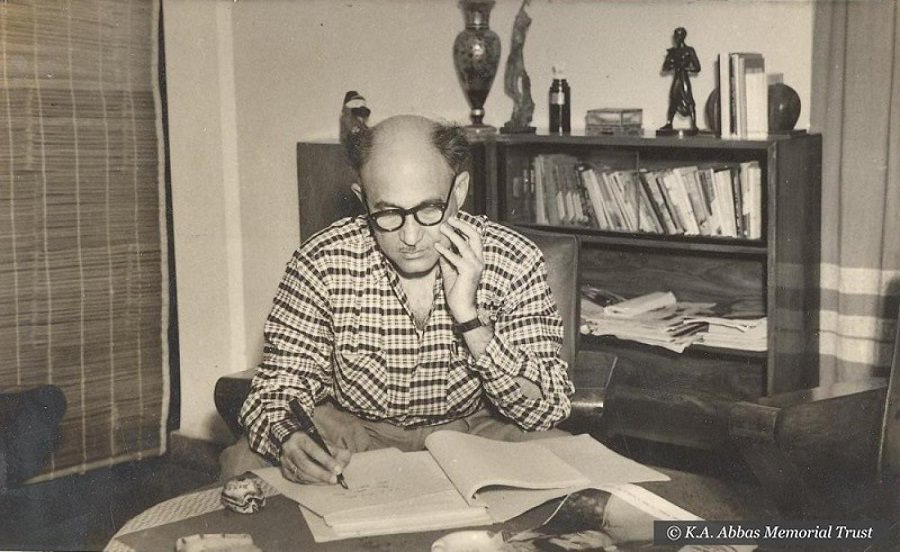
Khwaja Ahmad Abbas (1914–1987) was an Indian film director, screenwriter, novelist, and journalist whose extraordinarily prolific career spanned more than five decades and traversed the worlds of literature, journalism, theatre, and cinema. Working primarily in Hindi and Hindustani, and writing in Urdu, Hindi, and English, Abbas is regarded as one of the foundational figures of Indian parallel, or social-realist, cinema. Through both the films he directed and the screenplays he wrote for others, he helped establish a tradition of socially committed filmmaking in India that placed the lives of the poor, the dispossessed, and the marginalised at the centre of the cinematic frame.
His directorial debut, Dharti Ke Lal (1946), a harrowing account of the Bengal famine of 1943 made for the Indian People’s Theatre Association, is widely acknowledged as one of Indian cinema’s first social-realist films, and it notably opened the overseas market for Indian cinema in the Soviet Union. As a screenwriter, Abbas authored Neecha Nagar (1946), which remains the only Indian film to have won the Palme d’Or (Grand Prix) at the Cannes Film Festival, and he became the principal screenwriter for Raj Kapoor, scripting enduring classics such as Awaara (1951), Shree 420 (1955), Mera Naam Joker (1970), and Bobby (1973).
Abbas won four National Film Awards over the course of his career. His production Shehar Aur Sapna (1963) received the National Film Award for Best Feature Film, while Saat Hindustani (1969) and Do Boond Pani (1971) both won the National Film Award for Best Feature Film on National Integration. Internationally, films he wrote or directed earned recognition at Cannes and at the Karlovy Vary International Film Festival, where the Abbas-scripted Jagte Raho (1956) won the Crystal Globe Grand Prix. In 1969 the Government of India honoured him with the Padma Shri.
Beyond cinema, Abbas was a towering literary and journalistic presence. He was a founding member of the Progressive Writers’ Association and an early member of the Indian People’s Theatre Association (IPTA), and his weekly column “Last Page” — begun in The Bombay Chronicle in 1935 and continued in the Blitz until his death — became one of the longest-running newspaper columns in the history of Indian journalism. By the end of his life his output encompassed some seventy-four books, ninety short stories, around three thousand journalistic articles, and roughly forty films. He is also remembered as the filmmaker who introduced Amitabh Bachchan to the screen.
Life and Early Work
Khwaja Ahmad Abbas was born on 7 June 1914 in Panipat, in undivided Punjab, into the distinguished Ansari family, whose lineage was rich in scholarship, reform, and rebellion. His maternal great-grandfather was the celebrated Urdu poet Altaf Hussain Hali, a student of Mirza Ghalib, while his paternal grandfather, Khwaja Ghulam Abbas, was among the chief rebels of the 1857 uprising and is remembered as the first martyr of Panipat to be blown from the mouth of a cannon. His father, Ghulam-us-Sibtain, was among the first graduates of Aligarh Muslim University and modernised the preparation of Unani medicines, and his mother, Masroora Khatoon, came from a family deeply committed to education, particularly the education of girls. This inheritance of literary refinement and social conscience would shape the whole of Abbas’s subsequent life and work.
Abbas received his early schooling at the Hali Muslim High School, an institution founded by his maternal grandfather, and matriculated at the age of fifteen. He went on to Aligarh Muslim University, where he earned a Bachelor of Arts degree in English literature in 1933 and a Bachelor of Laws degree in 1935. The intellectual ferment of Aligarh, with its blend of literary culture and political awareness, proved formative; while still a law student he founded the journal Aligarh Opinion, an early indication of the journalistic vocation that would run parallel to his creative life.
After university, Abbas began his career in journalism, first at the National Call in New Delhi and then, from 1935, at The Bombay Chronicle, where he worked as a political correspondent before becoming the newspaper’s film critic. It was here that he launched “Last Page”, the weekly column that he would sustain for more than half a century. His move to Bombay placed him at the centre of the city’s intellectual and artistic ferment, and he soon became associated with the Progressive Writers’ Association and, later, the Indian People’s Theatre Association, alongside figures such as Balraj Sahni, Prithviraj Kapoor, and Utpal Dutt. These affiliations rooted Abbas in a milieu that understood art as an instrument of social transformation, a conviction that would define his cinema.
His entry into films came in 1936, when he joined Bombay Talkies — the studio of Himanshu Rai and Devika Rani — as a part-time publicist. It was to Bombay Talkies that he sold his first screenplay, Naya Sansar (1941), a film about the world of journalism that won him the Bengal Film Journalists’ Association award for Best Screenplay. From this point his literary and cinematic careers became inseparable, each feeding the other across the remaining decades of his life.
Filmmaking
Abbas’s reputation as a screenwriter was firmly established before he turned to direction. Following Naya Sansar, he wrote scripts for other directors, including Dr. Kotnis Ki Amar Kahani for V. Shantaram and, most significantly, Neecha Nagar (1946) for Chetan Anand. The latter, an allegory of class division loosely inspired by Maxim Gorky, won the Palme d’Or at the inaugural Cannes Film Festival of 1946 and remains, to this day, the only Indian film to receive that honour. The achievement signalled the arrival of a socially conscious, internationally legible Indian cinema, and Abbas was at its centre.
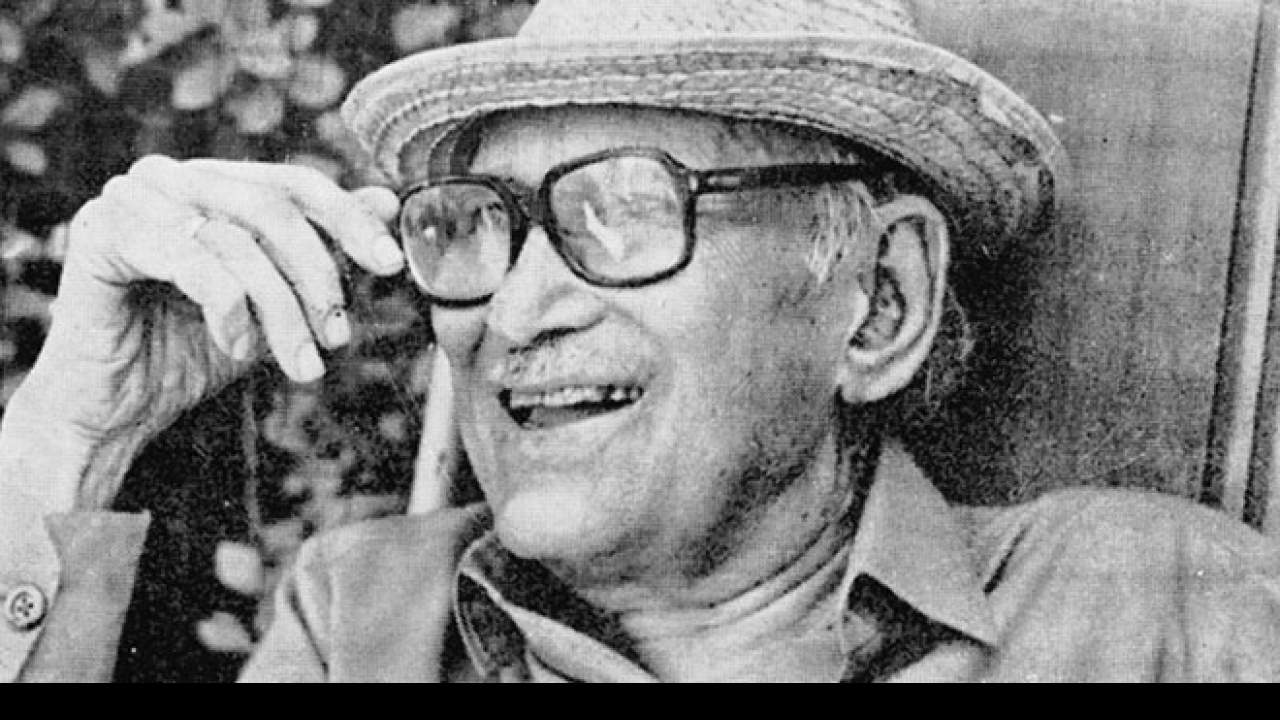
In 1945 Abbas made his directorial debut with Dharti Ke Lal (Children of the Earth), produced under the banner of the Indian People’s Theatre Association and based on the catastrophe of the Bengal famine of 1943. Drawing on documentary realism and an ensemble of IPTA performers, the film offered an unflinching portrait of rural destitution and was among the first Indian films to embrace a neo-realist aesthetic. It achieved unusual international distribution, finding a substantial audience in the Soviet Union and opening a market that later Indian films, especially those of Raj Kapoor, would exploit to great effect.
In 1951 Abbas founded his own production company, Naya Sansar, which he conceived as a vehicle for socially relevant cinema. Under its banner he produced and frequently directed a series of films distinguished by their engagement with contemporary social questions, among them Anhonee (1952), Rahi (1953) — based on a Mulk Raj Anand story about the plight of tea-plantation workers — and Munna (1954), an experimental film notable for its absence of songs, unusual for its time. Throughout the 1950s Abbas also sustained his parallel career as a screenwriter, most consequentially through his collaboration with Raj Kapoor.
The Abbas–Kapoor partnership produced some of the most beloved and ideologically charged films of the Hindi cinema’s golden age. Abbas wrote Awaara (1951), a Palme d’Or nominee whose vagabond hero became an emblem of the dispossessed across the developing world, and Shree 420 (1955), a satire of post-independence materialism. He also scripted Jagte Raho (1956), which won the Crystal Globe Grand Prix at Karlovy Vary, and continued the collaboration into later decades with Mera Naam Joker (1970), Bobby (1973), and, posthumously, the story for Henna (1991). These films carried Abbas’s humanist and socially critical sensibility into the heart of popular Indian cinema, demonstrating that mass entertainment and social conscience need not be opposed.
As a director, Abbas reached a creative peak in the 1960s. Pardesi (1957), an Indo-Soviet co-production he directed with Vasili Pronin, was nominated for the Palme d’Or at the 1958 Cannes Film Festival. Shehar Aur Sapna (1963), the story of a young couple searching for shelter amid the indifference of the metropolis, won the National Film Award for Best Feature Film and stands among his most accomplished works of social realism. The decade also saw Gyara Hazar Ladkian (1962), Teen Gharaney (1963), Hamara Ghar (1964), Aasman Mahal (1965), and Bambai Raat Ki Bahon Mein (1967), a body of work that confirmed his commitment to the urban poor and the moral dilemmas of a modernising nation.
In 1969 Abbas directed Saat Hindustani, a film about seven Indians of differing backgrounds who unite to liberate Goa from Portuguese rule. It won the National Film Award for Best Feature Film on National Integration and is forever associated with the screen debut of Amitabh Bachchan, whom Abbas cast in one of the leading roles. He followed it with Do Boond Pani (1971), a drama set against drought and the construction of an irrigation project, which likewise won the National Film Award for Best Feature Film on National Integration. His later directorial work included the documentary Char Shaher Ek Kahani (1968), the subject of a landmark censorship case, and The Naxalites (1980), an engagement with contemporary radical politics.
The censorship dispute surrounding Char Shaher Ek Kahani (A Tale of Four Cities), which contrasted the opulence of the rich with the squalor of the poor in Calcutta, Bombay, Madras, and Delhi, led Abbas to petition the Supreme Court of India in 1970. Challenging the constitutional validity of pre-censorship of films as an infringement of the right to free speech and expression, the case — K. A. Abbas v. Union of India — became a foundational judgment in Indian media law, even though the Court ultimately upheld the validity of pre-censorship. The episode testifies to Abbas’s lifelong willingness to translate his convictions into public action.
The Cinema of Khwaja Ahmad Abbas
The cinema of Khwaja Ahmad Abbas is inseparable from the political and ethical commitments that animated the whole of his life. Trained as a journalist and shaped by the Progressive Writers’ Association and the Indian People’s Theatre Association, Abbas approached film not as an autonomous aesthetic object but as a means of bearing witness — to famine, to poverty, to displacement, and to the unfulfilled promises of national independence. His was a cinema of social conscience, committed to the proposition that the camera carried a responsibility toward the lives it depicted.
What distinguished Abbas within Indian cinema was the breadth of his practice. He moved fluidly between the austere social realism of his own directorial work and the popular idiom of the films he wrote for Raj Kapoor, and in doing so he forged a connection between the parallel cinema tradition and the commercial mainstream that few of his contemporaries achieved. The vagabond of Awaara, the disillusioned everyman of Shree 420, and the famine-stricken peasants of Dharti Ke Lal are, in a sense, members of the same moral universe: figures through whom Abbas examined the condition of the ordinary Indian caught within unjust social structures.
Formally, Abbas drew on the documentary impulse and on Italian neo-realism, favouring location shooting, non-professional or theatre-trained performers, and narratives built around collective rather than purely individual destinies. His films frequently took the form of journeys, quests, or ensembles — the search for a home, the uniting of strangers for a common cause, the migration from village to city — structures that allowed him to survey the social landscape and to dramatise the interdependence of human lives. Even in his most didactic moments, his work retained a fundamental sympathy for human dignity under conditions of hardship.
Abbas was also, crucially, an internationalist. His engagement with the Soviet Union, his Indo-Soviet co-production Pardesi, and his journeys and interviews with figures from Charlie Chaplin to Mao Zedong reflect a conception of cinema as a bridge between peoples and a vehicle for solidarity across national boundaries. This cosmopolitanism, combined with his rootedness in the social realities of India, gave his cinema its characteristic double character: at once local in its concerns and global in its aspirations.
Key Themes
Poverty and Social Injustice From Dharti Ke Lal to Shehar Aur Sapna, the material conditions of the poor form the persistent centre of Abbas’s cinema. He treated destitution not as a backdrop but as a structural consequence of social and economic arrangements demanding scrutiny and redress.
National Integration and Unity Films such as Saat Hindustani and Do Boond Pani dramatise the coming together of Indians across region, religion, and class, articulating a vision of the nation founded on solidarity and shared purpose rather than division.
The City and the Migrant The metropolis — alluring, indifferent, and often cruel — recurs throughout his work. The migrant in search of shelter and livelihood, as in Shehar Aur Sapna, became one of his enduring figures for the dislocations of modern Indian life.
Humanism and Moral Conscience Whether in the social-realist mode or in popular entertainments, Abbas insisted on the dignity of the common person. His protagonists are tested by injustice yet retain a fundamental humanity that the films invite the audience to recognise and defend.
Art as Social Commitment Drawing on the ethos of the IPTA and the Progressive Writers’ Association, Abbas conceived of filmmaking as a form of public engagement, continuous with his journalism and fiction, and inseparable from the struggle for a more just society.
Internationalism and Solidarity His collaborations and travels across the Soviet Union and beyond reflect a belief in cinema as a means of connection between peoples, and in the artist as a participant in a global conversation about freedom and equality.
Selected Filmography
Dharti Ke Lal (1946)
Abbas’s directorial debut, produced for the Indian People’s Theatre Association and set against the Bengal famine of 1943. One of the earliest works of Indian social realism, it depicted rural starvation with documentary directness and achieved notable distribution in the Soviet Union, opening an overseas market for Indian cinema.
Neecha Nagar (1946)
Written by Abbas and directed by Chetan Anand, this allegory of class division remains the only Indian film to win the Palme d’Or (Grand Prix) at the Cannes Film Festival. It stands as a landmark in the international recognition of socially committed Indian cinema.
Awaara (1951)
Scripted by Abbas for Raj Kapoor, Awaara fused popular melodrama with social critique in the story of a vagabond shaped by poverty and circumstance. Nominated for the Palme d’Or, it became an international phenomenon, especially in the Soviet Union, and exemplified Abbas’s ability to embed social conscience within mass entertainment.
Munna (1954)
Produced and directed by Abbas under the Naya Sansar banner, Munna followed an orphaned child’s search for his mother. Made without songs — a bold departure from the conventions of Hindi cinema — it is among his most rigorous experiments in realist form.
Shree 420 (1955)
Another of Abbas’s celebrated collaborations with Raj Kapoor, this satire of urban materialism and moral compromise in newly independent India remains one of the most enduring films of its era, its songs and imagery permanently embedded in the popular imagination.
Pardesi (1957)
An Indo-Soviet co-production directed by Abbas with Vasili Pronin, recounting the journey of a Russian traveller to medieval India. Nominated for the Palme d’Or at the 1958 Cannes Film Festival, the film embodied Abbas’s internationalist conception of cinema.
Shehar Aur Sapna (1963)
Winner of the National Film Award for Best Feature Film, this account of a young couple’s search for a home amid the indifference of the city is among Abbas’s finest achievements in social realism, giving cinematic form to the precarity of urban migrant life.
Saat Hindustani (1969)
A drama of national integration in which seven Indians of varied backgrounds unite to liberate Goa, the film won the National Film Award for Best Feature Film on National Integration. It is also remembered as the screen debut of Amitabh Bachchan, whom Abbas cast in a leading role.
Do Boond Pani (1971)
Set against drought and the promise of irrigation, this drama of rural hardship and national development won the National Film Award for Best Feature Film on National Integration, reaffirming Abbas’s commitment to the lives of the rural poor.
The Naxalites (1980)
One of Abbas’s late directorial works, engaging directly with the radical Naxalite movement and the politics of rural insurgency. The film won a Gold Award for direction and testifies to his enduring willingness to confront contemporary political realities on screen.
Legacy
Khwaja Ahmad Abbas died in Bombay on 1 June 1987, days before his seventy-third birthday, having continued to work through a series of grave illnesses in his final years. He left behind a legacy of unusual breadth, occupying a place in Indian cultural history that few have matched: pioneer of social-realist cinema, prolific novelist and short-story writer, and one of the most influential journalists of his age. His weekly column “Last Page” ran for more than fifty years, and his books — among them the novel Inquilab and the autobiography I Am Not an Island — secured his standing as a major figure in Urdu, Hindi, and English letters.
Within cinema, Abbas’s influence operated on two levels. As a director he helped inaugurate the tradition of Indian parallel cinema, demonstrating that film could engage seriously with famine, poverty, displacement, and injustice; in this he anticipated and enabled the work of later directors associated with the New Indian Cinema of the 1970s and beyond. As a screenwriter he carried that same social consciousness into the popular mainstream through his collaborations with Raj Kapoor, shaping films that reached vast audiences across India and the wider world while retaining a recognisable moral and political vision.
His honours reflect this dual achievement. He won four National Film Awards, was awarded the Padma Shri in 1969, and received literary recognition including the Ghalib Award for his contribution to Urdu prose and the Soviet Union’s Vorovsky Literary Award. Films he wrote or directed were honoured at Cannes and Karlovy Vary, and his legal challenge in K. A. Abbas v. Union of India left a permanent mark on the jurisprudence of free expression in India. He is also credited with discovering Amitabh Bachchan, who would become the most celebrated actor of his generation.
More than three decades after his death, Abbas endures as a model of the engaged artist — one for whom literature, journalism, and cinema were not separate vocations but complementary instruments of a single purpose. His insistence that art should speak to the conditions of the poor and the marginalised, and his demonstration that such commitment could coexist with popular appeal, continue to inform debates about the social responsibilities of Indian cinema. In the long history of that cinema, Khwaja Ahmad Abbas occupies an indispensable place: a writer, thinker, and dreamer who turned the camera toward the realities of his time and insisted that they be seen.
Khwaja Ahmad Abbas on Art House Cinema
No Results Found
The page you requested could not be found. Try refining your search, or use the navigation above to locate the post.