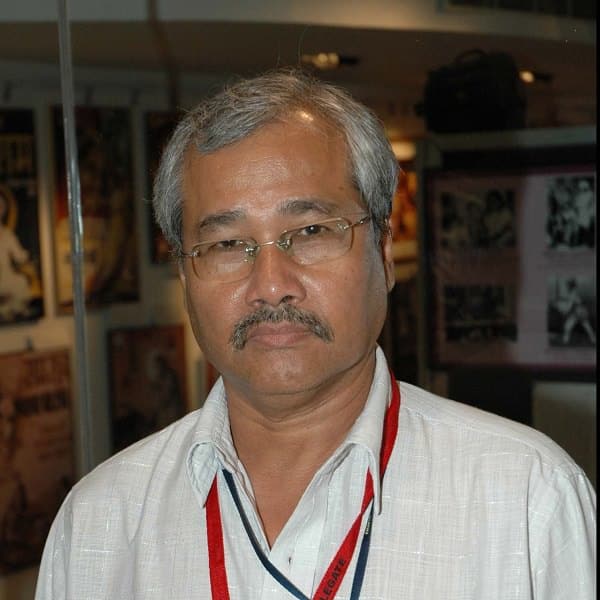
Rima Das
- Role
- Filmmaker
- Works in
- Assamese
- Born
- 13 May 1981Kalardiya
- On Art House Cinema
- No films yet

Rima Das writes, shoots, edits and produces her own films, and for most of her career she has done all of it at once, in and around the Assamese village where she was raised. Her second feature, Village Rockstars, took the Swarna Kamal for Best Feature Film at the 65th National Film Awards, announced in New Delhi on 13 April 2018 by a jury headed by Shekhar Kapur. Later that year the film was chosen from twenty-eight Indian titles as the country’s official submission to the 91st Academy Awards, the first Assamese film sent to the Oscars. Das had never attended a film school. She shot Village Rockstars on a Canon 5D with a single lens, bought by selling gold jewellery and raising a loan, across close to four years of filming.
The films are made almost entirely in Kalardiya and Chaygaon, in Assam’s Kamrup district, roughly fifty kilometres southwest of Guwahati, and cast from her family and her neighbours. Antardrishti (Man with the Binoculars) reached festivals in 2016. Village Rockstars followed in 2017, Bulbul Can Sing in 2018, Tora’s Husband in 2022, Village Rockstars 2 in 2024 and Not a Hero in 2026. Three consecutive features premiered at the Toronto International Film Festival, and Tora’s Husband was the first Indian film selected to compete for Toronto’s Platform Prize.
The award record is unusually dense for a filmmaker working at this scale. Village Rockstars won four National Film Awards at the 65th ceremony, taking Best Feature Film, Best Editing for Das, Best Child Artist for Bhanita Das and Best Location Sound Recordist for Mallika Das. Bulbul Can Sing won the National Film Award for Best Feature Film in Assamese at the 66th ceremony, announced on 9 August 2019. Both films took the Golden Gateway in the India Gold competition at the Mumbai Film Festival, in 2017 and 2018 respectively. Village Rockstars was named Best Indian Film of 2017 by the Film Critics Circle of India. Village Rockstars 2 won the Kim Jiseok Award at the 29th Busan International Film Festival in October 2024, and Not a Hero received a Special Mention from the Youth Jury in Generation Kplus at the 76th Berlinale in February 2026.
What holds the work together is a fixed subject and a fixed place. Das films children and adolescents at the point where childhood stops being available to them, and she films them in the village she comes from, over years rather than weeks, so that the performers visibly age inside the finished picture. Floods arrive because floods arrived. The method is the argument.
Life and Early Work
Rima Das was born on 13 May 1981 in Kalardiya, a village near Chaygaon in Kamrup district, Assam, about fifty kilometres southwest of Guwahati. Her father was a teacher. Assam in the 1980s and 1990s had a thin exhibition culture outside Guwahati, its cinema sustained largely by the small parallel tradition around Jahnu Barua and Bhabendra Nath Saikia.
Das took a master’s degree in Sociology at Pune University and cleared the National Eligibility Test, the qualifying examination for lectureships in Indian universities. An academic career was the expected next step. Instead she moved to Mumbai in 2003 to become an actor, and spent several years on the fringes of theatre and television. She appeared in stage work including an adaptation of Premchand’s Godaan staged at Prithvi Theatre. The acting career did not take.
Mumbai gave her something else. It was there that she began watching world cinema seriously, and the filmmakers she has named as formative are Satyajit Ray, Ingmar Bergman and Majid Majidi. Majidi is the closest fit: the Iranian films built on child protagonists, non-professional casts and small domestic stakes describe the shape of her own later work fairly exactly. Watching those films persuaded her that a feature did not require a studio, a unit or a budget.
Her first short, Pratha, was made in 2009. She then bought a Canon 5D Mark II, and in 2013 began shooting her first feature, Antardrishti, in Kalardiya. On the absence of training she has been direct: “The fact that I am not trained and I didn’t go to a film school in a way helped me to explore more and to be true to my vision. Be it the writing, direction, cinematography or editing, I didn’t follow a method trained professionals would.” The claim is easy to dismiss as retrospective self-justification. The films make it harder to dismiss, because the things they do well are precisely the things a trained unit finds expensive: waiting, repeating, coming back next season.
Filmmaking
Antardrishti was screened in 2016 at the Mumbai Film Festival and at the Tallinn Black Nights Film Festival, where it played in the First Features competition. It attracted little attention outside those rooms. Its importance to Das’s career is indirect. During post-production she came across a group of village children playing imaginary instruments along to a song on the radio, and that image became the starting point for her next film.
Village Rockstars was shot in Kalardiya over roughly four years with no crew. Das directed, wrote, produced, shot and edited it, with assistance from her cousin Mallika Das, who recorded the location sound. The lead role of Dhunu went to another cousin, Bhanita Das, who was ten when filming began. Basanti Das plays Dhunu’s widowed mother and Manabendra Das her elder brother. Dhunu watches a village band whose instruments are cut from styrofoam, decides she wants a real guitar and a real band, and begins saving rupee by rupee. Then the flood takes the family’s crop and the saving stops. Das has described the working conditions plainly: “I shot this film without any crew and cast of the film wasn’t trained in acting, so the process to make this film was hard and challenging.”
The film premiered in the Discovery section at Toronto on 9 September 2017 and travelled to San Sebastián’s New Directors competition, Kerala, Cairo, Tallinn, Hong Kong and Glasgow, among many others. At the Mumbai Film Festival in October 2017 it took three prizes: the Golden Gateway in India Gold, the Oxfam Best Film on Gender Equality award and the Young Critics Choice. Reviewers abroad reached for the same word. Deborah Young in The Hollywood Reporter wrote that the storytelling “is so offhand it borders on documentary” and that the action follows the seasons. Maggie Lee in Variety fixed on the treatment of Dhunu’s first period, and the rituals that follow it, as “attempts to enforce her otherness”. Saibal Chatterjee, reviewing for NDTV, gave the film five stars and wrote that it “dons a raw, innocent cloak and exudes a degree of purity that deliberate craft can never bestow on a film”. Barry Hertz gave it three and a half stars out of four in The Globe and Mail.
The National Film Awards followed on 13 April 2018, and the Oscar submission in September. India’s entry did not make the December shortlist of nine. Village Rockstars reached Indian cinemas only on 28 September 2018, more than a year after Toronto, and arrived on Netflix on 20 January 2020. The gap between international recognition and domestic distribution is the ordinary fate of Indian films of this kind, and it is worth stating without complaint: the film was famous in India for a year before most Indians could see it.
Bulbul Can Sing premiered in Contemporary World Cinema at Toronto on 7 September 2018, again shot in Kalardiya. The film follows three fifteen-year-olds, Bulbul, Bonny and Suman, played by Arnali Das, Banita Thakuriya and Manoranjan Das. Bulbul is caught with a boy. Suman is bullied for not behaving as village boys are expected to behave, and the pressure that follows destroys one of the three. Das has said she wanted the film to be subtle and impactful at once, and the restraint is real: the most violent event in the film happens between scenes. It won a Special Mention in Generation 14plus at the Berlinale in February 2019, the Golden Gateway at Mumbai in 2018, and the National Film Award for Best Feature Film in Assamese. Wendy Ide in Screen called it “a heartfelt, acutely honest portrait of rural Indian adolescence”. Deborah Young returned to Das’s work in The Hollywood Reporter and found the film “quietly insightful”, with “a pleasing simplicity and realism”. Indian release came on 20 September 2019.
Two smaller projects belong to 2019. For Each Other, a short made for the anthology Neighbours, premiered at the third Pingyao International Film Festival. Sunshine Dreamers, her first documentary fiction, was made as part of the BRICS co-production Kids & Glory alongside directors from Brazil, Russia, China and South Africa. In the same period Das was appointed an ambassador for Toronto’s Share Her Journey campaign, and she has since sat on juries at the Berlinale Generation 14plus in 2020, the Mumbai and Tallinn festivals and the Zlin Film Festival for Children and Youth.
Tora’s Husband is the outlier. Shot over two years in Chaygaon during the COVID-19 pandemic, it follows Jaan, a small-town bakery and restaurant owner played by Abhijit Das, whose business and marriage come apart under lockdown. Tarali Kalita Das plays his wife. Das lost her father, Bharat Chandra Das, during the pandemic, and dedicated the film to him. She has said the shoot was her hardest, with “this constant feeling of fear and restlessness, which my characters also depict”. The film had its world premiere at Toronto on 11 September 2022 in the Platform competition, the first Indian film chosen for that section, and went on to Busan, Bangkok, Hainan and Kolkata. It is her only feature centred on an adult, and the change of subject exposes the limits of her method.
In 2024 Das directed Emma, a segment of the Melbourne-set anthology My Melbourne, co-directed with Samira Coxx and following a deaf dancer’s route to self-acceptance. The other segments were made by Onir, Kabir Khan and Imtiaz Ali under an initiative of the Indian Film Festival of Melbourne and the Victorian screen agency. It is her first film shot outside Assam.
Village Rockstars 2 returned to Dhunu seven years on, with Bhanita Das, Basanti Das and Manabendra Das all resuming their roles, and with Fran Borgia’s Singapore company Akanga Film Asia joining Das’s own Flying River Films as co-producer. Dhunu is in her late teens now, still climbing trees and still wanting the band, and the film is about the closing of that possibility. It premiered at the 29th Busan International Film Festival on 4 October 2024 and won the Kim Jiseok Award, given to Asian directors with more than three features behind them. The European premiere came in Generation 14plus at the 75th Berlinale on 16 February 2025. Nikki Baughan, in ScreenDaily, praised Bhanita Das for “a low-key, naturalistic performance conveying Dhunu’s deep connection to this land and her family”, and read the film as amplifying the position of people in Assam facing climate change and a fight over land and resources. That reading has support outside the film. In October 2023 Das joined protests against a plan to fell more than a thousand trees for the widening of National Highway 17 in Assam.
Not a Hero, again co-produced with Akanga Film Asia, premiered in Generation Kplus at the 76th Berlin International Film Festival on 14 February 2026 and received a Special Mention in the Crystal Bear voted by the Generation Youth Jury. Eleven-year-old Mivan, played by Bhuman Bhargav Das, is sent from the city to an ancestral village to live with his young aunt Pahi, played by Sukanya Boruah. Nothing dramatic happens. The film runs 97 minutes and moves between Assamese, Hindi and English, the first of Das’s features to work across three languages.
The Cinema of Rima Das
Das’s cinema is built on a refusal of the shooting schedule. A conventional production compresses a story into a fixed number of days and manufactures whatever weather, growth and change the script requires. Das does the reverse: she keeps the camera in one place for years and takes what the place gives her. Dhunu is ten at the start of Village Rockstars and visibly older at the end, and the flood that ruins the family’s crop is a flood that happened. The seasons in the film are the seasons of four Assamese years. This is why the writing about her work keeps returning to the word documentary even though the films are scripted fictions.
The camera work follows from the same economy. One lens means no coverage, so Das cuts less than a trained editor would and lets scenes run at the length of an action rather than the length of a beat. She shoots at eye level with children and low from behind them when they run, and the framing is often loose enough that a goat or a passing cousin wanders through. The sound is location sound, recorded by Mallika Das on Village Rockstars with results good enough to win a National Award. There is almost no score. What carries the films instead is water: rain on a tin roof, the river, feet in flooded paddy.
The politics are handled at the same low volume. Village Rockstars shows Dhunu’s mother defending her daughter’s right to climb trees and swim with boys against neighbours who think it improper, and it shows the segregation and the sari that follow Dhunu’s first period, without a line of speech condemning either. Bulbul Can Sing pushes further and pays for it, following the punishment of adolescent desire through to a death that occurs off screen. Das is a feminist filmmaker who almost never argues.
The method has costs, and it is worth naming them. Tora’s Husband, the one feature about an adult, runs long and drifts, and the observational patience that gives the child films their texture reads as shapelessness when applied to a man whose crisis is financial and interior rather than seasonal. The problem is structural: Das’s technique reveals change over time in bodies, and a bankrupt bakery owner does not change visibly. There is also the question of repetition. Four of her six features are set in the same handful of villages, follow a child or adolescent through a rural year, and end with an accommodation to loss. Not a Hero tests this by bringing an outsider in from the city rather than following an insider outward, which is a variation on the pattern rather than a departure from it. Whether the pattern can absorb another film is a fair question to ask.
Her position in Indian cinema is nonetheless secure and slightly odd. She is the most internationally visible Assamese director since Jahnu Barua, and she reached that position without industry backing and without a distributor at the time of her Oscar submission. Younger filmmakers across India cite the economics of Village Rockstars more often than its style. Das has been generous with the details.
Key Themes
The end of childhood. Every one of Das’s features about young people is set at the moment when a child is being told what she may no longer do. Dhunu is separated from the boys after menstruating. Bulbul is caught with a boy and beaten for it. Dhunu in the sequel, now in her late teens, keeps climbing trees that she is too old to climb. The films do not treat this as a rite of passage. They treat it as a loss with a date on it.
Water and land. Floods in Assam are annual, and Das films them as household events rather than catastrophes: the crop is gone, the house is wet, the family goes on. In Village Rockstars 2 the pressure shifts from water to land, with the felling of trees and the fight over resources entering the frame directly, a concern Das has also carried into public protest against highway clearance in 2023.
Family as cast. Das casts her relatives and neighbours and keeps them across films. Bhanita Das, Basanti Das, Manabendra Das, Boloram Das and Bishnu Kalita appear in both Village Rockstars films. Mallika Das assists behind the camera and appears in front of it. The continuity is not a stunt. It allows a sequel in which the ageing on screen is real ageing.
Work. Money is always specific in these films. Dhunu counts coins towards a guitar. Her mother sells snacks at a village function. Jaan in Tora’s Husband watches a bakery fail. Poverty in Das’s cinema is a set of small transactions rather than a condition.
Silence. Das cuts dialogue to the minimum a scene will bear and lets faces and weather carry the rest. The most consequential events in Bulbul Can Sing and Village Rockstars happen without commentary from anyone in the film.
Selected Filmography
Pratha (2009)
Her first short film, made before she owned a camera of her own. Rarely screened, and useful now mainly as the point at which she stopped trying to act.
Antardrishti / Man with the Binoculars (2016)
Her first feature, begun in Kalardiya in 2013 on a Canon DSLR. Screened at the Mumbai Film Festival and in the First Features competition at Tallinn Black Nights. The film that taught her the working method she has used since, and the shoot during whose post-production she found the idea for Village Rockstars.
Village Rockstars (2017)
Dhunu, ten years old, wants a guitar. Four years of shooting in one village with a single lens. Premiered at Toronto in September 2017. Four National Film Awards including Best Feature Film, three prizes at Mumbai, Best Indian Film of 2017 from the Film Critics Circle of India, and India’s entry to the 91st Academy Awards. The film that made Assamese cinema internationally legible again.
Bulbul Can Sing (2018)
Three fifteen-year-olds in the same village, and the cost of adolescent desire in a place with fixed rules about it. Toronto premiere, Special Mention in Generation 14plus at the Berlinale in 2019, the Golden Gateway at Mumbai, and the National Film Award for Best Feature Film in Assamese. Formally her most controlled film.
Tora’s Husband (2022)
A bakery owner in Chaygaon during the pandemic, filmed over two years while the pandemic was happening. The first Indian film in Toronto’s Platform competition. Dedicated to her father. Her most ambitious attempt to leave the child-centred film, and her least resolved.
Village Rockstars 2 (2024)
Dhunu at seventeen, with the same performers seven years older. Won the Kim Jiseok Award at Busan in October 2024 and played Generation 14plus at the Berlinale in February 2025. An India-Singapore co-production, and the first of her features to be made with an international partner.
Not a Hero (2026)
A boy sent from the city to his ancestral village, and the slow effect of his presence on the adults there. Premiered in Generation Kplus at the 76th Berlinale and took a Special Mention from the Youth Jury. Her first feature in three languages.
Legacy
The most concrete part of Das’s legacy is a demonstration. Before Village Rockstars it was possible to believe that a feature capable of competing at Toronto, Busan and Berlin required money, a crew and a schedule. Das made one with a second-hand-priced DSLR, one lens, her cousins and four years. The lesson has been absorbed quickly by filmmakers working outside Mumbai, where the barrier has always been access to production infrastructure rather than talent, and where the argument that a film cannot be made locally has become harder to sustain.
For Assamese cinema in particular the consequences are direct. Assam had produced National Award-winning work before, Jahnu Barua’s Halodhia Choraye Baodhan Khai in 1988 above all, but the state’s film industry was small and its international presence intermittent. Das has now placed Assamese-language films in Toronto, Busan and Berlin across nine years, and has done so consistently enough that Assamese submissions are no longer treated as curiosities by programmers. The Kim Jiseok Award for Village Rockstars 2 is the most substantial competitive prize an Assamese film has taken at a major Asian festival.
She has also become part of the festival apparatus rather than only a beneficiary of it. Das has served on juries at the Berlinale Generation 14plus, the Mumbai and Tallinn festivals and the Zlin Film Festival for Children and Youth, and holds an ambassadorship for Toronto’s Share Her Journey campaign for gender equality in the industry. Krishna Kanta Handiqui State Open University conferred a doctorate on her at its third convocation in February 2018, and GQ India named her among its fifty most influential young Indians the same year. Those last two are honours of visibility, not of craft. They matter anyway, because visibility is exactly what a film made in Kalardiya on no money would otherwise lack.
The critical question that remains open is whether the body of work will be read as a single long project or as a set of variations that thinned over time. The child films are unquestionably of a piece, and Village Rockstars 2 did something no other Indian film has attempted at this scale by returning to the same non-professional cast after seven years and letting the interval be the subject. Against that, Tora’s Husband suggests the method is narrower than its practitioner would like. Das is in her mid-forties and has made six features in a decade. The answer is not yet available.