
Sai Paranjape
Sai Paranjpye occupies a distinctive place in the history of Indian cinema as a writer-director whose work bridged the worlds of art-house seriousness and popular accessibility. Active across Marathi, Hindi, and English in theatre, radio, television, children's cinema, the documentary, and the feature film, she fashioned a body of work characterised by humane warmth, social conscience, and a gently satirical wit rarely found in the more austere precincts of India's parallel cinema. While her contemporaries in the new wave often pursued a sombre realism, Paranjpye demonstrated that films of conscience could also be buoyant, funny, and tender, and in doing so she enlarged the expressive range of the movement to which she belonged.
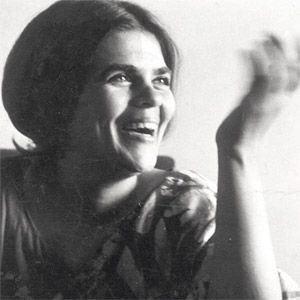
Born in 1938 into a family of remarkable intellectual and artistic accomplishment, Paranjpye trained at the National School of Drama and built her early reputation in radio, theatre, and the nascent medium of Indian television before turning to the cinema. Her feature debut, Sparsh (1980), a sensitive love story set in a school for the blind, announced a film-maker of unusual emotional intelligence; it was followed in quick succession by the affectionate urban comedy Chashme Buddoor (1981) and the moral fable Katha (1983), two of the most fondly remembered films of the period. Together these works established her as a rare figure who could move audiences and provoke thought without recourse to either melodrama or polemic.
Over a career spanning more than four decades, Paranjpye won four National Film Awards and two Filmfare Awards, and her films repeatedly engaged with social questions, from disability and literacy to migrant labour and environmental degradation. In 2006 the Government of India conferred upon her the Padma Bhushan, the country's third-highest civilian honour, in recognition of her contribution to the arts. Beyond the feature film she remained a prolific author of children's literature, a playwright, a maker of documentaries, and an administrator who twice chaired the Children's Film Society of India.
Once describing herself, with characteristic self-deprecation, as "a first-class writer and a second-class director," Paranjpye built her cinema upon the foundation of the written word: tightly constructed screenplays, sparkling dialogue, and a storyteller's instinct for character. That literary sensibility, combined with a deep humanism and an abiding interest in the dignity of ordinary lives, has secured her reputation as one of the most cherished and individual voices in modern Indian cinema.
Life and Early Work
Sai Paranjpye was born on 19 March 1938 in Lucknow, in what was then the United Provinces of British India, into a lineage distinguished in both Indian public life and the arts. Her mother, Shakuntala Paranjpye, was an accomplished actor of the 1930s and 1940s who appeared in V. Shantaram's celebrated Hindi social film Duniya Na Mane (1937) before becoming a writer and social worker; Shakuntala was later nominated to the Rajya Sabha, the upper house of the Indian Parliament, and was herself honoured with the Padma Bhushan. Sai's father, Youra Sleptzoff, was a Russian watercolour painter and the son of a Russian general. Her parents separated shortly after her birth, and she was raised in the household of her maternal grandfather.
That grandfather, Sir R. P. Paranjpye, was a renowned mathematician and educationist who served as India's High Commissioner to Australia from 1944 to 1947. As a consequence of his postings and the family's intellectual milieu, Sai grew up and was educated across several Indian cities, including Pune, as well as for a few years in Canberra. The atmosphere of learning, public service, and creative endeavour that surrounded her shaped her sensibility from an early age. A formative influence was her uncle, Achyut Ranade, a film-maker of the 1940s and 1950s, to whose home on Fergusson Hill in Pune the young Sai would walk to hear him recount stories as though narrating a screenplay, an early apprenticeship in dramatic structure.
Paranjpye's literary gifts emerged precociously: her first book of fairy tales, Mulancha Mewa, written in Marathi, was published when she was only eight years old. This early facility with language and narrative would remain the bedrock of her later work in every medium. She pursued her formal training in the dramatic arts at the National School of Drama in New Delhi, from which she graduated in 1963, joining the cohort of artists who would carry the techniques of modern theatre into Indian cinema and television.
Her professional career began at All India Radio in Pune, where she worked as an announcer and quickly became involved with the station's children's programming, an enthusiasm for young audiences that would persist throughout her life. Over the following years she wrote and directed plays in Marathi, Hindi, and English for both adults and children, among them the well-regarded Marathi works Jaswandi, Sakkhe Shejari, and Albel. She married the theatre artist Arun Joglekar, with whom she had a son, Gautam, and a daughter, Winnie; though the marriage ended after a short time, the two remained friends until Joglekar's death in 1992, and he went on to act in her films Sparsh and Katha.
Filmmaking
Before she made a feature film, Paranjpye served a long and varied apprenticeship in television and children's cinema that decisively shaped her craft. She worked for many years as a director and producer with Doordarshan in Delhi, becoming one of India's earliest television directors. Her first made-for-television film, The Little Tea Shop (1972), won the Asian Broadcasting Union Award at Tehran, and later that year she was chosen to produce the inaugural programme of Bombay Doordarshan. During the 1970s she twice served as Chairperson of the Children's Film Society of India, for which she directed several children's films, including the award-winning Jadoo Ka Shankh (1974) and Sikandar (1976).

Paranjpye's feature debut, Sparsh (The Touch, 1980), remains among her most admired achievements. Starring Naseeruddin Shah as the blind principal of a school for the visually impaired and Shabana Azmi as a widow who comes to work there, the film explores a tentative romance complicated by the man's pride and his fear of dependence. Restrained, observant, and free of sentimentality, Sparsh won five awards, including National Film Awards for Best Feature Film in Hindi and Best Screenplay, and established Paranjpye as a writer-director of rare tact and psychological insight.
She followed it with the film for which she is perhaps most widely loved, Chashme Buddoor (1981), a romantic comedy about three young men sharing a barsaati in Delhi and the gentle, studious one among them who wins the affection of a young woman selling detergent door to door. Buoyant, observant, and affectionately drawn, the film became a box-office success and a touchstone of a more humane strand of urban comedy; its enduring popularity was confirmed when it was remade in 2013. The next year brought Katha (1983), a musical satire transposing the fable of the hare and the tortoise to a Bombay chawl, in which an honest, retiring clerk played by Naseeruddin Shah is outpaced by a glib, opportunistic charmer played by Farooq Shaikh. Katha too was honoured at the National Film Awards.
Through the 1980s Paranjpye continued to move fluidly between cinema and television, making the serials Ados Pados (1984) and Chhote Bade (1985) among others. Her later features increasingly foregrounded social themes. Angootha Chhaap (1988) dramatised the National Literacy Mission, while Disha (1990), starring Shabana Azmi, Nana Patekar, and Om Puri, examined the plight of migrant labourers torn between their villages and the textile mills of the city, and earned wide critical respect for its unsentimental sympathy. She went on to make Papeeha (1993), with its concern for the natural environment, and Saaz (1997), a drama of two singing sisters and their rivalry widely understood to be inspired by the lives of the playback singers Lata Mangeshkar and Asha Bhosle.
Alongside her features, Paranjpye built a substantial body of documentary work, directing films such as Helping Hand, Talking Books, Capt. Laxmi, Warna Orchestra, and a portrait of the composer Pankaj Mullick. Her 1993 documentary Choodiyan, on an anti-liquor agitation led by women in a small Maharashtrian village, won the National Film Award for Best Film on Social Issues. She continued to make films for and about children and social causes, including Bhago Bhoot (2000) for young audiences, Chaka Chak (2005) on environmental awareness, and the documentary Suee (The Needle, 2009), made in partnership with the Sankalp Rehabilitation Trust to combat the stigma surrounding injecting drug users, which was broadcast on Doordarshan on World AIDS Day. In 2007 she chaired the feature-film jury of the 55th National Film Awards.
The Cinema of Sai Paranjpye
The cinema of Sai Paranjpye is defined above all by its humanism and its tone. Where much of India's parallel cinema in the 1970s and 1980s pursued a grave, often grim social realism, Paranjpye found a way to address serious subjects, blindness, poverty, migration, illiteracy, addiction, with warmth, humour, and a light, observant touch. Her films take ordinary people seriously without solemnity, treating their dignity, their foibles, and their small triumphs as worthy of close attention. This balance of social conscience and comic generosity is her signal contribution to Indian film.
Trained as a dramatist and steeped from childhood in storytelling and literature, Paranjpye built her cinema on the strength of the screenplay. Her films are admired for their tight construction, their precisely observed characters, and above all their dialogue, which is natural, witty, and revealing of character. Her own assessment of herself as primarily a writer is borne out by the literary care of her scripts, several of which were recognised with national awards for screenplay and dialogue. Visually her style is unobtrusive and humane, placing performance and situation before spectacle, and drawing from her actors, frequently Naseeruddin Shah, Shabana Azmi, Farooq Shaikh, and Deepti Naval, performances of relaxed naturalism.
Key Themes
The dignity of ordinary lives: Paranjpye's films are populated by clerks, teachers, students, labourers, and householders, and they insist on the worth and complexity of unremarkable people, finding drama and humour in everyday situations rather than in grand events.
Social conscience without polemic: From disability in Sparsh to literacy in Angootha Chhaap, migrant labour in Disha, and addiction in Suee, her work engages pressing social questions, yet it persuades through empathy and storytelling rather than through didacticism or rhetoric.
Comedy and gentle satire: A buoyant, affectionate humour pervades her best-known films, and in works such as Katha she turns to fable and satire to examine honesty, ambition, and opportunism in modern urban life.
The primacy of the word: Sharp, character-revealing dialogue and meticulously structured screenplays form the backbone of her cinema, reflecting her formation as a writer and dramatist.
Childhood and the young audience: A lifelong commitment to children, expressed through her books, her plays, her television work, and her films for the Children's Film Society of India, informs the playfulness and moral clarity of much of her output.
Women's lives and agency: From the widow of Sparsh to the rural women of Choodiyan and the rival sisters of Saaz, her films attend closely to the inner lives, choices, and struggles of women.
Selected Filmography
Sparsh (1980). Paranjpye's feature debut, a delicately observed love story between the blind principal of a school for the visually impaired and a widow who joins its staff. Winner of National Film Awards for Best Feature Film in Hindi and Best Screenplay, it remains a landmark of sensitive, character-driven film-making and announced one of the most humane voices in Indian cinema.
Chashme Buddoor (1981). A beloved romantic comedy about three young men sharing a Delhi barsaati and the gentle student who finds love. A box-office success that has endured as a touchstone of warm, intelligent urban comedy, and was remade in 2013, it exemplifies Paranjpye's gift for affectionate observation of everyday life.
Katha (1983). A musical satire that retells the fable of the hare and the tortoise in a Bombay chawl, contrasting an honest, self-effacing clerk with a glib opportunist. National-award-winning and widely admired, it distils Paranjpye's interest in moral character and her command of comic storytelling.
Angootha Chhaap (1988). A feature drawn from the National Literacy Mission, dramatising the value and difficulty of adult literacy. It typifies her ability to render a social cause as human, engaging drama.
Disha (1990). Starring Shabana Azmi, Nana Patekar, and Om Puri, a sympathetic study of migrant workers caught between village and city and the textile mills of Bombay. Among her most respected later features for its unsentimental treatment of displacement and labour.
Choodiyan (1993). A documentary on an anti-liquor agitation led by women in a small Maharashtrian village, made for the Films Division. Winner of the National Film Award for Best Film on Social Issues, it reflects her commitment to women's agency and grassroots social change.
Saaz (1997). A drama of two singing sisters and the rivalry that shadows their bond, widely understood to be inspired by the lives of the playback singers Lata Mangeshkar and Asha Bhosle. A mature exploration of family, talent, and competition.
Suee (2009). A documentary made in partnership with the Sankalp Rehabilitation Trust addressing the treatment, care, and rehabilitation of injecting drug users and the stigma they face. Broadcast on Doordarshan on World AIDS Day, it confirms her enduring engagement with marginalised lives.
Legacy
Sai Paranjpye's legacy rests on her demonstration that Indian cinema could be at once socially engaged and genuinely enjoyable. Within the parallel-cinema movement she carved out a tone distinctively her own, gentle, witty, and humane, that influenced subsequent generations of film-makers seeking to combine accessibility with substance. Films such as Sparsh, Chashme Buddoor, and Katha are now regarded as classics of their era, and the affection in which they continue to be held testifies to the durability of her vision.
Her contribution was recognised across a long career. She received four National Film Awards and two Filmfare Awards, and in 2006 she was awarded the Padma Bhushan for her services to the arts. Later honours included the Maharashtra Foundation Literature and Social Work Award in 2017, the Fergusson Gaurav Puraskar from her alma mater in 2019, and the Padmapani Lifetime Achievement Award in 2025. In 2016 she published her autobiography in Marathi, Saya: Majha Kalapravas, a bestseller that reached its fifth edition, followed in 2020 by an English version, A Patchwork Quilt: A Collage of My Creative Life.
Beyond the cinema, Paranjpye's influence extends into theatre, television, children's literature, and the documentary, fields in which she worked with equal seriousness and to lasting effect. Her stewardship of the Children's Film Society of India and her many books and plays for young readers shaped the cultural lives of generations of Indian children. As one of the relatively few women to achieve prominence as a writer-director in her generation, she also helped to widen the possibilities for women in Indian film-making.
Taken together, her work represents a singular synthesis of literary craftsmanship, social awareness, and humane comedy. In a national cinema often divided between commercial spectacle and austere art, Sai Paranjpye charted a third path, films of intelligence and feeling that neither condescended to their audiences nor abandoned the pleasures of storytelling. It is for this rare and generous balance that she is remembered as one of the most distinctive and enduring figures in the history of Indian cinema.
Sai Paranjape on Art House Cinema
