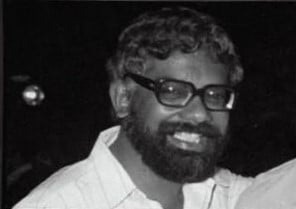
Rabindra Dharmaraj
- Role
- Filmmaker
- Works in
- Hindi
- Born
- 19 May 1946Sivakasi
- On Art House Cinema
- 1 film ↓

Rabindra Dharmaraj on Art House Cinema
Rabindra Dharmaraj was an Indian director whose only feature film was the Hindi drama Chakra (1981), set in a Bombay slum. He was born on 19 May 1946 in Sivakasi, Tamil Nadu. He died on 11 February 1981, aged 34. Before Chakra he had read the news on All India Radio, reported from the war in Vietnam, made short documentaries and spent most of the 1970s working on advertising films.
Chakra is adapted from a Marathi novel by Jaywant Dalvi, and Smita Patil won the National Film Award for Best Actress for her part in it. In May 1981 the film was shown in the Directors' Fortnight at Cannes. In August it won the Golden Leopard, the top prize of the Locarno International Film Festival, along with the Prize of the Ecumenical Jury.
Dharmaraj saw none of it. He had died in February, a few weeks after Chakra was shown at India's international film festival in Delhi.
Life and Early Work
Dharmaraj grew up in Sivakasi, a town in southern Tamil Nadu known for its match and fireworks factories. Little has been published about his family. According to the profile kept by the Indian Cinema Heritage Foundation, he studied literature and history in the 1960s. The Directors' Fortnight's own page on him says he was a student of St Stephen's College in Delhi.
That decade also formed his politics. The heritage foundation's profile says he passed through the drug culture of the time and came out of it a committed Marxist. He then went to Vietnam as a war correspondent, and his photographs and reports from the war were printed in Indian newspapers and magazines, among them the Junior Statesman, according to the Fortnight's page. What he saw there, the profile adds, marked him for good.
Back in India he read the news for All India Radio in Delhi, and later took a course in advanced film and video techniques at the University of California. No dates are on record for either. He went on to make documentaries for Films Division, the government's producer of non-fiction films, and worked as an assistant to the documentary maker Fali Billimoria and to Shyam Benegal.
In 1973 he joined the advertising agency Lintas as a deputy film executive. From there he moved to Hindustan Thompson and then to Neo Films, the company that would later distribute Chakra. Manmohan Shetty, a partner at Neo Films, told the writer Siddharth Kak that at their first meeting Dharmaraj wore glasses with one square lens and one rectangular one.
Filmmaking
His first films were shorts, and IMDb and the indiancine.ma archive list him as director of Crisis on the Campus (1971), No Tree Grows (1974) and Indian Airlines... Pride of India (1976). No Tree Grows is a 16-minute documentary in English, shot in black and white, but neither listing says who produced these films or what most of them are about.
The idea for a feature came years before the money did. While he was still working in documentary, Dharmaraj contacted Jaywant Dalvi for permission to film Chakra, Dalvi's novel about poverty and exploitation in a Bombay slum. The two men wrote the screenplay together, and Pradeep Uppoor produced a film whose title means wheel, or cycle.
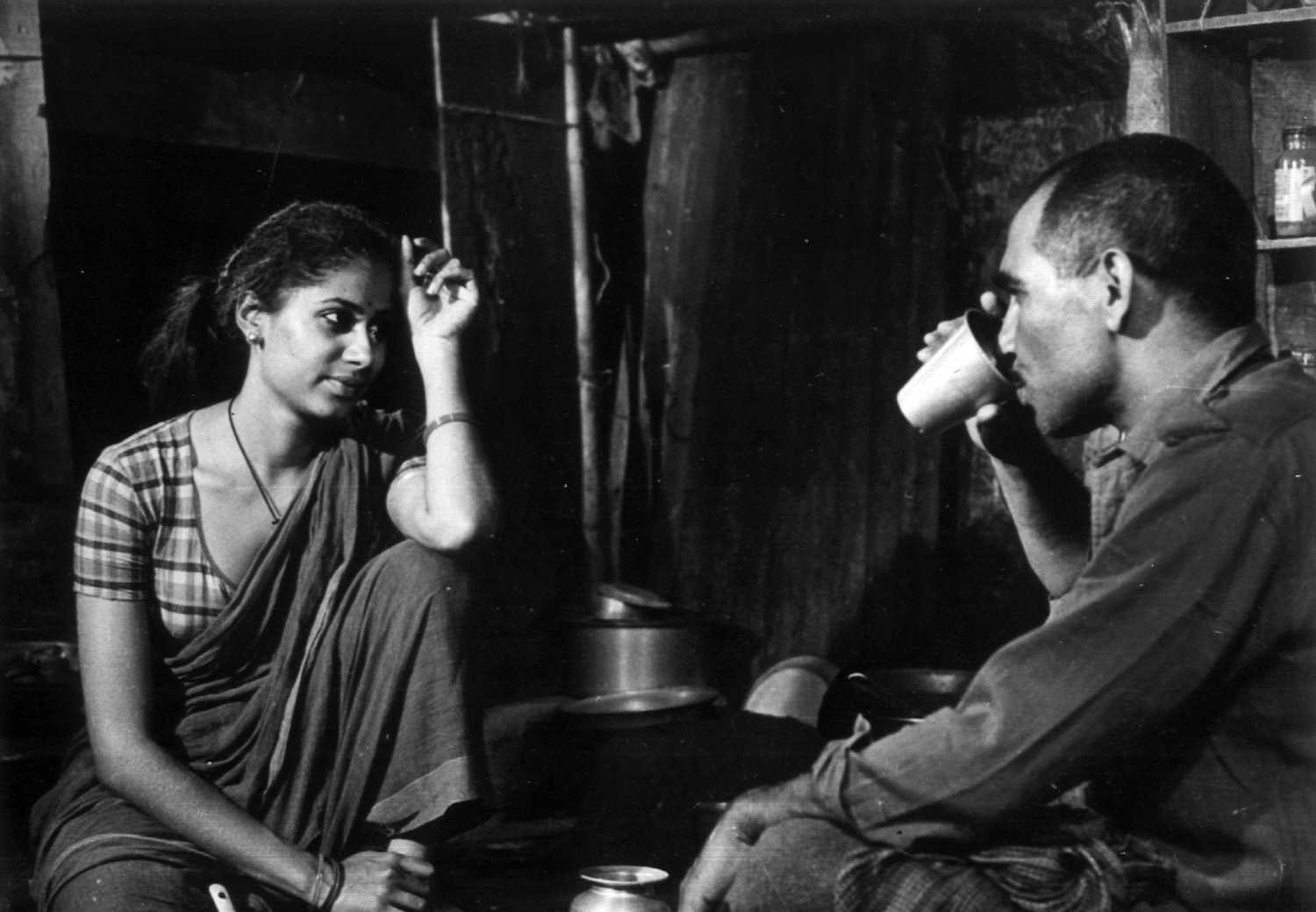
The story begins with violence in a village. Amma's husband kills a moneylender who has tried to rape her, and she runs to Bombay with her son Benwa. In the slum she keeps two lovers: Anna, a truck driver, and Lukka, a pimp and petty crook out on parole. Benwa marries a girl called Amli, and Amma becomes pregnant, though the film leaves open which man is the father.
Lukka comes back sick. Ravaged by syphilis and drugs, he steals medicine and hides in Amma's hut. The police arrest him and Benwa and beat them both, and Amma miscarries before bulldozers flatten the slum. In the last scenes its people move on to build a new slum somewhere else.
Dharmaraj did not shoot in a real slum. With the art director Bansi Chandragupta, who had designed Pather Panchali (1955) and many later films for Satyajit Ray, he built one on an empty plot owned by the Fertilizer Corporation of India. The heritage foundation's profile says the set looked so real that a small economy grew up around it. Barun Mukherjee was the cinematographer and Bhanudas the editor. Hridaynath Mangeshkar wrote the music.
Smita Patil played Amma and Naseeruddin Shah played Lukka, with Kulbhushan Kharbanda as Anna. Ranjit Chowdhry was Benwa and Alka Kubal was Amli. Rohini Hattangadi had the part of Laxmi. Satish Kaushik appeared briefly as a boot-polish boy. Kundan Shah was chief assistant director, two years before he made Jaane Bhi Do Yaaro (1983), and Rajkumar Santoshi was special assistant to the director.
The heritage foundation's profile describes Dharmaraj as a demanding and intense director. He finished the film in time for the Indian Panorama of the eighth International Film Festival of India, held in Delhi from 3 to 16 January 1981. Soon afterwards he went into a Bombay hospital with an ulcer, and he died there on 11 February. He had been planning a feature about the criminal Charles Sobhraj, but it never went into production.
Every prize came after his death. Smita Patil's National Film Award was presented at the 28th National Film Awards in April 1981. In May, Chakra was one of 22 features in the Directors' Fortnight at Cannes, beside a film by Saeed Mirza and another by the Sri Lankan director Lester James Peries. In August the 34th Locarno festival gave it the Golden Leopard, and its ecumenical jury called the film "a perceptive and human picture of an Indian shantytown."
At the 29th Filmfare Awards, held in Bombay in 1982, Chakra had six nominations and won three. Naseeruddin Shah won Best Actor and Smita Patil won Best Actress. Bansi Chandragupta won Best Art Direction, though he too had died, in June 1981. Dharmaraj was nominated for Best Director and Dalvi for Best Story, and the film lost Best Film to Shyam Benegal's Kalyug (1981).
The Cinema of Rabindra Dharmaraj
Any account of his cinema has to rest on one feature, because so little is known about the shorts. Chakra is enough to show how he worked. He came to fiction from reporting and documentary. Yet he chose to build his slum on an empty lot rather than film a real one, and he waited years to film the novel he had first asked Dalvi about.
The Locarno ecumenical jury noted that the film avoids militant language and lets viewers find solidarity and moral conscience among the poor for themselves. That is a fair account of a director who had been a convinced Marxist. The politics are in the shape of the story, which ends where it began, with people forced to move.
Key Themes
The cycle. The title names the structure of a film that opens with a family driven out of a village by a killing and closes with a whole slum driven out by bulldozers. Between those two moves the characters work and fall ill, and nothing they do changes their position. Benwa, the son of a man who killed to protect his wife, ends the film beaten in police custody.
Migration. Amma and Benwa arrive in Bombay running from a crime, not looking for wages. The slum takes them in, and at the end the slum itself is made to migrate. In Chakra the city is somewhere people end up rather than somewhere they choose.
Survival and desire. Amma keeps two men, a steady truck driver and a dangerous crook, and the film does not judge her for it. Her pregnancy, with its uncertain father, is treated as a fact of her life. Smita Patil's performance in the role won her the National Film Award for Best Actress.
The police. The state enters the slum twice, and both times it does harm: police officers beat Lukka and Benwa after the theft of the medicine, and then the bulldozers arrive. Neither comes with a named villain attached.
Selected Filmography
Crisis on the Campus (1971)
A short film listed under Dharmaraj's name by IMDb and the indiancine.ma archive. No synopsis or production details have been published.
No Tree Grows (1974)
A 16-minute documentary in English, shot in black and white. IMDb counts it among the works he is best known for.
Indian Airlines... Pride of India (1976)
A short credited to Dharmaraj as director, made during his years in advertising. Its title names India's state-owned domestic airline.
Chakra (1981)
It was his only feature. He wrote it with Jaywant Dalvi from Dalvi's Marathi novel and cast Smita Patil as Amma opposite Naseeruddin Shah. The film won the Golden Leopard at Locarno and three Filmfare Awards, and Smita Patil won the National Film Award for Best Actress.
Legacy
Dharmaraj's name survives through one film, and several careers passed through its set. Kundan Shah went from chief assistant to directing Jaane Bhi Do Yaaro, and Rajkumar Santoshi and Satish Kaushik also became directors. For Smita Patil, who died in December 1986 at 31, Amma brought a second National Award for Best Actress after Bhumika.
Chakra is the only film from India to have won the Golden Leopard. Locarno gave it the prize in the same year that Cannes chose it for the Directors' Fortnight, and both honours went to a first-time director who had been dead for months.
He died at 34, with a second feature planned. What he left is a handful of short films that few have seen and Chakra, which is still the reason his name is known.
Rabindra Dharmaraj on Art House Cinema