
Bharathan
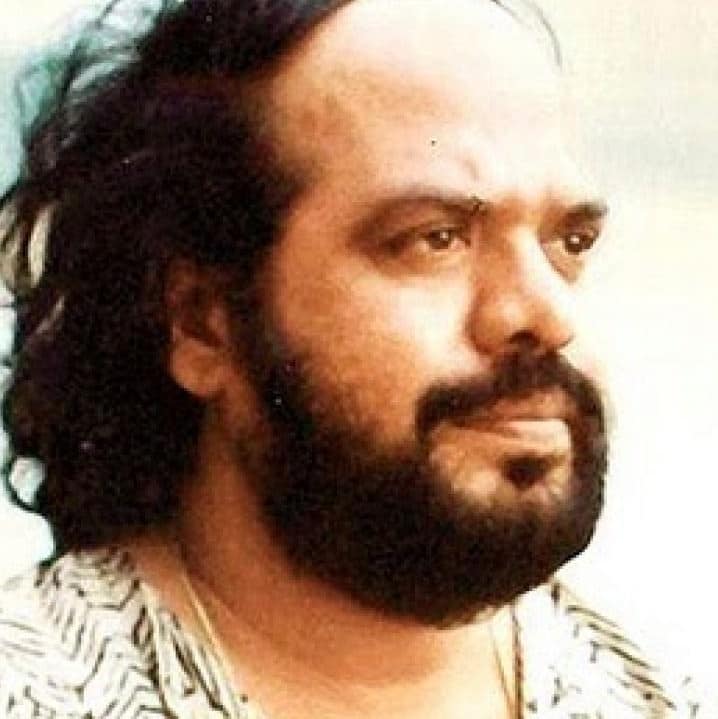
Bharathan (14 November 1946 – 30 July 1998) was a seminal Indian film director, artist, and auteur whose work reconfigured the aesthetics and narrative conventions of Malayalam cinema. Alongside contemporaries such as Padmarajan and K. G. George, Bharathan was instrumental in establishing a middle-of-the-road cinematic mode, a movement that mediated between the poles of commercial and art-house filmmaking in the 1970s and 1980s and profoundly influenced subsequent generations of filmmakers. His films are distinguished by their visual lyricism, narrative realism, and humane engagement with rural life and social relations.
Life and Early Work
Born in Engakkadu near Wadakkancherry in the Thrissur district of Kerala, Bharathan was drawn early to the visual arts. He earned a diploma from the College of Fine Arts, Thrissur, where his training in painting and sculpture laid the foundation for his later cinematic visuality.
Influenced by his uncle, veteran filmmaker P. N. Menon, Bharathan entered the film industry initially as an art director. His first significant assignment was on A. Vincent’s Gandharavakshetram (1972), where his background in fine arts was evident in the attention to texture, space, and environment.
After several roles as art director and assistant director, Bharathan made his directorial debut with Prayanam (1975), scripted by Padmarajan. The film’s critical success marked the emergence of a new sensibility in Malayalam cinema—one attentive to mood, landscape, and interiority rather than commercial formulas.
Filmmaking
Central to Bharathan’s cinema is a realist engagement with rural Kerala and a visual lexicon informed by his artistic training. His films often eschew melodrama and escapist tropes endemic to mainstream Indian cinema, opting instead for narrative simplicity suffused with emotional complexity. He was known to use detailed storyboards and immersive natural settings as integral elements of cinematic expression, with landscapes and natural props becoming quasi-characters in their own right.
Bharathan’s early works, such as Rathinirvedam (1978) and Chamaram (1980), confronted social conventions and intimate relationships with frankness, foregrounding psychological nuance and corporeal desire without sensationalism. This engagement with human experience, particularly the tensions between desire, tradition, and social norms, became a hallmark of his filmmaking.

Throughout the 1980s and 1990s, Bharathan’s scope expanded toward lushly composed narratives and collaborations with acclaimed writers such as M. T. Vasudevan Nair. Films like Vaishali (1988) and Amaram (1991) reveal his evolving formal ambition—rich visual tableaux that balance mythic resonance with grounded character study. In Thevar Magan (1992), his only major Tamil production, he navigated caste, tradition, and modernity while bringing together iconic actors Sivaji Ganesan and Kamal Haasan.
The Cinema of Bharathan
Analytically, Bharathan’s cinema can be understood as a dialogue between form and content. His painterly eye and sculptural sensibility enabled films that are compositionally robust yet emotionally vulnerable. Rejecting the star-centric mode prevalent in Indian cinema, he maintained narrative integrity even when working with major performers.
A recurrent concern in his work is the interior life of individuals within specific cultural milieus—whether the tender awakening of youth in Rathinirvedam, the tragic yearning of marginalized protagonists, or the intricate interplay of social structures in rural settings. His films often negotiate the intersection of personal desire and collective norms, positioning them as significant texts for the study of post-independent Indian cinema.
Selected Filmography
Prayanam (1975) – Directorial debut; poetic rural narrative.
Rathinirvedam (1978) – Coming-of-age and desire.
Thakara (1980) – Character study set in rural Kerala.
Chamaram (1980) – Social and emotional engagements.
Kattathe Kilikkoodu (1983) – Complex relational narrative.
Vaishali (1988) – Visual and mythic resonance.
Amaram (1991) – Evocative human drama.
Thevar Magan (1992) – Tamil production blending tradition with social turmoil.
Devaraagam (1996) – One of his later explorations.
Legacy
Bharathan’s contribution to Indian cinema extends beyond his filmography to the formal and thematic transformations he catalyzed in Malayalam film culture. As one of the architects of the middle cinema movement, he demonstrated that aesthetic rigor and popular appeal need not be mutually exclusive. His integration of fine arts sensibilities into cinematic practice inaugurated a mode of filmmaking where visual composition, sound, and narrative harmonize in pursuit of deeper human truths.
Despite his untimely death in 1998 due to illness, Bharathan’s films continue to be studied for their distinctive visual grammar and socio-cultural insights. Cinematic scholars and practitioners alike recognize his work as a touchstone for narrative realism and stylistic innovation in regional Indian cinema.


