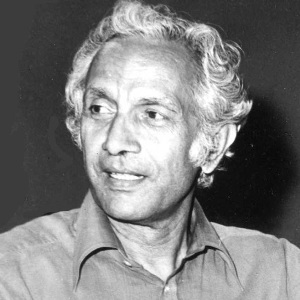
Shoojit Sircar makes Hindi films and lives in Kolkata, which is the first thing worth knowing about him. He moved his family out of Mumbai in 2010 so that his two daughters would grow up with a Bengali childhood, and he has commuted to his own industry ever since. Three of his films hold National Film Awards. Vicky Donor (2012) won Best Popular Film Providing Wholesome Entertainment, Pink (2016), which he produced and helped write, won Best Film on Other Social Issues, and Sardar Udham (2021) was named Best Hindi Film at the 69th National Film Awards.
Sircar came into cinema without a film school or a family name in the industry. He was an accountant at a Delhi hotel, then an advertising director, and he was close to forty when his first feature reached cinemas. Yahaan (2005) failed. His second film was impounded by a legal dispute and has still not been seen. What followed that double setback is the more interesting career: a run of films that put large stars into small, awkward, unglamorous parts and trusted audiences to arrive slowly, by word of mouth, rather than in a first-weekend rush.
The work rests on a small permanent company. Juhi Chaturvedi has written Vicky Donor, Piku, October and Gulabo Sitabo, and won two National Film Awards for Piku. Ronnie Lahiri, who co-founded Rising Sun Films with Sircar in 2007, budgets and produces. Avik Mukhopadhyay has photographed the later films. Inside that arrangement Sircar has moved between a comedy about sperm donation, a thriller about an Indian intelligence failure in Sri Lanka, a road film built around an old man’s bowels, and a reconstruction of the Jallianwala Bagh massacre.
Two of the films have run into political trouble. Madras Cafe was pulled from cinemas in Tamil Nadu and from Cineworld screens in Britain in August 2013 after protests that it maligned the Tamil Tigers. Sardar Udham was passed over as India’s submission to the Academy Awards in 2021, and one member of the selection jury, the Bengali filmmaker Indraadip Dasgupta, explained the decision by saying that the film “again projects our hatred towards the British”. The jury sent P S Vinothraj’s Tamil film Koozhangal instead.
Life and Early Work
Sircar was born into a Bengali family in West Bengal in the mid-1960s. His father was an officer in the Indian Air Force, so the household moved with postings. His earliest memory, as he told Lhendup G Bhutia of Open magazine in 2018, is of being four years old at the air force station at Hasimara, near the Bhutan border, watching his father paint the windowpanes of their quarters black during the 1971 war so that enemy bombers would not see the light. No bombers came. From the same posting comes the story of his mother, pregnant with her second child, being airlifted towards a hospital and giving birth aboard the helicopter fifteen minutes into the flight. The girl was named Akashi, after the sky, and called Heli at home.
Transfers took the family to Kolkata and then, when Sircar was a teenager, to Delhi. The move unsettled him. He has described walking into a classroom where he could barely follow the Hindi and had never before seen so many boys in turbans, having grown up in a city where he could count on one hand the Sikhs he had met. He left Kendriya Vidyalaya Barrackpore Airforce in 1985 and read for a Bachelor of Commerce at Shaheed Bhagat Singh College, University of Delhi. He told The Times of India in 2017 that he picked the college over Kirori Mal because his closest friend had taken admission there.
The job after that was a desk in the accounts department of Le Meridien in Delhi, where he paid out everybody’s salaries and absorbed the internal machinery of a five-star hotel. Thirty years later he would spend a whole film inside one. Meanwhile he was working in theatre. Act One, the group he formed in the early 1990s, counted Manoj Bajpayee, Piyush Mishra and Ashish Vidyarthi among its members. The group toured Punjab in the closing years of the Khalistan insurgency, which was not a settled place for a travelling theatre company.
Cinema arrived through the back door, and the phrase is close to literal. The International Film Festival of India was then held in Delhi. Sircar and his friends had no money for tickets and no contacts for passes, so they turned up on freezing nights when the halls were thin and paid the gatekeepers to let them in. Two films from those winters stayed with him. One was the American documentary Dear America: Letters Home from Vietnam, built from letters young soldiers wrote to their parents. The other was Satyajit Ray’s Pather Panchali, which Sircar has called the bible of his life, and whose poster hangs on his office wall.
Advertising came before features. Sircar founded Red Ice Films in 1999 and directed commercials through the following decade, among them Coca-Cola’s Piyo Sar Utha Ke and the Miss Palampur spot for Cadbury Dairy Milk. The discipline of the form stayed with him. He has attributed his ability to finish a feature inside a fixed schedule and a fixed budget to those years in advertising, and the habit is visible in the shooting calendars of the later films.
In 2004 both his parents died. His father went first, of cancer. Six months afterwards his mother suffered a brain stroke and fell into a coma that lasted close to four months. Sircar travelled from Mumbai to the Delhi hospital every few days and sat by the bed talking to her without knowing whether she could hear anything. Fourteen years later he made a film about precisely that.
Filmmaking
Yahaan, released in 2005 in the weeks around the Mumbai floods, is a love story between an Indian army captain, played by Jimmy Sheirgill, and a Kashmiri woman, played by Minissha Lamba, set in a valley under occupation by its own state. It disappeared almost at once. Anupama Chopra reviewed it in India Today and was unconvinced. The film has acquired admirers since, among them Anvita Singh, who argued in The Indian Express in April 2018 that it deserved a larger audience than it ever found.
The second film never opened at all. Shoebite, with Amitabh Bachchan in the lead, was finished and then frozen by a copyright dispute between Percept Picture Company and UTV Motion Pictures which reached the Delhi High Court in 2008. It has still not been released. Ronnie Lahiri, remembering the period, put the position plainly to Open magazine: “We were complete outsiders. And no star was willing to work with us.”
Out of the Shoebite wreckage came Rising Sun Films, which Sircar registered with Lahiri in 2007 so that he would control the films he made. Its first production was somebody else’s. Aparajita Tumi (2012), in Bengali, was directed by Aniruddha Roy Chowdhury.
Vicky Donor arrived the same year and altered the terms of Sircar’s career. Ayushmann Khurrana and Yami Gautam both made their Hindi film debuts in it, in a comedy about a Punjabi layabout recruited as a sperm donor by a Bengali fertility doctor in Delhi. Sircar has said he researched infertility and artificial insemination for three years before shooting a frame. Made for around fifteen crore rupees, the film took sixty-six crore worldwide. It won the National Film Award for Best Popular Film Providing Wholesome Entertainment and brought Sircar his first Filmfare nominations for Best Film and Best Director. Remakes followed in Telugu as Naruda Donoruda (2016) and in Tamil as Dharala Prabhu (2020).
Madras Cafe (2013) went the other way entirely. John Abraham plays an army officer seconded to Indian intelligence during the intervention in the Sri Lankan civil war, Nargis Fakhri a journalist covering it, and the film moves towards the assassination of Rajiv Gandhi with the names of the organisations and their leader lightly changed. Rajeev Masand of CNN-IBN wrote that political pressure and sensitive groups make historical subjects unusually hard to film in India, and called what Sircar had undertaken commendable. He was proved right within days. The Tamil Nadu Film Exhibitors Association declined to screen the film, and Cineworld withdrew it from its British cinemas after protests outside the distributor’s offices, so a film about a censored war was itself removed from circulation in two countries.
Piku (2015) takes its starting point from Ray’s 1980 short Pikoo and turns it into a road film. Deepika Padukone plays a Delhi architect, Amitabh Bachchan her father Bhashkor Banerjee, whose constipation is the household’s chief subject of conversation, and Irrfan Khan the owner of the taxi company who ends up driving them to Kolkata. Moushumi Chatterjee plays the aunt. Sircar shot the film in fifty days. At the 63rd National Film Awards, Bachchan won Best Actor and Juhi Chaturvedi took both Best Screenplay (Original) and Best Dialogues, sharing each award with Himanshu Sharma for Tanu Weds Manu Returns. Anupama Chopra gave it four stars out of five. The film earned Sircar the Filmfare Critics Award for Best Film and a second nomination for Best Director.
Pink (2016) was directed by Aniruddha Roy Chowdhury and produced by Sircar, who also worked on the writing. Three young women who share a flat in Delhi, played by Taapsee Pannu, Kirti Kulhari and Andrea Tariang, end up in a courtroom after one of them injures a politically connected man who assaulted her. Amitabh Bachchan plays the retired lawyer who takes the case. The film won the National Film Award for Best Film on Other Social Issues. In Sircar’s Mumbai office there is a clock in black and pink with a small witness box jutting out of it, the word No printed on each of its three sides.
October (2018) is the film Sircar had been carrying since his mother’s illness. Varun Dhawan plays Dan, an irritable hotel management trainee, and Banita Sandhu plays Shiuli, a fellow trainee who suffers a fall at a New Year party and does not wake. The two barely know one another. Dan visits the hospital anyway, and keeps visiting, for no reason he can explain to Shiuli’s mother or to himself. Avik Mukhopadhyay photographed the Delhi winter fog and the night jasmine of the title. A Marathi director, Sarika Mene, alleged that October borrowed from her film Aarti - The Unknown Love Story. The Screenwriters Association examined the claim, found some resemblances and eventually cleared the film.
The shoot ran to thirty-seven days. Dhawan spent a year in preparation on Sircar’s instructions, which included replacing his music with chants and, on waking, looking at a plant for ten minutes rather than at his phone. On set he wore no makeup and was told repeatedly to do less. He later said publicly that he felt awfully underutilised by the film’s quiet promotion, which was rather the point of the promotion.
Gulabo Sitabo (2020) is a Lucknow comedy about a crumbling haveli, its grasping landlord and the tenant who will not pay and will not go. Bachchan and Khurrana play the two men. The COVID-19 pandemic closed cinemas before release and the film went straight to Amazon Prime Video worldwide, one of the first Hindi productions to do so. It brought Sircar a third Filmfare nomination for Best Director.
Sircar had wanted to film the life of Udham Singh since his college years, and the research took roughly two decades. Principal photography on Sardar Udham began on 13 April 2019, the hundredth anniversary of the massacre at Jallianwala Bagh, with an initial schedule of about twenty-five days in London for the sequences set in England in the 1920s and 1930s. Amritsar, Saint Petersburg and Ireland followed. Vicky Kaushal plays Singh through several decades and several false passports, and the film withholds the massacre until its final stretch, where it runs at length as a night of gathering the wounded rather than as a burst of rifle fire. That sequence was broken into some thirty to forty shots and storyboarded before a camera turned.
The film premiered on Amazon Prime Video over the Dussehra weekend in October 2021. Saibal Chatterjee of NDTV wrote: “There is a phenomenal degree of craft in Sardar Udham but none of it is employed for mere effect. There is great deal of soul, too, in this magnificently crafted film.” At the 69th National Film Awards it took Best Hindi Film, Best Cinematography for Avik Mukhopadhyay, Best Production Design, Best Costume Design and Best Audiography for re-recording. Sircar dedicated the win to Irrfan Khan, who had died in April 2020.
I Want to Talk (2024) gives Abhishek Bachchan the part of Arjun Sen, a man who survives a cancer diagnosis and a long series of operations while trying to repair his relationship with his daughter. Reviews were warm. Audiences stayed away, and the film closed with about one and a quarter crore rupees in India. It won Sircar a second Filmfare Critics Award for Best Film at the ceremony held in October 2025.
The Cinema of Shoojit Sircar
Sircar’s method starts with arithmetic. He has explained that a film should be budgeted so tightly that it recovers its cost within two or three days of release, after which his responsibility ends and anything further is surplus. That is an advertising man’s sentence, and it has an artistic consequence. Because the money is small and comes back fast, the subject can be strange. A comedy about semen. A drama in which the female lead spends the running time unconscious. Neither would survive a hundred-crore recovery target.
The second principle is casting. Sircar takes actors the market has fixed in a shape and puts them in the opposite one. Bachchan as a man preoccupied with his stool. Padukone as a bad-tempered daughter whom the ending does not soften. Khurrana, before anyone knew him, as a Delhi loafer selling sperm. Dhawan, coming off Judwaa 2, in a part that required him to stop shouting, which Sircar had to ask him to do on the floor. The stars supply the opening weekend. The parts supply the film.
What Sircar takes from Ray is a willingness to let domestic detail carry the drama. The composition and the pacing are quite different. Piku is largely people arguing in cars and kitchens about bowel movements and property. October watches a hotel trainee fold napkins badly. The camera stays at eye level, and the endings withhold catharsis: Shiuli dies without a last exchange, Piku’s father dies offscreen between scenes, and the film carries on with the cycling and the arguing.
Key Themes
The body in trouble. Illness and bodily function organise a surprising amount of this filmography. Infertility in Vicky Donor, constipation and old age in Piku, coma in October, cancer and repeated surgery in I Want to Talk. The treatment is unembarrassed and often funny. Bhashkor Banerjee delivers his diagnosis of his own digestion with the authority of a scientist, and the joke is that everybody in the house must listen.
Care without romance. Dan’s vigil in October is never explained as love, and Shiuli’s mother keeps asking him why he comes at all. Piku looks after her father with visible resentment and does not stop. Arjun Sen in I Want to Talk is kept alive by surgeons he barely likes. The films are interested in obligations people take on without ever deciding to.
The city as a specific place. Sircar shoots Delhi as a working city rather than a monument, and Kolkata as a house full of relatives. Gulabo Sitabo is anchored to one decaying Lucknow haveli and the property law around it. In Madras Cafe the geography is operational, moving between Colombo, Jaffna, Delhi and a bar in Bangkok.
History without the flag. Sardar Udham spends more time on Singh’s years of waiting, the aliases and the rented London rooms, than on the shooting of Michael O’Dwyer, and it places the massacre last so that the audience finally understands what the man had been carrying for twenty-one years. There is no speech to camera. The Oscar jury’s objection in 2021 indicates how far the film sat from the patriotic register expected of it.
The outsider inside the system. Sircar’s protagonists work for institutions that fail them: the army in Yahaan, the intelligence service in Madras Cafe, the courts in Pink, the hospital in I Want to Talk. None of them walks out. They keep filing the paperwork.
Selected Filmography
Yahaan (2005). A captain and a Kashmiri woman fall in love while the valley is under military administration. Sircar’s debut, a commercial failure at the time, and the only one of his films to place a serving soldier at its centre without irony.
Vicky Donor (2012). Delhi comedy about sperm donation, infertility and a Bengali-Punjabi marriage. It made Ayushmann Khurrana a star, won the National Film Award for Best Popular Film Providing Wholesome Entertainment, and established the low-budget model Rising Sun Films has used since.
Madras Cafe (2013). An Indian intelligence operation during the Sri Lankan civil war, ending at the assassination of Rajiv Gandhi. The most conventionally plotted film Sircar has made, and the one that provoked the sharpest political response.
Piku (2015). A daughter drives her hypochondriac father from Delhi to Kolkata. Amitabh Bachchan won the National Film Award for Best Actor for it, and Juhi Chaturvedi won two writing awards.
Pink (2016). Produced and co-written by Sircar, directed by Aniruddha Roy Chowdhury. A courtroom film about consent, winner of the National Film Award for Best Film on Other Social Issues, and the source of the most quoted argument in recent Hindi cinema about the word no.
October (2018). A hotel trainee attends the bedside of a colleague in a coma. Sircar’s most formally severe film, and the one drawn most directly from his own life.
Gulabo Sitabo (2020). A landlord and a tenant fight over a Lucknow haveli neither will inherit. Released directly to streaming in the first year of the pandemic.
Sardar Udham (2021). The revolutionary Udham Singh waits twenty-one years and then shoots Michael O’Dwyer in London. Winner of Best Hindi Film and four other prizes at the 69th National Film Awards.
I Want to Talk (2024). A man negotiates cancer and his daughter. A box-office failure that took the Filmfare Critics Award for Best Film.
Legacy
Sircar’s clearest bequest to the Hindi industry is a working model rather than a style. Lahiri described it to Open magazine as sitting between the masala film and the pure art film, budgeted cheaply enough that a star can be talked into an unusual part because the downside is small. The point is the arithmetic, not the taste. Ayushmann Khurrana went on to build a career on the premise Vicky Donor established, that a taboo subject played straight and funny can outperform its budget several times over.
Sircar has also been an unusually loyal employer of writers. Juhi Chaturvedi came out of advertising, wrote her first screenplay for Vicky Donor, and now holds two National Film Awards and a Filmfare award for dialogue. That is a rare trajectory in an industry which treats writing as a service department. Four features with the same writer, most of them photographed by the same cinematographer and produced by the same partner, have given the films a consistency of texture easier to find in regional cinema than in Bombay.
There are limits worth naming. The restraint that makes October work can slacken into inertia, and the second half repeats its own effects. Madras Cafe, for all its craft, adopts the Indian state’s account of the Sri Lankan war and leaves the Tamil side of the argument almost nothing to say, which is a serious weakness in a film that claims documentary seriousness. Gulabo Sitabo is thin. And the habit of ending without release, admirable three films running, has begun to look like a signature rather than a decision taken afresh.
The stronger claim for Sircar rests on Sardar Udham and Piku. One took a figure Indian cinema had reduced to a poster and gave him twenty-one years of waiting under false names before the gunshot. The other found a two-hour film in an old man’s digestion and a daughter’s irritation, and persuaded a mass audience to sit through it. The 2021 Oscar selection jury decided Sardar Udham carried too much hatred of the British to represent India abroad. Two years later the National Film Awards jury named it the best Hindi film of its year.