
Chetan Anand
Chetan Anand (1921–1997) occupies a singular and somewhat paradoxical position in the history of Indian cinema. He was, on the one hand, the maker of Neecha Nagar (1946), the austere, socially engaged debut that became the first Indian film to win the highest honour at the Cannes Film Festival, and on the other a romantic, lyrical sensibility who, in the second half of his career, produced some of Hindi cinema’s most visually opulent meditations on love, war, and loss. Straddling the worlds of the leftist Indian People’s Theatre Association and the glamour of commercial Bombay cinema, he was at once a pioneer of socially conscious filmmaking and the patriarch of one of the industry’s most influential film families.
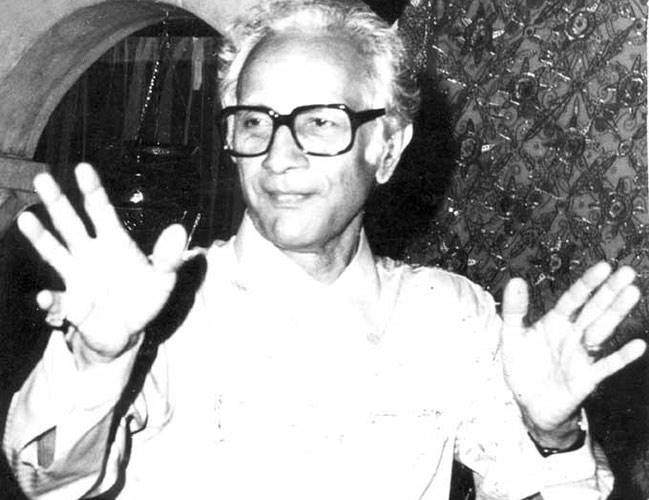
Anand’s reputation rests on a relatively compact body of roughly seventeen feature films made over four decades, several of which have become landmarks. Neecha Nagar, adapted from Maxim Gorky, announced the arrival of an Indian art cinema attuned to questions of class and social justice years before the parallel cinema movement acquired its name. Haqeeqat (1964), his sombre tribute to the Indian soldiers who fought in the 1962 Sino-Indian War, remains widely regarded as the finest war film made in Hindi and earned the National Film Award for Second Best Feature Film. Between these poles he co-founded Navketan Films with his brother Dev Anand and directed the stylish urban dramas Taxi Driver and Aandhiyan, before establishing his own banner, Himalaya Films, and producing the verse-drama Heer Raanjha and the reincarnation romance Kudrat.
His career was also distinguished by the company he kept and the talent he nurtured. He drew together a remarkable creative circle that included the cinematographer Jal Mistry, the composer Madan Mohan, the lyricist Kaifi Azmi, and the actress Priya Rajvansh, his lifelong companion who appeared in nearly all his later films. He gave early opportunities to figures who would shape Indian culture, among them the actress Kamini Kaushal, the sitar maestro Ravi Shankar, who composed his first film score for Neecha Nagar, and the future superstar Rajesh Khanna, whom Anand cast in Aakhri Khat.
As the eldest of the Anand brothers, Chetan was the intellectual progenitor of a cinematic dynasty that included Dev Anand, India’s enduring romantic star, and Vijay (Goldie) Anand, one of Hindi cinema’s most accomplished directors. Yet Chetan Anand’s own legacy is distinct: an artist who moved between social realism and high romanticism, who treated the popular film as a vehicle for poetry, and whose finest work fused the political conscience of the 1940s with a painterly visual imagination that anticipated much of what later generations would attempt.
Life and Early Work
Chetan Anand was born on 3 January 1921 in Lahore, then a flourishing cultural and educational centre of British India and now part of Pakistan. He was the eldest son of Pishori Lal Anand, a prosperous advocate, and grew up in a comfortable, educated Punjabi household that valued learning and public life. His two younger brothers, Dev Anand and Vijay Anand, would both go on to celebrated careers in cinema, making the family one of the foundational dynasties of the Hindi film industry.
His education combined traditional and modern strands. He spent time at the Gurukul Kangri Vishwavidyalaya near Haridwar, where he studied Hindu scriptures, an immersion in classical Indian thought that would later surface in the philosophical preoccupations of films such as Kudrat. He then graduated in English from the prestigious Government College, Lahore. During the 1930s he was drawn to the nationalist ferment of the age and became associated with the Indian National Congress, an early indication of the political engagement that would inform his first films.
Before entering cinema, Anand led an itinerant and intellectually ambitious life. He worked for a time with the British Broadcasting Corporation and taught history at the elite Doon School in Dehradun, one of India’s most distinguished institutions. Drawn increasingly to writing and the arts, he travelled to London with the intention of sitting the Indian Civil Service examinations, but he did not qualify. The setback proved decisive, for it redirected him toward the cinema. In the early 1940s he wrote a screenplay on the life of the emperor Ashoka, which he carried to Bombay in the hope of selling it.
Bombay transformed him. The director Phani Majumdar cast him in a leading role in the Hindi film Rajkumar (1944), giving him his first practical exposure to film production. More importantly, Anand became associated with the Indian People’s Theatre Association (IPTA), the cultural wing of the Communist movement and the crucible of progressive art in 1940s India. The IPTA brought together writers, musicians, actors, and directors committed to using the arts to address poverty, exploitation, and injustice, and its ethos of socially purposeful creativity left a permanent imprint on Anand’s artistic outlook. It was within this milieu of left-wing idealism and experimental ambition that he conceived his first and most acclaimed film.
In 1943 Anand married Uma Chatterji, a cultured woman of Bengali Christian and Brahmin heritage whose father was principal of the Government Law College in Lahore. The couple had two sons, Ketan and Vivek, but separated within a few years; the prevailing impossibility of obtaining a divorce meant they remained legally married long after the relationship had ended. This circumstance would later shape Anand’s lifelong and unmarried partnership with the actress Priya Rajvansh.
Filmmaking
Anand’s directorial debut, Neecha Nagar (1946), remains one of the most extraordinary first films in Indian cinema. Loosely adapted from Maxim Gorky’s play The Lower Depths, it set a stark allegory of class conflict in an Indian town divided between an affluent upper district and the impoverished lower settlement of the title, whose inhabitants are poisoned when a wealthy landlord diverts the town’s sewage into their water supply. The film marked the screen debut of the actress Kamini Kaushal and the first film score by the young Ravi Shankar. Its uncompromising social vision and expressionist visual style won it the Grand Prix at the inaugural Cannes Film Festival in 1946, an honour later renamed the Palme d’Or, making it the first Indian film to receive major international recognition. Remarkably, the film struggled to secure a proper commercial release in India and remained little seen at home even as it earned acclaim abroad.
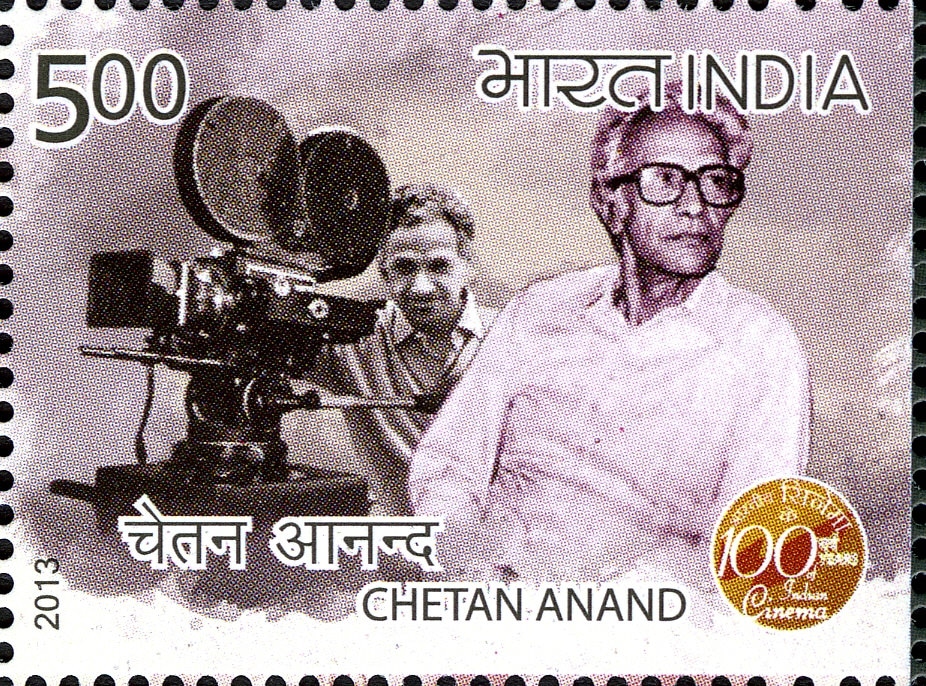
By 1949 Anand had joined his brother Dev to found Navketan Films, a banner that would become one of the most important independent production houses in Hindi cinema. Navketan’s early output reflected Chetan’s sensibility while accommodating the demands of the popular market. Afsar (1950), an adaptation of Gogol’s The Government Inspector starring Dev Anand and Suraiya, was the company’s first production. Anand followed it with Aandhiyan (1952) and the urban drama Taxi Driver (1954), the latter a commercial success that helped establish Dev Anand’s screen persona and demonstrated Chetan’s ability to work within mainstream conventions. He also directed the comedy Funtoosh (1956). Through Navketan, Anand helped cultivate a distinctive, sophisticated style of Bombay filmmaking that balanced realism, music, and star appeal.
Alongside direction, Anand continued to act occasionally, appearing in films such as Kala Bazar, Kinare Kinare, and Aman, and he played leading roles in his own Arpan and Anjali (both 1957). In time he established his own production company, Himalaya Films, and assembled the creative team with which his name became most closely identified: the cinematographer Jal Mistry, the composer Madan Mohan, the lyricist Kaifi Azmi, and the actress Priya Rajvansh. Together they produced a series of films notable for their emotional intensity, musical richness, and visual refinement.
The most celebrated of these was Haqeeqat (1964), a war film conceived as a tribute to the Indian soldiers who died in the 1962 Sino-Indian conflict in the high passes of Ladakh. Eschewing jingoism in favour of an elegiac realism, the film depicts the doomed predicament of a platoon stranded by the Chinese advance, and is suffused with the melancholy poetry of Kaifi Azmi’s lyrics and Madan Mohan’s music, including the celebrated song Kar Chale Hum Fida. Haqeeqat won the National Film Award for Second Best Feature Film and is frequently cited as the greatest war film in Hindi cinema. It also introduced Priya Rajvansh, who would appear in every film Anand subsequently directed.
Anand’s later films ranged widely in tone and subject. Aakhri Khat (1966), remembered for its scenic beauty and music, gave an early break to Rajesh Khanna and was distinguished by a remarkable performance from an infant on screen. Heer Raanjha (1970) was among the boldest experiments of his career: an adaptation of the legendary Punjabi romance whose entire dialogue, written by Kaifi Azmi, was composed in rhymed verse, producing a film that approached the condition of sung poetry. Hindustan Ki Kasam (1973) returned to the theme of war, drawing on the 1971 Indo-Pakistani conflict, while Hanste Zakhm (1973) was an urban romantic drama. In 1981 he directed Kudrat, a richly mounted romance built on the theme of reincarnation and again starring Rajesh Khanna; its screenplay earned Anand the Filmfare Best Story Award. His feature filmography continued through Saheb Bahadur (1977) and Haathon Ki Lakeeren (1986).
In his final creative phase Anand turned to television, then a rapidly growing medium in India. His acclaimed serial Param Vir Chakra, broadcast by Doordarshan in 1988, dramatised the stories of recipients of India’s highest military decoration, extending into the new medium the preoccupation with soldierly sacrifice that had animated Haqeeqat. Active from 1944 until the mid-1990s, Anand worked across five decades, his career spanning the late colonial period, the idealism of the Nehruvian era, and the commercial transformation of Hindi cinema.
The Cinema of Chetan Anand
Chetan Anand’s cinema resists easy classification because it spans two apparently opposed traditions. He began as a social realist shaped by the IPTA and the Progressive Writers’ movement, committed to exposing inequality and injustice; yet the larger part of his career was devoted to a lyrical, romantic, and frequently melancholy cinema in which mood, music, and visual beauty took precedence over polemic. What unites these phases is a poetic sensibility, a conviction that the film could aspire to the condition of poetry, and an insistence that even within the conventions of popular Hindi cinema there was room for seriousness of theme and refinement of form.
A literary intelligence underlies all his work. Anand repeatedly turned to literature and legend for his material, from Gorky and Gogol to the Punjabi romance of Heer and Ranjha, and he treated dialogue, lyric, and music not as decoration but as integral to dramatic meaning. His collaborations with the poet-lyricists Kaifi Azmi and the composer Madan Mohan produced some of the most memorable song sequences in Hindi cinema, and in Heer Raanjha he pushed this literary impulse to its limit by rendering an entire film in verse. His visual style, developed with cinematographers such as Jal Mistry, favoured carefully composed, painterly images, whether in the stark expressionism of Neecha Nagar or the austere mountain landscapes of Haqeeqat.
Key Themes
Social justice and class conflict. In his early work, especially Neecha Nagar, Anand examined the structural inequalities of Indian society, dramatising the exploitation of the poor by the powerful with an allegorical clarity that drew directly on his association with the leftist cultural movements of the 1940s.
War, sacrifice, and nationhood. Anand returned repeatedly to the experience of soldiers and the costs of conflict, most powerfully in Haqeeqat and later in Hindustan Ki Kasam and the television series Param Vir Chakra. His treatment of war was characteristically elegiac, honouring sacrifice while mourning loss rather than glorifying combat.
Romantic love and longing. Much of his later cinema is organised around intense, often doomed, love. From the legendary romance of Heer Raanjha to the reincarnation narrative of Kudrat, Anand explored love as a force that transcends social barriers, time, and even death.
Poetry and the lyrical image. Across his films Anand sought a fusion of word, music, and image, treating the song sequence as a vehicle for emotional and philosophical expression and cultivating a visual style of marked compositional beauty.
Fate, memory, and the metaphysical. His exposure to Hindu philosophy informed a recurring interest in destiny, rebirth, and the persistence of the past, themes that find their fullest expression in the reincarnation drama Kudrat.
Selected Filmography
Neecha Nagar (1946). Anand’s landmark debut, an allegory of class conflict adapted from Gorky’s The Lower Depths. The first Indian film to win the Grand Prix at the Cannes Film Festival, it introduced Kamini Kaushal and featured Ravi Shankar’s first film score, and stands as a foundational work of socially engaged Indian cinema.
Aandhiyan (1952). An early Navketan production written and directed by Anand, reflecting his ambition to bring serious dramatic intent to mainstream Hindi filmmaking.
Taxi Driver (1954). A popular urban drama for Navketan that helped consolidate Dev Anand’s star persona and demonstrated Chetan Anand’s command of the conventions of commercial cinema.
Haqeeqat (1964). A sombre, elegiac war film honouring the Indian soldiers of the 1962 Sino-Indian War. Widely regarded as the finest Hindi war film, it won the National Film Award for Second Best Feature Film and introduced Priya Rajvansh.
Aakhri Khat (1966). A lyrical drama celebrated for its locations and music, notable for giving the future superstar Rajesh Khanna one of his earliest roles.
Heer Raanjha (1970). A daring adaptation of the classic Punjabi romance whose entire dialogue, written by Kaifi Azmi, is in rhymed verse, making it one of the most formally audacious films of its era.
Hindustan Ki Kasam (1973). A war drama drawing on the 1971 Indo-Pakistani conflict, continuing Anand’s engagement with themes of nationhood and military sacrifice.
Kudrat (1981). A richly mounted romance built on the theme of reincarnation, starring Rajesh Khanna, for which Anand won the Filmfare Best Story Award.
Param Vir Chakra (1988). An acclaimed Doordarshan television series dramatising the stories of recipients of India’s highest gallantry award, extending Anand’s lifelong concern with valour and sacrifice into the new medium.
Legacy
Chetan Anand’s legacy is twofold. As an artist, he demonstrated that Indian cinema could be both internationally serious and emotionally popular, and his career traced an arc from the social realism of the 1940s to the high romanticism of the 1970s without ever abandoning the conviction that film was a poetic medium. Neecha Nagar’s triumph at Cannes in 1946 gave Indian cinema its first major international laurel and prefigured, by more than a decade, the art-cinema breakthrough of Satyajit Ray and the parallel cinema movement. Haqeeqat, meanwhile, established a template for the serious war film in India that has rarely been equalled.
As the eldest of the Anand brothers, he was also the founder of one of the most consequential family enterprises in Hindi cinema. Through Navketan Films, which he co-founded with Dev Anand in 1949, he helped launch a production house that would shape the careers of his brothers and many collaborators, and that became synonymous with a sophisticated, music-driven, urbane style of filmmaking. His youngest brother Vijay Anand emerged as a major director in his own right, and the creative culture Chetan helped foster influenced a wide circle of writers, composers, and performers.
His honours reflect the breadth of his achievement: the Grand Prix at Cannes in 1946 for Neecha Nagar, the National Film Award for Second Best Feature Film in 1965 for Haqeeqat, and the Filmfare Best Story Award in 1982 for Kudrat. In the decades since his death, his work has been the subject of renewed critical attention, including retrospectives at the Stuttgart Film Festival and the India International Centre in New Delhi in 2007, and the biography Chetan Anand: The Poetics of Film, written by his former wife Uma Anand and son Ketan Anand, together with a documentary of the same name.
Anand died in Mumbai on 6 July 1997 at the age of seventy-six. His final years and posthumous reputation were overshadowed by the murder, in 2000, of his companion Priya Rajvansh, a tragedy that drew unwelcome attention to the family. Yet the substance of his contribution endures. Chetan Anand was a pioneer who brought Indian cinema to the attention of the world, a romantic who treated the popular film as a canvas for poetry, and the founding figure of a dynasty whose imprint on Hindi cinema remains indelible. He stands as a bridge between the socially committed art cinema of the late colonial period and the lyrical mainstream of independent India, an artist whose finest films continue to reward serious study.