
Bhabendra Nath Saikia
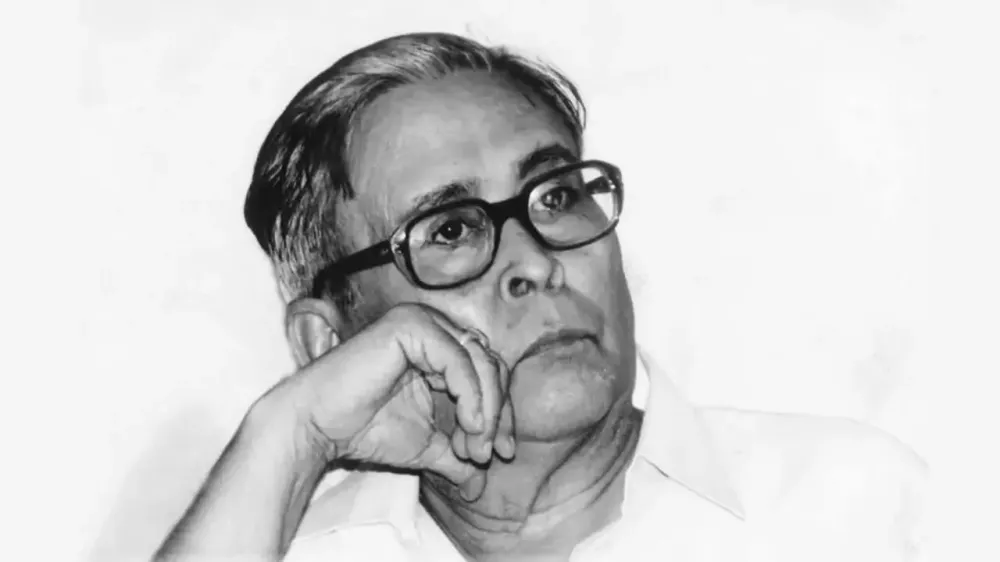
Dr. Bhabendra Nath Saikia (20 February 1932 – 13 August 2003) stands as a central figure in Assamese cultural history, renowned for his contributions as a novelist, short-story writer, editor, and filmmaker. His oeuvre reflects a sustained engagement with the social fabric of Assam, merging literary sophistication with cinematic realism. Saikia’s films are widely regarded as foundational to the evolution of Assamese cinema, bringing regional narratives into national and international forums while simultaneously enriching Indian parallel cinema.
Life and Early Work
Born in Nowgong (Nagaon), Assam Province, British India, Saikia exhibited academic brilliance from an early age, culminating in advanced studies in physics. After completing his Bachelor’s at Cotton College and Master’s at Presidency College in Calcutta, he pursued a Ph.D. in Physics from the University of London, along with a Diploma from Imperial College London. Upon returning to India, he served as a Reader in Physics at Gauhati University, while also engaging vigorously with Assamese literature and media.
Parallel to his academic career, Saikia established himself as a prolific short-story writer and editor. He authored numerous collections—marked by psychological depth and incisive social observation—and helmed influential publications such as the weekly Prantik and the children’s magazine Safura. His literary achievements were recognized with the Sahitya Akademi Award in 1976.
Filmmaking
Transitioning from literature to cinema in the mid-1970s, Saikia brought to film the same narrative acumen and cultural rootedness that defined his writing. Between 1977 and 1999, he directed eight feature films—seven in Assamese and one in Hindi—each distinguished by its adaptation of literary material and thematic concern with the complexities of Assamese life.
His cinematic debut, Sandhyaraag (1977), was the first Assamese film included in the Indian Panorama of the International Film Festival of India, marking a watershed moment for regional cinema. Across his filmography, Saikia retained creative control as screenwriter and director, often drawing upon his own stories or novels. His final work in Hindi, Kaal Sandhya (1997), expanded his thematic inquiries to the sociopolitical upheaval of insurgency in Northeast India.
The Cinema of Bhabendra Nath Saikia
Saikia’s cinema is defined by its narrative sobriety, psychological insight, and social realism. Eschewing melodrama and spectacle, his films foreground the internal dilemmas of their protagonists and the broader societal contexts in which they unfold. This approach situates his work in a distinctive austere aesthetic that resonates with the concerns of parallel cinema in India.
Thematically, his films interrogate familial relationships, social disintegration, and existential tensions within Assamese society, articulating a vision that is both particular to its cultural milieu and universal in its humanism. By incorporating elements of literary realism and ethnographic observation, Saikia contributed to a cinematic grammar that helped legitimize Assamese regional cinema in national and international arenas.
Selected Filmography
Sandhyaraag (Cry of Twilight) (1977) – Assamese; seminal debut screened in Indian Panorama.
Anirban (1981) – Assamese; literary adaptation with psychological focus.
Agnisnaan (1985) – Assamese; adaptation of his novel Antareep.
Kolahal (1988) – Assamese; engaging social narrative.
Sarathi (1991) – Assamese; exploration of human endurance.
Abartan (1993) – Assamese; continuing his thematic concerns.
Itihaas (1996) – Assamese; reflection on societal disillusionment.
Kaal Sandhya (1997) – Hindi; social critique of insurgency’s effects.
Legacy
Bhabendra Nath Saikia’s impact on Indian cinema and literature endures through his multidisciplinary contributions. He is widely regarded as a pioneer who elevated Assamese cinema to national prominence, with seven of his films receiving National Film Awards (Rajat Kamal) for Best Feature Film in Assamese.
Beyond filmmaking, Saikia’s role in standardizing Assamese academic texts, nurturing smaller publications, and fostering theatre and children’s literature has left an indelible imprint on cultural production in Assam. His legacy continues through institutions such as the Aarohan Trust, established to support artistic education among youth, and posthumous honors including awards and cultural memorials bearing his name.
Saikia’s body of work remains a subject of study for scholars of regional Indian cinema and literature, celebrated for its intellectual rigor, ethical seriousness, and deep empathy for the lived realities of ordinary life.