
Biplab Ray Chaudhury
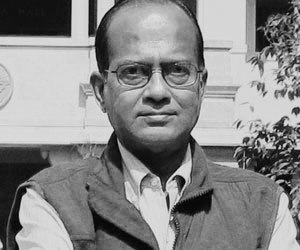
Biplab Ray Chaudhury (1942–2012) stands as a pivotal figure in the evolution of Odia cinema’s parallel and art-inflected narrative tradition. A filmmaker, screenwriter, and editor, his work traversed the cultural and socio-political landscapes of Odisha and Indian regional cinema, articulating the lived realities of marginalised communities through a realist cinematic idiom. Chaudhury’s films — notable for their engagement with issues of economic exploitation, social injustice and political corruption — occupy a distinguished place in the post-independent trajectory of Indian regional film, earning critical recognition at national platforms and securing a legacy that continues to inform contemporary Odia cinematic practice.
Life and Early Work
Biplab Ray Chaudhury was born on 6 October 1942 in Odisha, India. While certain sources note that he initially pursued medical studies before abandoning them to follow his passion for filmmaking, this unorthodox transition highlights a defining early tension between conventional professional pathways and artistic vocation in his life.
He commenced his cinematic journey in the early 1960s, working as an editor on Bengali and Hindi films before moving into direction and writing. This formative period equipped him with a technical foundation that would later shape his disciplined aesthetic as director and editor in his own feature films.
Filmmaking
Chaudhury’s oeuvre demonstrates a consistent commitment to social realism and a critical perspective on structures of power within Indian society. His films are marked by a narrative focus on villagers, labourers, and disenfranchised groups, and by a sobriety of style that avoids conventional commercial tropes.
His directorial debut Chilika Teerey (also spelled Chilika Tire) dramatizes the economic exploitation of fisherfolk communities around Odisha’s Chilika Lake, foregrounding class struggle and collective resistance. The film’s poignant depiction of rural Odisha’s fisher populations and the dynamics of economic oppression established Chaudhury’s interest in cinema as social inquiry. It received the National Film Award for Best Odia Feature Film at the 25th National Film Awards, underscoring its cultural and artistic impact within regional Indian cinema.
In Aranya Rodan (Cry in the Wildness), Chaudhury adapted Satakadi Hota’s novel Ashanta Arayana to the screen, tracing the quest of a journalist who becomes enmeshed in the lives of tribal communities following a brutal crime. This film continued his realist engagement with issues of systemic violence, marginalisation, and the complexities of social advocacy. It was subsequently selected for the Indian Panorama at the International Film Festival of India, reinforcing the critical stature of his work on the national stage.

With Nirbachana (Election), Chaudhury turned his lens to the moral complexities of electoral politics and rural aspiration. Through the interwoven struggles of impoverished villagers negotiating employment, dowry pressures, and the manipulations of patronage, the film exposed the corrosive effects of money and desperation within democratic processes. It too was selected for the Indian Panorama at IFFI (1996), reflecting sustained recognition of his cinematic concerns and craft.
Chaudhury’s films are distinguished by rigorous editing — often self-executed — and by a narrative commitment to foregrounding subaltern voices. His work bridges regional specificity with broader questions of social structure and political economy, situating Odia cinema within a pan-Indian art cinema discourse.
The Cinema of Bijukumar Damodaran
Chaudhury’s cinema defies easy categorisation into purely aestheticist or purely activist camps; rather, it synthesises formal control with ethically engaged storytelling. His films routinely place marginalised communities at their narrative centres, not as symbolic backdrops, but as subjects whose lived experience reveals the limitations and contradictions of post-colonial modernity in India.
Through restrained visual language and an emphasis on character-driven narrative, Chaudhury’s work reflects a commitment to realism that eschews melodrama and foregrounds structural critique. Chilika Teerey’s fisherfolk revolt, Aranya Rodan’s ethnographic empathy, and Nirbachana’s electoral moral economy all illustrate a cinema of scrutiny and solidarity that resonates with other parallel cinema movements in India, even as it remains grounded in the linguistic and cultural specificity of Odisha.
Selected Filmography
Chilika Teerey (1977) — Feature film exploring economic exploitation in rural Odisha; National Award winner.
Aranya Rodan (1993) — Adaptation of Satakadi Hota’s novel, featured in Indian Panorama (IFFI).
Nirbachana (1994) — Rural drama on electoral ethics and social choice; Indian Panorama selection.
Legacy
Biplab Ray Chaudhury’s legacy is integral to the history of Odia regional cinema and its articulation within the broader constellation of Indian parallel cinema. His films set a high standard for socially conscious filmmaking, demonstrating how regional languages and vernacular worlds can articulate political critique without losing narrative subtlety.
His impact persists both within academic discussions of Indian cinema and through the ongoing appreciation of his films by cinephiles in Odisha and beyond. Chilika Teerey in particular remains a touchstone for realist filmmakers and students of regional cinema, cited for its courageous engagement with class disparity and community resilience.