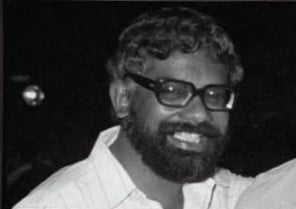
Rabindra Dharmaraj
Rabindra Dharmaraj (1946–1981) occupies a singular and poignant place in the history of Indian cinema: a filmmaker whose entire reputation rests upon a single feature, Chakra (1981), and who died before he could witness the acclaim it would bring him. A journalist, war correspondent, documentarist, and advertising professional before he turned to feature filmmaking, Dharmaraj belonged to the generation of artists radicalised by the political ferment of the 1960s and 1970s. His abiding concern was the condition of the dispossessed, and in Chakra he produced one of the most unsentimental and formally rigorous studies of urban poverty that the Indian parallel cinema movement ever achieved.
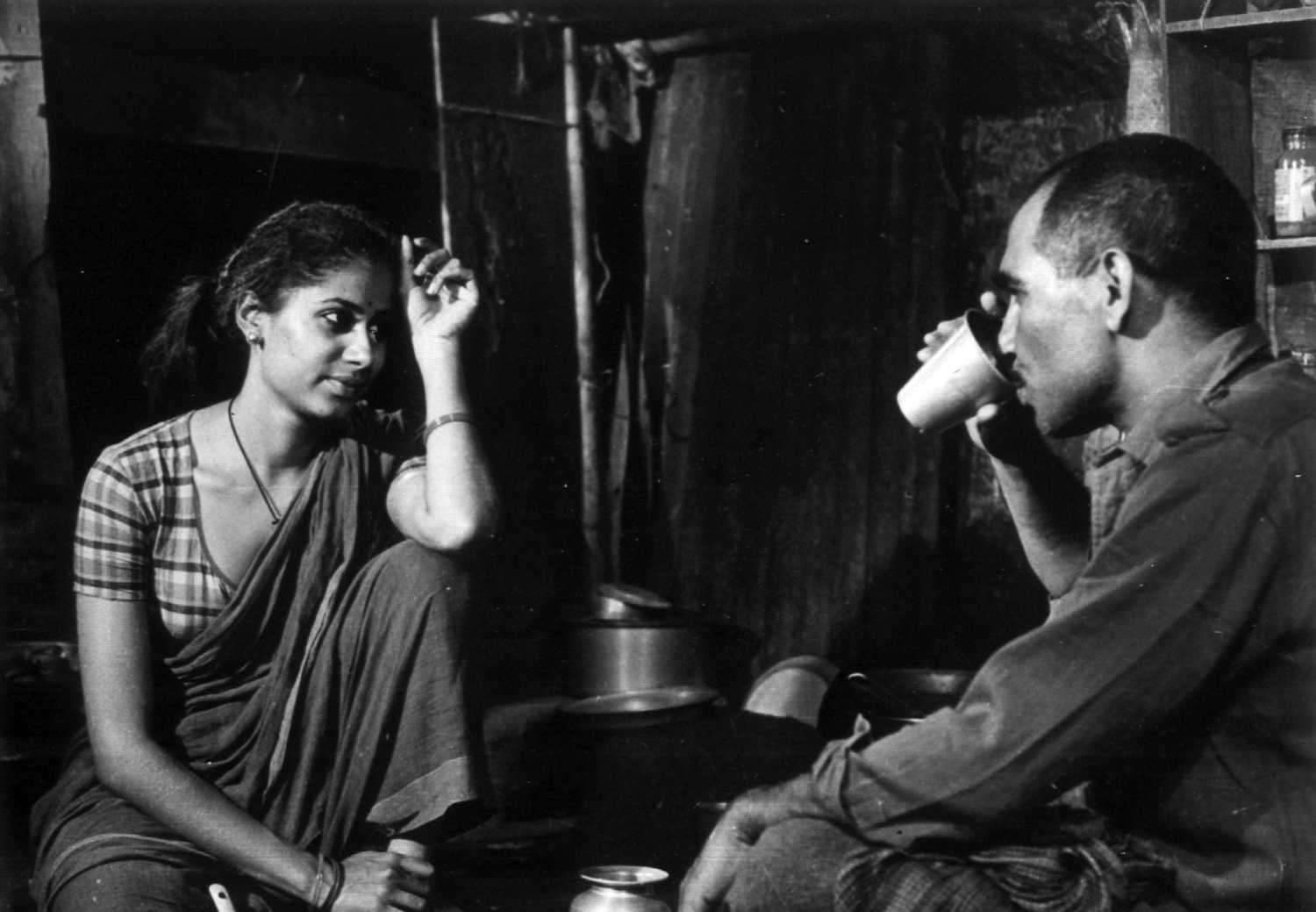
Chakra, adapted from the Marathi novelist Jaywant Dalvi’s searing account of life in a Bombay slum, brought together the foremost talents of the new Hindi cinema. It featured Smita Patil and Naseeruddin Shah at the height of their powers, with art direction by Satyajit Ray’s celebrated collaborator Bansi Chandragupta, and counted among its assistants future directors such as Kundan Shah and Rajkumar Santoshi. The film was honoured with the National Film Award for Best Actress for Smita Patil, won three Filmfare Awards, and travelled to the Locarno International Film Festival, where it received the Golden Leopard and the Prize of the Ecumenical Jury.
That such recognition should accrue to a debut work is remarkable; that it should be the work of a director who would never make another is among the most affecting tragedies of Indian art cinema. Dharmaraj died in a Bombay hospital on 11 February 1981, shortly after the film’s first screenings, leaving behind an unrealised project on the criminal Charles Sobhraj and the unanswerable question of what a longer career might have yielded. His reputation, sustained by the enduring power of Chakra, is that of a maverick committed to an uncompromising social vision—an artist whose single completed statement was sufficient to secure him a lasting place in the canon of Indian parallel cinema.
Life and Early Work
Rabindra Dharmaraj was born on 19 May 1946 in Sivakasi, in the Tamil Nadu region of southern India, a town better known for its match and fireworks industries than for its contribution to the arts. He came of age during the 1960s, studying literature and history at a moment of intense social and political upheaval both in India and across the world. Like many of his contemporaries, he was profoundly shaped by the spirit of the decade, and his intellectual formation drew equally upon the radical politics and the counter-cultural currents that defined the era.
Dharmaraj’s early years were marked by a restless and questioning temperament. By his own generation’s account he was a maverick and a rebel, drawn into the psychedelic drug culture of the period even as he underwent a parallel political awakening. He committed himself to a radical Marxist ideology, and this conviction took concrete form when he travelled to Vietnam as a war correspondent. His photographs and written reports of the Vietnam War appeared in various newspapers and magazines during the 1960s and 1970s. The trauma of what he witnessed there left a deep and lasting impression on his psyche, sharpening both his empathy for the subjugated and his sense of the violence underlying social order—preoccupations that would surface, transmuted, in his later cinema.
On returning to India, Dharmaraj worked for a time as a news anchor for All India Radio in Delhi. His interest in the moving image led him to undertake a course in advanced film and video techniques at the University of California, formal training that distinguished him from many of his self-taught contemporaries. He subsequently made several documentaries for the Films Division, the state body that was then the principal training ground for serious non-fiction filmmakers in India. During this period he assisted established figures including the documentarist Fali Billimoria and the parallel-cinema director Shyam Benegal, absorbing the disciplines of realist observation and socially engaged storytelling that informed their work.
It was around this time that the idea of adapting Jaywant Dalvi’s novel Chakra—an unflinching account of poverty and exploitation in a slum—first took root in his imagination. Dharmaraj went so far as to contact the author for permission to film the work, an early indication of the tenacity with which he would eventually pursue the project. In 1973 he joined the advertising agency Lintas India Limited as a Deputy Film Executive, later moving to Hindustan Thompson and then to Neo-Films. He distinguished himself in advertising through his creativity and meticulousness, yet the commercial discipline of the trade never curbed his individual spirit. Colleagues remembered him as a striking and idiosyncratic presence; the producer Manmohan Shetty, a partner at Neo-Films, recalled that at their first meeting Dharmaraj wore a pair of spectacles with one square lens and one rectangular lens. It was through these years in advertising and documentary that he assembled both the craft and the connections that would make his single feature possible.
Filmmaking
Dharmaraj’s career as a feature director consists entirely of Chakra (1981), a film he developed over the better part of a decade and realised through extraordinary persistence. The project originated in his admiration for Jaywant Dalvi’s Marathi novel of the same name, a brutal and compassionate portrait of migrants surviving on the margins of Bombay. Having secured the author’s blessing, Dharmaraj co-wrote the screenplay with Dalvi, shaping the novel’s episodic account of slum life into a cyclical narrative that would justify the title’s meaning—Chakra translates as ‘cycle’ or ‘wheel,’ invoking the relentless, repeating turn of poverty from which its characters cannot escape.
The film follows Amma, a woman who flees her village with her son Benwa after her husband kills a moneylender who has attempted to rape her, and is himself shot dead while stealing materials to build a shelter. In Bombay the pair take refuge in a slum, where Amma sustains herself through relationships with two men—a dependable truck driver, Anna, and a vain, dissolute petty criminal, Lukka, who becomes the impressionable Benwa’s idol. As Benwa marries and is drawn toward crime, and as Lukka returns ravaged by disease and disillusionment, the narrative tightens around its central insight: that for those trapped at the bottom of the urban order there is no exit, only the perpetuation of the same cycle. The film ends with bulldozers flattening the slum and its inhabitants moving on to build their shanties anew elsewhere, the chakra turning once more.
Dharmaraj approached the production with the rigour of a documentarist and the obsessiveness of an auteur. Working with the art director Bansi Chandragupta—the legendary designer of Satyajit Ray’s Apu Trilogy—he constructed a slum set on a vacant lot belonging to the Fertilizer Corporation of India that was so meticulously realistic that, by contemporary accounts, a small informal economy grew up around it. The cinematography was by Barun Mukherjee, the editing by Bhanudas, and the music by Hridaynath Mangeshkar. The producer was Pradeep Uppoor, and the film was distributed under the Neo Films banner with which Dharmaraj was professionally associated. He proved a demanding director, intense and wholly committed to his dream project, and he drew from his cast performances of rare conviction.
The ensemble Dharmaraj assembled reads as a roll-call of the parallel cinema’s finest talent. Smita Patil played Amma, building upon the acclaim she had recently won in Govind Nihalani’s Aakrosh and Shyam Benegal’s Manthan; Naseeruddin Shah played the doomed Lukka; and Kulbhushan Kharbanda took the role of Anna. The supporting cast included Ranjit Chowdhry as Benwa, Rohini Hattangadi, and, in an early screen appearance, Satish Kaushik. Notably, the chief assistant director was Kundan Shah, soon to make Jaane Bhi Do Yaaro, and the special assistant to the director was Rajkumar Santoshi—a measure of the gravitational pull Dharmaraj’s project exerted upon the rising generation of Bombay filmmakers.
The film was completed just in time to be selected for the Panorama section of the Eighth International Film Festival of India. Its critical reception was immediate and emphatic. India Today praised the virtuoso performances, singling out Smita Patil’s portrayal of oppression and ‘raw promiscuous sexuality.’ Chakra went on to win the Golden Leopard and the Prize of the Ecumenical Jury at the Locarno International Film Festival in 1981, while Smita Patil received the National Film Award for Best Actress. At the Filmfare Awards of 1982 the film won Best Actor for Naseeruddin Shah, Best Actress for Smita Patil, and Best Art Direction for Bansi Chandragupta, with further nominations for Best Film, Best Director, and Best Story. Tragically, Dharmaraj did not live to see this triumph. He was admitted to a Bombay hospital with an ulcer complaint and died there on 11 February 1981, shortly after the film’s first screening. He left behind plans for a feature on the criminal mastermind Charles Sobhraj, a project that never advanced beyond intention.
The Cinema of Rabindra Dharmaraj
To speak of ‘the cinema of Rabindra Dharmaraj’ is necessarily to speak of a single film, yet Chakra is so fully realised a work that it permits a coherent account of its maker’s artistic vision. Dharmaraj’s sensibility was forged at the intersection of documentary realism and committed political conviction, and Chakra reflects both lineages. From his years in the Films Division he inherited an observational rigour, an insistence upon the texture and detail of lived environments; from his Marxist formation and his experience as a war correspondent he brought a structural understanding of poverty as a system rather than a misfortune. The result is a film that refuses both the pity of the social-problem melodrama and the romanticisation of the poor that disfigured much popular cinema’s treatment of slum life.
What distinguishes Chakra within the parallel cinema movement is its bleakness and its formal discipline. Where Benegal’s films often held out the possibility of collective uplift, Dharmaraj offered no such consolation. His slum is not a backdrop for redemption but a closed circuit, and his characters are denied the dignity of escape. The film’s frankness about sexuality, violence, and degradation was unusual for its time, yet it never tips into exploitation, because Dharmaraj’s gaze remains analytical even as it is compassionate. The cyclical structure of the narrative is itself the film’s central argument: poverty reproduces itself, and the bulldozing of one slum merely displaces its inhabitants to the next.
Key Themes
The Cycle of Poverty. The governing metaphor of Dharmaraj’s cinema is the chakra—the wheel that turns endlessly without progress. Poverty is depicted not as a condition to be remedied through individual virtue or effort but as a self-perpetuating structure that consumes successive generations, so that the son inherits the father’s fate and the destruction of one slum simply gives rise to another.
Urban Migration and Displacement. The film traces the journey of rural migrants into the metropolis, exposing the violence that drives people from the village and the indifference that awaits them in the city. Displacement is both the origin and the recurring destiny of the characters, who are perpetually moved on—by landlords, by the police, by the bulldozers of urban development.
The Unsentimental Gaze. Dharmaraj’s documentary training expresses itself in a refusal of melodramatic uplift. He observes his characters with empathy but without illusion, declining to soften their circumstances or to grant them the consolations of conventional narrative. The realism of the slum set and the rawness of the performances serve this same unflinching honesty.
Sexuality and Survival. In Chakra, sexual relationships are inseparable from economic survival. Amma’s involvements with two men are presented not as moral failings but as strategies of endurance, and the film’s candid treatment of desire and the body refuses the prudishness of mainstream cinema while resisting any voyeuristic charge.
Marginality and the State. The institutions of order—the police, the apparatus of urban governance—appear in Dharmaraj’s work as agents of coercion rather than protection. The poor exist in an adversarial relationship to a state that polices and displaces them, and the film’s politics emerge precisely from this depiction of structural neglect and casual brutality.
Selected Filmography
Chakra (1981) — Dharmaraj’s sole feature and his enduring legacy. Adapted with Jaywant Dalvi from Dalvi’s Marathi novel, the film charts the lives of migrants in a Bombay slum through the figure of Amma (Smita Patil) and the men in her orbit, Anna (Kulbhushan Kharbanda) and Lukka (Naseeruddin Shah). With art direction by Bansi Chandragupta and a cyclical structure that gives the title its meaning, it stands among the most uncompromising depictions of urban poverty in Indian cinema. The film won the Golden Leopard and the Prize of the Ecumenical Jury at Locarno, the National Film Award for Best Actress for Smita Patil, and three Filmfare Awards. It remains a landmark of the parallel cinema movement and the singular achievement upon which Dharmaraj’s reputation rests.
Documentary work (1970s) — Prior to Chakra, Dharmaraj directed a number of documentaries for the Films Division and assisted established documentarists and directors including Fali Billimoria and Shyam Benegal. Though these non-fiction works are little documented today, they constituted the formative apprenticeship in observational realism that shaped the aesthetic of his single feature.
Legacy
Rabindra Dharmaraj’s legacy is paradoxical: it is at once slender, resting on a lone feature, and substantial, for that feature is a work of lasting significance. Chakra endures as one of the defining films of the Indian parallel cinema movement of the late 1970s and early 1980s, valued for its formal control, its political seriousness, and its refusal of sentimentality. In an era when the new Hindi cinema was producing some of its most important work, Dharmaraj’s film stood out for the severity of its vision, offering a portrait of urban deprivation that neither preached nor pitied but simply, relentlessly, observed.
The film’s afterlife has been sustained by the stature of those who made it. It contains one of Smita Patil’s most celebrated performances, a cornerstone of her brief but luminous career, and a major early role for Naseeruddin Shah. Its production also served as a crucible for talents who would shape Indian cinema in the decades that followed: Kundan Shah, its chief assistant director, would go on to make the enduring satire Jaane Bhi Do Yaaro, while the special assistant Rajkumar Santoshi and the young actor Satish Kaushik would become significant figures in the industry. In this sense Dharmaraj’s single production became a node in the network of the parallel cinema, connecting the documentary tradition from which he came to the feature filmmakers who came after.
The recognition conferred upon Chakra—the National Film Award, the Filmfare Awards, and above all the Golden Leopard at Locarno—secured its place in the historical record and confirmed the arrival of a major directorial talent at the very moment that talent was lost. Dharmaraj’s death at the age of thirty-four, on the threshold of what should have been a substantial career, lends his story an elegiac quality. He left behind the outline of an unrealised film on Charles Sobhraj and the tantalising suggestion of a body of work that never came to be.
It is the particular condition of Rabindra Dharmaraj’s reputation that it must be built upon potential as much as achievement. Yet the achievement is real and complete in itself. Chakra demonstrates that a single film, fully imagined and uncompromisingly executed, can be enough to earn an artist a permanent place in the history of his medium. Dharmaraj is remembered as a mercurial and committed talent whose deep empathy for the subjugated found its one full cinematic expression before his untimely death—a maverick who realised his dream film and, in doing so, contributed an indelible work to the canon of Indian cinema.
Rabindra Dharmaraj on Art House Cinema