Films with Sharada on Art House Cinema

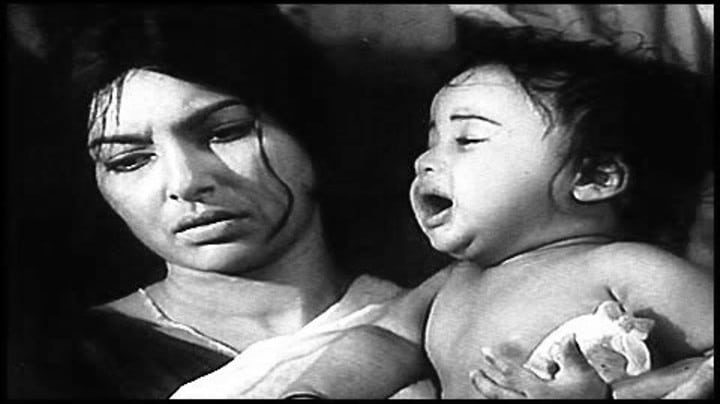
Sharada was born on 25 June 1945 in Tenali, in the Guntur district of present-day Andhra Pradesh, and was named Saraswathi Devi. Telugu by birth, she did her best-known work in Malayalam cinema, where she acted in more than 125 films. She is also credited as Sarada.
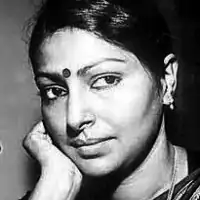
She won the National Film Award for Best Actress three times, for A. Vincent's Thulabharam (1968), Adoor Gopalakrishnan's Swayamvaram (1972) and B. S. Narayana's Telugu film Nimajjanam (1978). Because that award was once called the Urvashi Award, she is still known as Urvashi Sharada. She sat in the Lok Sabha for Tenali from 1996, and Kerala gave her the J. C. Daniel Award for 2024.
Life and Early Work
Her parents were Venkateswara Rao and Satyavathi Devi, and she has a brother, Mohan Rao. Accounts of her childhood differ. In The Hindu in 2015, Saju Chelangad described a family of weavers too poor to send her to school, who placed her in a dance teacher's house as student and servant. Her own account, given in 2006 to the website indiainteracts, describes a landed family and a childhood in Madras with her grandmother Kanakamma, a strict woman who allowed rehearsals only on Sundays.
Both versions agree on the dance. She began at six because her mother wanted it, dancing at Dasara and temple festivals. At about ten she appeared in a song sequence in the Telugu film Kanyasulkam (1955) and then went back to the stage. By her account she was 13 when she first played the wife of a man nearly 30 years older. She acted in Anna Chellalu for the Indian People's Theatre Association and toured Tamil Nadu with the Telugu version of the play Ratha Kanneer, which ran for more than 100 shows.
Around 1959 the Telugu film industry renamed her Sharada, since several actresses were already called Saraswathi. The producer L. V. Prasad put her under contract, and though she never acted in his films, she trained under him in the navarasas, the nine classical moods. The Hindu gives her date of birth as 12 June 1945, while Malayala Manorama and Onmanorama mark it on 25 June.
On Stage and Screen
Her first sizeable part came in Adurthi Subba Rao's Iddaru Mitrulu (1961), in which Akkineni Nageswara Rao played a double role and she played Meena. The film was a hit. Telugu producers then cast her mostly in comic parts, as in Aatma Bandhuvu and Murali Krishna, and in Tamil she acted opposite Sivaji Ganesan in Kunkhumam (1963).
Kunchacko of Udaya Studios brought her into Malayalam cinema with Inapravukal (1965), opposite Sathyan and Prem Nazir. He renamed her Rahel, after her character, but her mother insisted that she stay Sharada. A. Vincent's Murappennu (1965) came next. It was M. T. Vasudevan Nair's first screenplay, and she played Bhagi, whose family marries her to Aniyan instead of Balan.
Vasudevan Nair also wrote P. Bhaskaran's Iruttinte Athmavu (1967), and for playing Ammukutty in it she received a national honour from President Zakir Husain, at a time when the award did not yet carry the title of Best Actress. Then came Thulabharam (1968), Vincent's film of Thoppil Bhasi's play. It won her the Best Actress award at the 16th National Film Awards, presented by President V. V. Giri on 13 February 1970.
The film was remade in Tamil, in Telugu as Manushulu Marali and in Hindi as Samaj Ko Badal Dalo (1970), with Sharada in the lead each time. She told The Hindu that S. S. Vasan of Gemini Studios wanted the girl from the Malayalam film to learn Telugu for his version, until his son pointed out that she was Telugu already. In 1970 she also won the Kerala State Film Award for Best Actress, for Thriveni and Thara.
Adoor Gopalakrishnan wanted her for his first feature, Swayamvaram (1972), which the Chitralekha film co-operative made for Rs 2.5 lakh. She asked for Rs 25,000, and the director and his co-writer cut their own fees to pay her. She played Sita, who leaves her family to live with Vishwam, played by Madhu, and the part brought her a second National Award. Her marriage to the Telugu actor Chalam ended in divorce.
In Telugu, she has said, she never had the image of a tragedy queen, and there she even played a police officer, in Pratidhwani. Nimajjanam (1978) brought her a third National Award, presented at the 26th National Film Awards in April 1979. Gopalakrishnan cast her again in Elippathayam (1981). This time, he joked in 2019, there was no talk of a fee.
After a long gap she returned to Malayalam with Bharathan's Oru Minnaminunginte Nurunguvettam (1987), which won her the Filmfare Award for Best Actress in Malayalam. In 1996 she was elected to the Lok Sabha from Tenali on a Telugu Desam Party ticket. She lobbied to extend a train to Tenali but later called politics a mistake. She played a widowed mother to Mammootty in Rappakal (2005) and Chiranjeevi's mother in the Telugu Stalin (2006). Her last Malayalam film was Ammakkoru Tharattu (2015).
The Art of Sharada
Signature Roles
Thulabharam (1968). Vijaya's father dies after losing a lawsuit to the father of her closest friend, Vatsala. She marries Ramu, a trade union leader played by Prem Nazir, and he is killed during a strike. Starving and destitute, she kills her children and is arrested before she can kill herself. Vatsala, now a lawyer, prosecutes her. Sharada was 22, playing a woman in her thirties, and says she laughed a lot between the heavy scenes.
Swayamvaram (1972). Sita never explains her past to the audience, which learns it from a bad dream and from her silences. She follows Vishwam from a hotel to a lodge to a rundown house, sells her jewellery and jokes with the neighbour's boy as the money runs out. When he dies she sobs beside him with no music on the soundtrack, only the whine of a sawmill. The last shot leaves her with her baby, looking into the camera.
Nimajjanam (1978). A Brahmin housewife travels by bullock cart with her husband to immerse her father-in-law's ashes. On the way the cart driver rapes her. She drowns herself in the holy water. The jury of the 26th National Film Awards praised her "highly restrained performance" and her "sensitive non-verbal communication."
Elippathayam (1981). Rajamma is the middle sister in a decaying manor house ruled by her brother Unni, played by Karamana Janardanan Nair. He turns down a proposal for her as beneath the family, and when she falls ill he does nothing. The illness kills her. The film won the Sutherland Trophy at the London Film Festival in 1982.
Oru Minnaminunginte Nurunguvettam (1987). Saraswathi Amma is a retired schoolteacher married to Ravunni Nair, played by Nedumudi Venu. The childless couple suddenly become guardians of a teenage girl, played by Parvathy, and their worries multiply. The part, after her long absence, won her a Filmfare award.
Craft
Toning down. Swayamvaram was her first art film, and she was nervous. "We were all commercial artists," she recalled in a documentary on the film's 50th anniversary, and a little overacting came with the habit. Whenever it crept in, Gopalakrishnan would come over and ask her gently to tone it down.
Classical training. Onmanorama traces her discipline and sense of rhythm to her childhood Bharatanatyam. She credits her growth as an actor to the navarasa lessons with L. V. Prasad.
Playing older. She played Vijaya at 22 and a mother of four at about the same age. Later she played mothers to older stars and admitted some embarrassment at whitening her hair. "It's a part of the job," she said.
Selected Filmography
Iddaru Mitrulu (1961)
As Meena. Adurthi Subba Rao's Telugu hit, with Akkineni Nageswara Rao in a double role, gave her a first major part.
Inapravukal (1965)
As Rahel. Kunchacko's film for Udaya Studios, with Sathyan and Prem Nazir, was her first Malayalam film.
Murappennu (1965)
As Bhagi. A. Vincent directed M. T. Vasudevan Nair's first screenplay, from his story Snehathinte Mukhangal.
Iruttinte Athmavu (1967)
As Ammukutty. P. Bhaskaran's film of Vasudevan Nair's story won the National Film Award for Best Film on Other Social Issues.
Thulabharam (1968)
As Vijaya. A. Vincent's film of Thoppil Bhasi's play won her first National Award for Best Actress.
Swayamvaram (1972)
As Sita. Adoor Gopalakrishnan's debut won National Awards for Best Feature Film, Best Director, Best Actress and Best Cinematography.
Elippathayam (1981)
As Rajamma. Gopalakrishnan's film about a feudal household in decline won the Sutherland Trophy in London.
Oru Minnaminunginte Nurunguvettam (1987)
As Saraswathi Amma. Bharathan directed John Paul's script, and she won the Filmfare Award for Best Actress in Malayalam.
Legacy
Onmanorama has called her the Dukha Puthri, the daughter of sorrow, and Saju Chelangad wrote that viewers see her as the eternal tragedienne. She thinks Kerala took to her because she looked like a traditional Malayali woman. She also believes that her grandmother came from somewhere near Kozhikode.
In 2019 the 24th International Film Festival of Kerala held a retrospective of her films, the first for a Malayalam actress, and opened it with Swayamvaram. Gopalakrishnan released a book on her there, edited by Anu Pappachan. The Andhra Pradesh government had already given her its NTR National Award for 2010.
In January 2026 a jury chaired by Sreekumaran Thampi chose her for the J. C. Daniel Award for 2024, Kerala's top honour for a life in film. She was 80. "I consider this a true blessing," she said. Her one regret, she told The Hindu in 2016, was that she never got to act with Mohanlal.