Films with Kamal Haasan on Art House Cinema
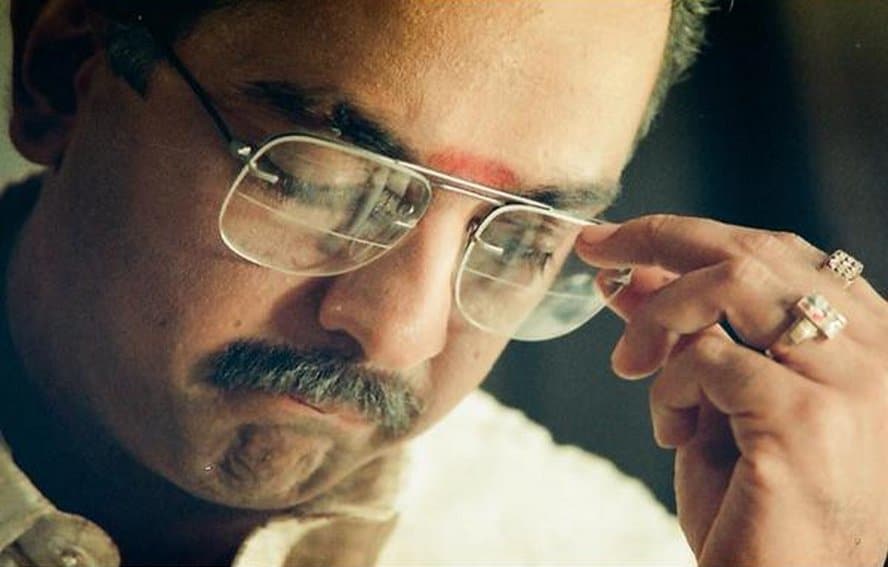
Kamal Haasan was born on 7 November 1954 in Paramakudi, in the Ramanathapuram district of what was then Madras State. He first faced a camera at about the age of six and has acted for more than sixty years since, mostly in Tamil, with major work in Telugu, Malayalam and Hindi. He also writes, directs, produces and sings, but this page is about the actor.
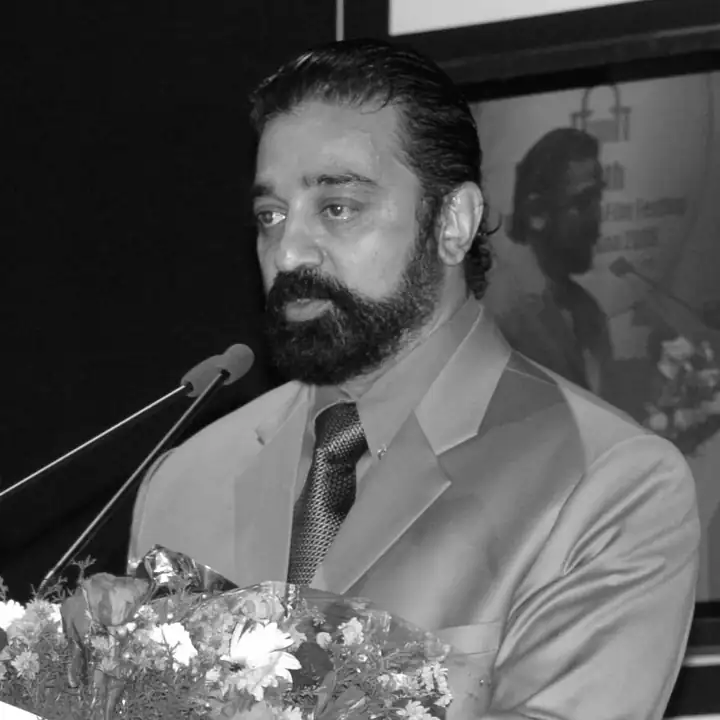
He has won the National Film Award for Best Actor three times, for Moondram Pirai (1982), Nayakan (1987) and Indian (1996). The Government of India gave him the Padma Shri in 1990 and the Padma Bhushan in 2014. France honoured him in 2016 as a Chevalier des Arts et des Lettres.
This site's interest is narrower: Sagara Sangamam (1983) with K. Viswanath, Nayakan with Mani Ratnam, Mahanadhi (1994) with Santhana Bharathi, and two he wrote himself, Hey Ram (2000) and Anbe Sivam (2003).
Life and Early Work
He is the youngest of four children of D. Srinivasan, a lawyer who had taken part in the freedom movement, and his wife Rajalakshmi. His elder brothers Charuhasan and Chandrahasan both became actors, and his sister Nalini became a classical dancer. He began school in Paramakudi and continued it in Madras after the family moved there.
His film debut came by accident, when a family doctor took him to the house of the producer A. V. Meiyappan, and Meiyappan cast him after an audition as Selvam, the small son of the heroine in AVM's Kalathur Kannamma (1960). The part had first gone to Daisy Irani, and the boy won the President's Gold Medal for it. A Malayalam film, Kannum Karalum, followed in 1962.
He then spent years away from leading parts. He joined T. K. Shanmugam's theatre company, the T.K.S. Nataka Sabha, where he took a lasting interest in make-up. He also trained in dance and worked as an assistant to the choreographer Thankappan on films such as Annai Velankanni (1971). It was dance direction, not acting.
On Stage and Screen
K. Balachander gave him his first real roles, in Arangetram (1973) and as a villain in Sollathaan Ninaikkiren the same year. In Balachander's Apoorva Raagangal (1975) he played Prasanna, a young rebel who falls for an older singer. He spent seven months learning the mridangam for it and won the Filmfare award for Best Actor in Tamil. The same director took him into Telugu with Maro Charitra (1978) and into Hindi with its remake, Ek Duuje Ke Liye (1981), where he played Vasu, a Tamil boy in love with a North Indian neighbour in Goa.
Two older directors used him next. In Balu Mahendra's Moondram Pirai (1982) he was Cheenu, a hill-station schoolteacher who shelters a young woman, played by Sridevi, after an accident leaves her with the mind of a child. It won him his first National Award as Best Actor, and in K. Viswanath's Telugu Sagara Sangamam (1983) he played a classical dancer, and Viswanath cast him again in Swathi Muthyam (1986).
Mani Ratnam's Nayakan came out on Diwali day in 1987. Its gangster, loosely based on the Bombay don Varadarajan Mudaliar, brought him his second National Award, and in 2005 Time magazine put the film on its list of the 100 best films of all time.
Then came the disguises. He played a dwarf circus clown and his twin brother in Apoorva Sagodharargal (1989). He wrote and produced Thevar Magan (1992), saying he wrote the script in seven days, and acted opposite Sivaji Ganesan in it. Mahanadhi followed in 1994, then P. C. Sreeram's songless police thriller Kuruthipunal (1995). In S. Shankar's Indian (1996) he played both an old freedom fighter turned vigilante and his corrupt son, and won a third National Award. In K. S. Ravikumar's Avvai Shanmughi, also from 1996, he was a divorced father who disguises himself as an elderly woman to be near his daughter.
After 2000 he took more control: he directed Hey Ram and Virumaandi (2004), wrote Anbe Sivam, played ten parts in Dasavathaaram (2008) and directed the spy film Vishwaroopam (2013). Vikram (2022), directed by Lokesh Kanagaraj, was his 232nd film as an actor. In 2018 he founded a political party, Makkal Needhi Maiam, and in 2025 he entered the Rajya Sabha.
The Art of Kamal Haasan
Signature Roles
Sagara Sangamam (1983). He plays Balu, a poor but gifted classical dancer who never gets his chance and becomes an alcoholic. The film moves through Bharatanatyam, Kuchipudi, Kathak and Kathakali. He dubbed his own voice for the Telugu, Tamil and Malayalam versions, and the part won him the Filmfare and Nandi awards for Best Actor in Telugu.
Nayakan (1987). As Sakthivel "Velu" Naicker he ages from a boy who flees to Bombay into an old slum boss. For the late scenes he wore dentures to put weight on his jaw, after Mani Ratnam turned down his idea of a beard like the one in Sagara Sangamam. A review in Bombay: The City Magazine in 1988 called it "a powerhouse performance."
Mahanadhi (1994). He wrote the story and co-wrote the screenplay with Ra. Ki. Rangarajan. He plays Krishnaswamy, a widower from a village near Kumbakonam who is cheated in a chit fund scheme and sent to prison. While he is inside, his children disappear and his daughter is trafficked to Calcutta. The reviewer for Ananda Vikatan wrote that viewers would forget the actor and see only Krishnaswamy.
Hey Ram (2000). He wrote and directed it, and shot it in Tamil and Hindi at once. He plays Saket Ram, an archaeologist whose wife is killed in the Calcutta riots of 1946 and who is drawn into a plot to kill Gandhi. He also plays Ram at 89, dying in 1999. Shah Rukh Khan is his friend Amjad, and Naseeruddin Shah plays Gandhi.
Anbe Sivam (2003). He wrote the story and screenplay, with dialogue by Madhan, and Sundar C directed. He plays Nallasivam, a street-theatre performer and social activist left scarred and partly paralysed by a bus accident, with make-up designed by Michael Westmore. Opposite him R. Madhavan plays a vain advertising man. The film lost money on release and has since become a favourite on Tamil television.
Craft
Make-up as a discipline. The interest began at the T.K.S. Nataka Sabha and turned into collaboration with Hollywood make-up artists. Michael Westmore and Michael Jones built the old Senapathy in Indian, and Westmore designed Nallasivam's scars. In Apoorva Sagodharargal the dwarf was played on his knees in special shoes, with a trench dug to hide his legs for side angles.
The body and the ear. Sagara Sangamam rests on his dance training, since the dancer's story is told through four classical styles. For Apoorva Raagangal he learned the mridangam rather than faking it. He dubs his own voice across languages and has sung on his own films, including Vikram.
One film at a time. In a Gulf News interview he called acting a neurotic business and credited Marlon Brando with that view. He said his technique improved on Nayakan because it was the only film he was making.
Selected Filmography
Apoorva Raagangal (1975)
As Prasanna. A young rebel falls for an older Carnatic singer, played by Srividya, in K. Balachander's drama, which was also Rajinikanth's debut.
Moondram Pirai (1982)
As Cheenu. Balu Mahendra's film ends at a hill station's railway platform, where the woman he has cared for no longer knows him. It brought his first National Award as Best Actor, and he repeated the part in the Hindi remake Sadma (1983).
Swathi Muthyam (1986)
As Sivayya. K. Viswanath cast him as a villager with a cognitive disability who marries a young widow and faces the anger of his village. It won him the Nandi Award for Best Actor.
Thevar Magan (1992)
As Sakthivel. A son back from his studies in London is pulled into his family's feud in a village near Madurai. Sivaji Ganesan plays his father. He wrote and produced the film for Bharathan.
Kuruthipunal (1995)
As Adhi Narayanan. In P. C. Sreeram's remake of Govind Nihalani's Drohkaal, he plays a police officer who sends two men undercover into a Naxalite group. He won the Filmfare award for Best Actor in Tamil.
Indian (1996)
As Senapathy. In Shankar's film he plays an old veteran of the Indian National Army who kills corrupt officials, and also his son Chandru. It brought his third National Award as Best Actor.
Virumaandi (2004)
As Virumaandi. He directed this prison film, in which two condemned men tell a researcher opposing versions of the same story. It won Best Asian Film at the Bucheon International Fantastic Film Festival in South Korea.
Legacy
His career covers more than sixty years of Tamil cinema, from a child's part in an AVM production of 1960 to a lead in 2022. Along the way he worked with K. Balachander, K. Viswanath, Balu Mahendra, Bharathan and Mani Ratnam. Six of his films were India's entries for the foreign-language Oscar, from Swathi Muthyam in 1986 to Hey Ram in 2000.
After Hey Ram he asked Filmfare not to give him any more awards. It did anyway, and Vikram brought his eighteenth Best Actor award from Filmfare South in 2023, out of 21 Filmfare awards in all.
The Directorate of Film Festivals held a retrospective of his films in New Delhi in July 2010. Seen in order, the films show an actor who will kneel in a trench, wear false teeth or sit under latex to change his shape. In Dasavathaaram he changed it ten times.