Vinod Kapri on Art House Cinema

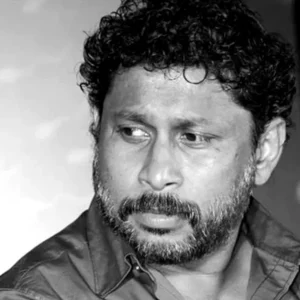
Vinod Kapri is a Hindi filmmaker who spent more than twenty years in journalism, most of them in television news, before he made his first film. He was born in Secunderabad into a Kumaoni family from Pithoragarh district in Uttarakhand. His debut documentary, Can't Take This Shit Anymore, shared the National Film Award for Best Film on Social Issues at the 62nd National Film Awards in 2015. He has since made three fiction features and a second documentary, 1232 KMS (2021), about migrant workers cycling home in the 2020 lockdown.
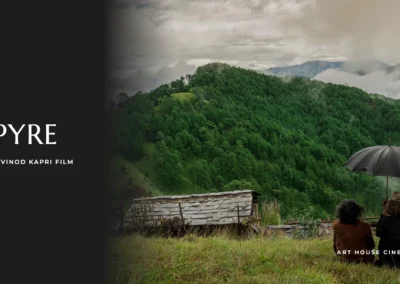
Pyre, shot in his family's corner of Kumaon with two first-time actors in their seventies and eighties, won the audience award at the Tallinn Black Nights Film Festival in November 2024. It reached Indian cinemas on 30 October 2026.
Life and Early Work
Kapri was born in Secunderabad, now in Telangana. His father, D. S. Kapri, served in the Indian Army. No reliable source gives his date of birth, and published accounts say little about his schooling. Speaking to the Khaleej Times in 2026, he said that reporting on the Himalayas as a journalist had helped him relearn his family's history.
He started out on the Hindi daily Amar Ujala in 1993, joined Zee News as a reporter two years later and rose to output editor. In 2004 he moved to STAR News as executive producer and was later made managing editor. From 2007 he was managing editor of India TV under its editor-in-chief, Rajat Sharma. Along the way he made documentaries on the Kargil war, the 2001 attack on Parliament and the Mumbai attacks of November 2008.
According to the trade site afaqs!, Kapri spent two or three months of 2013 on leave from India TV to shoot a feature, then resigned that December. He then ran the Hindi channel News Express as chief executive for ten months and left in October 2014 to finish his film. His wife, the journalist Sakshi Joshi, later co-produced Pyre.
Filmmaking
Can't Take This Shit Anymore (2014) is a 51-minute documentary about six women from Kheisha village in Kushinagar district, Uttar Pradesh. Each had left her husband's house and gone back to her parents because the marital home had no toilet. Kapri ruled out a voice-over from the start. He told Scroll.in in March 2015 that the crew had made a film about shit without showing any.
Miss Tanakpur Haazir Ho, his first feature, was released by Fox Star Studios on 26 June 2015. Annu Kapoor plays Sualaal Gandass, the rich and impotent head of the village of Tanakpur. When he finds that his young wife Maya (Hrishitaa Bhatt) is seeing a village youth, Arjun (Rahul Bagga), he has Arjun charged with raping his prize buffalo. The dialogue mixes Hindi with Haryanvi. Kapri said the story came from a real case in Rajasthan. Reviews were mostly hostile, though Saibal Chatterjee of NDTV called it a bruising satire on a pliable judicial system.
Pihu is built around one child. Myra Vishwakarma, who was two, plays a girl who wakes beside her mother and cannot rouse her, while her father is away and heard only on the telephone. Alone in a high-rise flat, she reaches a microwave, a steam iron, broken glass and an open balcony. The idea came from a 2014 case in Delhi, where a small boy was found alone at home with his dead mother.
In November 2017 the Ministry of Information and Broadcasting chose Pihu to open the feature section of the Indian Panorama at the 48th International Film Festival of India in Goa, in place of Ravi Jadhav's Nude. The next month it won the Grand Prize for best feature and the People's Choice award at the 14th Trans-Saharan International Film Festival in Zagora, Morocco. It reached Indian cinemas on 16 November 2018.
The lockdown of 2020 sent Kapri back to documentary. In April seven young labourers stranded in Ghaziabad set out by bicycle for their village in Saharsa, Bihar, 1,232 kilometres away. Kapri followed them by car for seven days with a small crew. 1232 KMS began streaming on Disney+ Hotstar on 24 March 2021, a year after the lockdown began. Nandini Ramnath of Scroll.in praised its observation but found the songs by Vishal Bhardwaj and Gulzar intrusive. Kapri's iPhone notes from the ride became a book, 1232 km: The Long Journey Home, published by HarperCollins India in 2021.
Pyre took longest. The idea came from an elderly couple Kapri met in Munsiyari, a Kumaon village emptied by migration, and accounts differ on whether that was in 2017 or 2018. At a family gathering in 2022, Kapri's uncle Padam Singh, a retired Army havildar, dared him to cast him, and a test scene worked. Heera Devi, a widow, was carrying a load of wood when she heard that the crew needed an actress, and she offered herself.
They play Padam and Tulsi, goat herders married for more than sixty years, whose son left for Mumbai long ago and has not come back. Kapri shot the film in the 2022 monsoon around Berinag in Pithoragarh district, where his family comes from. He wanted real rain, not a green screen. The village had no toilets, so the production built some and left them to the villagers. Kapri paid for the shoot himself. Patricia Rommel, the German editor of The Lives of Others, cut the film, and Mychael Danna wrote the score for a small fee.
At its Tallinn premiere, Pyre was the only Indian film in competition, and its two leads made their first trip abroad to attend. It opened the 16th Bengaluru International Film Festival in March 2025. In July it won audience awards in Spain, London and Birmingham, and the German Star of India, the main prize of the 22nd Indian Film Festival Stuttgart. In September the India International Film Festival of Boston gave it best feature and best director, and the 16th Chicago South Asian Film Festival an audience award.
Finding Indian screens was harder. Kapri told the Khaleej Times that his company's bank balance fell to Rs 7,423. A London-based backer, Suresh Joshi, joined to revive the release, and Cinepolis took on distribution. In mid-October 2026 about 3,700 people saw it in inflatable cinemas set up in three Uttarakhand towns, at Rs 99 a ticket. Pyre opened on 80 screens on 30 October and grew to about 400 within days. Kapri then said that many of his shows had been handed to Ramayana: Part 1, and on 12 November he told Outlook that the dispute was sorted. By mid-November the film was in its third week on more than 300 screens.
The Cinema of Vinod Kapri
Kapri approaches a film like a reporter who has found a case. Each one starts from an incident he read about or came across: women who walked out over a toilet, a boy alone with a dead mother, seven men on bicycles, an old couple in an empty village. The features are uneven. Sweta Kaushal of the Hindustan Times thought Miss Tanakpur Haazir Ho trivialised its subject, and Anupama Chopra found the script of Pihu manipulative. Pyre is quieter. He told Scroll.in in 2025 that he did not want to make a preachy film or spell out the situation.
Key Themes
Places people leave. Migration runs through his work from both ends. In 1232 KMS the workers abandon a city that no longer pays them, and in Pyre the parents wait in a hill village the young have left. The two films show the same movement, first from the road and then from the empty house.
The body and dignity. His first film is about latrines. Kapri told Scroll.in that the government had to provide basic facilities but that the deeper problem was one of mindset. The same practical eye shows on set, where the Pyre unit built toilets and left them for the village.
The law as farce. Miss Tanakpur Haazir Ho follows a false criminal charge to absurdity, through forged evidence to a court that demands to see the victim. It is a newsman's satire on how a case gets built.
People who are not actors. Kapri prefers faces without a screen history. Pihu rests on a two-year-old, 1232 KMS on the labourers themselves, and Pyre on his uncle and a village widow who speaks Kumaoni, not Hindi.
One place, one problem. Pihu never leaves the flat, and 1232 KMS never leaves the road. The confinement gives each film its pressure.
Selected Filmography
Can't Take This Shit Anymore (2014)
Six women in Kushinagar district leave their husbands' homes for want of a toilet. It shared a National Film Award.
Miss Tanakpur Haazir Ho (2015)
Kapri's first feature, a village satire with Annu Kapoor and Om Puri about a man framed for raping a buffalo.
Pihu (2018)
A two-year-old is left alone in a high-rise flat. It opened the Indian Panorama at IFFI 2017.
1232 KMS (2021)
Seven labourers cycle from Ghaziabad to Saharsa during the 2020 lockdown, filmed on the road.
Pyre (2024)
Two non-professional actors play an elderly Kumaoni couple whose son left for Mumbai and has not come back. It won the audience award at Tallinn.
Legacy
Kapri gave up a managing editor's post in Hindi television news in 2014 to make films, and the National Film Award came with his first documentary. Since then he has moved between small fiction features and documentary. His own company, Bhagirathi Films, produced three of his five films.
Pyre is the film he will be judged by for now. By October 2026, Outlook and Onmanorama reported, it had won 18 awards. The inflatable-cinema tour drew notice beyond his own film, and The Hollywood Reporter India wrote that the makers of Birds in the Dark were looking at the same model.
Vinod Kapri on Art House Cinema