
Govind Nihalani
Govind Nihalani (born 19 December 1940) is among the most consequential figures of post-independence Indian cinema, an artist whose work as both cinematographer and director helped define the aesthetic and political seriousness of the parallel cinema movement of the 1970s and 1980s. Working primarily in Hindi, and across a career that began in 1962, Nihalani brought to the screen an austere, morally rigorous realism preoccupied with the individual conscience as it is tested against corrupt, violent, and divided social structures. His films constitute a sustained inquiry into the institutions of modern India — the police, the courts, the bureaucracy, the political establishment — and the human costs exacted upon those whom these institutions are meant to protect.
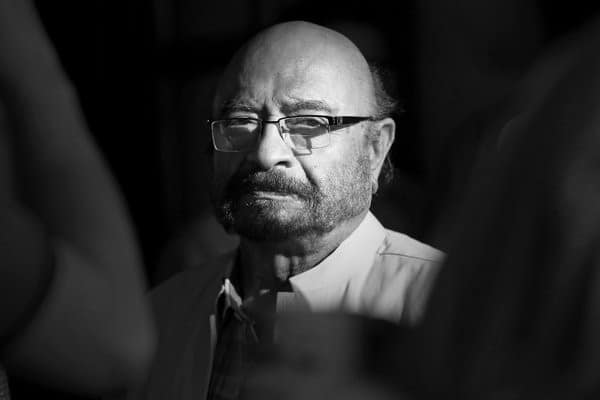
Nihalani first established himself as one of the finest cinematographers of his generation, shaping the visual language of Shyam Benegal’s landmark films before turning to direction. His directorial debut, Aakrosh (1980), and his subsequent Ardh Satya (1983) are widely regarded as defining works of the Indian New Wave, offering a gritty, unsentimental counterpoint to the mainstream “angry young man” of commercial Hindi cinema. With Tamas (1988), a four-hour television film on the Partition of India, he reached perhaps the largest audience ever commanded by a work of Indian art cinema, and confronted the nation with the communal violence at the root of its founding.
Recurring across Nihalani’s cinema is the motif of division — communal, class, gender, and political — and the predicament of the conscientious individual ensnared within systems that corrode integrity. From the silenced tribal of Aakrosh to the disintegrating police officer of Ardh Satya, from the Partition’s uprooted families in Tamas to the grieving mother of a slain Naxalite in Hazaar Chaurasi Ki Maa (1998), his protagonists inhabit a world in which moral clarity is a burden rather than a comfort. His was a cinema of ethical density, attentive to the structural forces that shape and constrain human choice.
The recipient of six National Film Awards and five Filmfare Awards, Nihalani was honoured with the Padma Shri in 2002. He also worked extensively as a screenwriter, producer, and co-author, contributing to the Encyclopaedia of Hindi Cinema (2003) alongside Saibal Chatterjee and Gulzar. His influence on the visual grammar and political conscience of Indian cinema remains profound, and his major films continue to be studied as essential texts of the parallel cinema tradition.
Life and Early Work
Govind Nihalani was born on 19 December 1940 in Karachi, in the Sindh province of British India, now in Pakistan. His childhood was decisively marked by the trauma of the Partition of India in 1947, when his family, like millions of others, was uprooted from its home and forced to migrate across the newly drawn border. The Nihalanis first moved to Jodhpur and subsequently settled in Udaipur, Rajasthan, where his father established himself as a grain merchant. The experience of displacement, communal rupture, and the violence that accompanied the founding of two nation-states would later become one of the most powerful subjects of his cinema, finding its fullest expression in Tamas.
Nihalani’s formal entry into cinema came through technical training rather than the literary or theatrical apprenticeships common among his contemporaries. He studied cinematography at the Shree Jaya Chamarajendra Polytechnic in Bangalore — the institution that later became the Government Film and Television Institute — graduating in 1962. This grounding in the craft of the camera, in the disciplines of light, composition, and movement, would distinguish Nihalani throughout his career and inform the rigorous visual intelligence of even his most overtly political films.
Upon graduating, Nihalani apprenticed under the celebrated cinematographer V. K. Murthy, whose luminous black-and-white work for Guru Dutt had set a benchmark for Indian film photography. From roughly 1962 to 1971 Nihalani worked as an assistant, absorbing the technical and expressive possibilities of the medium from one of its acknowledged masters. This long apprenticeship, unhurried and thorough, equipped him with a command of cinematographic craft that he would soon place in the service of a new and socially engaged cinema then emerging in India.
That emerging movement — variously called parallel cinema, the Indian New Wave, or middle cinema — sought to break from the conventions of commercial Hindi film in favour of realism, social engagement, and formal seriousness, drawing inspiration from Italian neorealism and the auteur cinemas of Europe. It was within this milieu, and particularly through his collaboration with the director Shyam Benegal, that Nihalani would establish himself first as a cinematographer of the first rank, and then as a director of singular moral and political conviction.
Filmmaking
Nihalani’s career in feature films began behind the camera as the cinematographer for Shyam Benegal, with whom he formed one of the most productive partnerships in the history of Indian art cinema. He photographed Benegal’s debut feature Ankur (1974), followed by a remarkable succession of films that became foundational texts of the parallel cinema movement: Nishant (1975), Manthan (1976), Bhumika (1977), Kondura (1978), Junoon (1978), Kalyug (1981), and Arohan (1982). For his cinematography on Junoon, a period drama set against the Revolt of 1857, Nihalani won both the National Film Award and the Filmfare Award for Best Cinematography in 1979. His visual sensibility — attentive to landscape, texture, and the human face — became inseparable from the look of Benegal’s cinema during this period.
Nihalani’s technical reputation also drew international attention. He served as an uncredited second-unit director on Richard Attenborough’s Gandhi (1982), the Oscar-winning biographical drama, where he played a key role in shooting major sequences including the vast funeral procession that opens the film. The experience of orchestrating crowds and managing the logistics of epic-scale cinema would later inform his own ambitious works.
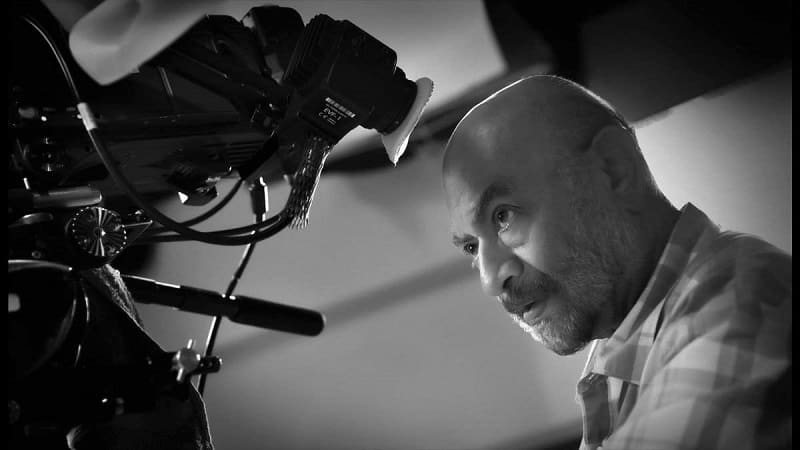
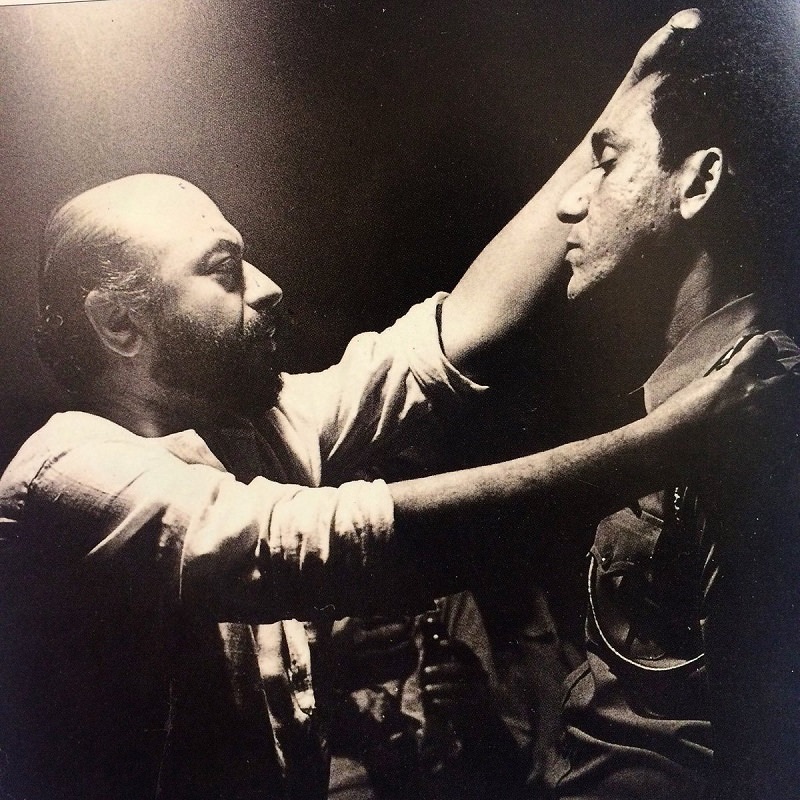
His directorial debut, Aakrosh (1980), announced the arrival of a major new voice. Scripted by the eminent Marathi playwright Vijay Tendulkar and starring Om Puri, Naseeruddin Shah, Smita Patil, and Amrish Puri, the film told the story of a mute tribal man, falsely accused of murdering his wife, whose anguished silence becomes an indictment of a justice system rigged against the powerless. Aakrosh won the Golden Peacock for Best Film at the International Film Festival of India in 1981, the National Film Award for Best Feature Film in Hindi, and the Filmfare Award for Best Director, establishing Nihalani at a single stroke as one of the country’s most formidable filmmakers.
In 1982 Nihalani directed Vijeta, a coming-of-age drama set against the backdrop of the Indian Air Force, for which he also served as cinematographer, winning a further Filmfare Award for Best Cinematography. The following year he made Ardh Satya (1983), often regarded as his masterpiece and one of the greatest of all Indian films about the police. Adapted by Vijay Tendulkar from S. D. Panvalkar’s short story “Surya,” with dialogues by Vasant Dev, the film charts the moral disintegration of an idealistic young sub-inspector, played by Om Puri, who is slowly crushed between political corruption, institutional brutality, and his own inherited rage. Ardh Satya won Nihalani the Filmfare Awards for Best Director and Best Film, while Om Puri received the Best Actor award at the Karlovy Vary International Film Festival as well as national recognition. The film offered a searing, realist alternative to the romanticised vigilante hero of mainstream cinema.
Nihalani continued to draw on the theatre and literature for his subsequent work. Party (1984), adapted from Mahesh Elkunchwar’s play, dissected the hypocrisies and evasions of a bourgeois intellectual elite, contrasting their drawing-room postures with the absent figure of a poet who has committed himself to genuine political struggle. Aghaat (1985) turned to the world of trade unionism and the betrayal of working-class solidarity. Across these films, Nihalani’s preoccupation with the gap between professed ideals and lived conduct deepened into a sustained moral examination of Indian public life.
In 1988 Nihalani realised his most monumental project, Tamas, adapted from Bhisham Sahni’s Sahitya Akademi Award-winning Hindi novel of 1974. Set in the days surrounding the Partition, the film traced the descent of a community into communal carnage and the suffering of Hindu and Sikh families forced to flee their homes. Broadcast on the national television network Doordarshan as a mini-series, and later screened as a four-hour feature, Tamas reached an audience of unprecedented scale for a work of such artistic ambition and provoked intense national debate. At the 35th National Film Awards it received three honours, including the Nargis Dutt Award for Best Feature Film on National Integration — a recognition of its plea against the very communal hatreds it so unflinchingly depicted.
The films of the following decade extended Nihalani’s range while sustaining his thematic concerns. Drishti (1990), an intimate study of marriage and infidelity, won the National Film Award for Best Feature Film in Hindi and marked a rare turn toward the interior life of a relationship. He also directed Pita (1991), Rukmavati Ki Haveli (1991), and the television film Jazeere (1991), the last adapted from Henrik Ibsen’s play Little Eyolf. With Drohkaal (1994), starring Om Puri and Naseeruddin Shah, he returned to the terrain of institutional violence, examining the psychological toll of counter-terrorism upon the police officers who wage it. The film’s power was such that it was remade in Tamil by Kamal Haasan as Kuruthipunal (1996), which went on to become India’s official entry for the Academy Award for Best Foreign Language Film at the 68th Academy Awards.
In 1998 Nihalani adapted the Bengali writer Mahasweta Devi’s celebrated novel Hazaar Chaurasi Ki Maa (“Mother of 1084”), the story of a middle-class mother who, in the wake of her son’s killing as a Naxalite revolutionary, comes slowly to understand the convictions for which he died and to question the complacency of her own world. The film, which Nihalani also produced, won the National Film Award for Best Feature Film in Hindi. The following year he attempted a more commercial idiom with Thakshak (1999), an action drama starring Ajay Devgn, Tabu, and Rahul Bose that probed the nexus of business and organised crime. His later works included Deham (2001), a dystopian science-fiction allegory; Dev (2004), a politically charged drama on communal violence and policing that won the Filmfare Critics Award for Best Movie; the Marathi-language Ti Ani Itar (2017); and the direct-to-video Up Up and Up (2019).

The Cinema of Govind Nihalani
The cinema of Govind Nihalani is defined above all by its moral seriousness. Trained as a cinematographer and schooled in the realist ethos of the Indian New Wave, Nihalani fashioned a body of work that consistently subordinates spectacle to ethical inquiry. His films pose, again and again, the same fundamental question: what becomes of conscience, integrity, and individual will within social structures organised around violence, corruption, and division? The answer his cinema offers is rarely consoling, but it is always rigorous, and it is delivered with a formal control that lends even his bleakest visions a stark and disciplined beauty.
What distinguishes Nihalani from many of his contemporaries is the way his technical mastery serves his political and moral vision rather than calling attention to itself. His background behind the camera gave his direction an unusual visual precision — a feeling for the expressive weight of light, framing, and the human face under pressure. Yet this craft is never decorative. The austere, often unsparing realism of his images is itself a moral stance, a refusal of the evasions and consolations of commercial melodrama. Where mainstream cinema offered catharsis through the triumphant vigilante, Nihalani offered the spectacle of the conscientious individual broken or compromised by forces larger than himself.
Central to his work is the figure of the institution — the police, the courts, the political party, the trade union, the bureaucracy — and the corrosion it works upon those caught within it. Ardh Satya remains the definitive statement of this concern, its title (“Half Truth”) naming the impossible compromise demanded of anyone who would remain honest within a dishonest system. But the same preoccupation animates Aakrosh, Drohkaal, and Dev. Nihalani’s collaboration with the playwright Vijay Tendulkar, whose own work probed the violence latent in social and sexual relations, was decisive in shaping this institutional and psychological focus.
Equally persistent is Nihalani’s attention to division in its many forms. The communal cleavage of Tamas, the class antagonisms of Aghaat and Party, the ideological chasm of Hazaar Chaurasi Ki Maa, the marital estrangement of Drishti — all are variations on a single underlying theme: the fracturing of human solidarity along the fault lines of religion, class, politics, and gender. Against these divisions Nihalani set the suffering and occasionally the awakening of individuals, registering the human cost of social rupture without ever reducing his characters to mere illustrations of a thesis. His was a cinema rooted in the conviction that political structures are lived, intimately and painfully, in individual lives.
Key Themes
Conscience within Corrupt Institutions Nihalani’s most enduring concern is the predicament of the honest individual within dishonest systems. The police officer, the bureaucrat, and the citizen are tested by institutions that demand complicity, and the resulting moral disintegration — most powerfully in Ardh Satya — forms the dramatic and ethical core of his cinema.
Division and Social Rupture Across his films, division — communal, class, political, and gender — recurs as a structuring preoccupation. From the Partition violence of Tamas to the ideological conflicts of Hazaar Chaurasi Ki Maa, Nihalani charts the fracturing of human solidarity and its cost to ordinary lives.
The Plight of the Marginalised Nihalani repeatedly gave voice to the powerless and the silenced — the falsely accused tribal of Aakrosh, the exploited worker, the dispossessed refugee — exposing the systems that oppress them and the indifference of those in power.
Violence and the State The legitimate and illegitimate violence of the state, and its psychological consequences for those who enact it, is a sustained subject, examined with particular intensity in Drohkaal and Dev. Nihalani refused both the glamorisation and the simple condemnation of such violence, insisting instead on its human complexity.
Realism as Moral Stance Nihalani’s austere, unsentimental realism is itself an ethical choice — a refusal of the evasions of commercial melodrama. His cinematographic precision serves not display but truthfulness, lending his films their distinctive gravity.
Literature and Theatre as Source Much of Nihalani’s work draws on serious literary and dramatic sources — Tendulkar, Sahni, Elkunchwar, Mahasweta Devi, Ibsen — reflecting his conviction that cinema could carry the intellectual and moral weight of the finest writing.
Selected Filmography
Aakrosh (1980)
Nihalani’s directorial debut, scripted by Vijay Tendulkar, follows the case of a mute tribal man falsely accused of murder whose silence becomes a devastating indictment of a justice system stacked against the poor. Starring Om Puri, Naseeruddin Shah, Smita Patil, and Amrish Puri, the film won the Golden Peacock at the International Film Festival of India and the National Film Award for Best Feature Film in Hindi, announcing a major new voice in Indian cinema.
Ardh Satya (1983)
Widely regarded as Nihalani’s masterpiece, this study of an idealistic police sub-inspector’s moral disintegration, adapted by Tendulkar from a story by S. D. Panvalkar, offered a searing realist alternative to the romanticised vigilante of mainstream cinema. Om Puri’s performance won acclaim at the Karlovy Vary International Film Festival, and the film secured Nihalani the Filmfare Awards for Best Director and Best Film.
Party (1984)
Adapted from Mahesh Elkunchwar’s play, Party dissects the hypocrisies of a bourgeois intellectual elite, contrasting their cultivated postures with the absent figure of a poet committed to genuine political struggle. The film stands as one of Nihalani’s sharpest critiques of the gap between professed ideals and lived conduct.
Tamas (1988)
Adapted from Bhisham Sahni’s novel and broadcast on Doordarshan as a mini-series before its release as a four-hour feature, Tamas is among the most profound depictions of the Partition in Indian cinema. Its unflinching chronicle of communal violence and displacement reached an unprecedented audience and won three honours at the 35th National Film Awards, including the Nargis Dutt Award for Best Feature Film on National Integration.
Drohkaal (1994)
A taut examination of the psychological cost of counter-terrorism upon the police, starring Om Puri and Naseeruddin Shah. The film’s power was confirmed by its Tamil remake, Kamal Haasan’s Kuruthipunal (1996), which became India’s official entry for the Academy Award for Best Foreign Language Film.
Hazaar Chaurasi Ki Maa (1998)
Adapted from Mahasweta Devi’s novel, the film traces a middle-class mother’s painful awakening following the killing of her son as a Naxalite revolutionary. A meditation on grief, political conviction, and bourgeois complacency, it won the National Film Award for Best Feature Film in Hindi.
Dev (2004)
A politically charged drama on communal violence and the ethics of policing, Dev returned Nihalani to his enduring concerns within a more popular register. The film won the Filmfare Critics Award for Best Movie and reaffirmed his commitment to a cinema of social conscience.
Legacy
Govind Nihalani occupies a distinctive and durable place in the history of Indian cinema as one of the principal architects of its parallel tradition. As a cinematographer, he helped forge the visual identity of the Indian New Wave through his work with Shyam Benegal; as a director, he gave that movement some of its most uncompromising and politically urgent works. The realist depiction of institutional corruption, communal violence, and individual moral struggle that defines his cinema established a model of socially engaged filmmaking whose influence extends across subsequent generations of Indian directors working in a serious, issue-driven idiom.
His impact on the popular imagination is perhaps most visible in the figure of the conscientious, embattled protagonist. Where Hindi commercial cinema of the 1970s offered the triumphant “angry young man,” Nihalani offered his darker, more truthful counterpart — the honest officer or citizen ground down by a corrupt order. Ardh Satya in particular has attained the status of a classic, its unflinching portrait of policing and its central performance by Om Puri continuing to shape how Indian cinema imagines the relationship between the individual and the state. Films on the police and on institutional decay made in later decades remain in dialogue with the template Nihalani established.
Tamas endures as a landmark of a different kind: a work of art cinema that, through the medium of national television, entered the homes and the conscience of an entire country. Its courageous engagement with the violence of the Partition, and its plea for communal harmony, secured its place as one of the most significant interventions of Indian cinema into the nation’s understanding of its own history. That a four-hour, literary, and uncompromising film could command such an audience testifies both to Nihalani’s artistry and to the cultural possibilities of his moment.
Nihalani’s contributions were recognised with six National Film Awards and five Filmfare Awards across the categories of direction, cinematography, and best film, as well as the Padma Shri, conferred by the Government of India in 2002. Beyond his own films, he contributed to the scholarship and documentation of Indian cinema, co-authoring the Encyclopaedia of Hindi Cinema (2003) with Saibal Chatterjee and Gulzar, and he remained an articulate advocate for the craft and the conscience of the medium throughout his life.
If Nihalani has at times been less celebrated in popular memory than the scale of his achievement warrants, his standing among scholars, critics, and serious filmgoers remains secure. His films constitute an indispensable record of the moral and political anxieties of post-independence India, rendered with a craftsmanship and an ethical seriousness that few of his contemporaries matched. In the union of technical mastery and unwavering social conscience, Govind Nihalani offered Indian cinema a model of what the medium, at its most ambitious, could be: not merely entertainment, but a sustained and searching inquiry into the condition of a society and the individuals who must live within it.