B.V. Karanth
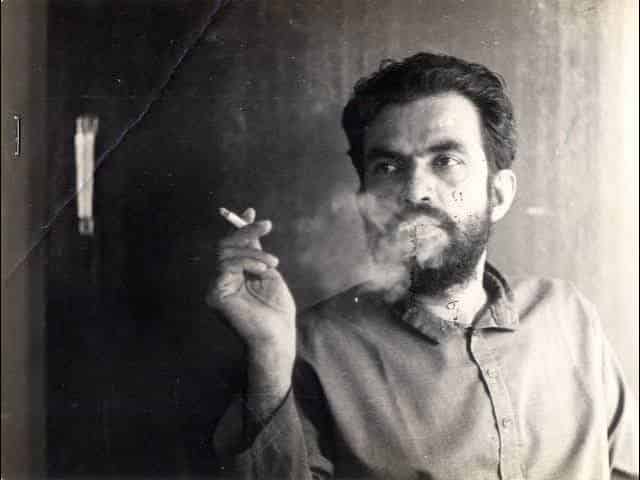
Babukodi Venkataramana Karanth (B.V. Karanth) (19 Sep 1929 – 1 Sep 2002) was a composer, film director, screenwriter, and actor closely associated with theatre and cinema in Karnataka. Karanth stands as one of the most influential figures in post-Independence Indian theatre and cinema. His multifaceted career encompassed roles as director, dramatist, actor, musician, and educator, and he is widely recognized for his pivotal contributions to both Kannada and Hindi theatre as well as the Indian New Wave in cinema. An alumnus and later Director of the National School of Drama (NSD), Karanth’s work was characterized by a profound engagement with traditional performance idioms and a commitment to expanding the reach of serious theatre practice across the subcontinent. He was honored with the Padma Shri and numerous national awards for his artistic achievements. He directed many plays and award-winning films in Kannada including Vamsha Vriksha and Chomana Dudi.
Life and Early Work
Babukodi Venkataramana Karanth was born on 19 September 1929 in Manchi, a village near Babukodi in the Bantwal taluk of the Dakshina Kannada district, then part of the princely Kingdom of Mysore in British India. He was born into a Kannada-speaking family of coastal Karnataka, a region whose dense traditions of ritual performance—above all the all-night dance-drama of Yakshagana—would later furnish him with an inexhaustible vocabulary of music, movement and stylisation. His passion for theatre declared itself extraordinarily early: while still in the third standard he appeared in a play titled Nanna Gopala, directed by P. K. Narayana.
That early enchantment soon overran the ordinary course of a schoolboy’s life. As a young boy Karanth ran away from home and joined the legendary Gubbi Veeranna Drama Company, then the most famous professional theatre troupe in the Kannada country. There he worked as a contemporary of the young Rajkumar, who would go on to become the great superstar of Kannada cinema. The years inside a touring company gave Karanth a practical, ground-level education in every aspect of the stage—acting, music, stagecraft and the discipline of nightly performance—that no academy could have supplied.
Recognising the boy’s gifts, Gubbi Veeranna sent Karanth to Banaras (Varanasi) to pursue formal study. There he completed a Master of Arts degree and, decisively for his later career, underwent rigorous training in Hindustani classical music under the eminent vocalist Guru Omkarnath Thakur. This grounding in the northern classical tradition, layered upon his native immersion in the folk and ritual forms of coastal Karnataka, produced the singular musical sensibility that would become his hallmark. Few artists of his generation could move so naturally between the desi and the margi, the folk and the classical.
Together with his wife, the theatre director and filmmaker Prema Karanth, whom he married in 1958, he founded Benaka—an acronym for Bengalooru Nagara Kalavidaru—one of Bangalore’s oldest and most influential theatre groups. When Prema took up a teaching position in Delhi, she supported Karanth through his studies at the National School of Drama, then headed by the formidable Ebrahim Alkazi. Karanth graduated from the NSD in 1962, winning recognition as the best all-round student of his year. Between 1969 and 1972 he taught drama at the Sardar Patel Vidyalaya in New Delhi before the couple returned to Bangalore, where Karanth began to involve himself in cinema and film music alongside such collaborators as the playwright Girish Karnad and the novelist U. R. Ananthamurthy. It was in this fertile circle of writers, dramatists and intellectuals, at the cusp of the 1970s, that his film career was born.
Filmmaking
Karanth’s entry into cinema came in 1971 with Vamsha Vriksha (The Family Tree), which he co-directed with Girish Karnad. Adapted from S. L. Bhyrappa’s celebrated Kannada novel, the film examined questions of lineage, tradition, widowhood and individual conscience within a Brahmin family, and it announced the arrival of a serious, literary cinema in the Kannada language. Vamsha Vriksha won the National Film Award for Best Direction and the National Film Award for Best Feature Film in Kannada, while also earning Karanth and Karnad the Filmfare Award for Best Director in Kannada. The film is widely regarded as one of the foundational works of the Kannada new wave, the regional counterpart to the parallel cinema then emerging across India.
Karanth’s gifts as a director of children and his lifelong commitment to children’s theatre carried over into cinema with Chuti (1974), a Hindi-language film made for and about children, a relatively rare venture in the Indian art cinema of the period. But it was his next film that secured his place in the history of Indian cinema. Chomana Dudi (Choma’s Drum, 1975), adapted from the novel by the Jnanpith laureate Shivaram Karanth, told the story of Choma, an “untouchable” bonded labourer whose deepest desire—to till his own land—is denied him by the rigid hierarchies of caste. Starring M. V. Vasudeva Rao in an unforgettable performance as Choma, the film built towards a devastating conclusion in which the broken protagonist shuts himself inside his hut and beats his drum until he dies.
Chomana Dudi won the Swarna Kamal, the National Film Award for Best Feature Film, while Vasudeva Rao received the National Film Award for Best Actor and the film took the award for Best Story. Karanth, who composed the film’s music himself, was again named Best Director in Kannada at the Filmfare Awards. With its unflinching depiction of caste oppression and rural poverty, and its restrained, humane realism, Chomana Dudi remains among the most powerful social statements in Indian cinema and a cornerstone of the parallel film movement.
Karanth’s fourth feature, Tabbaliyu Neenade Magane (1977), again co-directed with Girish Karnad and adapted from a Shivaram Karanth novel, was made simultaneously in Kannada and in a Hindi version titled Godhuli. The film confronted the tensions between tradition and modernity through the charged subject of cow worship and slaughter, following a young man who returns from America with a foreign wife to his ancestral village. It won the National Film Award for Best Feature Film in Kannada, completing a remarkable run in which every one of Karanth’s features was recognised at the national level.
Equally important was Karanth’s parallel career as a film composer, in which capacity he scored music for roughly two dozen films. His collaborations with the directors of the Kannada new wave were especially fruitful: he won the National Film Award for Best Music Direction in 1976 for Rishyashringa and again in 1977 for Girish Kasaravalli’s Ghatashraddha, one of the most acclaimed Indian films of its era, as well as a Karnataka State Film Award for his music in Hamsageethe. In these scores Karanth applied to cinema the same principles that animated his theatre—drawing on classical ragas, folk melody and the ritual soundscapes of coastal Karnataka to create music that emerged organically from the dramatic situation rather than ornamenting it from without. Across both his direction and his composition, Karanth’s cinema was inseparable from the literary and theatrical ferment of Karnataka in the 1970s, and from the wider movement that sought to forge a serious, socially engaged Indian art film.
The Cinema of B. V. Karanth
To speak of the cinema of B. V. Karanth is necessarily to speak of an artist for whom the screen was one expression among several of a unified theatrical imagination. His films cannot be separated from his theatre, and both are governed by the same convictions: that art must be rooted in the soil and idiom of a particular place; that music is not decoration but the very breath of dramatic form; and that the traditional and the folk are not relics to be preserved but living resources for a contemporary art. Karanth’s distinctive achievement was to channel the energies of Yakshagana, Hindustani classical music and the regional literary renaissance into a modern audiovisual language.
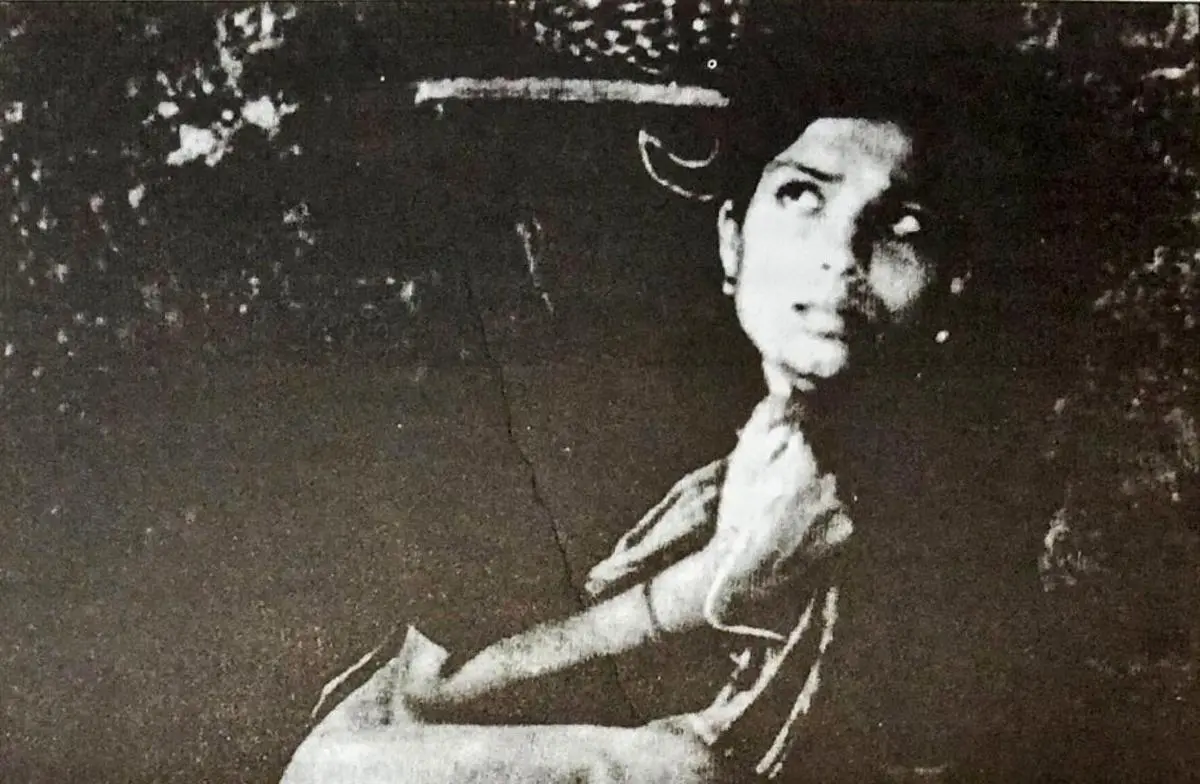
His cinema belongs squarely to the tradition of Indian realism, yet it is a realism inflected by his deep musicality and his sensitivity to ritual, landscape and the rhythms of rural life. Where some of his contemporaries pursued a severe formal austerity, Karanth’s sensibility was warmer and more lyrical, attentive to the textures of community and the cadences of vernacular speech. His adaptations of major Kannada novels—by Bhyrappa and Shivaram Karanth—reflect a conviction that cinema, like theatre, could give visual and aural body to the moral and social questions that the regional literature of his time was raising with such urgency.
Key Themes
Caste, oppression and social conscience: Karanth’s most celebrated film, Chomana Dudi, is an unsparing study of caste oppression and the human cost of bonded labour, and his cinema as a whole is animated by a deep ethical engagement with the marginalised and the powerless.
Tradition and modernity: From the questions of lineage and widowhood in Vamsha Vriksha to the clash of ancestral belief and the returning émigré in Tabbaliyu Neenade Magane, Karanth repeatedly examined the strains placed on inherited tradition by the forces of modern life.
Music as dramatic substance: Trained in Hindustani classical music and steeped in folk forms, Karanth treated music as the structural and emotional core of his work, both as composer of his own films and as the award-winning music director of films by others. His scores drew on raga, folk melody and ritual sound to grow out of the drama itself.
Rootedness in the regional and the folk: Nirmal Verma’s description of Karanth as “the authentic desi genius” points to the abiding principle of his art—a determination to build a modern, contemporary cinema and theatre from indigenous, vernacular and folk materials rather than imported models.
Literary adaptation: Karanth turned consistently to the major novels of the Kannada literary renaissance, treating cinema as a medium capable of carrying the moral seriousness and social inquiry of the regional literature of his generation.
Selected Filmography
Vamsha Vriksha (1971) — Co-directed with Girish Karnad and adapted from S. L. Bhyrappa’s novel, this study of family, lineage and conscience won the National Film Award for Best Direction and Best Feature Film in Kannada. A founding work of the Kannada new wave and the film that launched Karanth’s cinematic career.
Chuti (1974) — A Hindi-language children’s film that carried Karanth’s lifelong devotion to children’s theatre into cinema, a rare undertaking within the Indian art film of the period.
Chomana Dudi (1975) — Karanth’s masterpiece, adapted from Shivaram Karanth’s novel, a harrowing account of caste oppression and the bonded labourer Choma’s denied longing to till his own land. It won the Swarna Kamal for Best Feature Film, with M. V. Vasudeva Rao named Best Actor; Karanth also composed its music. A landmark of Indian parallel cinema.
Tabbaliyu Neenade Magane / Godhuli (1977) — Co-directed with Girish Karnad and made simultaneously in Kannada and Hindi, this adaptation of another Shivaram Karanth novel explored cow worship, tradition and cultural displacement, winning the National Film Award for Best Feature Film in Kannada.
Ghatashraddha (1977, as composer) — Karanth’s music for Girish Kasaravalli’s acclaimed film won him the National Film Award for Best Music Direction, exemplifying his conception of a film score drawn from classical and folk tradition.
Rishyashringa (as composer) — Won Karanth the National Film Award for Best Music Direction in 1976, one of his several honours as a music director within the parallel cinema.
Legacy
Karanth’s legacy is both institutional and artistic. In Karnataka, he catalyzed a renaissance in modern theatre, challenging entrenched proscenium conventions and introducing a dramaturgy that integrated language, music, and movement in innovative ways. His direction of plays such as Hayavadana, Jokumara Swamy, and Sattavara Neralu reshaped expectations of regional performance practice.
As Director of the NSD and later head of repertories such as Rangamandal at Bharat Bhavan (Bhopal) and Rangayana in Mysore—institutions he helped establish and nurture—Karanth created enduring platforms for training, production, and theatrical discourse. These institutions continue to sustain professional theatre practice and outreach.
His work also transcended linguistic and regional boundaries: he directed plays in multiple Indian languages and engaged deeply with folk performance forms, bridging traditional aesthetics with modernist sensibilities. His translations of canonical plays and his mentorship of successive generations of performers have ensured the continued vitality of his artistic vision.
In cinema, the films he directed and scored remain touchstones within the Kannada and parallel film traditions, appreciated for their artistic integrity and cultural resonance. Karanth’s multifaceted practice, therefore, represents a cornerstone of late-20th-century Indian theatre and cinema—a legacy that persists in academic study and performance repertoires across the subcontinent.