
Kamal Swaroop
Kamal Swaroop occupies a singular position in the history of Indian cinema: he is the author of arguably the most radical feature film ever produced within the institutional framework of the Indian art-cinema movement, and yet, for almost three decades, he remained one of its least visible figures. A screenwriter and director of film, television, and radio, Swaroop trained at the Film and Television Institute of India (FTII) in Pune and emerged in the late 1980s with Om-Dar-B-Dar (1988), a delirious, genre-defying feature that bewildered audiences, censors, and distributors alike before disappearing into near-total obscurity. When the film was at last restored and released theatrically in January 2014, it was greeted by a new generation of viewers and critics as a lost masterpiece, a foundational text of Indian avant-garde and surrealist cinema, and a work whose audacity had outrun its time by a quarter of a century.
Swaroop’s reputation rests not on prolific output but on the conceptual ambition and intransigent originality of a small, fiercely personal body of work. Where the dominant strain of Indian parallel cinema pursued social realism and reformist seriousness, Swaroop turned instead toward myth, dream, popular memory, and the absurd, fashioning a cinema of associative montage, satirical exuberance, and philosophical play. His films refuse linear narrative, scramble the boundary between documentary and fiction, and treat the soundtrack, the song sequence, and the found image as instruments of thought rather than ornament.
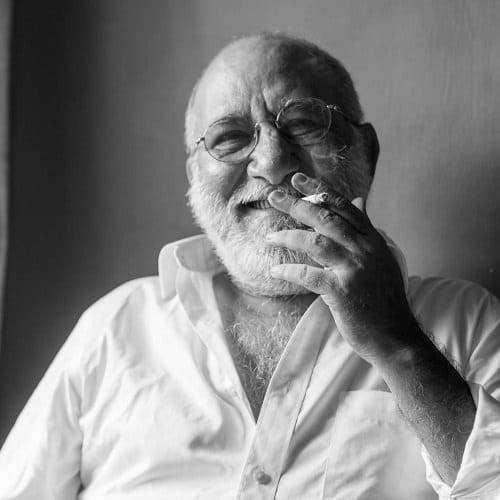
Beyond Om-Dar-B-Dar, Swaroop devoted much of his career to a sustained, almost obsessive engagement with Dhundiraj Govind Phalke, the father of Indian cinema, producing the documentaries Tracing Phalke and Rangbhoomi (2013) and a book on the subject. Rangbhoomi, which reimagines Phalke’s years in Banaras after he abandoned filmmaking for the theatre, premiered in competition at the Rome Film Festival and won the National Film Award for Best Non-Feature Film, the second national honour of Swaroop’s career. His later documentaries, among them Pushkar Puran (2017) and the politically charged The Battle for Banaras (2014), confirmed his standing as one of the most intellectually restless non-fiction filmmakers in the country.
That a body of work so resistant to commercial logic could be sustained at all is itself a measure of Swaroop’s significance. Regarded by admirers as a cult figure, a teacher, and a conscience of the experimental tradition, he has come to embody the road not taken by mainstream Indian cinema: the possibility of a national film practice that is at once rooted in indigenous myth and ritual and uncompromisingly modernist in form.
Life and Early Work
Kamal Swaroop was born around 1950, in an India still negotiating the aftermath of Partition and the early years of independence. Accounts of his birthplace point to Kashmir, but his formative years were spent in Ajmer, the historic pilgrimage town in Rajasthan to which his family moved during his childhood. His father was a schoolteacher who also practised as a palmist, while his mother kept the household; the conjunction of pedagogy and divination in the figure of the father—a man who taught the rational disciplines by day and read fortunes in the lines of the hand—would echo throughout Swaroop’s later work, most directly in Om-Dar-B-Dar, whose young protagonist is the son of a fortune teller.
Ajmer and the nearby temple town of Pushkar, with their layered religious traditions, fairs, myths, and the omnipresent imagery of pilgrimage, formed the imaginative soil from which Swaroop’s cinema would grow. Decades later he would return to Pushkar to make a feature-length documentary about its cosmology, and the small-town Rajasthani milieu—its bazaars, its rituals, its mixture of the sacred and the absurd—remained the recurring landscape of his films.
Swaroop’s formal education began not in the arts but in the sciences. He studied biology, a training whose residue is visible in the recurring motifs of dissection, frogs, reproduction, and biological process that run through Om-Dar-B-Dar. Before committing himself to cinema he had a brief and unusual stint at the Indian Space Research Organisation, where he was involved in educational work, using Russian fairytales as a means of teaching science to children—an early instance of the collision between scientific rationalism and folk narrative that would become central to his sensibility. He subsequently attended filmmaking classes in a remote village in Maharashtra before entering the country’s premier film school.
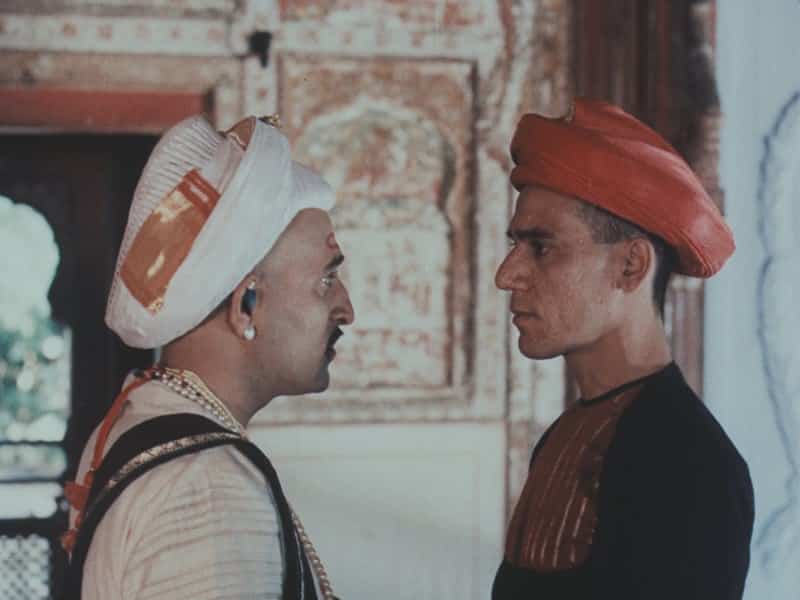
In 1974 Swaroop graduated from the Film and Television Institute of India in Pune, where he studied film direction. His student work attracted unusual international attention, and he continued at the institute with postgraduate study. The FTII of that era was the crucible of the Indian New Wave, and Swaroop belonged to a remarkable cohort steeped in the European modernist canon—Fellini, Godard, Buñuel, the Soviet montage theorists—as well as in the theoretical debates around cinema then circulating through the institute. Among his early collaborative experiences was involvement with Ghashiram Kotwal (1976), the celebrated film adaptation of Vijay Tendulkar’s play made collectively by a group of FTII-trained directors, which placed him within the founding generation of India’s parallel cinema.
The decisive practical apprenticeship of Swaroop’s early career came when he served as an assistant director to Richard Attenborough on the epic production of Gandhi (1982). The experience was formative in an oblique way: charged with managing the vast crowds assembled for the film’s set pieces, Swaroop kept the extras entertained by telling them stories. One of these—about a boy who skips school and runs away from home when his examination results are due, only to discover that he can earn a living by holding his breath underwater like a frog—became the germ of Om-Dar-B-Dar. The contrast could hardly have been sharper: from the reverent, monumental realism of Attenborough’s biopic, Swaroop carried away the seed of a film that would invert every convention the older production embodied.
Filmmaking
Swaroop’s filmmaking career divides loosely into two phases: the early, foundational period dominated by his sole narrative feature, and a long, productive later phase devoted almost entirely to documentary and essayistic non-fiction. Across both, his concerns remained strikingly consistent—myth, memory, the history of cinema itself, and the texture of provincial Indian life.
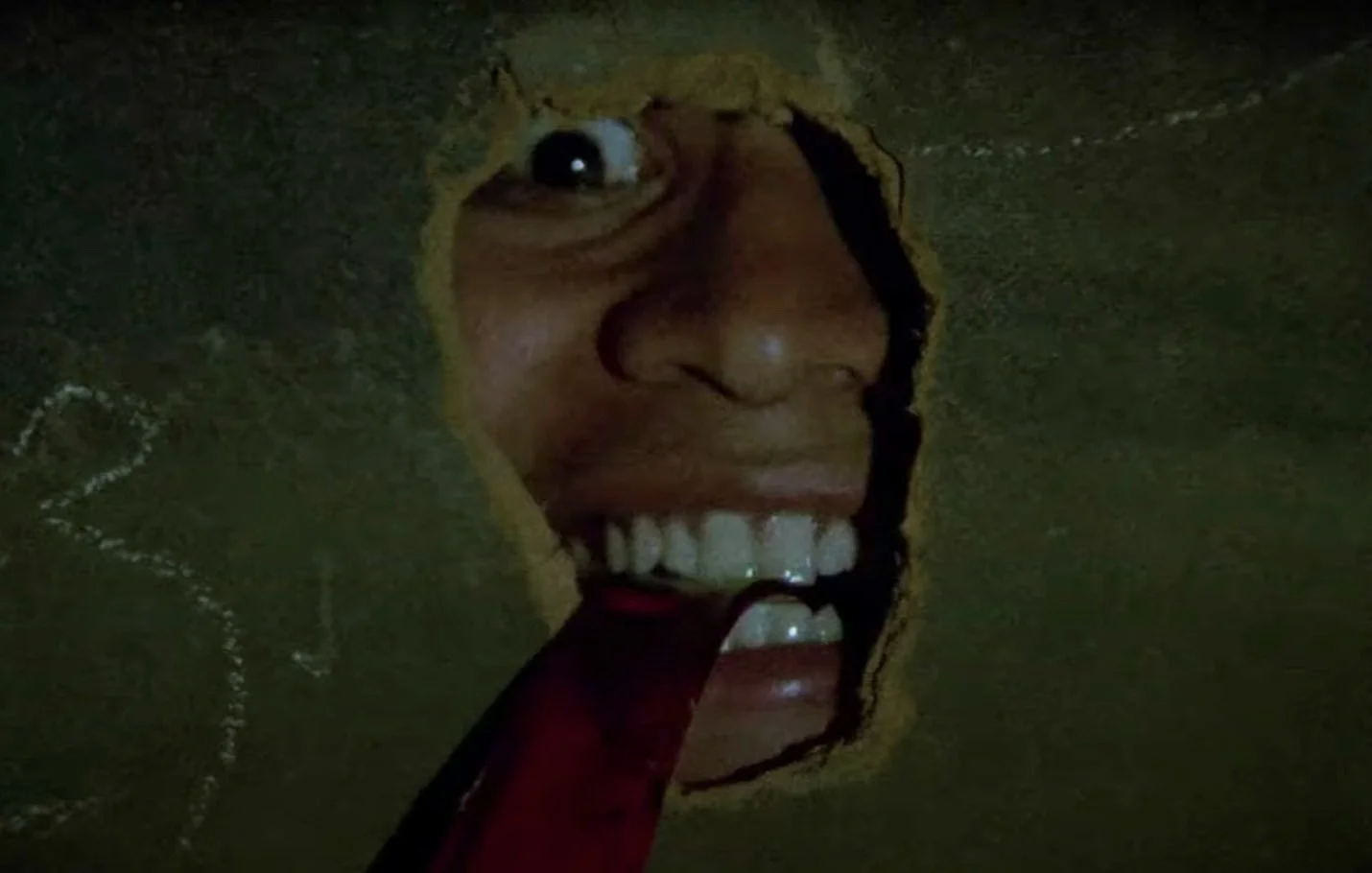
His debut and, to date, only fiction feature, Om-Dar-B-Dar, was produced in 1988 with the support of the National Film Development Corporation of India (NFDC), the state body that financed much of the parallel-cinema movement. Set in a mythical small town in Rajasthan modelled on Ajmer, the film follows Om, an adolescent boy and the son of a fortune teller, as he grows up amid the everyday surrealism of provincial life. Riddled with guilt over his voyeurism, Om comes to believe himself responsible for everything that happens around him, while his elder sister Gayatri—courted by the young Jagdish—dreams of small freedoms such as riding a bicycle or sitting in the men’s section of the cinema. Around this slender domestic frame Swaroop assembled a torrent of digressive song sequences and visual fantasias: a science teacher’s dissection of a frog blossoms into a Fellini-esque “Rana Tigrina” musical number; a boy moonwalks across a terrace on the night Neil Armstrong walks on the Moon; firecrackers at Diwali become real explosions of war; diamonds hoarded for the black market are swallowed by frogs. The film fuses Pop Art, advertising jingles, scientific jargon, Hindu cosmology, and the iconography of small-town India into a dense, punning, polyphonic collage.
Scored with an inventive, genre-scrambling soundtrack and built on principles of free association rather than plot, Om-Dar-B-Dar was unlike anything Indian cinema had produced. It travelled the international festival circuit and screened at the Berlin International Film Festival, where its audacity drew notice, and it earned the Filmfare Critics Award for Best Film. Yet at home it ran into incomprehension and resistance; denied a proper theatrical release, it slipped almost entirely from view, surviving for years only as a rumour among cinephiles and a handful of degraded prints. Its rehabilitation came in January 2014, when a restored version was released commercially across Indian cities to enthusiastic critical acclaim, recasting Swaroop overnight from a forgotten figure into the acknowledged pioneer of Indian avant-garde cinema.
During the same period Swaroop worked as a writer and creative collaborator on other landmark productions of the New Indian Cinema. He contributed to Mira Nair’s Salaam Bombay! and worked as a researcher and script consultant on Saeed Akhtar Mirza’s Salim Langde Pe Mat Ro (1989), among other projects, lending his distinctive intelligence to films at the heart of the parallel-cinema canon. These collaborations situated him firmly within the intellectual community of FTII-trained filmmakers even as his own directorial path diverged toward the experimental margins.
In the decades that followed, Swaroop turned increasingly to documentary, where his essayistic instincts found a natural home. The defining project of this phase was his prolonged engagement with Dadasaheb Phalke, the pioneer who made India’s first feature film in 1913. Awarded a grant by the India Foundation for the Arts, Swaroop set out to trace Phalke’s life through a series of workshops held across the country. One such workshop, conducted in Banaras—the city to which Phalke retreated after abandoning cinema for the theatre—became the foundation for the documentary Rangbhoomi (2013), produced by Films Division and named after Phalke’s own semi-autobiographical play. A meditation on creative failure, reinvention, and the unwritten chapters of cinema history, Rangbhoomi premiered in the official competition of the 2013 Rome Film Festival and won the National Film Award for Best Non-Feature Film (the Golden Lotus), the second national award of Swaroop’s career. The companion documentary Tracing Phalke (2013) and a book of the same investigation extended this lifelong preoccupation into a body of Phalke scholarship unmatched by any other Indian filmmaker.
Swaroop’s later non-fiction work ranged widely. The Battle for Banaras (2014) documented the charged 2014 parliamentary contest in Varanasi between Narendra Modi and Arvind Kejriwal, offering a granular, observational portrait of Indian electoral democracy that encountered certification difficulties of its own. Pushkar Puran (2017), a return to the sacred geography of his Rajasthani childhood, explored the myths and rituals of the Pushkar lake and its annual fair, and premiered at the Montreal World Film Festival, DOK Leipzig, the Mumbai Film Festival, and the Edinburgh International Film Festival. In the same year he completed Atul, a documentary on the contemporary painter Atul Dodiya that deconstructs the artist’s canvases to trace the evolution of his practice. Earlier non-fiction and television work, including When the Image Meets the Shadow (2004) and Bandish (2007), filled out a career conducted largely outside the commercial mainstream, sustained by public institutions, grants, and the sheer persistence of an artist unwilling to compromise his vision.
The Cinema of Kamal Swaroop
The cinema of Kamal Swaroop is defined above all by its refusal of narrative as conventionally understood. Where most filmmakers, including most of his parallel-cinema contemporaries, organise meaning through causal story and psychological character, Swaroop builds his films through association, juxtaposition, and rhythm. Om-Dar-B-Dar has frequently been situated between the avant-garde experiments of Stan Brakhage and the dream-logic surrealism of David Lynch, and it has been read as a key Indian instance of the oneiric theory of cinema—the idea that film is an extension of dreaming, a visual manifestation of fear and desire. Its sequences do not so much advance a plot as accumulate into a deconstruction of collective meaning, a film that resembles a Bollywood musical on the surface while behaving like something wholly alien beneath it.
Swaroop’s method is one of saturation. He floods the frame and the soundtrack with references drawn from popular science, advertising, Hindu mythology, the space race, geology, biology, and small-town ritual, trusting montage and the spectator’s associative imagination to forge connections. The result is a cinema of density and play, satirical and metaphysical at once, in which a frog can carry the weight of mortality, sexuality, and cosmic cycle simultaneously. This intellectual exuberance is matched by a deep rootedness in the specific: the dust, idiom, and iconography of provincial Rajasthan ground even his most abstract flights in a recognisable Indian reality.
Equally characteristic is Swaroop’s erosion of the boundary between documentary and fiction. His Phalke films are at once historical investigations and essayistic reconstructions; his fiction is shot through with the textures of the real. Across his work runs a sustained reflexivity about cinema itself—its origins, its myths, its capacity to remember and to forget—that makes him one of Indian cinema’s most self-aware practitioners.
Key Themes
Myth, ritual, and the provincial sacred. The small towns of Rajasthan—Ajmer, Pushkar, and their mythic doubles—furnish Swaroop with a world in which the sacred and the mundane are inextricable. Pilgrimage, fortune-telling, festival, and legend are not exotic backdrops but the very grammar of his films, which treat indigenous myth as a living, ironic, and inexhaustible resource.
Science against folklore. Trained in biology and shaped by his work teaching science through fairytales, Swaroop repeatedly stages the collision of rationalist knowledge—dissection, the Moon landing, biological reproduction—with myth and superstition, refusing to grant either a final victory and finding comedy and dread in their entanglement.
Dream and the oneiric. Swaroop’s films embrace the logic of dreams: free association, non-linearity, sudden eruptions of fantasy. Cinema, for him, is a machine for externalising desire and anxiety, and his images aspire to the condition of the dreamed rather than the narrated.
Cinema and its own history. From his lifelong pursuit of Dadasaheb Phalke to his reflexive play with the conventions of the Hindi musical, Swaroop returns obsessively to the origins, myths, and forgotten byways of the moving image, making the history of cinema itself a recurring subject.
Satire and the absurd. A mordant, anarchic humour runs through his work, puncturing the pieties of nation, family, religion, and the art film alike. The absurd, for Swaroop, is not nihilism but a mode of truth-telling, exposing the surreal substratum of ordinary Indian life.
Selected Filmography
Ghashiram Kotwal (1976)
A collectively directed FTII adaptation of Vijay Tendulkar’s landmark Marathi play, among the founding works of Indian parallel cinema, on which Swaroop worked as part of the directing collective at the outset of his career.
Om-Dar-B-Dar (1988)
Swaroop’s sole fiction feature and his masterpiece: a surreal, free-associative coming-of-age tale set in small-town Rajasthan, financed by the NFDC, premiered at the Berlin Film Festival, and awarded the Filmfare Critics Award for Best Film. Long suppressed and unreleased, its restored 2014 theatrical run established it as the foundational text of Indian avant-garde cinema.
When the Image Meets the Shadow (2004)
A documentary work from Swaroop’s middle period, reflecting his abiding interest in the nature of the cinematic image and its relationship to perception and memory.
Bandish (2007)
A non-fiction project engaging with Indian musical and performance traditions, extending Swaroop’s exploration of indigenous art forms through the documentary form.
Tracing Phalke (2013)
A Films Division documentary born of Swaroop’s grant-funded investigation into Dadasaheb Phalke, part of a larger project that also produced a book and reflected his decades-long obsession with the father of Indian cinema.
Rangbhoomi (2013)
A meditation on Phalke’s years in Banaras after he abandoned cinema for the theatre, named for his semi-autobiographical play. It premiered in competition at the Rome Film Festival and won the National Film Award for Best Non-Feature Film (Golden Lotus), Swaroop’s second national honour.
The Battle for Banaras (2014)
An observational documentary on the high-stakes 2014 parliamentary contest in Varanasi between Narendra Modi and Arvind Kejriwal, a politically charged portrait of Indian electoral democracy that itself met with certification obstacles.
Pushkar Puran (2017)
A feature-length documentary returning to the sacred geography of Swaroop’s Rajasthani childhood, exploring the myths and rituals of Pushkar. It premiered at festivals including Montreal, DOK Leipzig, Mumbai, and Edinburgh.
Atul (2017)
A documentary portrait of the contemporary painter Atul Dodiya, deconstructing his canvases to narrate the evolution of his artistic practice and influences.
Legacy
For much of his working life Kamal Swaroop was a filmmaker known chiefly to other filmmakers—a name spoken with reverence within FTII corridors and among cinephiles, attached to a film almost no one had been able to see. The restoration and 2014 release of Om-Dar-B-Dar transformed that underground reputation into a public one, and the film has since been canonised as the great outlier of Indian parallel cinema: the moment when the movement’s prevailing realism was answered by an equally serious, equally rigorous, but wholly antithetical experimentalism. For a younger generation of independent and experimental Indian directors, Om-Dar-B-Dar became a touchstone and a permission—proof that an indigenous avant-garde was not only possible but had already existed.
Swaroop’s influence extends beyond his own films through his long association with the Film and Television Institute of India, where he taught and mentored, transmitting his uncompromising aesthetic and his encyclopaedic engagement with cinema’s history to successive cohorts of students. His scholarship on Dadasaheb Phalke, conducted across documentaries, workshops, and a book, constitutes a major contribution to the historiography of early Indian cinema and has reframed Phalke not merely as a technical pioneer but as a complex, defeated, reinventing artist.
His honours include two National Film Awards—among them the Golden Lotus for Best Non-Feature Film for Rangbhoomi—and the Filmfare Critics Award for Best Film for Om-Dar-B-Dar, alongside selection at major international festivals from Berlin and Rome to Edinburgh, Montreal, and Leipzig. Yet his standing rests less on prizes than on the example of a career conducted entirely on its own terms, indifferent to commercial reward and faithful to a difficult, personal idea of what cinema might be.
In the broader narrative of Indian film history, Swaroop represents the persistence of the experimental impulse against considerable odds. He demonstrated that the resources of Indian myth, popular culture, and provincial life could fuel a genuinely modernist cinema, and that the song-and-dance idiom of the Hindi film could be turned into an instrument of avant-garde thought. As both the maker of a singular masterpiece and the patient chronicler of cinema’s own origins, Kamal Swaroop endures as one of the most original and uncompromising imaginations Indian cinema has produced.
Kamal Swaroop on Art House Cinema

Ghasiram Kotwal (1976)
Ghasiram Kotwal is a 1976 Marathi Film based on a play of the same name by Vijay Tendulkar. The film was the first venture of YUKT Film Cooperative, an experiment in collective filmmaking and was made by a group of filmmakers – K. Hariharan, Kamal Swaroop, Mani Kaul, and Saeed Akhtar Mirza.
Om Dar Ba Dar (1988)
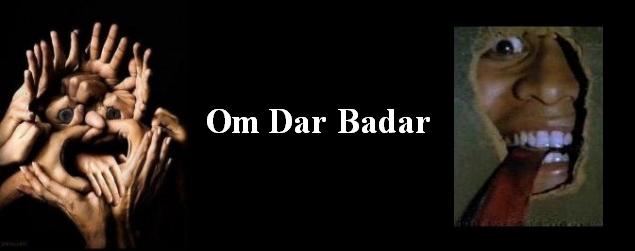
Om Dar Ba Dar is a 1988 Hindi film directed by Kamal Swaroop. This film is considered a pioneer in the Indian Avant Garde cinema and has become a cult classic with a section of viewers with its post modernist approach extending to absurdist.