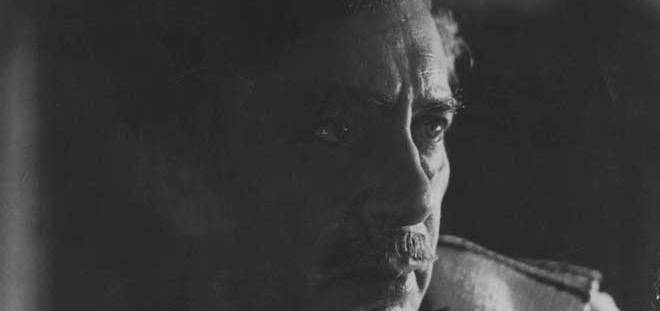
M.S. Sathyu
Mysore Shrinivas Sathyu, known universally as M. S. Sathyu, is among the most distinctive figures of India’s parallel cinema movement: a director, art director and stage designer whose reputation rests on a body of work that is at once politically engaged, formally restrained and humane in its sympathies. Born in 1930 into a Kannada family in Mysore, Sathyu came to filmmaking by an unusual route, through painting, animation and, above all, the theatre, and he carried into cinema the rigour and social conscience of the cultural-left stage movements of mid-century India. His name is inextricably linked to a single, towering achievement—Garm Hava (1973), one of the earliest Indian films to confront the human cost of the Partition of 1947 from the perspective of the Muslims who chose to remain in India—but his career extends across Hindi, Urdu and Kannada, encompassing feature films, documentaries, television serials and several decades of pioneering theatre design.
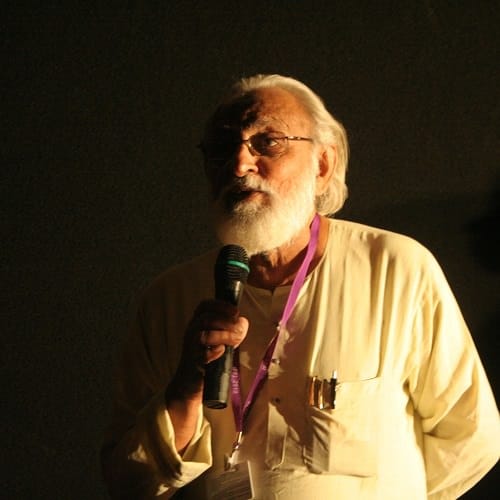
Sathyu belongs to the generation of artists shaped by the Indian People’s Theatre Association (IPTA) and the broader progressive cultural ferment that followed Independence, and his cinema reflects those commitments: a concern for the dispossessed, a suspicion of communal and bureaucratic power, and a belief that art ought to serve the cause of social integration. Garm Hava, made with the collaboration of the Marxist poet Kaifi Azmi, the actor Balraj Sahni and the writer Shama Zaidi (Sathyu’s wife), remains a landmark not only for its political courage but for the dignity and tenderness with which it treats its subject.
Over a career spanning more than half a century, Sathyu won wide recognition for his work in both film and theatre. He received the Padma Shri in 1975, the year after Garm Hava was selected as India’s official entry to the Academy Awards and screened in competition at the Cannes Film Festival. His later Kannada feature Bara (1982), a mordant study of famine and political opportunism, brought him Karnataka State and Filmfare honours, and its Hindi version, Sookha, won the Nargis Dutt Award for Best Feature Film on National Integration. For his contribution to stagecraft he was honoured by the Sangeet Natak Akademi, which conferred its award on him in 1994 and elected him to its prestigious Fellowship in 2014.
If Sathyu is sometimes described as a filmmaker who scaled his highest peak in his very first attempt, the judgement undervalues the breadth of a practice that ranged freely across media and languages. Yet it also testifies to the singular cultural weight of Garm Hava, a film whose restoration and theatrical re-release in 2014 introduced it to a new generation and confirmed its place among the enduring works of Indian cinema.
Life and Early Work
S. Sathyu was born on 6 July 1930 in Mysore, then part of the princely Kingdom of Mysore in British India, into a Kannada-speaking family. He grew up in the city and pursued his higher education first in Mysore and later in Bangalore. Drawn early to the visual arts—he had a keen interest in painting and design—he found the conventional academic path uncongenial, and in 1952, while still working towards a Bachelor of Science degree, he abandoned his studies to follow his artistic inclinations. The decision took him to Bombay, the centre of the Indian film industry, in pursuit of a creative vocation whose precise shape was not yet clear to him.
The transition was anything but smooth. After a brief spell freelancing as an animator in 1952–53, Sathyu endured close to four years of unemployment before securing his first salaried position as an assistant director to the filmmaker Chetan Anand. The apprenticeship proved formative. Anand, a founder of the Navketan banner and himself a figure associated with socially conscious cinema, gave Sathyu his entry into the professional world of film, and it was through this association that Sathyu would later make his decisive mark as an art director.
Equally important to Sathyu’s formation was the theatre. He became deeply involved in the stage movements centred on Delhi, working as a designer and director with the Hindustani Theatre, with Habib Tanvir’s Okhla Theatre, with Kannada Bharati and with numerous other groups. As a founder-member and lifelong patron of the Indian People’s Theatre Association—the cultural wing of the progressive movement that sought to carry messages of social justice and national integration to ordinary audiences—he absorbed an aesthetic and ethical outlook that would inform all his subsequent work. The theatre taught him an economy of means, an attentiveness to performance and design, and a conviction that art carried social responsibility, lessons he would bring directly to the cinema.
Sathyu’s personal life was bound up with his artistic collaborators. He married Shama Zaidi, a writer, screenwriter and art director from a north Indian Shia Muslim family, and she became one of his most important creative partners; the couple had two daughters. Zaidi’s involvement in the writing of Garm Hava exemplifies the close interweaving of family, politics and art that characterised the milieu in which Sathyu worked—a world of progressive writers, poets and performers for whom cinema and theatre were extensions of a shared cultural and political project.
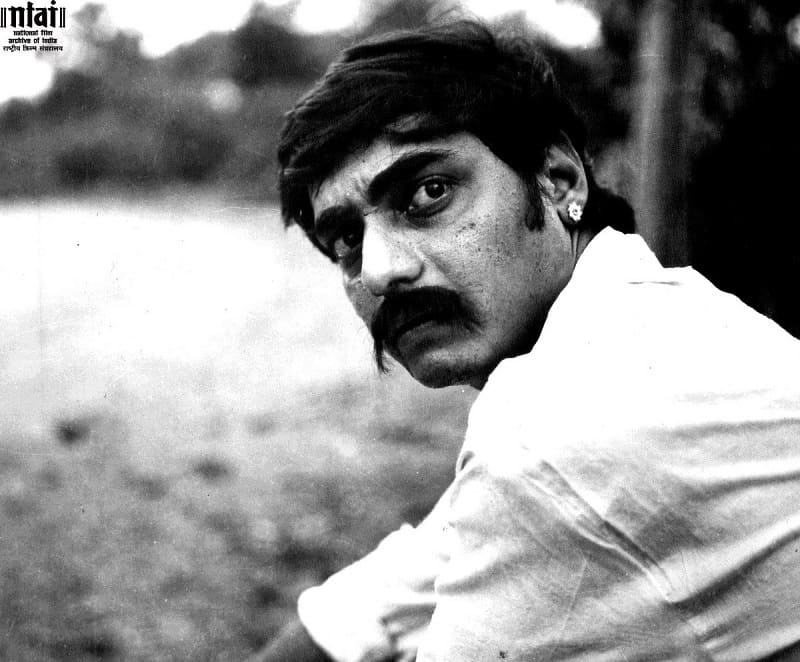
Filmmaking
Sathyu’s entry into films was as an art director rather than a director, and his first significant recognition came in that capacity. Working as an independent art director on Chetan Anand’s war film Haqeeqat (1964), a drama set against the backdrop of the Sino-Indian conflict, he won the Filmfare Award for Best Art Direction in the black-and-white category in 1965. The award established his standing as a craftsman with a strong visual sensibility, and across his career he would continue to work not only as a director but as an art director, cameraman, screenwriter and producer—a versatility rooted in his training in the theatre and the fine arts.
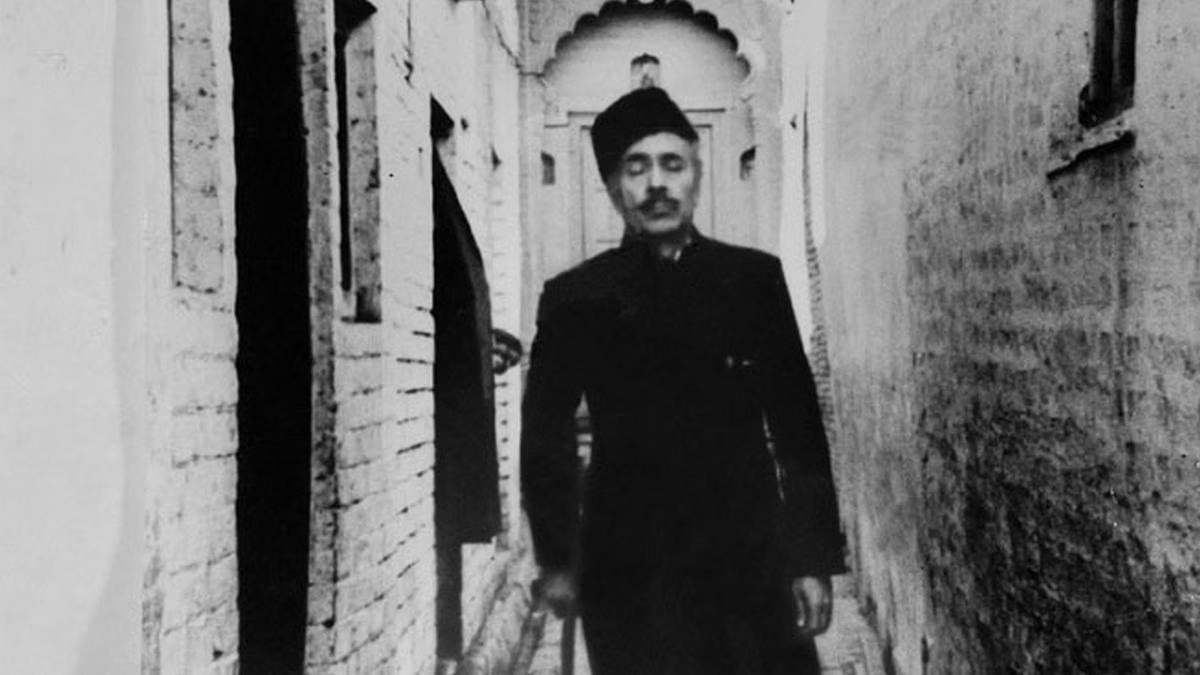
His directorial debut, Garm Hava (literally “Scorching Winds,” 1973), remains the work by which he is principally remembered and one of the defining achievements of Indian parallel cinema. Adapted from an unpublished story by the Urdu writer Ismat Chughtai, with a screenplay by Kaifi Azmi and Shama Zaidi and dialogue and lyrics by Azmi, the film follows Salim Mirza, a Muslim shoe manufacturer in Agra, and his family in the years after Partition as they struggle to hold on to their place in a country that increasingly treats them as outsiders. The film was among the last to feature the great actor Balraj Sahni, whose performance as Salim Mirza—completed shortly before his death—is widely regarded as one of the finest in Indian cinema. Garm Hava drew together a remarkable concentration of the talent associated with the 1950s Marxist cultural movement, and its making was itself an act of political and artistic conviction.
The film’s reception confirmed its importance. Garm Hava was screened in the competitive section of the Cannes Film Festival in 1974 and was selected as India’s official entry for the Academy Awards. At home it won the National Film Award for Best Feature Film on National Integration (the Nargis Dutt Award) and the Filmfare Award for Best Screenplay. Despite early apprehensions about its politically sensitive subject—its release was delayed by concerns over censorship and communal tension—the film opened to acclaim and came to be seen as a watershed in the representation of Indian Muslims in mainstream cinema, granting them a dignity and centrality that the commercial industry had rarely afforded.
Having achieved so much with his first feature, Sathyu went on to a varied and prolific career across languages and forms. He directed Kanneshwara Rama (subtitled “The Legendary Outlaw”), a Kannada film drawing on the lore of a folk bandit, and Chithegu Chinthe (1978), which was screened at the International Film Festival of India. In Hindi he made Kahan Kahan Se Guzar Gaya (1981). His most celebrated work after Garm Hava was Bara (“Famine,” 1982), a Kannada feature based on a short story by the eminent writer U. R. Ananthamurthy, which dissected the collusion of drought, bureaucratic inertia and political opportunism in a famine-stricken district. Bara won the Karnataka State Film Awards for Best Film and Best Director and the corresponding Filmfare Awards for Kannada cinema; Sathyu subsequently made a Hindi version, Sookha (1983), which won the Nargis Dutt Award for Best Feature Film on National Integration in 1984 along with the Filmfare Critics Award.
Sathyu continued to direct features into the new century, including Galige (1994), Kotta (1999) and Ijjodu (2009), the last a Kannada film engaging with questions of caste, exploitation and the devadasi system. Alongside his feature work he maintained an active practice in documentary and short film, with titles such as Irshad, Black Mountain, Ghalib and Islam in India, and his filmography is generally reckoned to include more than fifteen documentaries in addition to his eight feature films in Hindi, Urdu and Kannada. He also worked extensively in television, directing serials including Pratidhwani, Choli Daaman, Kayar and Antim Raja, the last concerning the last ruler of Coorg. In 2013, at the age of eighty-three, he found an unexpected wider fame as the elderly Pakistani character Yusuf in the celebrated Reunion advertisement for Google Search, in which two friends separated by Partition are brought back together—a fitting late echo of the themes that had animated Garm Hava four decades earlier.
The Cinema of M. S. Sathyu
Sathyu’s cinema is most readily understood as an extension of the progressive cultural project of the Indian People’s Theatre Association into the medium of film. His sensibility is fundamentally that of a designer and a man of the theatre: attentive to space, to the texture of social environments, and to performance, yet disciplined by a refusal of spectacle. Where the commercial cinema of his era favoured melodrama and song, Sathyu pursued a quieter realism, allowing his stories to unfold through observed detail—the courtyard of an old Agra house, the dust of a famine-stricken village, the small humiliations of a family losing its footing in the world. His training as an art director gave his films a precise sense of place, and his theatrical instincts gave them an actor’s cinema in which character and moral predicament took precedence over plot mechanics.
Politically, Sathyu’s work is consistent in its sympathy for the marginalised and its scepticism towards the structures of power—communal, bureaucratic and economic—that grind them down. Garm Hava indicts the slow violence of communal suspicion; Bara and Sookha anatomise the way official indifference and political calculation transform natural disaster into human catastrophe. Yet Sathyu rarely descends into didacticism. His films hold their anger in check, trusting instead to the accumulated weight of particular lives and to the audience’s capacity for empathy. It is this combination of political clarity and emotional restraint that distinguishes him within the parallel cinema movement and aligns him with the humanist tradition of Indian art cinema.
Key Themes
Partition and Belonging — The trauma of 1947 and the predicament of those—above all Indian Muslims—forced to prove their loyalty to a homeland that questions their right to belong. Garm Hava treats this not as historical spectacle but as an intimate familial ordeal, and the theme of separation and reunion recurs as late as Sathyu’s 2013 appearance in the Reunion advertisement.
Social Justice and the Dispossessed — A consistent concern, inherited from the IPTA, for the poor, the exploited and the powerless—whether the famine-stricken villagers of Bara or the caste-bound figures of Ijjodu—and a corresponding critique of those who profit from their suffering.
Bureaucratic and Political Failure — A recurring exposure of the gap between official rhetoric and lived reality, most sharply in Bara and Sookha, where administrative paralysis and political opportunism deepen a humanitarian crisis.
National Integration — A deep commitment, recognised in the national awards his films received, to communal harmony and to a pluralist vision of India in which difference is a source of richness rather than division.
The Dignity of Ordinary Life — An abiding respect for the resilience and moral seriousness of ordinary people, conveyed through restrained performance, carefully observed settings and an avoidance of sentimentality.
Selected Filmography
Haqeeqat (1964) — Chetan Anand’s war drama, on which Sathyu served as independent art director, winning the Filmfare Award for Best Art Direction (black-and-white) in 1965 and establishing his reputation as a visual craftsman.
Garm Hava (1973) — Sathyu’s directorial debut and defining work, a study of a Muslim family in post-Partition Agra. Featuring Balraj Sahni in one of his last roles, with a screenplay by Kaifi Azmi and Shama Zaidi, it screened in competition at Cannes, was India’s entry to the Academy Awards, and won the National Film Award for National Integration and the Filmfare Award for Best Screenplay.
Kanneshwara Rama (1977) — A Kannada feature drawing on the legend of a folk outlaw, demonstrating Sathyu’s engagement with regional storytelling traditions.
Chithegu Chinthe (1978) — A Kannada film screened at the International Film Festival of India, reflecting Sathyu’s continued work in his native language.
Bara (1982) — A Kannada feature adapted from a short story by U. R. Ananthamurthy, examining famine, bureaucratic inertia and political opportunism. It won Karnataka State and Filmfare Awards for Best Film and Best Director.
Sookha (1983) — The Hindi version of Bara, which won the Nargis Dutt Award for Best Feature Film on National Integration and the Filmfare Critics Award, extending the film’s reach to a wider audience.
Ijjodu (2009) — A late Kannada feature engaging with caste, exploitation and the devadasi tradition, testifying to Sathyu’s enduring social concerns.
Legacy
S. Sathyu occupies a secure place in the history of Indian cinema as one of the founding figures of the parallel film movement and as the maker of one of its undisputed masterpieces. Garm Hava has come to be regarded as a foundational text in the cinematic reckoning with Partition, admired both for its political courage and for the humanity of its treatment, and its restoration and theatrical re-release in 2014 ensured that its influence would extend to audiences born long after the events it depicts. In opening mainstream space for sympathetic, fully realised portrayals of Indian Muslims, the film reshaped the possibilities of representation in Indian cinema and continues to be cited by critics and filmmakers as a model of socially engaged art.
Beyond the cinema, Sathyu’s contribution to the Indian stage has been profound and sustained. As a designer and director associated with the Hindustani Theatre, Habib Tanvir’s company, Kannada Bharati and the IPTA, and as the director of productions ranging from Dara Shikoh and Bakri to Gul-e-Bakavali, he helped shape the visual language of modern Indian theatre over several decades. His standing in this field was formally acknowledged by the Sangeet Natak Akademi, which honoured him with its award for stagecraft in 1994 and elected him to its Fellowship—the highest honour the Akademi bestows—in 2014.
The honours Sathyu received across his career—the Padma Shri in 1975, his national and state film awards, and the recognition of his theatre work—reflect the breadth of a practice that refused the boundaries between media and languages. Working with equal seriousness in Hindi, Urdu and Kannada, in feature film, documentary, television and the stage, he embodied the integrative, pluralist ideal that runs through all his work. For later generations of Indian filmmakers concerned with realism, social justice and the responsibilities of art, Sathyu remains an exemplary figure: an artist who proved, with his very first film, that politically committed cinema could also be cinema of the highest craft and feeling, and who devoted a long career to the conviction that the camera and the stage alike might serve the cause of human understanding.
M.S. Sathyu on Art House Cinema

Kanneshwara Rama (1977)