
Films with Madhabi Mukherjee on Art House Cinema
Madhabi Mukherjee was born on 10 February 1942 in Calcutta. She went on stage as a small child and played her first major screen role in 1960. Cinestaan has called her the only Bengali actress to have worked with Satyajit Ray, Mrinal Sen and Ritwik Ghatak.

Her best-known work came in a burst. Sen cast her as a child bride in Baishey Shravan (1960), Ray gave her the lead in Mahanagar (1963) and Charulata (1964), and Ghatak's Subarnarekha, shot in 1962, reached cinemas in 1965. She won the National Film Award for Best Actress for Dibratrir Kabya (1970). She also kept a long career in popular Bengali films.
Life and Early Work
She was born Madhuri Mukherjee. Cinestaan, drawing on her own account, writes that Partition broke up the family. Her parents separated, and her mother, the only earner, raised Madhuri and her elder sister and was often asked to sing in public.
The stage came before the camera. The actress Prabha Devi took her, aged five or six, to meet the actor-manager Sisir Kumar Bhaduri. She acted with her mother and sister at his Srirangam theatre. When Bhaduri scolded her during a rehearsal of the play Sita, she walked out. She joined the Minerva theatre under Chhabi Biswas, whom she still calls her true mentor on stage. She also acted on stage with Ahindra Choudhury and Nirmalendu Lahiri.
Filmographies usually open with Premendra Mitra's Kankantala Light Railway (1950). No print of it is known to survive. She told Cinestaan in 2017 that it was her second film and that the first was Mitra's Dui Beyai, released in 1953, in which she played the heroine as a girl, teased by her cousins as the maid's daughter.
On Stage and Screen
Mrinal Sen began by asking whether she could scrub pots and mop floors. In Baishey Shravan (1960) she played Malati, a teenage girl married to Priyanath, a much older man played by Jnanesh Mukherjee, in a marriage that sours during the Bengal famine of 1943. The producers billed her as "Nabagata Madhabi", newcomer Madhabi, and the new name stayed. The censors objected to Malati hanging herself, so Sen tried poison instead. He disliked it and in the end showed only the rope.
Ghatak had first chosen her for Komal Gandhar (1961), but the distributor replaced her with Supriya Devi and offered her a small part, which she refused. Then he called her for Subarnarekha, and the day before shooting he told her, in front of the whole crew, that her face did not look good in long shots or close-ups. The film was finished in 1962 and released on 1 October 1965.
Ray cast her as Arati in Mahanagar in 1963, which she has described as the first screenplay centred on a woman that she read. When the shoot ended he asked her, by her account, "When will I get to work with you again?" The answer was Charulata the next year, and then Kapurush (1965). After Charulata he advised her to sign no new films for a while. There was never a fourth, and asked why in 2017 she said, "It's important to stop sometimes."
Dibratrir Kabya (1970) was directed by Bimal Bhowmik and Narayan Chakraborty from a novel by Manik Bandopadhyay. It won her Best Actress at the 17th National Film Awards, presented in Madras on 21 November 1970. It remains her only National Film Award. She also won four Best Actress awards from the Bengal Film Journalists' Association, the first for Charulata.
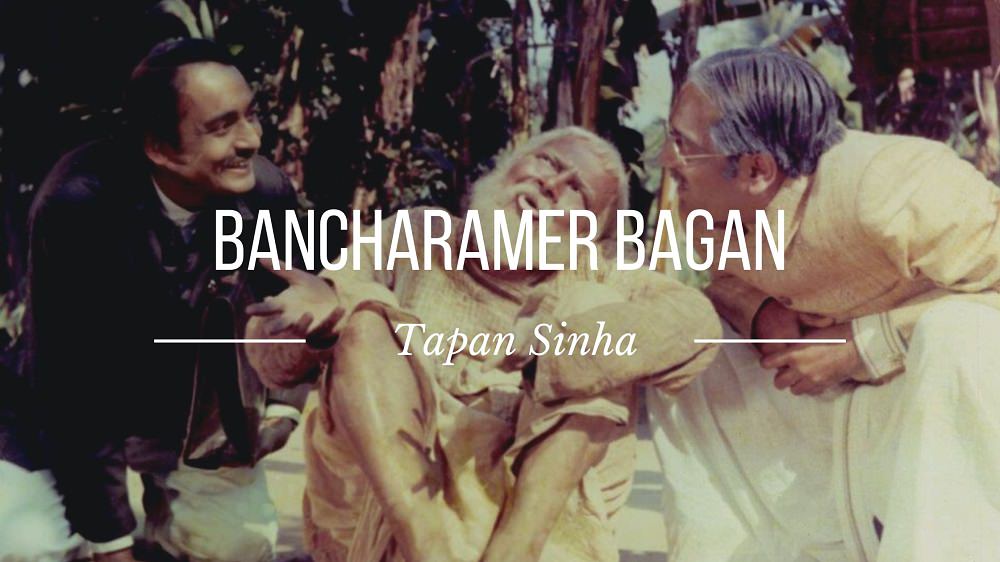
The popular films paid the bills. In Chhadmabeshi (1971) she played Sulekha, the new wife of a botany professor who poses as a driver to fool her brother-in-law, and Hrishikesh Mukherjee remade it in Hindi as Chupke Chupke (1975). She returned to Sen for Calcutta 71 (1972). Purnendu Pattrea cast her in three of his five films, Swapno Niye, Strir Patra and Malancha, and Tapan Sinha used her in Bancharamer Bagan (1980).
She stayed out of Hindi cinema by choice. She turned down Raj Kapoor's offer of the schoolteacher's part in Mera Naam Joker, citing her limited Hindi and her dislike of dubbing. She married the actor Nirmal Kumar, with whom she has two daughters, and the couple separated many years ago.
Rituparno Ghosh cast her as Bhagabati, a mother whose grown children gather in the family home for Durga Puja, in Utsab (2000). In the 2001 Assembly election she was the Trinamool Congress candidate in Jadavpur against the Chief Minister, Buddhadeb Bhattacharjee. She lost by 29,281 votes.
The Art of Madhabi Mukherjee
Signature Roles
Baishey Shravan (1960). Malati is married off as a teenager to please her husband's widowed mother. After the mother dies in a storm, famine follows the war. An early sign is Malati putting aside the leftover rice from his meal, and soon Priyanath is eating while she goes hungry. He leaves after a final quarrel and comes back to find her dead.
Mahanagar (1963). Arati is a Calcutta housewife who sells a knitting machine door to door because her husband's salary is not enough. Her in-laws object, then his bank fails and she becomes the family's only earner. When her boss sacks her Anglo-Indian colleague, Edith, Arati confronts him and resigns.
Charulata (1964). Charu is the wife of a newspaper editor in Calcutta in 1879, from Tagore's novella Nastanirh. Her husband, Bhupati, has no time for her. She embroiders and watches the street through opera glasses until his cousin Amal, played by Soumitra Chatterjee, arrives and talks with her about literature. She told Cinestaan the opera glass was the key, because Charu needed it to look even at her husband.
Subarnarekha (1965). Sita is brought to West Bengal as a child refugee by her elder brother, Ishwar, played by Abhi Bhattacharya. She elopes with Abhiram on the day of her arranged wedding and lives with him in Calcutta until a crowd kills him. Left with a small son, she is pushed towards prostitution. One night the man who walks into her room is Ishwar, drunk, and Sita cuts her own throat.
Dibratrir Kabya (1970). Supriya is a police officer's wife in a village near Hazaribagh who still wants Heramba, a teacher from her past. She follows him to Puri and neglects her sick husband. There she clashes with a younger rival, Ananda. Writing for Cinemaazi in 2021, Shantanu Ray Chaudhuri singled out her eyes and her gaze in the part. The film ends with Supriya in a widow's white, asking Heramba what she should do.
Craft
Stage habits. On the set of Dui Beyai the child kept prompting the other children when they forgot their lines, as she did in the theatre. Premendra Mitra called "Cut" and pointed to the boom microphone, which recorded everything she said. She argued that she prompted on stage, and he explained that a theatre audience sits too far away to hear.
Taking direction. Ray did not explain the last scene of Charulata in advance, and when she asked, he said, "I'll tell you later." On the day he had her and Sailen Mukherjee, who played Bhupati, reach out without touching. "There must be a small gap," she quotes him in her memoir, and she understood why only when she saw the finished film in the projection room. She wore no make-up but pancake, and she gives the credit for her look to Ray and the cameraman Subrata Mitra.
The frown. Purnendu Pattrea complained that she frowned constantly in front of the camera. Open magazine quoted his verdict: "A frown looks terrible on such a beautiful face."
Selected Filmography
Baishey Shravan (1960)
As Malati. Mrinal Sen's film about a village marriage before and during the famine of 1943 was shown abroad as The Wedding Day.
Mahanagar (1963)
As Arati. Ray's film, from a story by Narendranath Mitra, won him the Silver Bear for Best Director at Berlin in 1964 and was Jaya Bhaduri's first screen appearance.
Charulata (1964)
As Charulata. Ray's film won the National Film Award for Best Feature Film and the Silver Bear for Best Director at Berlin in 1965.
Kapurush (1965)
As Karuna. Ray adapted a story by Premendra Mitra about a man, played by Soumitra Chatterjee, who meets the woman he once failed to marry.
Subarnarekha (1965)
As Sita. Ritwik Ghatak's film, shot in 1962, closes his trilogy about the Partition of Bengal and shared the National Film Award for Best Bengali Feature Film.
Dibratrir Kabya (1970)
As Supriya. Bimal Bhowmik and Narayan Chakraborty's adaptation of Manik Bandopadhyay's novel won her the National Film Award for Best Actress.
Chhadmabeshi (1971)
As Sulekha. Agradoot's comedy, opposite Uttam Kumar, was remade in Hindi as Chupke Chupke (1975).
Utsab (2000)
As Bhagabati. Rituparno Ghosh won the National Film Award for Best Director for this family drama set during Durga Puja.
Legacy
Rituparno Ghosh once found a still of her as Charulata among pictures from the classics of world cinema at a festival abroad. He told her it made him feel at home. She told Ananda Bazar Patrika in 2018 that the picture would always stay with her. She treats the part as a crown, not a burden.
Abroad, she has said, she found two of her films in almost every household, Charulata and Chhadmabeshi. To her that proves audiences know what they want. She would abolish film censorship for the same reason.
She received the Filmfare East Lifetime Achievement Award in 2014 and was chief guest at the International Film Festival of Kerala in 2017. Arunava Sinha's English translation of her 2012 Bengali memoir, Madhabikanan, appeared in 2026 as Madhabi's Garden. Asked in 2017 to name her best performance, she said, "None yet."


