
Films with Waheeda Rehman on Art House Cinema


Waheeda Rehman was born on 3 February 1938 in Chengalpattu, in what was then the Madras Presidency. She trained in Bharatanatyam as a child and first came to the screen as a dancer in Telugu films in 1955. Guru Dutt saw her there and brought her to Bombay. She went on to act for more than five decades, almost entirely in Hindi, with one Bengali part for Satyajit Ray.

Her best-known work sits in about fifteen years. She was Gulabo in Dutt's Pyaasa (1957), Rosie in Vijay Anand's Guide (1965) and the nautanki dancer Hirabai in Basu Bhattacharya's Teesri Kasam (1966). She won the Filmfare award for Best Actress for Guide and Neel Kamal (1968), and the National Film Award for Best Actress for Reshma Aur Shera (1971). The Government of India gave her the Padma Shri in 1972 and the Padma Bhushan in 2011, and on 17 October 2023 she received the Dadasaheb Phalke Award for 2021.
Life and Early Work
Her father, Mohammed Abdur Rehman, was a district commissioner, and her mother was Mumtaz Begum, and she was the youngest of their four daughters. His postings took the family to Andhra, Palghat and Nagapattinam, and she went to St. Joseph's Convent in Visakhapatnam while he was posted there. She and her sisters learned Bharatanatyam in Madras, and according to ThePrint she began at about nine and gave her first stage performance before C. Rajagopalachari.
She wanted to be a doctor. Her father died in 1951, her mother fell ill, and the plan was given up.
Dance brought the first film offer: at seventeen the producer C. V. Ramakrishna Prasad asked her to dance a number in the Telugu film Rojulu Marayi (1955). Her mother agreed on condition that she went to the sets with her. The song "Eruvaka Sagaro", sung by Jikki to music by Master Venu, became a big hit in Telugu. The same year she played a princess opposite N. T. Rama Rao in Jayasimha.
Guru Dutt noticed her after the Rojulu Marayi number and signed her to his company in Bombay, though she had never seen his films. Raj Khosla and Dutt both pressed her to change her name. She refused. She also had a clause put into her contract that she would not wear clothes she found objectionable.
On Stage and Screen
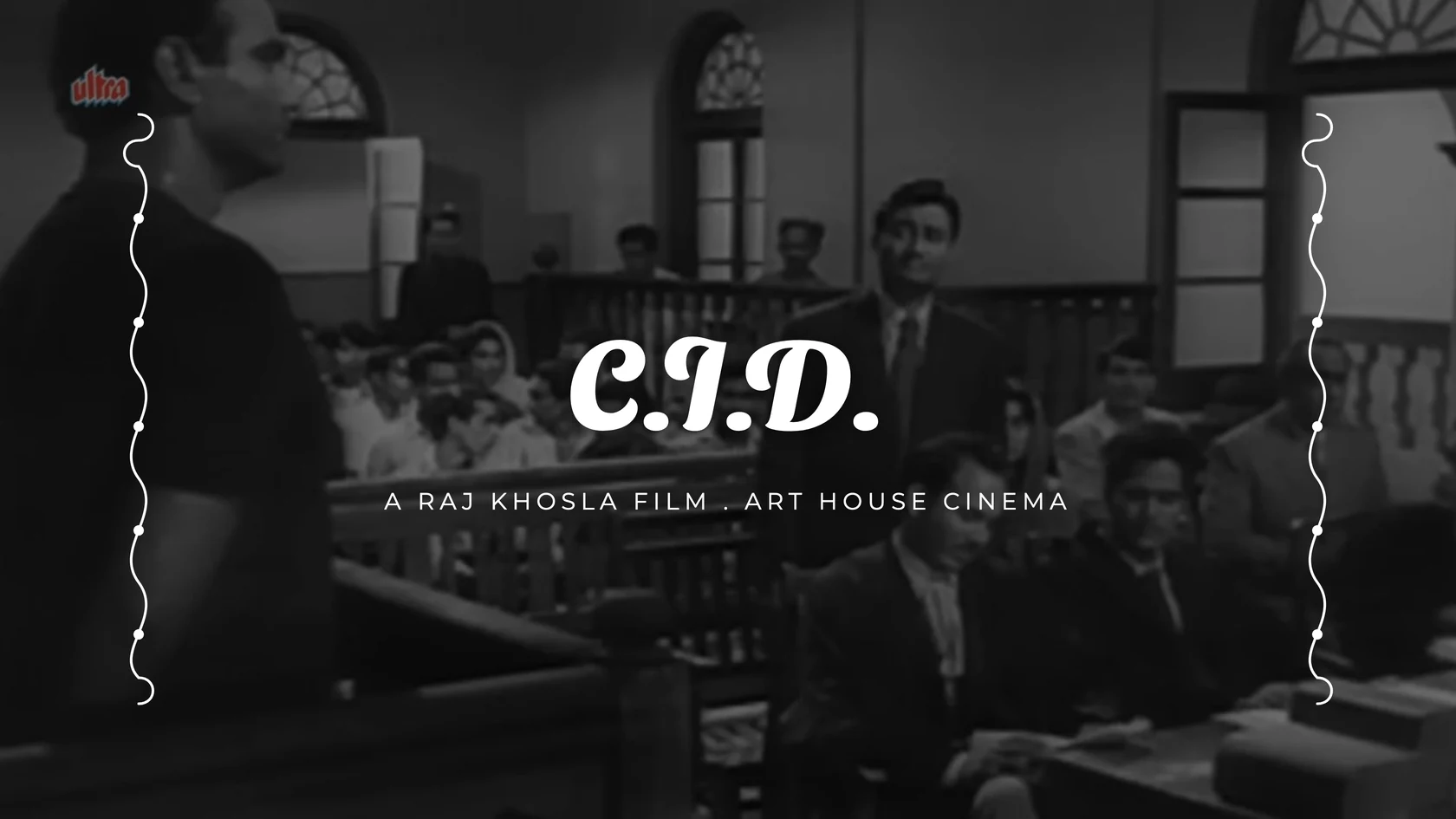
Her first Hindi film was C.I.D. (1956), a crime thriller that Raj Khosla directed for Dutt's company. A year later Dutt gave her the lead she is still known for. In Pyaasa she played Gulabo, a prostitute who loves the failed poet Vijay and gets his poems published. The co-writer Abrar Alvi had met a woman in Bombay's red-light district who called herself Gulabo, and he used her words in the script.
She stayed with Dutt for five films, and after 12 O'Clock (1958) came Kaagaz Ke Phool (1959), in which she played Shanti, a young woman whom a fading director turns into a star. It failed on release and hurt Dutt's studio badly. Chaudhvin Ka Chand (1960), directed by M. Sadiq, cast her as Jameela and was one of the year's biggest hits. In Sahib Bibi Aur Ghulam (1962), directed by Abrar Alvi, she played Jaba, the lively daughter of a Brahmo factory owner, opposite Meena Kumari's lead, and the part brought her first Filmfare nomination.
Her first Bengali film came the same year, when Satyajit Ray cast her as Gulabi in Abhijan, from Tarasankar Bandyopadhyay's 1946 novel. In 1963 she played Chameli Jaan, a courtesan who goes away with a Chambal dacoit, in Moni Bhattacharjee's Mujhe Jeene Do. Sunil Dutt played the dacoit, and the film competed at Cannes in 1964.
Guide was the turn. Vijay Anand adapted R. K. Narayan's 1958 novel, and she played Rosie, an archaeologist's wife who leaves her marriage and becomes a dancer. It was the first film to win all four main Filmfare awards, for film, direction, actor and actress. In 1966 came Teesri Kasam, which the lyricist Shailendra produced from Phanishwar Nath Renu's story "Mare Gaye Gulfam", with Raj Kapoor as Hiraman, the bullock-cart driver who carries her Hirabai to a fair. It won the National Film Award for Best Feature Film but lost money.
In Asit Sen's Khamoshi (1969) she was Radha, a nurse in a psychiatric ward who falls in love with her patients and breaks down. Then came Reshma Aur Shera (1971), Sunil Dutt's feud drama set in Rajasthan, which won her the National Film Award and was India's entry for the Academy Awards. It failed at the box office.
In April 1974 she married Shashi Rekhi, who acted as Kamaljeet and had played opposite her in Shagoon (1964). They had two children, Sohail and Kashvi, and lived on a farm near Bangalore. Her parts then moved towards older women: she played Jaya Bhaduri's mother in Phagun (1973) and worked for Yash Chopra in Kabhi Kabhie (1976), Chandni (1989) and Lamhe (1991). Rekhi died on 21 November 2000, and she moved back to Bandra in Bombay. Later films include Deepa Mehta's Water (2005), Rang De Basanti (2006) and Delhi-6 (2009).
The Art of Waheeda Rehman
Signature Roles
Pyaasa (1957). Gulabo is a prostitute who believes in Vijay's poems when no publisher will. She also cut her own song. After a trial show she told Dutt that the boat song "Rut Phire Par Din Hamaare" stalled the story, since the hero is believed dead at that point. Dutt later removed it, according to Nasreen Munni Kabir's Conversations with Waheeda Rehman (2014).
Kaagaz Ke Phool (1959). Shanti walks into a shot by mistake and a director casts her as Paro in his Devdas. She becomes the star he cannot remain. Her best-known moment is wordless. In "Waqt Ne Kiya Kya Haseen Sitam" she stands with Dutt in an empty studio, cut by a shaft of light that V. K. Murthy made with two mirrors and sunlight.
Guide (1965). Rosie is a courtesan's daughter, married to a man who forbids her to dance. She leaves him for Dev Anand's Raju and becomes a stage star. Lata Mangeshkar's "Aaj Phir Jeene Ki Tamanna Hai", the song in which Rosie breaks free, was shot on her at Chittor Fort.
Teesri Kasam (1966). Hirabai is a travelling nautanki dancer, and Hiraman, who drives her cart, cannot accept the work she does. Bhattacharya wanted both leads to play naturally, and reviewers praised them both. She refuses to give up the stage for him and leaves. The Bengal Film Journalists' Association named her Best Actress (Hindi) for the role.
Reshma Aur Shera (1971). Reshma loves Shera across a blood feud between two Rajasthani clans, in a film Sunil Dutt took over from S. Sukhdev and reshot. She won the National Film Award for Best Actress, and Jaidev's music and Ramachandra's photography won National awards too.
Craft
Acting without words. Kabir links her dance training to a gift for showing feeling with no dialogue. She points to songs sung by someone else while Waheeda Rehman only listens or moves: "Tere Mere Sapne" in Guide, "Woh Shaam Kuch Ajeeb Thi" in Khamoshi and "Duniya Banane Waale" in Teesri Kasam. In each the face does the work.
Plain playing. Kabir calls her style "natural, unaffected and very modern". Of Dutt's method she told Kabir, "Guru Dutt ji spoke little. He'd just observe." Kabir also writes of a stillness in her that is genuine.
Her own terms. She kept her name and wrote her costume terms into her first Hindi contract, and she judged a film as a whole. The Pyaasa song she asked Dutt to drop was her own.
Selected Filmography
C.I.D. (1956)
As Kamini. Raj Khosla's crime thriller for Guru Dutt's company was her first Hindi film.
Chaudhvin Ka Chand (1960)
As Jameela. M. Sadiq's romance put her at the centre of a love triangle with Guru Dutt and Rehman, and it was a commercial hit.
Sahib Bibi Aur Ghulam (1962)
As Jaba. Her part in Abrar Alvi's film of Bimal Mitra's novel brought her first Filmfare nomination.
Abhijan (1962)
As Gulabi. In Satyajit Ray's film she played a village widow caught up with a proud taxi driver, played by Soumitra Chatterjee.
Mujhe Jeene Do (1963)
As Chameli Jaan. Moni Bhattacharjee shot this dacoit drama in the Chambal ravines, with Sunil Dutt as the bandit she goes away with.
Khamoshi (1969)
As Radha. Asit Sen's hospital drama gave her a nurse who cannot keep her feelings out of her work.
Namkeen (1982)
As Jugni. In Gulzar's film she played a former nautanki dancer raising three daughters in a Himachal village, and was nominated for a Filmfare award.
Lamhe (1991)
As Dai Jaan. Yash Chopra's romance was her last film before she announced a break from acting.
Legacy
The government's choice of her for the Dadasaheb Phalke Award was announced on 26 September 2023, the centenary of Dev Anand's birth. President Droupadi Murmu gave it to her at the 69th National Film Awards in New Delhi. She was the eighth woman to receive it. She dedicated it to the film industry.
Her films have had a long second life. Time put Pyaasa on its 2005 list of the 100 best films, the only Hindi film on it. Guide was shown at Cannes in 2007, more than forty years after its release. Kaagaz Ke Phool and Teesri Kasam both failed in their day and were reassessed later.
Kabir spent nearly a decade persuading her to talk at length for the 2014 book, in which she talks about her parents, her contracts and her directors. She kept her private life private.


