Films with Kali Banerjee on Art House Cinema
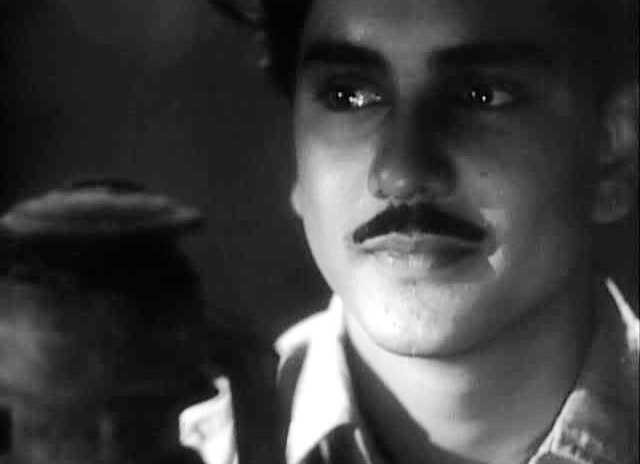
Kali Banerjee was born on 20 November 1921 in Calcutta and died on 5 July 1993. Born Kaliprasad Banerjee, he is also credited as Kali Bannerjee and Kali Bandyopadhyay. Sources disagree on where he died, since the English Wikipedia names Lucknow while Cinemaazi, the Indian Cinema Heritage Foundation's database, names Kolkata.
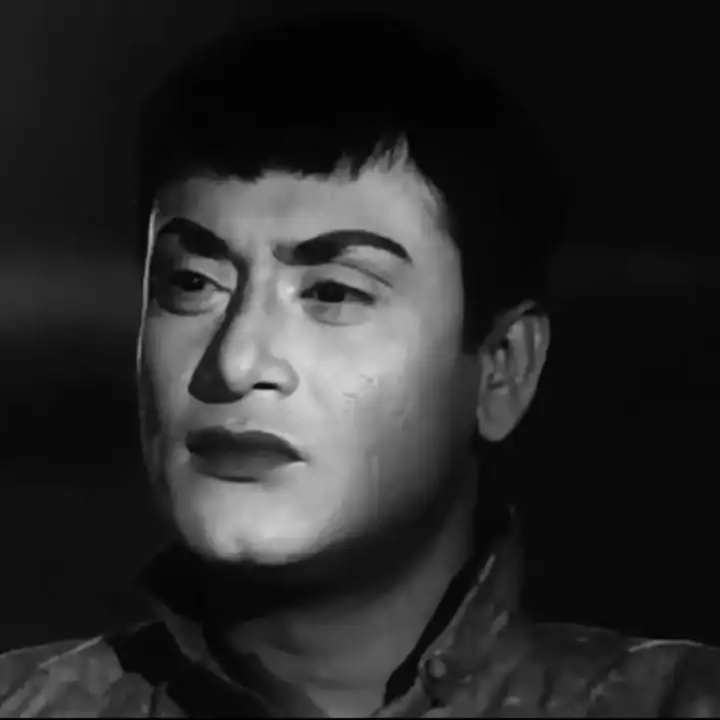
He came to films from the political theatre of the 1940s and kept acting for more than forty years, and his best parts were working men and men left behind. Ritwik Ghatak gave him the taxi driver Bimal in Ajantrik (1958). Mrinal Sen cast him as a Chinese silk hawker in Neel Akasher Neechey (1959), and Satyajit Ray used him in Parash Pathar (1958) and Teen Kanya (1961).
Bengali audiences first loved him for a stammer. As Ganesh in Satyen Bose's comedy Barjatri (1951), he played one of five friends who go along with a bridegroom to his wedding, and the part won him wide praise.
Life and Early Work
His father was Manindranath Banerjee. According to Cinemaazi, the young Kali was drawn to the Swadeshi movement and wanted to become a freedom fighter, and he played football for several clubs. For a time he worked as an interpreter for the Air Force, and he spent a short spell at an American army hospital.
He joined the professional stage in 1945. His first notable parts there were in two plays by Mahendra Gupta, Satabarsha Agey and Tipu Sultan. Late in the 1940s he moved to the Indian People's Theatre Association, the left-wing movement known in Bengal as the Gananatya Sangha. There he acted in Tagore's Bisarjan and in a popular staging of Adarsha Hindu Hotel.
The actor Anup Kumar first met him on a Gananatya Sangha stage in 1946. In his memoir Jibanpurer Pathik, Anup Kumar recalls that their first production together was Swarga Hote Baro. Kali Banerjee was the older man, but he, Anup Kumar and the actor Satya Bandyopadhyay became inseparable friends who would sit talking for hours in Deshapriya Park.
On Stage and Screen
The earliest title in his filmography is Tatinir Bichar (1940), and small parts followed through the decade. Barjatri changed that in February 1951, with Anup Kumar as Gorachand and Kali Banerjee as the stammering Ganesh. During one scene Satyen Bose asked him to slap Haradhan Bandyopadhyay hard enough to register on camera. He did, and Bose kept the take. Haradhan walked off the set with five finger marks on his cheek and refused to go on.
The next year Ghatak cast him as Ramu's father in Nagarik, a film about a family sliding into poverty in post-Partition Calcutta. It was finished in 1952 but had its premiere only on 20 September 1977, at the New Empire in Kolkata. Ghatak had died the year before.
The mid-1950s brought steady work with a new generation of directors. He was in Mrinal Sen's first film, Raat Bhore (1955), and played Inspector Shushil in Agradoot's Sabar Upare (1955). For Tapan Sinha he played Kashim, a prisoner, in Louha Kapat, and he also appeared in Sinha's Kabuliwala.
Four of his best films then came out within about a year. Ray's Parash Pathar opened in January 1958, with Kali Banerjee as the secretary of a clerk who finds a stone that turns iron into gold. Ghatak's Ajantrik followed in May. Bari Theke Paliye, Ghatak's film about a runaway boy, is dated 1958 in most sources, though some give 1959. Sen's Neel Akasher Neechey opened on 20 February 1959, and the government then banned it for two months, the first ban on a film in independent India.
Ray cast him again in the Monihara episode of Teen Kanya (1961). In the 1960s he worked often with Sinha, in Hansuli Banker Upakatha (1962) and Arohi (1964). He went on acting on stage too, and with Anup Kumar he played in Bidhayak Bhattacharya's Kshudha and in Ghar, which opened at the Biswarupa theatre on 4 March 1969.
Hindi audiences met him in Hrishikesh Mukherjee's Bawarchi (1972). Later Bengali work included Debi Chowdhurani (1974), Sinha's Harmonium (1976) and Tarun Majumdar's Dadar Kirti (1980). He kept working into the early 1990s in commercial family dramas such as Guru Dakshina (1987), and some of his films were released after his death.
The Art of Kali Banerjee
Signature Roles
Nagarik (1952). Ramu, a new graduate, looks for work and believes that better times are coming. His father is a cynic who does not share his children's hope. Kali Banerjee was about thirty when he played this older man, the head of a household that is running out of money. Ramu cannot pay the rent, and the family is evicted and has to move to a slum.
Ajantrik (1958). Bimal drives a battered 1920 Chevrolet taxi in a small town in the Chotanagpur hills. He calls the car Jagaddal and talks to it, questions it and urges it on, while people laugh at him for loving a wreck. When the car finally breaks down for good, he sells it for scrap, and as it is pulled apart it seems to him that the car is screaming. In the last shot a small child squeezes the old horn, and Bimal finds a moment of joy in the sound. Writing for the BFI in 2023, Derek Malcolm called Bimal "a brilliantly convincing figure."
Bari Theke Paliye (1958). Haridas is an elderly Partition refugee and former schoolteacher who sells fried snacks to children on the Calcutta streets, wearing a wig and a false beard. Kanchan, the eight-year-old runaway, takes him for a child-lifter. Haridas turns out to be the boy's protector, and at the end he hands Kanchan his sack and his beard as the boy's earnings from the city.
Neel Akasher Neechey (1959). Wang Lu is a Chinese silk hawker in 1930s Calcutta who refuses to join his countrymen's opium trade. He grows fond of Basanti, played by Manju Dey, the wife of a lawyer in a nationalist group, and treats her as a sister. When she is jailed, he takes up her cause. Then he goes home to fight the Japanese invasion of China. The film is adapted from Mahadevi Varma's story Chini Pheriwala.
Teen Kanya (1961). In Monihara, the second of the three Tagore stories, he plays Phanibhushan Saha, a businessman who keeps buying jewels for his cold wife Manimalika in the hope of winning her love. Kanika Majumdar plays the wife. A fire ruins his business, and she leaves with her cousin, who takes the jewels. Afterwards he is haunted by a dark figure that claims to be his wife. Ray left the episode out of the film's international release.
Craft
Knowing the part. Anup Kumar wrote that his friend's chief strength was his awareness as an actor. He studied each character before he took it on and judged whether it suited him. The same memoir admits that many of his late commercial films left little mark.
The people's stage. His training came from the Gananatya Sangha, the theatre of the left, where Anup Kumar first worked with him. Its plays were about ordinary people, and so were his best film parts. A taxi driver and a street hawker are not heroes in the usual sense, and he did not try to make them heroes.
Committing to the take. The Barjatri slap shows how far he would go for a director. Satyen Bose asked for a blow the camera would believe, and he gave it, even though it sent a fellow actor off the set.
Selected Filmography
Barjatri (1951)
As Ganesh. Satyen Bose's comedy, from a story by Bibhutibhushan Mukhopadhyay, follows five young men on a wedding trip that goes wrong.
Nagarik (1952)
As Ramu's father. Ritwik Ghatak's first feature was finished in 1952 and premiered in Kolkata on 20 September 1977.
Ajantrik (1958)
As Bimal. Ghatak adapted the film from a story by Subodh Ghosh, with music by Ali Akbar Khan and camerawork by Dinen Gupta.
Parash Pathar (1958)
As Priyotosh Henry Biswas. He is the private secretary to Tulsi Chakraborty's newly rich clerk, and when the police arrive he swallows the magic stone.
Bari Theke Paliye (1958)
As Haridas. Ghatak based the film on a novel by Shibram Chakraborty about a village boy who runs away to Calcutta.
Neel Akasher Neechey (1959)
As Wang Lu. Hemanta Mukherjee produced Mrinal Sen's film and composed its music, including the song "O Nodi Re."
Teen Kanya (1961)
As Phanibhushan Saha. He plays the husband in Monihara, the second of the film's three Tagore stories.
Bawarchi (1972)
As Kashinath Sharma. In Hrishikesh Mukherjee's remake of Tapan Sinha's Galpo Holeo Satti (1966), he is Kashi, a pompous schoolteacher and one of the brothers in a quarrelling joint family.
Legacy
Kali Banerjee won no major award that the record shows. His standing rests on a handful of films made within a few years by Ray, Ghatak and Sen, the three directors who changed Bengali cinema in the 1950s, and each of them saw something different in him.
For Ghatak he was a man in love with a machine. For Sen he was an outsider who joined a struggle that was not his own, and for Ray a husband ruined by his wife's hunger for jewels. In Barjatri, made by none of them, he was simply funny.
Two of those films had a hard road. Nagarik reached the screen twenty-five years late, and Neel Akasher Neechey was banned for two months. Ajantrik found admirers abroad. The French historian Georges Sadoul wrote that he watched it spellbound to the end, and more than sixty years later Derek Malcolm still praised Kali Banerjee's Bimal by name.