Films with Sharmila Tagore on Art House Cinema


Sharmila Tagore was born on 8 December 1944 in Kanpur, then called Cawnpore, in the United Provinces. She was 14 when Satyajit Ray cast her as Aparna, the young bride in Apur Sansar (1959). She made four more films with Ray. Shakti Samanta's Hindi films then made her a star in Bombay while she kept working in Calcutta.
The two careers ran side by side for more than a decade. In Bengali she was Doyamoyee in Devi (1960), the journalist Aditi in Nayak (1966) and a second Aparna in Aranyer Din Ratri (1970). In Hindi she won the Filmfare award for Best Actress for Aradhana (1969) and the National Film Award for Best Actress for Gulzar's Mausam (1975).
She chaired the Central Board of Film Certification from 2004 to 2011. In 2013 the Government of India gave her the Padma Bhushan.
Life and Early Work
Her father, Gitindranath Tagore, worked for the British India Corporation. Her mother, Ira, came from the Barua family of Assam. Gitindranath was a grandson of the painter Gaganendranath Tagore, whose father was a first cousin of Rabindranath. Her sister Oindrila also acted as a child, as Mini, the little girl in Tapan Sinha's Kabuliwala (1957).
Sources differ on where she was born. Most reference works give Kanpur, but a 2020 National Herald profile by Papri Sri Raman gives Hyderabad, where it says her father was posted.
Ray found her after his own search had failed. He had advertised for photographs of girls between 15 and 17 to play Apu's wife, and by his account more than a thousand replies came, and not one was worth an interview, but she had sent no photograph. She has written that she met Ray at 13 and that Manik-da, as she called him, became her mentor.
School paid for the film. After Apur Sansar made her known across Bengal, the principal of her Bengali-medium school asked her to leave, fearing she would be a bad influence. Her father said in public that a part in a Ray film was an honour worth more than the school, and she had no say. At her new English-medium school she struggled with the language, and she has written that her first English essay, "On a Windy Day", was composed in Bengali and translated almost word for word.
On Stage and Screen
In Apur Sansar Aparna is married to Apu, played by Soumitra Chatterjee, on the afternoon her intended groom turns out to be insane. She dies in childbirth. She had never faced a movie camera, and she told Shoma A. Chatterji of The Tribune in 2005 that Ray gave her exact steps for her first shot: "one step ahead, two to the right, then three towards the window, stop."
Ray called her back for Devi, shot in her summer holidays and released on 19 February 1960. She played Doyamoyee, the young wife of Umaprasad, again played by Chatterjee, and her father-in-law Kalikinkar, played by Chhabi Biswas, dreams that she is the goddess Kali and has her worshipped. The film won the President's Silver Medal for the best Bengali feature. It competed at Cannes in 1962.
Her first Hindi film was Samanta's Kashmir Ki Kali, released on 20 November 1964. She played Champa, a flower seller in Kashmir, opposite Shammi Kapoor, and the film was among the year's six biggest earners. Samanta cast her again in An Evening in Paris (1967), Aradhana and Amar Prem (1972).
Nayak (1966) followed. She was Aditi Sengupta, editor of a small women's magazine, who interviews a matinee idol played by Uttam Kumar on the train to Delhi. In Aranyer Din Ratri (1970) she was Aparna, a composed young woman in Palamau whom four men from Calcutta meet on holiday. In Seemabaddha (1971) she was Tutul, who comes from Patna to stay with her sister and watches her brother-in-law trade his scruples for a promotion.
Aradhana was released on 27 September 1969. She played Vandana, who secretly marries an air force officer, loses him in a crash days later, and then gives up their son to a childless couple and becomes his nanny. It won her the Filmfare award for Best Actress. In December 1968 she had married Mansoor Ali Khan Pataudi, then captain of India's cricket team, and their son Saif was born in 1970. In Amar Prem she was Pushpa, a wife thrown out by her husband and sold to a Calcutta brothel.
Gulzar gave her two quieter parts. In Mausam, released on 29 December 1975, she played a mother and a daughter, and the double part won her the National Film Award for Best Actress at the 23rd National Film Awards. In Namkeen (1982) she was Nimki, the eldest of three sisters living with their mother in a Himachal village.
The later films were few. In Goutam Ghose's Abar Aranye (2003) she played Aparna again, now old, with Chatterjee back as Ashim, and it won her the National Film Award for Best Supporting Actress. After about 13 years away from the screen she came back in Rahul V. Chittella's Gulmohar (2023) as Kusum Batra, whose family must leave the house it has lived in for decades. Manoj Bajpayee played her son, and the film won the National Film Award for Best Hindi Film.
The Art of Sharmila Tagore
Signature Roles
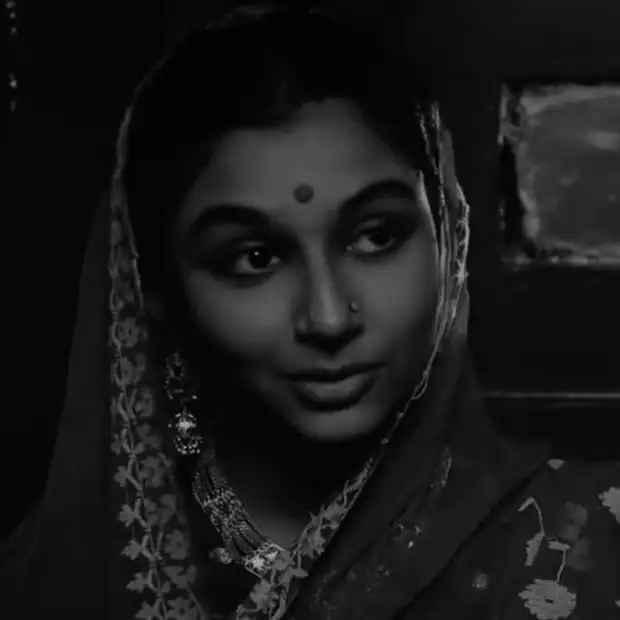
Apur Sansar (1959). Aparna comes from a comfortable home and is married by accident to a poor writer. She arrives as a stranger in his rented room in Calcutta, and the film watches her make it a home. In a horse carriage after a night at the cinema she strikes a match for Apu's cigarette and teases him with a look. She was 14.
Devi (1960). Doyamoyee is worshipped as Kali and comes to doubt herself. In a 2021 essay for Scroll she called it her favourite performance. She has described the scene where her father-in-law worships her after his dream: her reaction is in her nails digging into the wall and her toes curling away. At the end Doya runs out into the mist in her wedding clothes.
Nayak (1966). Aditi starts out with contempt for film stars. By morning she has heard his confessions, seen him drunk and near despair, and talked him back to his compartment. She tears up her notes so that he can keep his public face.
Aranyer Din Ratri (1970). Aparna is the one person in the forest whom Ashim cannot read. In one sunset scene with him the light fades until he needs his lighter. Wes Anderson, who helped bring about the film's restoration, called her performance "mysterious, cerebral, mesmerizing" before its Cannes screening in 2025.
Mausam (1975). Chanda is a healer's daughter in Darjeeling who waits for a medical student, played by Sanjeev Kumar, to come back. He does not. Twenty-five years later he finds her daughter Kajli in a brothel, and she has her mother's face. Tagore plays both women, the girl who waits and the daughter who has stopped expecting anything.
Craft
Precision first. On Apur Sansar Ray gave her positions in counted steps, but by Aranyer Din Ratri his method had loosened. She told The Hollywood Reporter India in 2025 that the actors got handwritten scripts and were not encouraged to learn them by heart. She could improvise, while Chatterjee, by her account, was held to the text.
The body before the face. Her own account of Devi puts the feeling in her hands and feet, not in close-ups of tears. She has said the heavy make-up, the garlands and the long waits between shots weighed on her, and that the weight suited Doya.
Two cinemas. She shot her first two Ray films during school holidays. Later, Ray's films came between Hindi films for Samanta and Gulzar, and in the 2000s she went back to Bengali with Goutam Ghose and Rituparno Ghosh. She told The Tribune in 2005 that she was proud to be a Bengali and happy to be working in Bengali cinema again.
Selected Filmography
Kashmir Ki Kali (1964)
As Champa. Shakti Samanta's musical romance, with O. P. Nayyar's songs, was her first Hindi film.
Aradhana (1969)
As Vandana. Samanta's story of a mother who becomes her own son's nanny won her the Filmfare award for Best Actress.
Seemabaddha (1971)
As Tutul. Ray's film about a Calcutta company executive won the National Film Award for Best Feature Film.
Amar Prem (1972)
As Pushpa. Samanta remade the Bengali Nishi Padma (1970), from a Bibhutibhushan Bandyopadhyay story.
Namkeen (1982)
As Nimki. Gulzar's film, from a story by Samaresh Basu, also starred Waheeda Rehman, Shabana Azmi and Sanjeev Kumar.
Abar Aranye (2003)
As Aparna. Goutam Ghose sent Ray's characters back to the forest thirty years on, and she won the National Film Award for Best Supporting Actress.
Gulmohar (2023)
As Kusum Batra. Rahul V. Chittella's family drama was released on Disney+ Hotstar.
Legacy
A notification of 13 October 2004 made her chairperson of the Central Board of Film Certification in place of Anupam Kher, and she held the post until March 2011, when Leela Samson took over. In 2009 she sat on the competition jury at Cannes under Isabelle Huppert. President Pranab Mukherjee gave her the Padma Bhushan at Rashtrapati Bhavan on 5 April 2013.
The Film Heritage Foundation spent about six years restoring Aranyer Din Ratri in 4K. At its Cannes Classics screening in May 2025 she walked the red carpet with Simi Garewal, who had played the Santhal woman Duli.
Two of her three children, Saif Ali Khan and Soha Ali Khan, became actors. Soha made her debut in the Bengali film Iti Srikanto, and her mother told The Tribune that she had guided her on it.