Mani Kaul
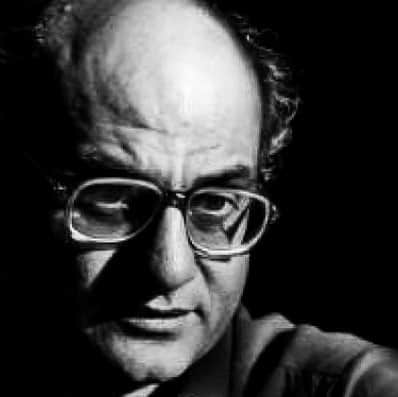
Mani Kaul (25 December 1944 – 6 July 2011), born Rabindranath Kaul, was one of the most significant and formally adventurous filmmakers in the history of Indian cinema. A central figure of the parallel cinema movement that emerged in India during the late 1960s and 1970s, Kaul distinguished himself from his contemporaries through a radically experimental approach to film form, narrative structure, and cinematic time. Working predominantly in Hindi across a career spanning more than four decades, he produced an oeuvre of approximately twenty feature films and documentaries that remains among the most uncompromising and critically esteemed bodies of work in the annals of South Asian art cinema. His debut feature, Uski Roti (1969), is widely regarded as a landmark of Indian cinema and one of the key films of the New Indian Cinema or the Indian New Wave.
Kaul’s filmmaking drew upon an unusually broad range of aesthetic traditions—classical Indian music, Mughal miniature painting, Sanskrit aesthetics, medieval literature, and the European modernist cinema of Robert Bresson and Jean-Marie Straub. A trained practitioner of dhrupad, the ancient Hindustani vocal form, he sought to transpose the temporal logic of classical Indian music into the medium of film, creating works in which meaning accreted gradually, through the accumulation and counterpoint of individual moments rather than through conventional narrative causality. This orientation produced films of extraordinary formal severity that were simultaneously imbued with a keen attentiveness to the textures of everyday life—the rhythms of domestic labour, the silences of strained relationships, the play of light upon rural or historical landscapes.
Among Kaul’s most celebrated works are his early trilogy of feature films—Uski Roti (1969), Ashadh Ka Ek Din (1971), and Duvidha (1973)—as well as the documentary Dhrupad (1982), the poetic documentary-portrait Siddheshwari (1989), and the Dostoevsky adaptations Nazar (1991) and Idiot (1992). He was the recipient of two National Film Awards—the National Film Award for Best Direction in 1974 for Duvidha, and the National Film Award for Best Non-Feature Film in 1989 for Siddheshwari—as well as four Filmfare Critics Awards for Best Movie. In 1974 he was awarded the prestigious Jawaharlal Nehru Fellowship.
Beyond his work as a director, Kaul was an influential teacher and intellectual whose impact extended well beyond the cinema. He taught film at Harvard University, Duke University, the Art Institute of Chicago, and CalArts, and served as Creative Director of the film house at Osian’s Connoisseurs of Art in Mumbai. His theoretical writings on film, music, and visual art—particularly his essays on Mughal miniature painting and on the aesthetics of dhrupad—constitute a significant contribution to Indian aesthetic thought. A decade after his death, his influence can be felt in the work of younger Indian directors such as Amit Dutta and Gurvinder Singh, who have acknowledged him as a formative presence and a master explorer of cinematic form.
Life and Early Work
Mani Kaul was born Rabindranath Kaul on 25 December 1944 in Jodhpur, Rajasthan, to a family of Kashmiri Pandits—members of Kashmir’s upper-caste Hindu elite—who had relocated to Rajasthan several generations earlier. He grew up in the small town of Jalore, where his father held a post in the civil service, a comfortable position that provided the family with a bungalow and servants. The provincial landscape of Rajasthan, with its desert vistas, distinctive folk traditions, and architectural heritage, would later find its way into his films, most notably in Duvidha, which was based on a Rajasthani folktale.
Kaul has described a formative episode in his childhood that shaped his orientation as an artist: fitted with spectacles at the age of eleven, after years of being unable to see the classroom blackboard clearly, he experienced his corrected vision as a revelation. In his own words, it was “as if somebody had jolted me out of my sleep and made me stand up in my waking state.” The experience instilled in him an abiding obsession with the act of seeing—with looking carefully and attentively at the visible world—that would become the animating impulse of his entire cinematic project. He began drawing shortly after receiving his spectacles, developing an interest in the visual arts that would eventually lead him to cinema.
The Kaul family had connections within the Hindi film industry that might easily have steered the young Mani towards a career in mainstream commercial cinema: his uncle Mahesh Kaul was a successful film director, and another relative was the prolific actor Raaj Kumar. However, when Kaul enrolled at the Film and Television Institute of India (FTII) in Pune in 1963—an institution that had been established only a few years earlier—he found himself drawn towards a very different kind of cinema. At FTII he initially enrolled in the photography programme before transferring to the direction course, and it was there that he encountered the figure who would most decisively shape his artistic formation: the great Bengali filmmaker Ritwik Ghatak, who served as vice principal and teacher at the institute during the mid-1960s.
Ghatak’s influence on Kaul was profound and lasting. A filmmaker of extraordinary ambition and formal complexity, Ghatak introduced his students to a cinema of radical formal experimentation grounded in a deep engagement with Indian cultural tradition. Kaul has spoken of serving Ghatak “with the same devotion as a disciple serves his guru,” and the master’s emphasis on the formal properties of cinema—on image, sound, and rhythm as aesthetic materials in their own right—left an indelible mark on the younger director. Alongside his fellow FTII student Kumar Shahani, with whom he would remain closely associated throughout his career, Kaul absorbed Ghatak’s lessons and synthesised them with influences drawn from European cinema, above all the ascetic films of Robert Bresson, and from Indian classical music and visual art.
During his student years at FTII, Kaul also developed passionate interests in a wide range of artistic and intellectual traditions: the paintings of Matisse, Picasso, Cézanne, and Klee; Mughal miniature painting; haiku; the nouveau roman; the writings of Dostoevsky; and dhrupad, the ancient and rigorous Hindustani classical vocal form. He later trained formally in dhrupad under Ustad Zia Mohiuddin Dagar, one of the foremost practitioners of the tradition. This immersion in Indian classical music was not merely a personal pastime but a direct influence on his cinematic method: dhrupad’s emphasis on the exploration of a single scale over an extended duration, and its insistence on the integrity and specificity of each individual note, provided Kaul with a model for a cinema of patient, non-teleological attention. He graduated from FTII in 1966, producing a student diploma film, Yatrik, that year.

Filmmaking
After graduating from FTII, Kaul spent several years fulfilling obligations to the state Films Division, producing a number of documentary shorts before being granted support for a feature film. The result, released in 1969 when Kaul was twenty-five years old, was Uski Roti (His Bread), an adaptation of a short story by the distinguished Hindi writer Mohan Rakesh. The film depicts a day in the life of Balo, a rural Punjabi housewife who waits by the highway each evening to deliver her husband’s dinner to him when his bus passes. Yet Kaul’s adaptation departs radically from the conventions of literary adaptation: the film abandons linear chronology, compresses and abstracts space through the use of long lenses and painterly flat compositions, and replaces emotional expressivity with a mode of restrained, attentive observation that recalls, in its formal discipline, the films of Robert Bresson.
Uski Roti was immediately recognised as a landmark. Described by critics as “one of the key films of the New Indian Cinema or the Indian New Wave,” it marked, in the words of Indian film scholar Ashish Rajadhyaksha, a decisive rupture with the realist tradition established by Satyajit Ray and consolidated by the social cinema of the mainstream. Where Ray’s neorealism had drawn upon the European tradition of carefully observed social psychology, Kaul’s film drew upon the formal strategies of Mughal miniature painting—the abstraction of space, the compression of perspective, the emphasis on surface and pattern—and the structural logic of classical music, in which meaning accumulates through the development and variation of a constrained set of elements. The film won Kaul the Filmfare Critics Award for Best Movie and established him overnight as a major force in Indian cinema.
His second feature, Ashadh Ka Ek Din (One Day in the Rainy Season, 1971), was based on a celebrated stage play by Mohan Rakesh—the same playwright whose short story had provided the source material for Uski Roti—inspired by the life of Kalidas, the fifth-century Sanskrit poet and dramatist. The film tells the story of Mallika, the poet’s muse, who encourages him to accept a prestigious appointment at a distant royal court, knowing that it will separate them permanently. Shot in austere monochrome, with a chamber-drama intimacy and a haunting, archaic quality, Ashadh Ka Ek Din drew upon ancient Indian cave painting traditions—particularly the double-portrait compositions visible in the frescoes at Ajanta and Ellora—to render the emotional landscape of its characters. The film won Kaul a second consecutive Filmfare Critics Award for Best Movie and confirmed the seriousness and consistency of his formal vision.
The third and perhaps most widely celebrated work of Kaul’s early period was Duvidha (The Dilemma, 1973), his first film in colour, based on a Rajasthani folktale recorded by the author and folklorist Vijaydan Detha. The narrative concerns a young bride abandoned by her merchant husband on the day of their wedding, who leaves for a seven-year business journey; in his absence, a benevolent ghost assumes the husband’s form and comes to live with her. Kaul committed entirely to the folktale’s logic, shooting on a minimal budget with limited 16mm Kodachrome reels loaned by the painter Akbar Padamsee, and produced a work of astonishing visual beauty in which a warm palette of reds, oranges, and whites ironically illuminates the bride’s constrained predicament. The film was widely shown across Europe and won Kaul the National Film Award for Best Direction in 1974—the most prestigious recognition in Indian cinema—as well as a third Filmfare Critics Award.
In the years following this early trilogy, Kaul produced a series of documentary and hybrid works that extended his investigation of Indian artistic traditions. Puppeteers of Rajasthan (1974) and A Historical Sketch of Indian Women (1975) continued his engagement with the documentary form, while Ghashiram Kotwal (1976) was an adaptation of the celebrated Marathi play by Vijay Tendulkar, which had become one of the landmark works of the Indian People’s Theatre movement. In 1976, Kaul was also one of the co-founders of the Yukt Film Co-operative (Union of Kinematograph Technicians), a collective that sought to create conditions for the production of avant-garde films outside the commercial mainstream.
The documentary Dhrupad (1982), a meditative examination of the ancient vocal form and its living practitioners—featuring extended performances by the Dagar Brothers, the most distinguished dhrupad singers of their generation—stands as one of the most profound works in the international documentary canon. A film as much about the nature of attentive listening as about its ostensible subject, Dhrupad rendered in cinematic form the aesthetic principles that had long guided Kaul’s practice. The following year, Mati Manas (1984) and A Desert of a Thousand Lines (1986) extended his documentary explorations.
Kaul’s Satah Se Uthata Admi (Man Emerging from the Surface, 1980), a collaboration with the poet Gyan Rajan, was selected for the Cannes Film Festival in 1981, marking one of the more significant recognitions of his work in the international arena. The film, which concerns the life of the Hindi poet Muktibodh, exemplifies Kaul’s characteristic blurring of the boundary between fiction and documentary, between biography and formal experiment.
In 1989 he produced what many consider his most publicly accessible major work: Siddheshwari, a poetic documentary portrait of the legendary thumri singer Siddheshwari Devi of Varanasi. Less a conventional biographical documentary than a cinematic meditation on memory, voice, and the passage of time, the film won Kaul his second National Film Award, in the category of Best Non-Feature Film. The following decade saw him turn to adaptations of major European literary works: Nazar (The Gaze, 1991), inspired by Dostoevsky’s short story “A Gentle Creature,” shot in low, chiaroscuro lighting; and Idiot (1992), a feature-length adaptation of Dostoevsky’s novel of the same name, which won him a fourth Filmfare Critics Award. These adaptations demonstrated Kaul’s conviction that the Russian writer’s preoccupations—with spiritual suffering, with the clash of worldliness and innocence, with the impossibility of pure goodness in a corrupt society—had deep resonances within the Indian context.
His later works include The Cloud Door (1995), based on medieval Sanskrit erotic literature; Naukar Ki Kameez (The Servant’s Shirt, 1999), an adaptation of a novel by Vinod Kumar Shukla; and Bojh (Burden, 2000), as well as works produced during his time in the Netherlands, including Ik Ben Geen Ander (I Am No Other, 2002) and A Monkey’s Raincoat (2005). Throughout this later period, Kaul continued to teach, lecture, and write, remaining an active presence in international film culture until the final years of his life. He was also a member of the jury at the 21st Berlin International Film Festival in 1971, one of the earliest international recognitions of his critical standing.
The Cinema of Mani Kaul
Mani Kaul’s cinema occupies a singular position within Indian and world film culture: it is neither easily assimilated to the realist tradition of the parallel cinema movement with which he is most often associated, nor comfortably placed within any single strand of international modernist filmmaking. Rather, his work constitutes a sustained and highly original synthesis of diverse aesthetic traditions—Indian classical music, medieval miniature painting, Sanskrit aesthetic theory, and the European modernist cinema of Bresson—in the service of a cinematic practice devoted above all to the investigation of perception, time, and the formal possibilities of the image.
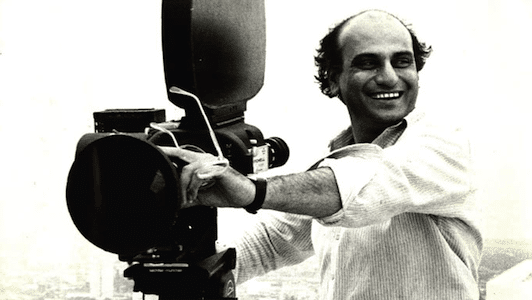
The most frequently cited influence on Kaul’s formal method is the classical Hindustani music tradition of dhrupad. The dhrupad aesthetic, characterised by an unhurried, incremental exploration of a single melodic scale over an extended duration—in which meaning resides, as one critic has written, in “the specificity and clarity of every individual note”—provided Kaul with a structural model for a cinema that abandons the conventional logic of narrative causality in favour of a temporal experience closer to musical improvisation. His films do not develop towards a resolution; they unfold, scene by scene, as a continuous process of discovering and rediscovering the possibilities latent within a given set of materials. This approach has been described as constituting a kind of accordion-like treatment of cinematic time: expanding and contracting, revisiting and departing, without ever submitting to the teleological pull of conventional narrative.
Equally central to Kaul’s aesthetic is the influence of Mughal miniature painting, on which he wrote with great intelligence and subtlety. In his essay “Seen from Nowhere,” he observed that miniature paintings abstract “the physical to the extent where it may both anchor the viewer’s sensuous attention as well as absorb the so-called distortions, enabling him to enter into the picture.” His films reproduce this effect through their characteristic flatness of composition—achieved through the use of long lenses that compress spatial depth—and through their spare, patterned use of colour, which abstracts the visual field without abandoning the sensuous specificity of the real. Like a miniature painting, Kaul’s frames offer the viewer a constant reorganisation of the perceptual field: space is dynamised by architectural forms and a precisely controlled camera, resulting in a mode of visual experience that is simultaneously concrete and abstracted.
The influence of Robert Bresson is equally pervasive. Like Bresson, Kaul preferred to film parts of the body—hands, feet, the back of the head—rather than expressive faces; like Bresson, he used non-professional or semi-professional actors whose performances were deliberately stripped of the theatrical register of conventional acting, creating a mode of presence that is attentive and inward rather than expressive and outward. Yet where Bresson’s editing creates meaning through the juxtaposition of discrete, self-contained images, Kaul’s editing is more fluid, more musical in its logic, allowing sequences to breathe and expand in ways that resist the aphoristic compression of Bressonian montage.
Key Themes
The Status and Inner Life of Women. Kaul’s films place women at the centre of their concerns, casting a sustained and subtle light on the predicament of women within Indian society. Balo in Uski Roti, Mallika in Ashadh Ka Ek Din, the bride in Duvidha—each of these figures is rendered with a gravity and interior dignity that refuses the sentimentalisation or victimhood narrative that so often attends female protagonists in Indian cinema. Kaul’s women possess a powerful sense of inwardness, which the director scrupulously refuses to violate or commodify, affording them a privacy that comments implicitly on the restrictions placed upon women in Hindu society.
Time, Memory, and Non-Linear Narrative. A defining preoccupation of Kaul’s cinema is the deconstruction of linear, cause-and-effect narrative in favour of a more open, temporally fluid mode of storytelling. His films move freely between present action, recollection, and anticipation, frequently revisiting the same event from different temporal and perspectival positions. This approach is rooted in the structural logic of classical Indian music, and finds its most radical expression in the early trilogy, where the disruption of chronology becomes a formal correlative for the psychological states—waiting, longing, uncertainty—that his characters inhabit.
The Relationship Between Cinema and the Other Arts. Uniquely among major Indian filmmakers, Kaul treated the formal and philosophical questions raised by other Indian art forms—dhrupad, Mughal miniature painting, Sanskrit dramatic theory, folk narrative—as direct resources for cinematic practice rather than merely as thematic or cultural content. His films are not simply films about Indian art; they attempt to transpose the structural principles of those arts into a cinematic idiom, producing works that occupy a genuinely hybrid position between the different arts.
Alienation, Doubled Identity, and the Crisis of Selfhood. In his adaptations of Dostoevsky, and in the ghost narrative of Duvidha, Kaul returned repeatedly to questions of identity, doubling, and the impossibility of authentic self-knowledge. The bhoot or ghost of Duvidha, who assumes the husband’s form and comes to embody a more genuine version of the absent original, functions as a figure for the split between social identity and inner life that structures so many of Kaul’s narratives.
The Documentary and the Poetic. Throughout his career, Kaul maintained what he himself described as a thin and permeable boundary between fiction and documentary filmmaking. His documentaries—on dhrupad music, on thumri singing, on traditional crafts, on the poetry of Muktibodh—aspire to the condition of poetry rather than to the condition of factual exposition, while his fiction films frequently incorporate documentary registers of observation and attention. This refusal of generic demarcation was a principled aesthetic choice rather than a pragmatic accommodation.
Selected Filmography
Uski Roti (His Bread, 1969)
Kaul’s debut feature, adapted from a short story by Mohan Rakesh, depicts a rural Punjabi housewife who waits each evening by the highway to deliver her husband’s dinner. A landmark of Indian experimental cinema, the film employs flat, painterly compositions derived from Mughal miniature painting and a non-linear, musically structured editing method to create an experience of radical formal originality. Winner of the Filmfare Critics Award for Best Movie.
Ashadh Ka Ek Din (One Day in the Rainy Season, 1971)
An adaptation of Mohan Rakesh’s celebrated play about the poet Kalidas and his abandoned muse Mallika, this film is shot in austere monochrome and employs double-portrait compositions inspired by the ancient frescoes at Ajanta and Ellora. A chamber drama of profound formal and emotional severity, the film won a second consecutive Filmfare Critics Award for Best Movie.
Duvidha (The Dilemma, 1973)
Kaul’s first film in colour, based on a Rajasthani folktale by Vijaydan Detha, in which a ghost assumes the form of a young bride’s absent merchant husband. Shot on minimal resources with loaned 16mm Kodachrome film, Duvidha achieves a visual beauty of remarkable delicacy, its warm palette of reds and oranges ironically illuminating the bride’s constrained condition. Winner of the National Film Award for Best Direction (1974).
Dhrupad (1982)
A meditative documentary on the ancient Hindustani vocal tradition of dhrupad, featuring extended concert performances by the Dagar Brothers, who were among the most distinguished practitioners of the form. Less a conventional musical documentary than a philosophical inquiry into the nature of listening and time, Dhrupad is widely regarded as one of the finest music documentaries ever made.
Siddheshwari (1989)
A poetic documentary portrait of Siddheshwari Devi, the great thumri singer of Varanasi, that dissolves the boundaries between documentary investigation, lyrical evocation, and formal experiment. The film employs music, image, and silence to create a meditation on voice, memory, and the passage of time that far exceeds the conventions of biographical documentary. Winner of the National Film Award for Best Non-Feature Film (1989).
Nazar (The Gaze, 1991)
An adaptation of Dostoevsky’s short story “A Gentle Creature,” shot in low, chiaroscuro lighting that evokes the formal world of Rembrandt. Nazar transposes the Russian writer’s exploration of power, love, and self-deception into a contemporary Indian setting, demonstrating Kaul’s conviction that Dostoevsky’s moral universe possesses deep resonances within the Indian context.
Idiot (1992)
A feature-length adaptation of Dostoevsky’s great novel, produced for Doordarshan, the Indian state broadcasting service. The film renders the novel’s central conflict between the innocent, Christ-like Prince Myshkin and the corrupt social world into which he is plunged as a parable of spiritual vulnerability in modern India. Winner of the Filmfare Critics Award for Best Movie (1993).
Legacy
Mani Kaul died on 6 July 2011 at his home in Gurgaon, near Delhi, after a prolonged battle with cancer. He is survived by two sons and two daughters. His death prompted widespread tributes from filmmakers, scholars, musicians, and writers across India and internationally, reflecting the breadth of his influence and the depth of affection in which he was held by those who had encountered his work or been touched by his teaching.
Kaul’s legacy in Indian cinema is a complex and in some respects a paradoxical one. During his lifetime, his films were never widely released or commercially distributed; his audiences were, as he himself acknowledged, inevitably small. Retrospectives of his work were held predominantly abroad, and reviews in the international press were sometimes uncomprehending—the New York Times famously described his films as “impenetrable” and “incoherent.” Even within India, his work was revered by a coterie of artists, scholars, and critics while remaining almost entirely unknown to the general public. Satyajit Ray, the most internationally celebrated of Indian filmmakers, attacked Kaul’s “wayward, fragile aestheticism” as betraying a “lack of concern for social issues,” a criticism that illuminates, by contrast, the genuine divergence between Kaul’s project and the humanist realism that had defined Indian art cinema internationally.
And yet Kaul’s influence on subsequent generations of Indian filmmakers has been both real and demonstrable. Directors such as Amit Dutta, who has acknowledged Kaul as a formative influence, and Gurvinder Singh, who described him as a “master explorer of cinematic form,” have carried forward aspects of his formal and philosophical project into the twenty-first century, producing films that honour his insistence on the integrity of cinematic time and the autonomy of the image. The Yukt Film Co-operative that Kaul co-founded in 1976, along with his decades of teaching at institutions in India and abroad, ensured that his ideas and methods were transmitted to successive generations of practitioners.
The international critical reassessment of Kaul’s work, which had been building gradually during the last decade of his life, has accelerated significantly since his death. The Criterion Collection’s inclusion of a feature essay on his early trilogy, the programming of his films at major retrospectives at the Centro de Cultura Contemporánea de Barcelona (CCCB) and the International Film Festival Rotterdam, and the increasing attention paid to his work by scholars of Indian cinema and world film have all contributed to a belated recognition of his importance. The Caravan magazine’s critical reassessment of his work, published in 2017, described him as a filmmaker who had defined a “cinema to come”—a cinema whose implications had not yet been fully absorbed.
Mani Kaul’s films represent one of the most sustained and rigorous attempts in the history of cinema to rethink the medium’s fundamental assumptions about narrative, time, and the relationship between image and sound. Drawing upon the deepest resources of Indian aesthetic tradition while simultaneously engaging with the most demanding currents of international modernist film, he created a body of work that is unlike anything else in the history of Indian cinema—or, indeed, of world cinema. His aspiration, articulated with characteristic precision in an interview late in his career, was to create an audience for cinema capable of the quality of attention that a trained listener brings to a dhrupad concert: an audience that would “exclaim, Wah! What a pan!” at the revelation of a beautifully composed shot. That aspiration remains, in the fullest sense, a gift to the future.
Mani Kaul on Art House Cinema
Ghasiram Kotwal (1976)
Ghasiram Kotwal is a 1976 Marathi Film based on a play of the same name by Vijay Tendulkar. The film was the first venture of YUKT Film Cooperative, an experiment in collective filmmaking and was made by a group of filmmakers – K. Hariharan, Kamal Swaroop, Mani Kaul, and Saeed Akhtar Mirza.

Uski Roti (1970)
Uski Roti (Eng: Our Daily Bread) is a 1970 Hindi film made by Mani Kaul. The first film of Mani Kaul, Uski Roti is based on a story by the same name by Mohan Rakesh. It is considered a landmark in the history of New Wave Cinema in India.