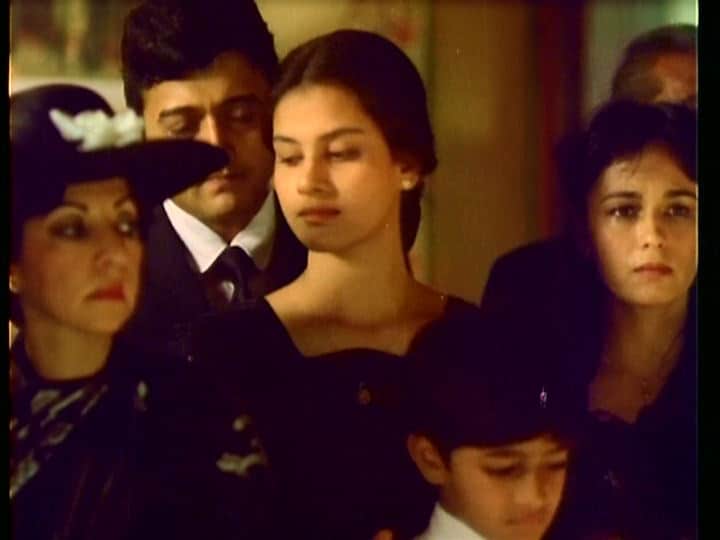
Shyam Benegal
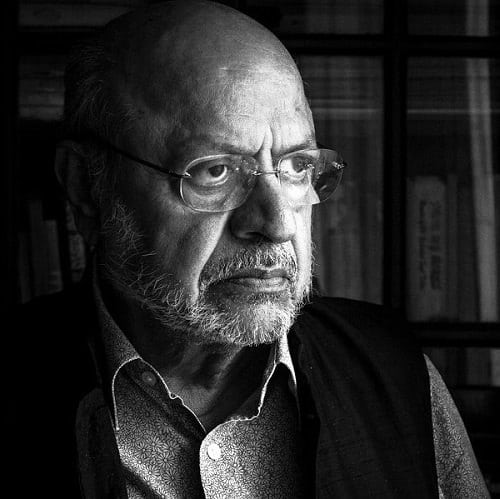
Shyam Benegal’s significance in Indian cinema rests not only upon the critical regard in which his individual films are held but also upon the institutional and aesthetic precedents he established. He was instrumental in the emergence of what came to be known variously as New Indian Cinema, the Indian New Wave, and parallel cinema — a movement distinguished by its rejection of formulaic plotting, its engagement with the lives of marginalised communities, and its fidelity to the lived textures of post-independence Indian society. His early films — Ankur, Nishant (1975), Manthan (1976), and Bhumika (1977) — are considered canonical works of world cinema, celebrated for their formal rigour and their unflinching examination of caste, class, gender, and rural power. They brought to international attention a generation of actors — including Shabana Azmi, Smita Patil, Naseeruddin Shah, and Om Puri — who would go on to define a new standard of screen performance in India.
Throughout his career, Benegal received eighteen National Film Awards, including seven for Best Feature Film in Hindi, as well as the Filmfare Award for Best Film on two occasions. He was conferred the Padma Shri in 1976 and the Padma Bhushan in 1991 in recognition of his contributions to Indian arts and culture. In 2005 he was awarded the Dadasaheb Phalke Award, India’s highest honour in cinema, in acknowledgement of a lifetime of achievement. Beyond his work in feature films, he directed more than 900 documentary and sponsored films, and the landmark television serial Bharat Ek Khoj (1988), a fifty-three-episode adaptation of Jawaharlal Nehru’s The Discovery of India, which reached an audience of tens of millions and remains one of the most ambitious productions in Indian television history.
Benegal passed away on 23 December 2024 in Mumbai at the age of ninety, following treatment for chronic kidney disease. His death was mourned across India as the end of an era, and tributes poured in from filmmakers, actors, critics, politicians, and cultural institutions around the world. He leaves behind a body of work that endures as essential testament to what Indian cinema can be when it addresses, with courage and intelligence, the complexities of the society from which it emerges.
Life and Early Work
Shyam Sunder Benegal was born on 14 December 1934 in Trimulgherry, a cantonment area of Secunderabad in the Hyderabad State of British India, in what is now the city of Hyderabad in Telangana. He was born into a Konkani-speaking Saraswat Brahmin family with roots in the coastal Karnataka region, and grew up in a household where the principal languages of daily life were Konkani and English, alongside the Telugu and Urdu of the surrounding city. His father, Sridhar B. Benegal, was a distinguished professional photographer, and the visual culture of the household exerted a formative influence upon the young Shyam’s aesthetic sensibility from an early age.
By his own account, Benegal’s fascination with cinema began in childhood. His father presented him with a camera when he was twelve years old, and Benegal made his first film — a rudimentary effort, but evidence of a precocious engagement with moving images — on that instrument. The Hyderabad of his youth was a cosmopolitan city, the seat of the Nizam’s court, possessed of a rich and layered cultural life that drew upon Deccani, Persian, Urdu, Telugu, and Hindi traditions simultaneously. This environment of cultural plurality and intellectual ambition left permanent marks upon Benegal’s cinematic imagination, informing his lifelong attention to questions of identity, community, and historical memory.
Benegal pursued his formal education at Nizam College, affiliated with Osmania University in Hyderabad, where he studied Economics and was awarded a Master of Arts degree. His years at the university were intellectually expansive: he read widely in literature, philosophy, and political thought, and developed a sustained engagement with world cinema through the Hyderabad Film Society, which he founded himself during this period. The film society movement was then a significant force in the intellectual life of educated India, providing access to the work of Italian Neorealists, the French New Wave, and other currents of international art cinema that were otherwise inaccessible, and Benegal’s immersion in these traditions shaped his understanding of what cinema could accomplish beyond the confines of commercial entertainment.
In 1959, Benegal moved to Mumbai and commenced a career in advertising, joining the prestigious agency Lintas as a copywriter. He would remain in the advertising industry for over a decade, rising steadily through the organisation to become its creative head. The discipline of advertising film — with its demands for economy, visual precision, and the communication of complex ideas within severely constrained durations — proved a rigorous technical apprenticeship. During this period Benegal directed his first documentary film, Gher Betha Ganga (Ganges at the Doorstep, 1962), produced in Gujarati, and subsequently went on to direct more than nine hundred sponsored documentary and advertising films. These works, largely unseen by general audiences, trained him in the management of real locations, natural light, non-professional performers, and the practical exigencies of low-budget production — precisely the conditions that would characterise his early features.
It was also during the late 1960s that Benegal’s ambitions in feature filmmaking crystallised. Encouraged by the nascent parallel cinema movement taking shape in Bengal under Mrinal Sen and others, and alert to the institutional possibilities opened by the Film Finance Corporation — the government body tasked with supporting non-commercial cinema — Benegal began developing the project that would become Ankur. His years of documentary work had given him not only technical skill but a deep knowledge of the social realities of rural and semi-urban India, and it was this knowledge that he would bring to bear upon his first feature film.

Filmmaking
Shyam Benegal’s debut feature film, Ankur (The Seedling, 1973), was released to immediate and widespread critical acclaim and established him at once as a filmmaker of the first order. Set in the rural hinterland of Andhra Pradesh, the film depicts the sexual and economic exploitation of a Dalit woman, Lakshmi, by a young landlord who takes her as a mistress while his wife is absent. Benegal chose to shoot the film in Hyderabad with a predominantly local cast, and the decision to cast the then-unknown Shabana Azmi in the role of Lakshmi proved momentous: her performance was revelatory, winning her the National Film Award for Best Actress, and she would go on to become one of the most celebrated performers in the history of Indian cinema. Ankur was also cinematographically distinctive, photographed by Govind Nihalani in a naturalistic style that emphasised the harsh beauty of the Deccan landscape and the grinding ordinariness of feudal life. The film won the National Film Award for Best Feature Film in Hindi in 1974.
The four films that followed in rapid succession constituted what critics and scholars have retrospectively identified as the foundational period of Benegal’s career. Nishant (Night’s End, 1975) intensified the social critique of Ankur, depicting the abduction and repeated rape of a schoolteacher’s wife by a zamindar’s brothers in a village where institutional authority is complicit in the oppression of the powerless. The film starred Girish Karnad, Shabana Azmi, and Naseeruddin Shah, and its bleak, unsparing portrait of systemic violence was met with both controversy and critical admiration. Manthan (The Churning, 1976) was an extraordinary experiment in both form and funding: the film, which depicted the struggle to establish a dairy cooperative in a Gujarat village in the teeth of upper-caste resistance, was financed by a contribution of two rupees each from approximately five hundred thousand dairy farmers of the Gujarat Cooperative Milk Marketing Federation, making it one of the earliest examples of what might now be called crowd-funding in the history of cinema. Manthan won the National Film Award for Best Feature Film in Hindi.
In 1977 Benegal released two films that together demonstrated the breadth of his artistic range. Bhumika (The Role), based on the autobiography of the Marathi actress Hansa Wadkar, starred Smita Patil in a tour-de-force performance as a woman who navigates the patriarchal structures of the Hindi film industry and of Indian domestic life, seeking autonomy and selfhood across multiple relationships. The film is at once a feminist meditation, a study of performance and identity, and a lucid portrait of the Bombay film world of the 1930s and 1940s. Kondura (also 1977), Benegal’s only film in Telugu, was a more intimate study of superstition, desire, and power in a village community in Northern Andhra Pradesh. Both films continued his collaboration with the cinematographer Govind Nihalani and with Vanraj Bhatia, whose chamber scores provided a distinctive musical texture to the early work.
The late 1970s and early 1980s saw Benegal expand his thematic and formal ambitions significantly. Junoon (Obsession, 1979) marked a striking departure: produced by the actor Shashi Kapoor, who was making his debut as a film producer, the film was a period drama set against the backdrop of the Sepoy Mutiny of 1857 and centred on an obsessive romantic attachment between a Pathan soldier and an English girl. The film won the Filmfare Award for Best Film, demonstrating that Benegal’s rigorous approach to filmmaking could also attract mainstream recognition. Kalyug (The Machine Age, 1980), again produced by Shashi Kapoor, transposed the narrative of the Mahabharata into the world of contemporary Indian industrial capitalism, examining the dynastic rivalries and moral corruption of a powerful business family. It too won the Filmfare Award for Best Film. Arohan (The Ascent, 1982) returned to the terrain of rural oppression, produced by the Government of West Bengal to document and celebrate the impact of Operation Barga, the state’s landmark land reform programme.
The mid-1980s brought further diversification. Mandi (The Marketplace, 1983) was a satirical ensemble film set in a brothel, examining with ironic detachment the hypocrisies of respectable society and the moral economy of sexual commerce. Trikal (Past, Present, and Future, 1985) was set in Portuguese-ruled Goa in the years immediately before and after Liberation, tracing the decline of a Goan Catholic family of the landowning class and exploring themes of memory, cultural identity, and historical transition. Susman (1987) focused on the world of handloom weavers, examining the economic pressures bearing down upon traditional craft industries in an era of industrial production. Throughout this period Benegal also continued his prolific work in documentary film and in 1988 directed Bharat Ek Khoj, his celebrated fifty-three-episode television serialisation of Nehru’s The Discovery of India, for Doordarshan, the national broadcaster. The serial was a landmark in Indian television, reaching an audience of extraordinary scale and establishing a template for ambitious historical narrative on the small screen.
During the 1990s Benegal produced what became known as his Muslim Women Trilogy, three films that examined the experiences of Muslim women negotiating questions of identity, memory, and belonging in post-Partition India. Mammo (1994) told the story of a Muslim woman from Pakistan who crosses into India to visit her grandson and finds herself unable to return, trapped in a bureaucratic limbo that becomes a meditation on the arbitrary cruelties of the Partition settlement. Sardari Begum (1996) was a portrait of a thumri singer of the old Lucknow tradition, reconstructed retrospectively through the memories of those who knew her. Zubeidaa (2001) explored the life of a glamorous Muslim actress who becomes the junior wife of a Rajput maharaja, with tragic consequences. All three films won the National Film Award for Best Feature Film in Hindi and starred Farida Jalal, Ratna Pathak Shah, and Rekha respectively in their lead roles, and together they constitute one of the most sustained and intelligent engagements with Muslim feminine experience in Indian cinema.
In the first decade of the twenty-first century Benegal produced two of his most ambitious and formally distinctive films. Netaji Subhas Chandra Bose: The Forgotten Hero (2004), an epic biographical film about the Indian independence leader Subhas Chandra Bose, depicted Bose’s years in Nazi Germany and Japanese-occupied Asia and the formation of the Indian National Army. The film was shot across multiple international locations and received wide critical acclaim at the BFI London Film Festival; it won the National Film Award for Best Feature Film on National Integration and the National Film Award for Best Production Design. In contrast, Welcome to Sajjanpur (2008) and Well Done Abba (2010) were comic films, satirical in register, that examined rural India’s encounter with democratic politics and bureaucratic dysfunction. Well Done Abba won the National Film Award for Best Feature Film in Hindi, bringing Benegal’s tally in that category alone to seven awards over the course of his career.
The Cinema of Shyam Benegal
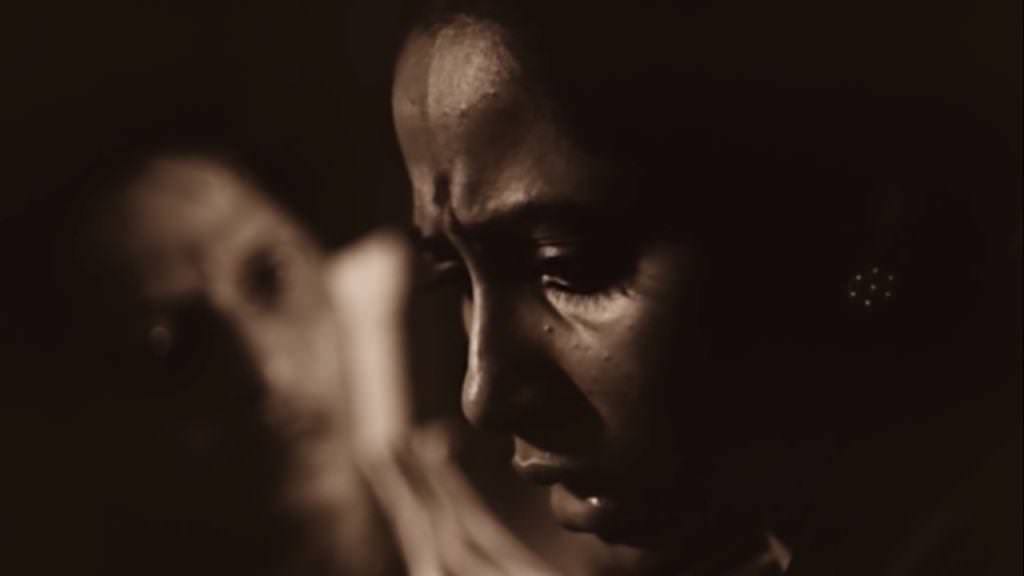
Shyam Benegal’s films constitute one of the most coherent and substantial bodies of work in the history of Indian cinema. Taken together, they represent a sustained and disciplined attempt to use the medium of cinema to investigate the social and historical realities of post-independence India with the rigour, seriousness, and formal intelligence that the subject demands. His cinema is characterised by a deep commitment to realism understood not as a mere stylistic preference but as an ethical position: a refusal to subordinate the complexities of human experience to the requirements of entertainment or ideology. Where mainstream Hindi cinema of his era offered its audiences fantasy, consolation, and wish-fulfilment, Benegal’s films demanded engagement, discomfort, and thought.
His aesthetic practice drew upon a wide range of influences, including Italian Neorealism, the French New Wave, the documentary tradition of Humphrey Jennings and Robert Flaherty, and the parallel Bengali cinema of Satyajit Ray and Ritwik Ghatak. From Neorealism he derived his insistence upon shooting on location, his preference for natural light, and his readiness to cast non-professional actors in supporting roles. From the French New Wave he absorbed a restless formal curiosity and a willingness to allow narrative to be driven by character psychology rather than plot mechanics. From his years in documentary filmmaking he developed an ethnographic attentiveness to the details of particular social milieus — the rhythms of rural labour, the hierarchies of caste, the textures of vernacular architecture and landscape — that gives his films their distinctive quality of density and specificity.
Central to Benegal’s cinema is his collaborative relationship with his performers. He was unusual among directors of his generation in his dedication to developing actors and in his sustained working relationships with a core company of performers that included Shabana Azmi, Smita Patil, Naseeruddin Shah, Om Puri, Amrish Puri, Girish Karnad, Kulbhushan Kharbanda, and Anant Nag. Many of these actors made their film debuts in Benegal’s productions, and his methods of rehearsal and direction drew out performances of exceptional naturalism and psychological depth. His long-standing collaboration with the cinematographer Govind Nihalani, who photographed his first seven feature films, was equally formative: together they developed a visual language that privileged the integrity of observed reality over the seductions of compositional beauty.
Key Themes
Caste and Feudal Oppression. From Ankur onward, Benegal’s cinema returns repeatedly to the structures of caste hierarchy and feudal power that persist beneath the formal commitments of democratic India. His films examine with unflinching clarity the mechanisms by which upper-caste dominance is reproduced and normalised, and the costs borne by those at the bottom of the social order.
Gender and Patriarchy. Women occupy the centre of Benegal’s moral and narrative universe, and his films constitute an extended inquiry into the conditions of female existence in Indian society. From Lakshmi in Ankur to Usha in Bhumika to the women of the Muslim Women Trilogy, his female protagonists are rendered with a specificity and dignity that was rare in Indian popular cinema.
The Post-Independence Nation and Its Contradictions. Benegal’s cinema is deeply preoccupied with the gap between the promises of Independence and Partition and the realities that followed: the persistence of old hierarchies beneath new political forms, the failures of land reform and rural development, and the unequal distribution of modernity’s benefits and burdens across Indian society.
Identity, Memory, and History. A significant strand of Benegal’s work is concerned with the relationship between individual identity and historical process. Films such as Trikal, the Muslim Women Trilogy, and Netaji Subhas Chandra Bose: The Forgotten Hero examine how communities and individuals negotiate inherited histories, cultural displacements, and the demands of national belonging.
The World of Work and Labour. Benegal’s films attend with unusual seriousness to the economics of labour: the world of handloom weavers in Susman, of dairy cooperatives in Manthan, of the emerging industrial bourgeoisie in Kalyug, and of the agricultural poor across his rural films all receive documentary-inflected treatment rooted in research and social observation.
Selected Filmography
Ankur (1973)
Benegal’s debut feature and one of the landmark films of Indian parallel cinema. Set in rural Andhra Pradesh, the film depicts the exploitation of a Dalit woman, Lakshmi, by a young landlord who takes her as a mistress. Photographed by Govind Nihalani in a naturalistic, documentary-influenced style, Ankur introduced Shabana Azmi to Indian cinema and won the National Film Award for Best Feature Film in Hindi. Its final image — a child hurling a stone at the landlord’s bungalow — became one of the most celebrated in Indian cinema.
Nishant (1975)
A searing study of systemic violence in a feudal village, Nishant follows a schoolteacher whose wife is abducted and sexually exploited by the brothers of the local zamindar, while the village’s institutions — the police, the temple, the school — remain complicit in the oppressor’s authority. Starring Girish Karnad, Shabana Azmi, Smita Patil, and Naseeruddin Shah, the film builds toward a collective act of retributive violence that is presented neither as heroic nor as redemptive.
Manthan (1976)
Unusually financed by contributions of two rupees from each of approximately five hundred thousand Gujarat dairy farmers, Manthan depicts the effort of a government veterinarian to establish a cooperative dairy movement in a village dominated by a powerful local merchant. The film is notable for its optimistic portrayal of subaltern agency and its sympathetic account of rural cooperative politics. It won the National Film Award for Best Feature Film in Hindi.
Bhumika (1977)
Based on the autobiography of the Marathi actress Hansa Wadkar, Bhumika is a complex feminist film in which Smita Patil plays an actress who moves from one relationship to another in search of autonomy and selfhood, only to find that each new arrangement replicates the constraints of the last. At once a portrait of the Hindi film industry of the 1930s and 1940s and a meditation on the performance of identity, the film is widely considered one of the masterpieces of Indian parallel cinema.
Kalyug (1980)
An ambitious transposition of the Mahabharata’s dynastic conflicts into the world of contemporary Indian industrial capitalism, Kalyug uses the ancient epic’s narrative architecture as an armature for an examination of moral corruption, fraternal rivalry, and the amorality of power in the world of the post-independence Indian business family. Produced by Shashi Kapoor, it won the Filmfare Award for Best Film.
Mammo (1994)
The first film of Benegal’s Muslim Women Trilogy, Mammo tells the story of an elderly Muslim woman from Pakistan who comes to Mumbai to visit her grandson and finds herself unable to return because of the rigid immigration protocols of the post-Partition settlement. The film’s examination of national belonging, bureaucratic power, and the human costs of Partition is conducted with quiet restraint and great emotional intelligence. It won the National Film Award for Best Feature Film in Hindi.
Netaji Subhas Chandra Bose: The Forgotten Hero (2004)
Benegal’s most ambitious production in terms of scale, this epic biographical film reconstructs the final years of Subhas Chandra Bose’s life — his sojourn in Nazi Germany, his journey by submarine to Japanese-occupied Asia, and his leadership of the Indian National Army in the campaign to free India from British rule. Shot in multiple countries on an exceptional budget by the standards of Indian parallel cinema, the film received critical admiration at the BFI London Film Festival and won the National Film Awards for Best Feature Film on National Integration and Best Production Design.
Legacy
Shyam Benegal’s legacy in Indian cinema is of a scope and depth that few filmmakers anywhere in the world can claim. As the leading figure of the Hindi parallel cinema movement, he demonstrated that it was possible to make serious, formally rigorous, socially engaged films in Hindi — the dominant language of Indian popular culture — and to attract both critical recognition and a genuine audience for such work. His early films served as an existence proof for subsequent generations of filmmakers who sought alternatives to the commercial mainstream, and they remain essential viewing in film schools and universities in India and across the world.
His influence upon Indian acting is equally profound. The actors he discovered, nurtured, or developed — Shabana Azmi, Smita Patil, Naseeruddin Shah, Om Puri, Amrish Puri, and others — redefined the possibilities of screen performance in India, bringing to their roles a psychological realism and an emotional authenticity that set a new standard against which subsequent generations of actors have measured themselves. Benegal’s willingness to give these actors complex, morally ambiguous roles, and his skill in eliciting from them performances of exceptional depth, helped to create an entire ecosystem of serious acting culture in Hindi cinema.
Beyond his work in feature films, Benegal’s contributions as a documentary filmmaker and television director have been of considerable cultural and educational importance. His serial Bharat Ek Khoj reached an audience of tens of millions and introduced generations of Indian viewers to a rigorous and pluralistic account of their own history. His over nine hundred advertising and documentary films trained him and, through his example, influenced countless others in