Films with Surekha Sikri on Art House Cinema

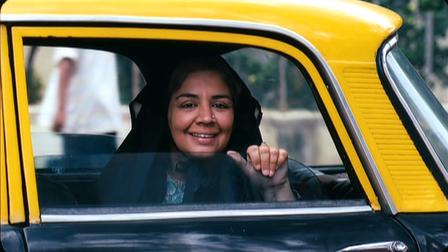
Surekha Sikri was born on 19 April 1945 and died on 16 July 2021 in Mumbai. Her career lasted about fifty years. She spent most of the first two decades on the Delhi stage, as a student at the National School of Drama and then in its Repertory Company. She was in her early thirties when she made her first film.
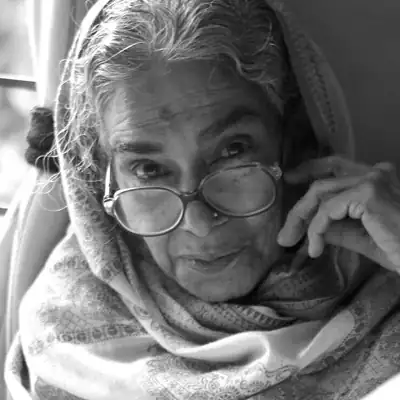
She won the National Film Award for Best Supporting Actress three times: for Govind Nihalani's Tamas (1988), Shyam Benegal's Mammo (1994) and Amit Sharma's Badhaai Ho (2018). The last also brought her the Filmfare award in the same category. The Sangeet Natak Akademi honoured her work in Hindi theatre in 1989. On television she played Kalyani Devi, the matriarch called Dadisa, in Balika Vadhu for about eight years.
Life and Early Work
Sources disagree on where she was born. Wikipedia and DNA India give Delhi, while Scroll.in gives Almora. She grew up in Almora and Nainital in the Kumaon hills, the daughter of an Indian Air Force officer and a schoolteacher, and studied at Aligarh Muslim University before she turned to the stage.
She graduated from the National School of Drama in 1971. Ebrahim Alkazi ran the school from 1962 to 1977, and ThePrint lists her among the actors he trained, alongside Naseeruddin Shah, Om Puri and Rohini Hattangadi. She later told Scroll.in that she had arrived as a "blank canvas", unsure of what she could do. Uttara Baokar, Manohar Singh and Raghubir Yadav were among her contemporaries there.
Family ties ran through the same world. Her sister Parveen Murad, also known as Manara Sikri, was Naseeruddin Shah's first wife, and their daughter Heeba Shah would later play the young Dadisa in Balika Vadhu. Sikri married Hemant Rege, who died in 2009. Their son Rahul is an artist.
On Stage and Screen
For more than a decade she toured with the NSD Repertory Company, which in the 1970s was the only theatre group in Delhi that paid its actors a salary. Her plays there included The Trojan Women, Look Back in Anger, Girish Karnad's Tughlaq, Mohan Rakesh's Adhe Adhure and Sandhya Chhaya. In July 1978 she told the newspaper Morning Echo that actors worked twelve-hour days and were still underpaid. She loved it anyway. "I find it very absorbing," she said. Anupam Kher, after her death, called her "the queen of theatre in Delhi".
Her first film was Amrit Nahata's political satire Kissa Kursi Ka, in which she played Meera. Nahata's first version had been seized and burnt during the Emergency, so this was the film he made again. Sikri later admitted she was "pretty green regarding film work". On screen, she noticed, nobody had kept track of continuity.
The work that made her name on screen came in the late 1980s. Nihalani's Tamas, from Bhisham Sahni's novel of the 1947 riots in Punjab, was first shown on Doordarshan in 1988, and she played Rajo. Saeed Akhtar Mirza cast her as Amina, the mother of a disabled young extortionist, in Salim Langde Pe Mat Ro (1989). In Prakash Jha's Parinati (1989) she and her husband keep an inn. It was Nandita Das's first film, and Das later wrote that Sikri was the one who "convinced my father" to let her do it. Mani Kaul then cast her in Nazar (1991), from Dostoevsky's "The Meek One".
Shyam Benegal cast her four times between 1994 and 2001. She was Fayyazi, the grandmother who raises the boy Riyaz, in Mammo and again in Zubeidaa. In Sardari Begum (1996) she played the courtesan who turns away the runaway young Sardari and sends her home. In Hari-Bhari (2000) she was Hasina, one of five women of different generations in a single family. Aparna Sen then cast her as Najma Khan in Mr. and Mrs. Iyer (2002).
Balika Vadhu began on Colors in 2008 and ran until 2016, and she played Dadisa as a rooted woman rather than a sarcastic one, winning Indian Telly Awards for the part. When Amit Sharma began casting Badhaai Ho, he found her serial work too loud and nearly passed her over. At her third reading she found the pitch he wanted.
In November 2018, while shooting a serial in Mahabaleshwar, she fell in a bathroom and suffered a brain stroke. On 23 December 2019 Vice President M. Venkaiah Naidu presented her National Film Award for Badhaai Ho in New Delhi. Zoya Akhtar cast her in the Netflix anthology Ghost Stories (2020) as a bedridden woman waiting for her son to visit. Complications from a second stroke followed, and she died of cardiac arrest at 76.
The Art of Surekha Sikri
Signature Roles
Tamas (1988). Rajo is a housewife who takes in an elderly Sikh couple as communal tension closes in on her town. She is kind and frightened at once, and Nihalani said Sikri caught that tension exactly. "As a performer, Surekhaji had a fine mind," he told the Free Press Journal after her death. The part brought her first National Film Award.
Salim Langde Pe Mat Ro (1989). Amina's son Salim, played by Pavan Malhotra, lives by extortion and robbery with his friends. Her younger son dies of an electric shock, and the family pins its hopes on the daughter's marriage. Salim tries to go straight and is killed on the day of his sister's engagement. Mirza's film won the National Film Award for Best Feature Film in Hindi.
Mammo (1994). Fayyazi is bringing up her teenage grandson Riyaz in Bombay when her sister Mammo, played by Farida Jalal, arrives from Pakistan on a temporary visa. A quarrel over the boy's birthday party drives Mammo out of the flat for a while. Later the police deport her. Khalid Mohamed co-wrote the film, and Benegal returned to the same family for Zubeidaa.
Mr. and Mrs. Iyer (2002). Najma Khan is the wife of Iqbal Ahmed Khan, an elderly Muslim on a bus that is stopped during a communal riot. She dies after coming to her husband's defence. The part is small, and it is where the film's violence stops being abstract.
Badhaai Ho (2018). Dadi is the mother-in-law of Priyamvada, played by Neena Gupta, a middle-aged woman whose late pregnancy embarrasses the family. Sharma modelled the character on his own grandmother. Dadi bickers with her daughter-in-law for most of the film, then turns on her own relatives at a wedding in Meerut when they mock Priyamvada. The blessing she gives Priyamvada at the end was improvised.
Craft
Theatre first. Her years with the Repertory gave her the habits of a professional company. On Badhaai Ho, Gajraj Rao said, she arrived with four pages of dialogue memorised. One scene took about a hundred takes over five or six hours, and she never complained. Nihalani made the same point about Tamas. Her work looked effortless, he said, and you would never know how hard she had worked on it.
Voice and pitch. Nihalani said she grasped the "nuances and essence" of Rajo quickly, and that this understanding shaped her body and her speech in the part. With Dadi the test was volume. Sharma wanted her quieter than her television self, and she found that register at the third reading.
Self-criticism. "I'm very critical about my work," she told Film Companion in 2019, and after a scene she would often see another way it could have been played. Well into her seventies she went to acting workshops, among them one run by Atul Mongia, because they helped her "find your own limitations". After the stroke she described herself as a musical instrument that was not being played.
Selected Filmography
Tamas (1988)
As Rajo. Govind Nihalani's film of Bhisham Sahni's Partition novel won three National Film Awards, hers for Best Supporting Actress among them.
Parinati (1989)
As Ganesh's wife. Prakash Jha's film about a couple who keep an inn was Nandita Das's first.
Salim Langde Pe Mat Ro (1989)
As Amina. Saeed Akhtar Mirza's film about a young Muslim man who tries to give up crime won the National Film Award for Best Feature Film in Hindi.
Mammo (1994)
As Fayyazi. Shyam Benegal's film about two sisters divided by Partition brought her a second National Film Award.
Hari-Bhari (2000)
As Hasina. Benegal's film follows five women of one rural family and won the National Film Award for Best Film on Family Welfare.
Zubeidaa (2001)
As Fayyazi. The grandmother of Mammo returns in Benegal's film about an actress who marries a maharaja, with Karisma Kapoor in the title role.
Mr. and Mrs. Iyer (2002)
As Najma Khan. Aparna Sen's film is set on a bus stranded by a communal riot.
Badhaai Ho (2018)
As Dadi. Amit Sharma's comedy about a late pregnancy brought her a third National Film Award and the Filmfare award for Best Supporting Actress.
Legacy
Sikri made about thirty films in forty years, and her three National Film Awards were all for supporting parts. Rajo, Fayyazi and Dadi each occupy a few scenes in someone else's story.
Badhaai Ho brought her to a generation that had never seen Tamas or Mammo, and it grossed about 221 crore rupees on a budget of about 29 crore. Nandita Das, after her death, called her "an extraordinary actor on stage and screen". Manoj Bajpayee remembered her as "a treat to watch on stage".
The stage work survives mainly on paper, in press cuttings such as the 1978 Morning Echo interview kept by the Alkazi Foundation's theatre archive. The films remain. In them she plays mothers, grandmothers and wives with the discipline of a repertory actor who learned her trade before she ever faced a camera.