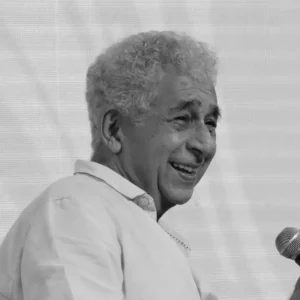
Films with Balraj Sahni on Art House Cinema
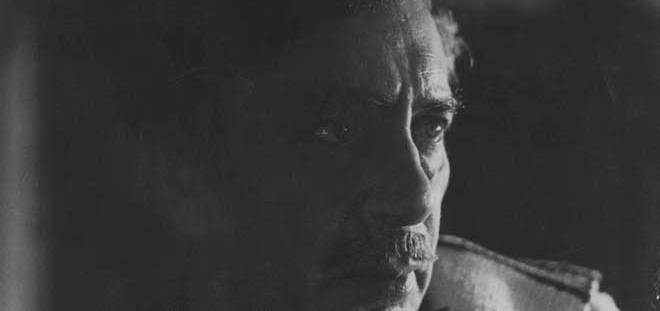
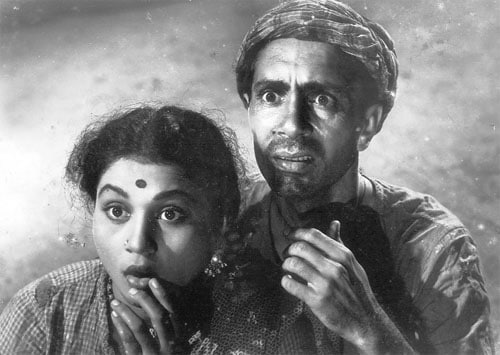
Balraj Sahni was born on 1 May 1913 in Rawalpindi and died on 13 April 1973 in Bombay. He acted in Hindi films for 27 years and wrote books in Punjabi. Before he ever faced a film camera he had been a teacher at Santiniketan and a radio announcer in wartime London. He was a member of the Communist Party of India. His best-known parts are poor men under pressure, such as the farmer who pulls a rickshaw in Calcutta in Do Bigha Zamin and the Muslim shoemaker of Agra in Garm Hava.

His film career began in 1946 and ended with M. S. Sathyu's Garm Hava (1973), which he finished dubbing the day before he died. Between the two came Bimal Roy's Do Bigha Zamin (1953), winner of the International Prize at Cannes in 1954, and Kabuliwala (1961). He received the Padma Shri in 1969. In a convocation address at Jawaharlal Nehru University in 1972 he said he had worked in more than 125 films over 25 years.
Life and Early Work
He was born Yudhishthir Sahni, and his father, a businessman, belonged to the Arya Samaj. His younger brother Bhisham became a Hindi novelist and playwright, the author of Tamas. Balraj took a master's degree in English literature at Government College, Lahore, in 1936 and also held a degree in Hindi. That year he married Damayanti and went home to Rawalpindi to join the family cloth business. It did not hold him.
In 1937 the couple went to Rabindranath Tagore's university, Visva-Bharati, at Santiniketan, where both taught English and Hindi and where their son Parikshat was born. Tagore, Sahni later recalled, asked him why he did not write in Punjabi, his mother tongue. In 1938 he spent about a year working with Gandhi at Sevagram.
Gandhi recommended him to the BBC, and in 1939 he sailed for London to work as a Hindustani announcer in the Indian section of the Eastern Service. He stayed four years, in the same service as George Orwell, and the film writer Marie Seton introduced him to Soviet cinema and to Eisenstein. By the time he came back to India in 1943 he was a Marxist.
On Stage and Screen
Chetan Anand invited him to Bombay, where Sahni joined the Indian People's Theatre Association. He acted in its plays and directed its production of K. A. Abbas's Zubeida, with a young Dev Anand in the cast. His first films came out in 1946. Insaaf failed. Abbas's Dharti Ke Lal, IPTA's only film production, followed one family through the Bengal famine of 1943.
Damayanti died in 1947, and Sahni later married the writer Santosh Chandhok. He was then jailed for communist activity, but he had already signed for K. Asif's Hulchul (1951), and Asif persuaded the police to let him out under escort to shoot by day. His part was a jailer. He also wrote the script of Guru Dutt's Baazi (1951) for Dev Anand's company, Navketan.
Bimal Roy saw him in Hum Log (1951) and cast him as the farmer in Do Bigha Zamin. Sahni had mostly played well-off men, and he wrote that Roy's first reaction on meeting him was "What sort of a joke are you playing on me?" He kept the part. The film won the first Filmfare award for Best Film and a prize at Karlovy Vary.
Steady work followed. He played the manager of an orphanage opposite Nutan in Amiya Chakravarty's Seema (1955). Hrishikesh Mukherjee made him a village doctor in Anuradha (1960), which won the President's Gold Medal for Best Feature Film. Chetan Anand cast him as an army major in Haqeeqat (1964), a film about the 1962 war with China that was shot partly in Ladakh. A year later Yash Chopra's Waqt made him a father whose family is scattered by an earthquake. He also acted in Punjabi films.
His last major part came from M. S. Sathyu, who had been the art director of Haqeeqat. Garm Hava was shot on location in Agra on a small budget, and the censors held it for eight months before it could be released. Sahni's own daughter Shabnam had died in 1972. In the film, his character's daughter takes her own life. He finished the dubbing and died the next day, before the film opened.
The Art of Balraj Sahni
Signature Roles
Do Bigha Zamin (1953). Shambhu Mahato is a farmer whose debt of 65 rupees has been padded to 235 in the landlord's books, so he goes to Calcutta and pulls a rickshaw to save his two bighas of land. Sahni practised on the city's roads. He ran barefoot on hot asphalt until his soles blistered. He also met a rickshaw puller whose life ran close to the film's story, and in his memoir he says that man taught him a lesson.
Garam Coat (1955). He played Girdhari, a post-office clerk who handles money orders, with Nirupa Roy as his wife. Rajinder Singh Bedi based the story on Gogol's The Overcoat and won the Filmfare award for Best Story. The film was also Sahni's own. It was the first production of Cine Co-operative, a company he had formed in 1954 with Bedi and the actress Geeta Bali.
Kabuliwala (1961). Abdul Rehman Khan is a dry-fruit seller from Afghanistan who grows fond of Mini, a small girl in Calcutta, because she reminds him of the daughter he left at home. Tapan Sinha had filmed Tagore's 1892 story in Bengali in 1957, with Chhabi Biswas in the part. Sahni had that performance to follow.
Garm Hava (1973). Salim Mirza is a Muslim shoe manufacturer in Agra who stays in India after Partition while his relatives leave for Pakistan one after another and his business fails. Kaifi Azmi and Shama Zaidi wrote the screenplay from an unpublished story by Ismat Chughtai. Accused of spying, Salim ends the film by joining a protest march instead of leaving the country. The film won the National Film Award for Best Feature Film on National Integration.
Craft
A model from life. Sahni looked for a real person behind each part. For Do Bigha Zamin he went to a milkmen's colony at Jogeshwari, a suburb of Bombay, to eat and talk with the farmers there. After Hum Log he visited railway stations in a false nose and moustache to watch people. In his memoir he wrote that in Calcutta he simply stopped thinking about the academic theories of acting.
Hindi through Punjabi. In 2025 Parikshat Sahni told the news agency ANI that his father found Hindi film dialogue stilted. Balraj rewrote his lines in Punjabi, in the Gurmukhi script, and rehearsed them that way before speaking them in Hindi. His advice to his son was brief: "Don't act. But believe."
Theatre first. He came to film from IPTA's stage, where he had acted and directed, and his memoir is frank about how unsure he was of his own acting. It records that Clare Mendonca, then editor of Filmfare, compared his performance in Badnaam to a corpse. He left the remark in the book.
Selected Filmography
Do Bigha Zamin (1953)
As Shambhu Mahato. Bimal Roy's film about a farmer who becomes a rickshaw puller in Calcutta won the International Prize at Cannes in 1954.
Seema (1955)
As Ashok. Known as Babuji, he runs the orphanage where Gauri, a girl convicted of theft, is sent. Nutan won the Filmfare award for Best Actress as Gauri.
Garam Coat (1955)
As Girdhari. Amar Kumar directed this adaptation of Gogol's The Overcoat, set among the clerks of a post office.
Anuradha (1960)
As Dr Nirmal Chowdhary. An idealistic village doctor marries a radio singer, played by Leela Naidu, who gives up her music for him.
Kabuliwala (1961)
As Abdul Rehman Khan. Hemen Gupta directed the Hindi film for Bimal Roy, with music by Salil Chowdhury.
Haqeeqat (1964)
As Major Ranjit Singh. Chetan Anand's film follows a small platoon in Ladakh in the 1962 war with China and won the National Film Award for Second Best Feature Film.
Waqt (1965)
As Lala Kedarnath. He ignores an astrologer's warning and loses his family to an earthquake, and with Achala Sachdev he has the song "Ae Meri Zohra Jabeen", sung by Manna Dey.
Garm Hava (1973)
As Salim Mirza. M. S. Sathyu's film about a Muslim family in Agra after Partition competed at Cannes in 1974 and was India's entry for the Academy Award for Best Foreign Language Film.
Legacy
Amitabh Bachchan has said that his father, the poet Harivansh Rai Bachchan, told him to follow Sahni's example. India Post issued a stamp with Sahni's portrait in 2013, his centenary year. Government College, Lahore, where he studied, carries a plaque to him.
The writing has lasted too. Mera Pakistani Safarnama (1960) records a visit to Pakistan, and Mera Rusi Safarnama (1969), about a tour of the Soviet Union, won the Soviet Land Nehru Award. He wrote for the Punjabi magazine Preetlari, and his Hindi memoir, Meri Filmi Atmakatha, was published in English as Balraj Sahni: An Autobiography. In 1970 he became the first president of the All India Youth Federation.
His family kept the record. Bhisham Sahni wrote Balraj My Brother, and Parikshat Sahni published The Non-Conformist: Memories of My Father Balraj Sahni in 2019. The JNU Teachers' Association reprinted his convocation address as a pamphlet, in which he told the graduates: "A free man has the power to think, decide, and act for himself."