
Bimal Roy
Bimal Roy (12 July 1909 – 7 January 1966) stands among the most consequential directors in the history of Indian cinema, a filmmaker whose aesthetic commitments to social realism, humanist ethics, and formal rigour permanently altered the course of Hindi and Bengali filmmaking. Working across three decades in an industry then dominated by theatrical spectacle and mythological extravagance, Roy carved out an independent tradition of restraint, empathy, and moral seriousness that would influence generations of practitioners long after his death. His best-known films — Do Bigha Zamin (1953), Devdas (1955), Madhumati (1958), Sujata (1959), and Bandini (1963) — occupy a canonical position in Indian cinema, celebrated simultaneously by popular audiences, national awards bodies, and international film festivals.
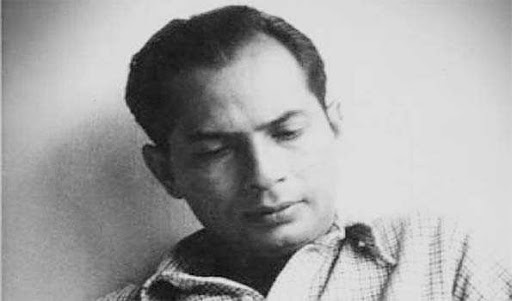
Roy’s importance to the history of Indian cinema rests not merely on individual achievements but on a structural intervention: he demonstrated, with compelling commercial and critical evidence, that films attentive to the conditions of the poor, the marginalised, and the dispossessed could command wide audiences without sacrificing artistic integrity. His Do Bigha Zamin won the International Prize at the 1954 Cannes Film Festival and was nominated for the Grand Prix de la Commission Supérieure Technique, becoming among the first Indian films to register a decisive international presence. Over a career spanning more than two decades as a director, Roy received eleven Filmfare Awards — including four for Best Film and seven for Best Director — as well as multiple National Film Award certificates of merit for films in both Hindi and Bengali.
Beyond his own directorial output, Roy functioned as the presiding intelligence of an extraordinary creative community. The workshop-like environment of Bimal Roy Productions, the company he established in Bombay (now Mumbai) in the early 1950s, nurtured talents who would themselves become defining figures of Indian cinema: the director-editor Hrishikesh Mukherjee, the screenwriter Nabendu Ghosh, the cinematographer Kamal Bose, and the lyricist-director Gulzar each passed through his studio. Roy’s influence on parallel cinema, on the development of the Indian New Wave, and on the mainstream realist tradition in Hindi film is so pervasive as to constitute, in the assessment of many scholars, a founding moment in the history of modern Indian cinema.
Roy’s films are characterised by an unflinching commitment to depicting social injustice — agrarian dispossession, caste discrimination, female imprisonment — within narratives of sustained emotional complexity. He synthesised the lyrical realism of the Bengali literary tradition with the visual grammar of Italian neo-realism, creating a hybrid aesthetic capable of engaging both the educated cinephile and the mass audience. The films he produced and directed between 1953 and 1963 constitute one of the most coherent and morally urgent bodies of work in the entirety of South Asian cinema.
Life and Early Work
Bimal Roy was born on 12 July 1909 in Suapur, in the Dhaka district of what was then the Eastern Bengal and Assam province of British India, a territory now comprising part of Bangladesh. He came from a Bengali Baidya family — a caste traditionally associated with medicine and learning — and was the sixth of his parents’ eight surviving children. The family’s material circumstances were substantially altered by his father’s early death, which deprived them of their zamindari (landed estate) and forced Bimal’s widowed mother to relocate to Calcutta with her younger children. This experience of uprooting, of the violent severance of families from their ancestral land and livelihood, would recur as a governing theme throughout his mature filmmaking career.
Roy pursued his education in Calcutta and at the University of Dhaka, where he and his contemporaries were deeply engaged with the political ferment of the independence movement. The atmosphere of nationalist struggle, with its concurrent social reform agendas and its emphasis on the dignity of common people, provided the ideological substrate that would inform his later preoccupations with class, poverty, and injustice. It was in Calcutta, however, that Roy found his vocation, entering the film industry not through the usual routes of performance or writing but through the lens of the camera.
Roy joined New Theatres Pvt. Ltd., the celebrated Calcutta-based studio that was then the centre of Bengali and Hindi filmmaking, as a camera assistant. He received his formation under the cinematographer Nitin Bose, one of the most technically accomplished practitioners in Indian cinema of the 1930s. This apprenticeship in the visual mechanics of filmmaking — the management of light, composition, and movement — gave Roy a command of the image that would remain the most distinctive feature of his directorial work. He advanced rapidly through the studio hierarchy, working as a still photographer and later as a cinematographer. His work behind the camera for P.C. Barua’s definitive Devdas (1935), starring Kundan Lal Saigal, placed him at the centre of the most significant film production of its decade.
As a cinematographer through the late 1930s and early 1940s, Roy worked on numerous productions for New Theatres, developing a visual sensibility shaped by the atmospheric chiaroscuro of the studio’s dominant aesthetic and by his own growing interest in location-based naturalism. His work on films including Mukti (1937) and Abhinetri (1940) demonstrated a mastery of monochromatic composition that he would carry into his career as a director. He married Manobina Roy in 1936, and the couple would eventually have four children.
Roy’s transition to direction came in 1944, when he made Udayer Pathey at New Theatres, a film of social conscience subsequently remade by him in Hindi as Hamrahi (1945). The film was immediately recognised as an important departure from prevailing conventions, and its treatment of working-class characters anticipates the social-realist project that would define Roy’s mature work. Ritwik Ghatak and Satyajit Ray have both been cited as filmmakers who found in Roy’s early directorial work a model for a cinema that took seriously the social dimensions of Bengali and Indian life. By the late 1940s, however, the New Theatres studio — like the Calcutta film industry more broadly — was in commercial decline, and Roy recognised that the future of the kind of cinema he wished to make lay in Bombay.
Filmmaking
In 1950, Bimal Roy made the decisive move to Bombay, taking with him a core team of collaborators whose skills would prove essential to his subsequent achievement: Hrishikesh Mukherjee as editor, Nabendu Ghosh as screenwriter, Asit Sen as assistant director, and Kamal Bose as cinematographer. Together they formed a creative unit of remarkable coherence and discipline, one whose working methods — meticulous in pre-production, attentive to performance, uncompromising in post-production craft — set them apart from the prevailing studio culture of the Bombay industry. Roy re-established himself at Bombay Talkies and released Maa in 1952, a competent commercial film that marked the beginning of the second and most fruitful phase of his career.
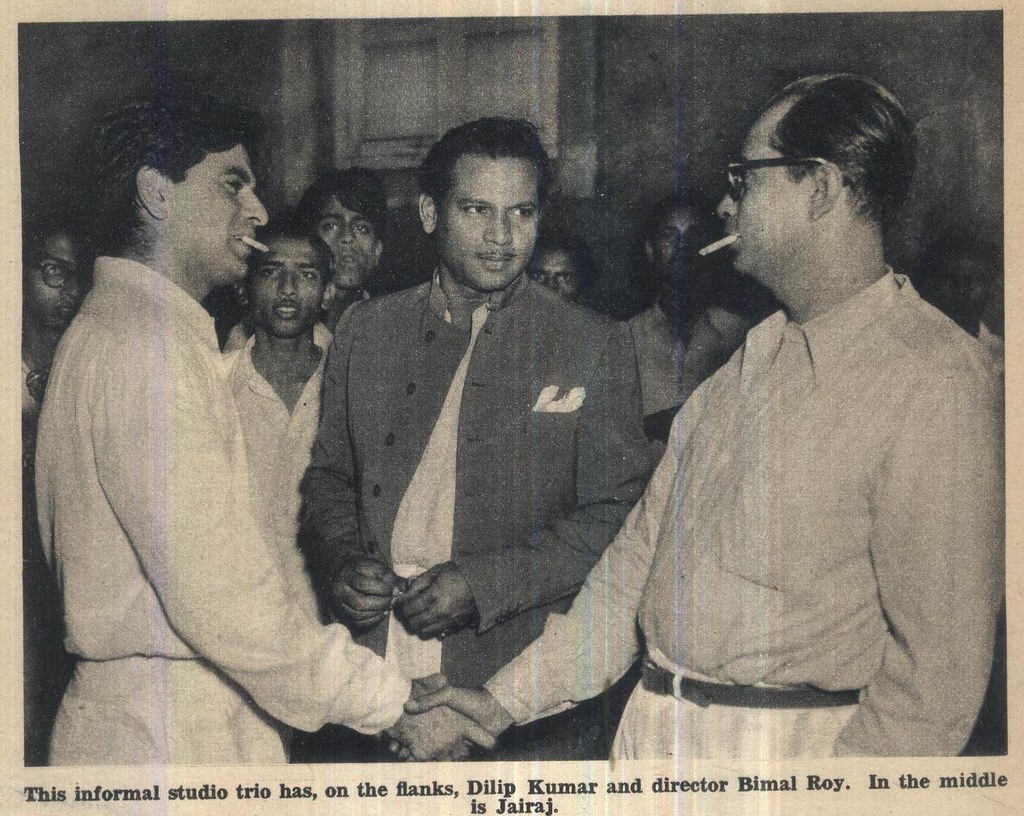
The year 1953 constituted a turning point not only in Roy’s career but in the history of Indian cinema. In rapid succession he released two films of landmark significance: Parineeta, an adaptation of Sarat Chandra Chattopadhyay’s novel that won the Filmfare Award for Best Director and confirmed Roy’s mastery of literary adaptation, and Do Bigha Zamin, the film that established his international reputation and fundamentally redefined the possibilities of popular Indian cinema. Inspired by his viewing of Vittorio De Sica’s Bicycle Thieves at the International Film Festival in Bombay in 1952, Roy conceived Do Bigha Zamin as India’s engagement with Italian neo-realism: a film shot partly on location, depicting the experiences of a debt-ridden peasant farmer who migrates to Calcutta as a rickshaw puller to prevent the loss of his ancestral two acres of land. The film won the International Prize at the 1954 Cannes Film Festival, was nominated for the Grand Prix, and received additional recognition at the Karlovy Vary Film Festival. At home, it received the National Film Award All India Certificate of Merit for Best Feature Film and both the Filmfare Award for Best Film and Best Director.
The following years saw Roy consolidate his position as the pre-eminent director in Hindi cinema. Biraj Bahu (1954), another Sarat Chandra adaptation, won Roy a third consecutive Filmfare Award for Best Director and received a National Film Award Certificate of Merit, as well as a Cannes nomination for the Palme d’Or. Naukari (1954) continued his examination of economic vulnerability. In 1955, Roy returned to the Devdas story — the narrative that had shaped his formative career as a cinematographer — directing a new adaptation with Dilip Kumar as the self-destructive protagonist and Suchitra Sen as Paro. Roy’s Devdas (1955) is widely regarded as the definitive screen version of Chattopadhyay’s tragedy, distinguished by S.D. Burman’s music and by Roy’s characteristic restraint in depicting emotional excess. The film received the National Film Award Certificate of Merit for Best Feature Film in Hindi.
Roy established Bimal Roy Productions in this period, giving him greater creative autonomy and enabling him to produce films by other directors. He produced Parivar (1956) for Asit Sen and later Kabuliwala (1961) for Hemen Gupta, extending his influence beyond his own directorial work into the broader ecology of quality Hindi cinema.
In 1958, Roy released Madhumati, a supernatural romantic melodrama with a screenplay by Ritwik Ghatak — a unique collaboration between two filmmakers otherwise separated by temperament and aesthetic — and music by Salil Chowdhury. The film, one of the earliest in Indian cinema to deal explicitly with the theme of reincarnation, was a massive commercial success, the highest-grossing film of the year, and swept the Filmfare Awards, winning nine — a record that stood for thirty-seven years. The same year, Roy directed Yahudi (1958), a historical drama demonstrating his willingness to range beyond the contemporary social realism for which he was celebrated.
The films of Roy’s final creative phase — Sujata (1959), Parakh (1960), and Bandini (1963) — are among the most formally accomplished and thematically searching works of the era. Sujata, scripted by Nabendu Ghosh and scored by S.D. Burman, addressed the practice of untouchability through the story of a low-caste girl raised in a Brahmin household. The film earned Roy a further Filmfare Award for Best Director and Best Film, was nominated for the Palme d’Or at the 1960 Cannes Film Festival, and received the National Film Award All India Certificate of Merit for Third Best Feature Film. Parakh (1960), a Salil Chowdhury-scored satire on the corrupting effects of sudden wealth in a village community, won Roy yet another Filmfare Award for Best Director.
Roy’s final masterpiece, Bandini (1963), is widely considered the culmination of his artistic achievement. Scripted by Nabendu Ghosh and featuring S.D. Burman’s score — with lyrics that marked the debut of Gulzar as a lyric-writer — the film tells the story of a woman imprisoned for murder and the moral choices she confronts upon encountering her former lover. Bandini swept the Filmfare Awards with six prizes including Best Film and Best Director, and received the National Film Award for Best Feature Film in Hindi. Roy was a member of the jury at the 1st Moscow International Film Festival in 1959, a further indication of the international regard in which he was held.
Roy died of cancer on 7 January 1966 in Bombay, at the age of fifty-six. His death was mourned across the Indian film industry as the loss of its most morally serious practitioner. He was survived by his wife Manobina Roy and four children, including his eldest daughter Rinki Bhattacharya, who has since become the primary custodian of his legacy.
The Cinema of Bimal Roy
Bimal Roy’s cinema is defined by a set of aesthetic and ethical commitments that remained consistent across the varied formal registers — neo-realist social drama, literary adaptation, supernatural melodrama, anti-casteism narrative — in which he chose to work. At its core, his filmmaking is organised around a conviction that the interior life of ordinary, marginalised, and suffering human beings constitutes the proper subject of cinema, and that the film form possesses unique capacities for rendering such interiority visible and consequential. Roy’s visual style — attentive to the expressive possibilities of shadow, landscape, and the human face — derived from his formation as a cinematographer but was refined in service of a directorial vision of unusual moral precision.
Unlike contemporaries who pursued purely formalist or literary routes into art cinema, Roy remained committed to the possibility of a popular cinema that did not compromise its moral and aesthetic seriousness. His films were box-office successes as well as critical achievements; they were accompanied by music of lasting popular appeal — the compositions of Salil Chowdhury and S.D. Burman, performed by Lata Mangeshkar, Mukesh, Talat Mahmood, and others — while simultaneously advancing an argument, implicit in every formal choice, about the obligations of a national cinema in a newly independent state. This synthesis of the popular and the purposive is Roy’s most distinctive contribution to Indian film culture.
Roy’s engagement with Italian neo-realism was not imitative but transformative. Where De Sica’s Bicycle Thieves operates in a mode of secular humanist observation largely untethered from literary tradition, Roy’s neo-realism is continuously in dialogue with the social-realist strand of Bengali fiction — Sarat Chandra, Manik Bandyopadhyay, Premendra Mitra — and with the lyrical conventions of Hindi film melodrama. The result is a cinema capable of sustaining both political analysis and emotional intensity, one in which the formal strategies of location shooting, available light, and non-theatrical performance coexist with the expressive artifice of composed music and cinematographic beauty.
Key Themes
Agrarian Dispossession and the Urban Poor. Roy’s concern with landlessness and economic displacement, rooted in his own family’s loss of zamindari after his father’s death, finds its fullest expression in Do Bigha Zamin, where the migration of a peasant family from village to city becomes an anatomy of capitalist extraction under both colonial and postcolonial conditions. The film refuses both the pastoral romanticism and the melodramatic sensationalism that characterised treatments of rural poverty in contemporaneous Hindi cinema, insisting instead on a materialist account of cause and consequence.
Caste, Untouchability, and Social Hierarchy. Roy returned repeatedly to the violence of caste discrimination, most extensively in Sujata, where the practice of untouchability is examined through the personal and familial rather than the abstractly political. His treatment of caste — avoiding polemical simplification in favour of the gradual revelation of internalised prejudice — anticipates the approach that would characterise the finest subsequent Indian films on the subject.
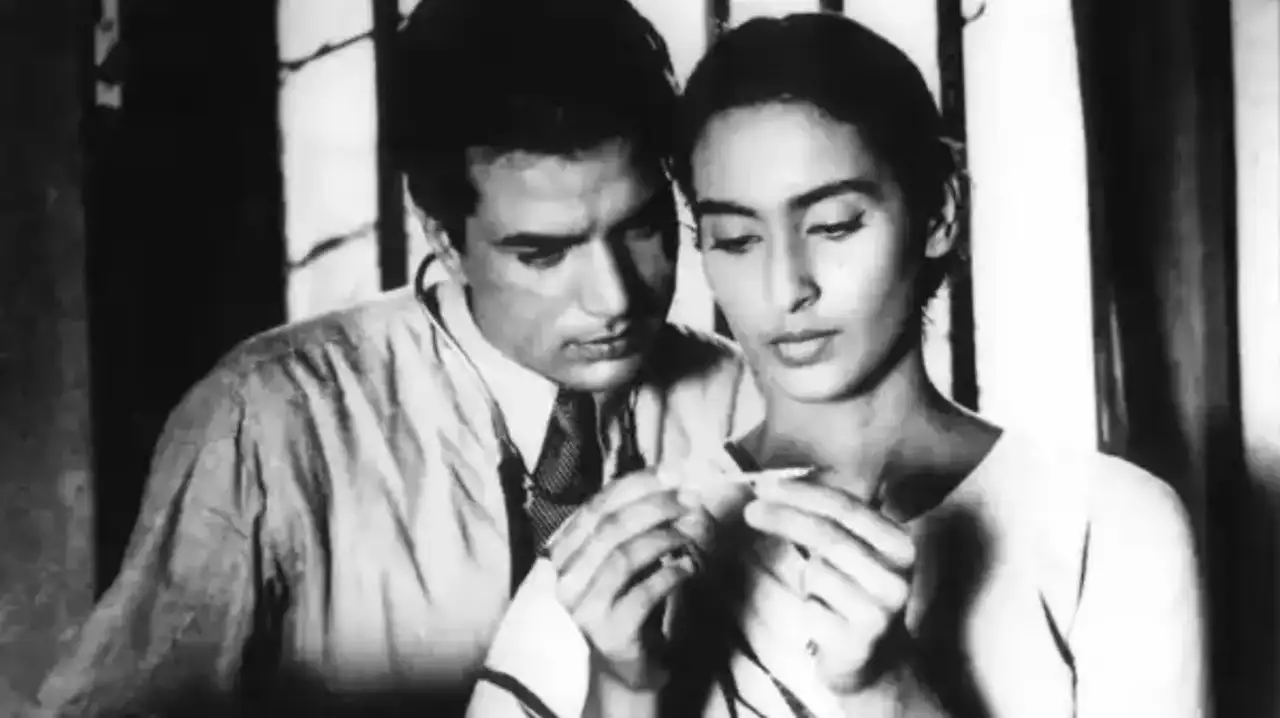
Female Subjectivity and Moral Agency. Roy’s films exhibit a consistently attentive regard for the interior experiences of women. The imprisoned protagonist of Bandini, the socially stigmatised heroine of Sujata, the divided loyalties of Paro and Chandramukhi in Devdas — each is rendered with a complexity and a moral seriousness rarely encountered in popular cinema. Roy’s sympathy for female experience was not merely thematic but formal: his camera lingers on women’s faces, on their acts of waiting and choosing, in ways that grant them an interiority often denied them in the melodramatic conventions of the period.
The Tension Between Tradition and Modernity. Many of Roy’s films dramatise the friction between inherited social structures — caste, family, feudal obligation — and the emancipatory possibilities opened by education, urbanisation, and nationalist modernity. This tension is never resolved schematically; Roy’s characteristic honesty about the costs of modernisation distinguishes his films from the more optimistic developmentalist narratives of the Nehruvian era.
Redemption, Suffering, and Moral Consequence. Roy’s moral universe is governed by a commitment to consequence: his characters suffer for their choices, and the suffering is not redemptive in any easy theological sense but illuminating — it reveals the structure of the social world that produced it. The ending of Do Bigha Zamin, in which Shambhu arrives home to find his land destroyed, is among the most unsparing conclusions in Indian cinema, its refusal of consolation constituting a formal argument in itself.
Selected Filmography
Udayer Pathey (1944)
Roy’s debut as director at New Theatres, Calcutta, adapted from a story of social conscience, marked an early engagement with the conditions of working-class life and established his resistance to theatrical artifice. The film was subsequently remade by Roy in Hindi as Hamrahi (1945), extending his realist project into the Bombay industry’s primary linguistic register.
Do Bigha Zamin (1953)
Regarded as the founding text of Indian neo-realist cinema, this film follows a debt-ridden peasant farmer, Shambhu, who travels to Calcutta as a rickshaw puller in a desperate effort to save his ancestral land from a rapacious landlord. Inspired by De Sica’s Bicycle Thieves, Roy shot extensively on the streets of Calcutta, employing a visual economy of devastating simplicity. The film won the International Prize at the 1954 Cannes Film Festival, the All India Certificate of Merit for Best Feature Film at the 1st National Film Awards, and both the Filmfare Award for Best Film and Best Director. Its critical consensus identifies it as the first Indian film to successfully bridge art cinema and popular film practice.
Devdas (1955)
Roy’s adaptation of Sarat Chandra Chattopadhyay’s canonical tale of doomed love and self-destruction, starring Dilip Kumar, Suchitra Sen, and Vyjayanthimala, is widely considered the definitive screen version of one of the most frequently adapted texts in Indian literary history. Roy’s approach subordinates the novel’s romanticism to an unsparing examination of class, gender, and the narcissism of self-destruction, while S.D. Burman’s score and the performances of the principal cast achieve a sustained emotional intensity. The film received the National Film Award Certificate of Merit for Best Feature Film in Hindi.
Madhumati (1958)
A commercial and artistic triumph that demonstrated the range of Roy’s formal capacities, Madhumati employs the conventions of supernatural romance — reincarnation, the haunted forest, vengeful return — within a narrative framework that implicates the feudal exploitation of tribal workers. Scripted by Ritwik Ghatak and scored by Salil Chowdhury, the film won nine Filmfare Awards, a record held for thirty-seven years, and was the highest-grossing film of its year. Its influence on subsequent treatments of reincarnation in Indian popular cinema has been both extensive and enduring.
Sujata (1959)
Among Roy’s most direct engagements with the social evil of untouchability, Sujata follows a low-caste girl raised in a Brahmin household, examining the internalised operations of caste prejudice with an intimacy and a structural intelligence that resist both condescension and sentimentality. The film won the Filmfare Award for Best Film and Best Director, received a National Film Award Certificate of Merit, and was nominated for the Palme d’Or at the 1960 Cannes Film Festival.
Bandini (1963)
Roy’s final completed masterpiece is a profound study of female moral agency, tracing the imprisoned Kalyani’s confrontation with her past and her choices about the future through a narrative of exceptional restraint and formal elegance. Scripted by Nabendu Ghosh and featuring the lyrical debut of Gulzar, the film received the National Film Award for Best Feature Film in Hindi, swept the Filmfare Awards with six prizes including Best Film and Best Director, and stands as the summation of Roy’s artistic project: a cinema of moral consequence, emotional truth, and formal rigour.
Legacy
Bimal Roy’s legacy in Indian cinema is simultaneously that of a practitioner and of an institution. As a practitioner, he produced, across a working career of approximately two decades, a body of directorial work that set the terms for what a socially responsible popular cinema might look like in postcolonial India. As an institution, Bimal Roy Productions functioned as the most productive training ground of the post-independence period, incubating a generation of filmmakers, editors, writers, and lyricists — among them Hrishikesh Mukherjee, Asit Sen, Gulzar, Salil Chowdhury, Nabendu Ghosh, and Basu Bhattacharya — whose collective contribution to Hindi cinema over the succeeding three decades was immeasurable.
The influence of Do Bigha Zamin on the emergence of parallel cinema and the Indian New Wave is widely acknowledged by film historians. Satyajit Ray and Ritwik Ghatak, who were formulating their own cinematic projects in Calcutta in the early 1950s, recognised in Roy’s synthesis of literary realism and neo-realist technique a model for a specifically Indian art cinema, one that drew on indigenous narrative traditions without surrendering to their commercial degradations. The ideological current initiated by Roy — a cinema of and about the poor, made without condescension — flows through the entirety of subsequent Indian parallel cinema, from Shyam Benegal’s agrarian dramas to the social realism of Adoor Gopalakrishnan and beyond.
Within mainstream Hindi cinema, Roy’s formal innovations — his privileging of performance over spectacle, his use of exterior locations, his integration of music as expressive content rather than mere entertainment — were absorbed into the grammar of a broader tradition. His work with actors of the stature of Dilip Kumar, Balraj Sahni, Nutan, and Meena Kumari helped to establish standards of naturalistic screen performance that distinguished the best Hindi films of the 1950s and 1960s. His collaborations with Salil Chowdhury and S.D. Burman produced soundtracks of enduring cultural currency, songs that remain among the most beloved in the popular Hindi repertoire.
Roy received numerous formal honours during his lifetime, including eleven Filmfare Awards and multiple National Film Award certificates of merit. His film Bandini received the National Film Award for Best Feature Film in Hindi at the 11th National Film Awards; Madhumati received the President’s Silver Medal at the 6th National Film Awards; and Do Bigha Zamin received the All India Certificate of Merit at the inaugural 1st National Film Awards. In 2025, he was posthumously honoured with the Filmfare Cine Icon Award for his enduring legacy in Hindi cinema. India Post issued a commemorative postage stamp in his honour on 8 January 2007. The Bimal Roy Memorial Trophy has been awarded annually since 1997 by the Bimal Roy Memorial and Film Society, recognising both established artists and emerging filmmakers.
The continuing vitality of Roy’s reputation is evidenced by the ongoing restoration of his films. In 2025, the Criterion Collection and Janus Films, in collaboration with the Film Heritage Foundation, restored Do Bigha Zamin, with the restored print premiering at the Venice Film Festival — over seven decades after the film’s original Cannes triumph. This restoration confirms Roy’s place not merely in the national canon of Indian cinema but in the global history of the medium. His films continue to be screened at major international festivals and retrospectives, engaging new audiences with the clarity and moral urgency of a vision that remains, more than sixty years after his death, indispensable to any serious understanding of what cinema has been capable of achieving.
In the assessment of Shyam Benegal, who acknowledged Roy as a decisive influence on his own practice, Roy possessed the rare capacity to make the personal universal and the political intimate — to situate the largest social forces of his era within the smallest acts of individual choice and suffering. It is this capacity, as much as any individual formal achievement, that constitutes his enduring claim on the attention of cinema’s historians and practitioners alike.