
Naseeruddin Shah
- Role
- Actor
- Acted in
- English, Hindi
- Born
- 20 July 1950Barabanki
- On Art House Cinema
- 14 films ↓


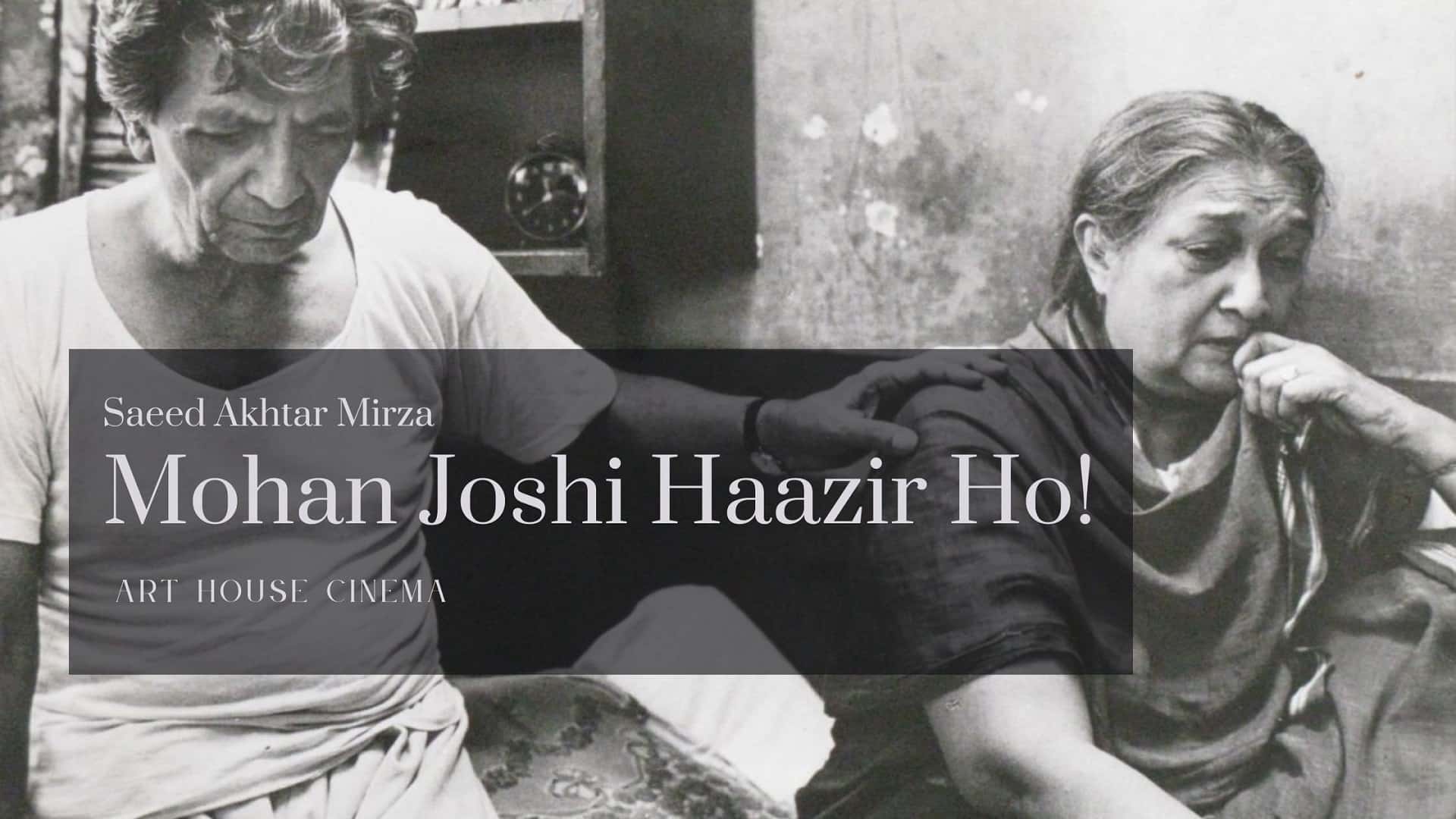
Naseeruddin Shah was born on 20 July 1950 in Barabanki, Uttar Pradesh. He trained at the National School of Drama in Delhi and then at the Film and Television Institute of India in Pune, and his first major screen part came in Shyam Benegal's Nishant (1975). Over the next decade he became one of the faces of Hindi parallel cinema. He worked for Benegal, Govind Nihalani, Sai Paranjpye, Saeed Mirza, Goutam Ghose and Ketan Mehta, usually on small budgets and often beside Shabana Azmi, Smita Patil and Om Puri.
He has won the National Film Award for Best Actor twice, for Sparsh (1980) and Paar (1984), and Paar also brought him the Volpi Cup for Best Actor at the Venice Film Festival in 1984. A third National Film Award, this time for Best Supporting Actor, came for Iqbal (2005). He received the Padma Shri in 1987 and the Padma Bhushan in 2003.
He has never left the stage. Since 1979 he has acted in and directed plays for Motley, the theatre company he runs with Benjamin Gilani, and his memoir, And Then One Day, was published in 2014.
Life and Early Work
His parents were Aley Mohammed and Farrukh Sultan. His elder brother, Zameer Uddin Shah, rose to lieutenant general, served as Deputy Chief of the Army Staff and was later Vice-Chancellor of Aligarh Muslim University. Naseeruddin was sent away to boarding school. He studied at St Anselm's in Ajmer and then at St Joseph's College in Nainital. In the memoir those years are mostly films, cricket and school plays.
He took an arts degree at Aligarh Muslim University in 1971 and went on to the National School of Drama, then run by Ebrahim Alkazi. The memoir reveres Alkazi but weighs his flaws too. It also pays tribute to the English actor Geoffrey Kendal.
From Delhi he went to the acting course at FTII in Pune. By his own account, he realised there how little he had learned so far, and he began to work on the craft for the first time. Om Puri, a fellow NSD student, followed him there at his urging.
Shah married young, and his daughter Heeba was born from that first marriage. In 1982 he married the actress Ratna Pathak, and their sons, Imaad and Vivaan, are actors too.
On Stage and Screen
The first break came through Girish Karnad, who was then the director of FTII. In the memoir Shah writes that Karnad mentioned him to Shyam Benegal, who was casting his second feature at the time. That film was Nishant. Shah played Vishwam, the youngest brother of a feudal landlord in Telangana in 1945, with Smita Patil as his wife Rukmani. The film competed for the Palme d'Or at Cannes in 1976.
Benegal kept him on. In Manthan (1976), a film about a milk cooperative that was paid for by some 500,000 farmers at two rupees each, he played Bhola, a Dalit villager full of anger at the upper-caste sarpanch. He also acted in Benegal's Bhumika and Junoon.
The year 1980 brought two films that set his reputation. Sai Paranjpye's Sparsh, which waited almost four years for release, cast him as the blind principal of a school for blind children. Govind Nihalani's first feature, Aakrosh, cast him as a young lawyer. He won the National Film Award for the first and the Filmfare award for Best Actor for the second.
From then on he moved between both kinds of Hindi cinema. He won Filmfare's Best Actor award again for Rabindra Dharmaraj's Chakra (1981), as the slum tough Looka, and for Shekhar Kapur's Masoom (1983). Kundan Shah's Jaane Bhi Do Yaaro (1983), a farce the National Film Development Corporation made for 8 to 9 lakh rupees, was restored and re-released in 2012. Goutam Ghose's Paar (1984) took him to Venice, and Ketan Mehta's Mirch Masala (1987) set him against Smita Patil. He also played commercial leads in films such as Karma (1986) and Tridev (1989), and he was the poet in Gulzar's Doordarshan serial Mirza Ghalib (1988).
On stage, Motley's first production was Samuel Beckett's Waiting for Godot. It opened at the newly built Prithvi Theatre in Bombay on 29 July 1979, under the banner of Om Puri's group Majma because the new company did not yet have a name. Shah, Gilani and Tom Alter were in the cast. From 2000 the company added Hindustani plays to its English repertoire, and Shah has directed stage versions of stories by Ismat Chughtai and Saadat Hasan Manto.
Later screen work went wider still. He played Mahatma Gandhi in Kamal Haasan's Hey Ram (2000) and Captain Nemo in the Hollywood film The League of Extraordinary Gentlemen (2003). For Nagesh Kukunoor's Iqbal (2005) he played a drunk former cricketer who coaches a village boy. He directed his first feature, Yun Hota Toh Kya Hota, in 2006, and he has acted in Pakistani cinema too, in Khuda Ke Liye.
The Art of Naseeruddin Shah
Signature Roles
Sparsh (1980). Anirudh Parmar is the blind principal of Navjivan Andhvidyalay, a school for blind children. He wants help for his pupils, not pity. Shabana Azmi played Kavita, a young widow who comes to volunteer at the school. The part won Shah his first National Film Award for Best Actor, and the film won Best Feature Film in Hindi.
Aakrosh (1980). Bhaskar Kulkarni is the young lawyer assigned to defend Lahanya Bhiku, a labourer played by Om Puri, who has been framed by the foreman who raped his wife. Vijay Tendulkar wrote the script from a reported case. Amrish Puri played the public prosecutor, Dusane. Shah's lawyer is an outsider who learns how the courts and the local bosses work together.
Jaane Bhi Do Yaaro (1983). Vinod Chopra is one of two struggling photographers, with Ravi Baswani as his partner Sudhir Mishra. It was a farce, and a cheap one. Kundan Shah won the Indira Gandhi Award for Best Debut Film of a Director for it.
Paar (1984). Naurangia is a labourer from rural Bihar who flees to Calcutta with his pregnant wife Rama, played by Shabana Azmi, after he kills the landlord's brother. To earn their fare home, the couple agree to drive a herd of pigs across the Ganga, and they nearly drown. Shah went on a high-protein diet, lost a lot of weight and studied the bodies and gestures of rural labourers. He won the Volpi Cup at Venice and his second National Film Award.
Mirch Masala (1987). The Subedar is an arrogant tax collector. His men terrorise a village in the early 1940s. When Sonbai, played by Smita Patil, slaps him, she takes shelter in a spice factory guarded by Om Puri's old gatekeeper, Abu Mian. In the last scene the women of the factory attack the Subedar with bags of chilli powder and leave him on his knees.
Craft
Two schools. Shah came to film with formal training behind him. At NSD he learned the stage under Alkazi, and at FTII, he writes, he first saw that acting was a craft a person could work at. The weight he lost for Paar, and the time he spent watching labourers move, came out of that training.
Against tears. He has said that in India "crying is mistaken for good acting", and he has complained that he was typecast as a serious actor too early. In 1983 alone he played the married father of Masoom and the hapless photographer of Jaane Bhi Do Yaaro.
The stage as home. Motley has kept him in front of live audiences for more than four decades. The company grooms young actors, and his children Heeba, Imaad and Vivaan have each directed plays for it.
Selected Filmography
Nishant (1975)
As Vishwam. The youngest of the landlord's brothers in Shyam Benegal's film about a feudal village in Telangana in 1945.
Manthan (1976)
As Bhola. A Dalit villager in Benegal's film about a dairy cooperative, paid for by some 500,000 farmers.
Sparsh (1980)
As Anirudh Parmar. Sai Paranjpye's film about a blind school principal won the National Film Award for Best Feature Film in Hindi.
Aakrosh (1980)
As Bhaskar Kulkarni. Govind Nihalani's first feature, written by Vijay Tendulkar, won the National Film Award for Best Feature Film in Hindi.
Masoom (1983)
As D. K. Malhotra. A married father learns he has a son from an old affair in Shekhar Kapur's first film, adapted from Erich Segal's novel Man, Woman and Child.
Paar (1984)
As Naurangia. Goutam Ghose adapted the film from a Bengali short story by Samaresh Basu, and Shabana Azmi also won a National Film Award for it.
Mirch Masala (1987)
As the Subedar. Ketan Mehta's film about a village siege won the National Film Award for Best Feature Film in Hindi.
Iqbal (2005)
As Mohit Mishra. A former cricketer turned drunk coaches the boy at the centre of Nagesh Kukunoor's film, and Shah won the National Film Award for Best Supporting Actor.
Legacy
The honours came from both stage and screen. The Sangeet Natak Akademi gave Shah its award in 2000, three years before the Padma Bhushan, and his three National Film Awards span three decades.
Motley is the clearest part of what he has built. His children grew up inside it as actors and directors.
The memoir is the other record. And Then One Day ends with the founding of Motley, and it gives a candid account of his first marriage and a closing reconciliation with his father. Shah has said there will be no second part.


