
Films with Deepti Naval on Art House Cinema
Deepti Naval was born on 3 February 1952 in Amritsar. She has acted in Hindi films since the late 1970s, and she also paints, takes photographs, writes poetry and has directed a feature film. Her first lead part came in Vinod Pande's Ek Baar Phir (1980), a Hindi film shot in England, and within three years she had worked twice for Sai Paranjpye.

Her strongest work is in small films about women hemmed in by the decisions of men. She played the tribal woman bought by a journalist in Kamla (1984) and the headman's wife in Ketan Mehta's Mirch Masala (1987). She won Best Actress at the New York Indian Film Festival in 2013 for Listen... Amaya.
Life and Early Work
Her father, Uday Chandra Naval, was a professor and head of the English department at Hindu College, Amritsar, and her mother, Himadri, who grew up in Burma, was a teacher and a painter. Deepti went to Sacred Heart Convent in the walled city and trained in Kathak. She told the magazine Khabar that she decided at 11 that she wanted to act. At 13 she ran away from home.
In 1971 her father took a teaching post at the City University of New York, and the family moved to America. She took a bachelor's degree in fine arts at Hunter College, with painting as her major. Amritsar had shown her little beyond commercial Hindi films. In New York she heard about Shyam Benegal's Ankur and Nishant and saw his Bhumika. She met its star, Smita Patil, there too.
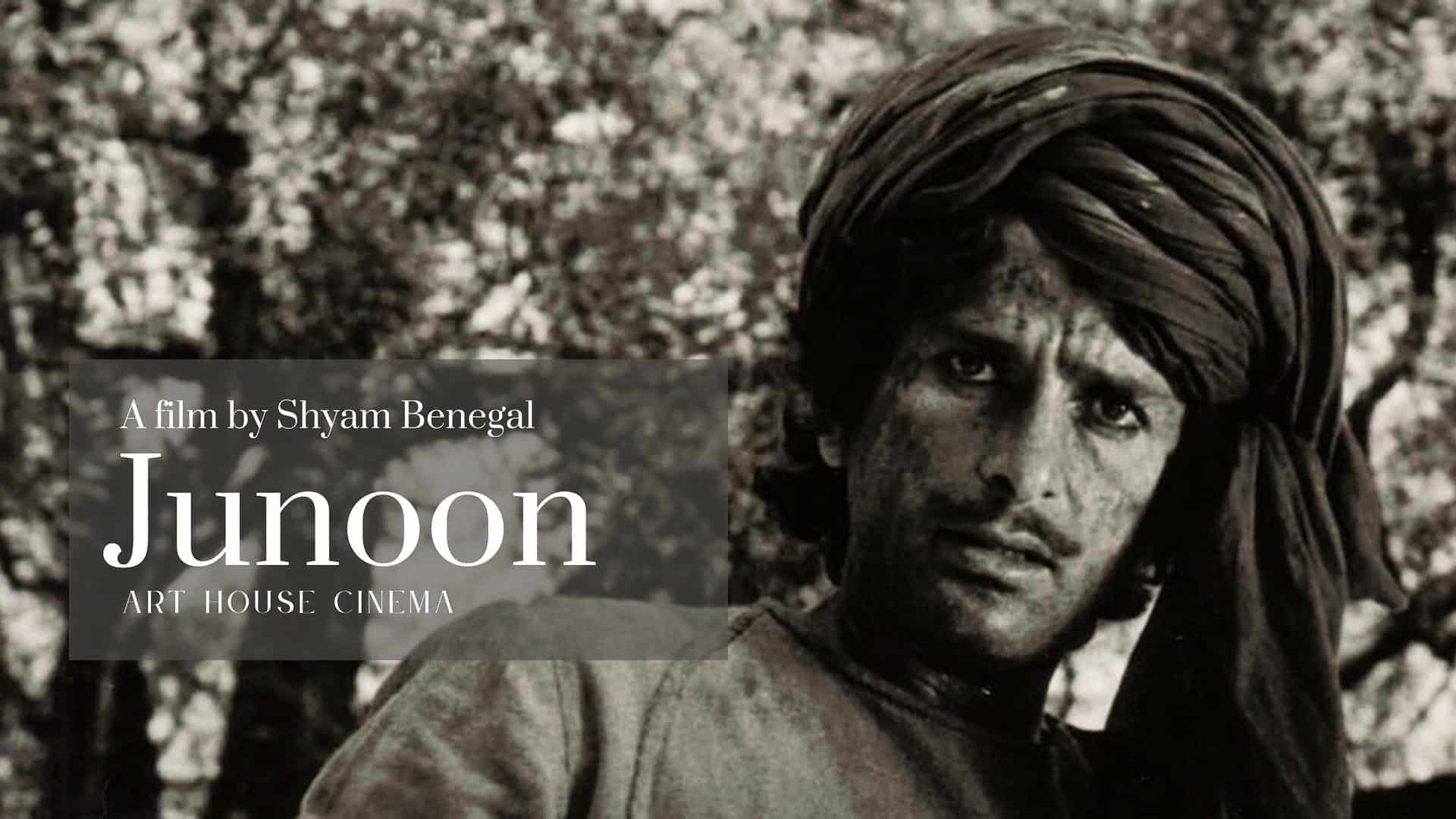
She then went to Bombay on her own and told Benegal she wanted to start her career with him. He had already cast Junoon (1978), but he called her to the Lucknow shoot for a small part. The work took four or five days. She stayed about three months because Benegal wanted her to watch trained actors at work. In a 2024 interview with The Week she called Naseeruddin Shah's preparation for each scene "quite an eye-opener".
On Stage and Screen
The first lead came from Vinod Pande, a director who lived in London. Ek Baar Phir was the first Indian-language feature made in England, and it opened in London in July 1979 and in India the following March. Naval played Kalpana, the neglected wife of a film star, who falls for a poor art student and leaves her husband. The journalist Avijit Ghosh later chose it for his book 40 Retakes as a film that backed a woman's right to leave a failed marriage.
Sai Paranjpye's Chashme Buddoor (1981) made her widely known. Raman Kumar's Saath Saath (1982) followed, and Paranjpye cast her again in Katha as Sandhya, a girl in a Bombay chawl courted by two different men. Farooq Shaikh was her co-star in all three. In 1985 she married the director Prakash Jha.
Her serious work came from directors outside the studio system, several of them backed by the National Film Development Corporation. Jagmohan Mundhra's Kamla, from Vijay Tendulkar's play, gave her the title role. The NFDC produced Mirch Masala, and with Doordarshan it made Sudhir Mishra's Main Zinda Hoon (1988), which won the National Film Award for Best Film on Social Issues. In Punjabi she played Bhani in Surinder Singh's Marhi Da Deeva (1989).
In 1995 she wrote, directed and acted in Thoda Sa Aasmaan, a 14-part serial for Doordarshan, and produced a travel series for Star TV. She and Jha adopted a daughter, Disha, and they divorced in 2002. Her partner, the singer Vinod Pandit, died in 2001.
Her later roles were mostly mothers and widows. In Nandita Das's Firaaq (2008), set after the 2002 violence in Gujarat, she played a Hindu housewife. She directed her own feature, Do Paise Ki Dhoop, Chaar Aane Ki Baarish, with Manisha Koirala and Rajit Kapur; its script won Best Screenplay at the New York Indian Film Festival in 2009, and the film reached Netflix in 2019. Her first stage role came in 2015, when she played the poet Amrita Pritam in Ek Mulaqaat, opposite Shekhar Suman as Sahir Ludhianvi.
The Art of Deepti Naval
Signature Roles
Ek Baar Phir (1980). Kalpana marries the star Mahender Kumar (Suresh Oberoi). He has no time for her. In London she meets Vimal (Pradeep Verma), an art student who sketches people, and guilt over their affair sends her back to her husband before she finally leaves him. TV & Video World, profiling her in August 1985, described Kalpana as the sensitive, docile wife of a brash superstar.
Chashme Buddoor (1981). Neha Rajan is the girl next door to three Delhi students. She rings their bell selling Chamko washing powder, and the shy Siddharth (Farooq Shaikh) answers. His two flatmates spread lies about her and wreck the romance for a while. Audiences started calling her Miss Chamko. She later told Khabar that she was never trying to be funny, and she played Neha straight.
Kamla (1984). Kamla is a Bhil woman bought in a village in Madhya Pradesh by Jaisingh Jadhav (Marc Zuber), a Delhi journalist who wants her as evidence of the trade. Tendulkar's 1981 play drew on a real case: Ashwini Sarin of The Indian Express had bought a woman in Dholpur, Rajasthan, and shown her to the press. In Jadhav's house Kamla meets his wife Sarita (Shabana Azmi). The 1985 TV & Video World profile said Naval carried this deglamourised part with her face and eyes and took the film from Azmi.
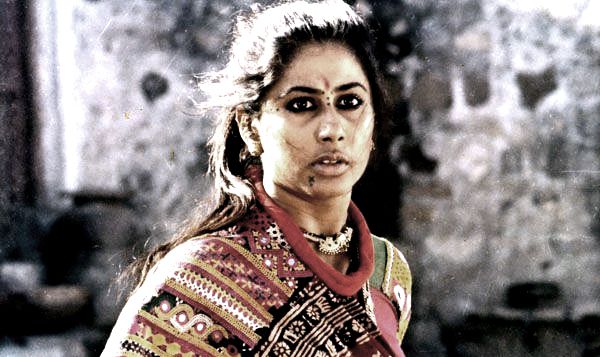
Mirch Masala (1987). Saraswati is the wife of the Mukhi (Suresh Oberoi), a village headman who is seldom home. The schoolmaster (Benjamin Gilani) persuades her to enrol their only daughter in school, and the other women mock her for it. The Mukhi pulls the girl out and beats his wife for defying him. Naval has only a handful of scenes beside Smita Patil's Sonbai.
Memories in March (2010). Arati Mishra is a divorced mother from Delhi whose son Siddhartha dies in a road accident in Kolkata. At his office she blames his colleagues for his death. Then she finds the part of his life he had kept from her, his love for his colleague Ornob (Rituparno Ghosh), and Naval takes Arati from accusation to acceptance. The part won her Best Actress at the ImagineIndia Film Festival in Madrid in 2012.
Craft
Watching first. Naval came to the screen without formal acting training. On the Junoon set she spent three months watching Shah, Shabana Azmi, Jennifer Kendal and Shashi Kapoor at work. She told The Week that Benegal redefined for her what acting meant, and that she learned there how much hard work it took.
From the inside. She has said she takes a character in so fully that it comes out of her without being put on. For Goldfish she drew on her own mother's dementia, but only for the last three scenes, and imagined the rest without copying her.
The painter's training. Her first solo show, Reflections, was at the Jehangir Art Gallery in Bombay, and one self-portrait, Contradiction, shows her as a pregnant nun. She has also shown photographs of Ladakh in winter as In Search of Another Sky, in India and at the Nehru Centre in London.
Selected Filmography
Saath Saath (1982)
As Geetanjali Gupta. A mill owner's daughter, she leaves her father's house to marry an idealistic student writer (Farooq Shaikh) and keeps the household going by teaching and private tuition. When he turns into a hard-nosed businessman, she walks out.
Main Zinda Hoon (1988)
As Beena. A village woman marries into a middle-class city family, and her husband leaves soon after the wedding. She takes a job to support his family and falls for a colleague just as the husband comes back.
Marhi Da Deeva (1989)
As Bhani. Surinder Singh's Punjabi film is adapted from Gurdial Singh's 1964 novel, with Raj Babbar as Jagsa, and it won the National Film Award for Best Feature Film in Punjabi.
Firaaq (2008)
As Aarti. She is a Hindu housewife married to Sanjay (Paresh Rawal) who cannot forget that she did not help a Muslim woman chased by a mob, and a Muslim orphan, Mohsin, gives her a way to make amends.
Listen... Amaya (2013)
As Leela Krishnamoorthy. A widow who runs a library cafe in Delhi, she grows close to a widowed photographer (Farooq Shaikh), and her daughter Amaya (Swara Bhaskar) cannot accept it.
Goldfish (2023)
As Sadhana. In Pushan Kripalani's film her daughter Anamika (Kalki Koechlin) returns to the family home after Sadhana is diagnosed with dementia, and the two have to live with years of bad feeling between them.
Legacy
In 2007 the Indian Film Festival of Los Angeles named Naval its Tribute Honoree. The evening on 19 April screened three of her films from the 1980s, among them Kamla and Main Zinda Hoon.
Her books run alongside the films. Lamha Lamha is a collection of poems in Hindi and Urdu. Black Wind and Other Poems (2004) includes poems written while she observed a hospital's mental ward, and The Mad Tibetan (2011) is a book of short stories. Her memoir, A Country Called Childhood (2022), returns to Amritsar. Its cover is a painting by her mother of the dome of the Khairuddin Masjid beside Chandrawali house, where the family lived and which has since been demolished.
In her films of the 1980s she is often the person with the least power in the room. Kamla is bought like goods. Four decades later she was still taking parts of that kind, though the women had grown older. Sadhana in Goldfish is losing her memory, and the house is full of old grievances.


