Mrinal Sen
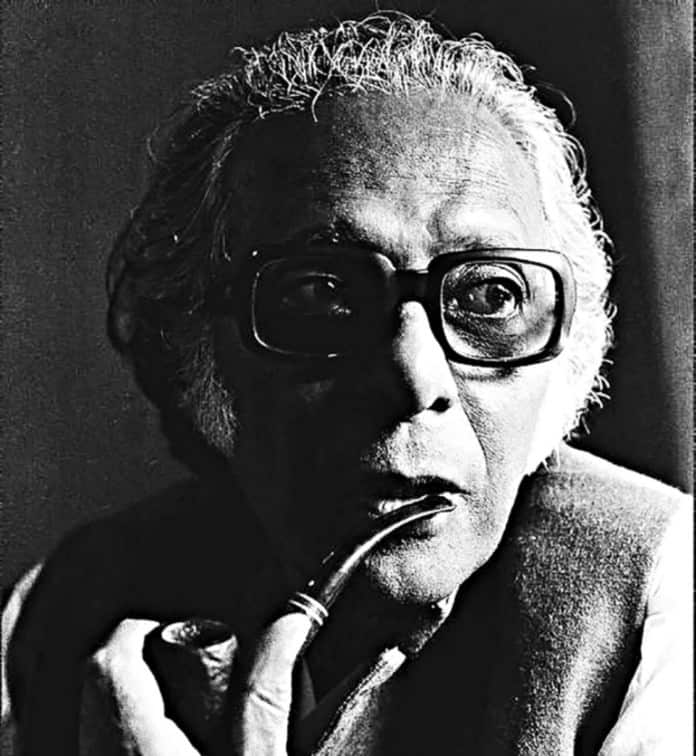
Mrinal Sen (1923-2018) was a celebrated Indian film director who made films primarily in Bengali and Hindi. He is considered as one of the pioneers of the New Wave Cinema in India, sitting in the august company of the likes of Satyajit Ray, Ritwik Ghatak, and Tapan Sinha. His films had deep political undertones, reflecting the socio-political turbulence of his time, and showed a remarkable Communist influence in line with his own political leanings. His most remarkable work is around the city of Calcutta, especially the Calcutta trilogy where he explored the people, social fabric, value system, and struggles of the city.
Mrinal Sen received as many as 18 National Film Awards, besides the Dadasaheb Phalke Award, a remarkable feat for a filmmaker. He was awarded Padma Bhushan, India’s third-highest civilian honor, by the Government of India. The Government of France awarded him the Ordre des Arts er des Lettres, while Russia conferred the Order of Friendship upon him. His films won awards at major film festivals, including Cannes, Venice, and Berlin film festivals. He is considered among the greatest filmmakers in the world.
Life and Early Work
Mrinal Sen was born on 14 May 1923 in Faridpur, a town in the district of the same name in East Bengal, now part of Bangladesh. His father, Dineshchandra Sen, was a lawyer of some local prominence who was sympathetic to the Indian independence movement and who opened his home to freedom fighters associated with the Indian National Congress. This early exposure to political commitment — to the sense that the educated Bengali intelligentsia bore a civic and moral responsibility to the world beyond its domestic circumstances — exerted a lasting influence on the young Mrinal and ultimately shaped the particular quality of his engagement with public life.
After completing his secondary schooling in Faridpur, Sen relocated to Calcutta to pursue higher education, enrolling at Scottish Church College — affiliated with the University of Calcutta — where he began studies in physics in the early 1940s. He did not complete his degree; his attentions were increasingly drawn to the political and cultural ferment that characterised Calcutta during this period. The Bengal famine of 1943, which devastated the city and the surrounding region, was a formative experience that Sen would later describe as permanently shaping his understanding of the relationship between poverty, power, and institutional indifference — an understanding that would permeate his most important films.
During his years in Calcutta, Sen became closely associated with the Indian People’s Theatre Association (IPTA), the influential cultural organisation that served as the artistic wing of the Communist Party of India. Between approximately 1943 and 1947, he engaged with IPTA’s network of writers, musicians, theatre practitioners, and visual artists — an association that introduced him to Marxist critical frameworks and to a generation of progressive intellectuals who would shape the contours of Indian cultural life for decades. Through this immersion, Sen developed what he later described as a form of personal Marxism: a non-dogmatic, humanistic commitment to understanding social reality through the lens of class conflict and material inequality, a commitment that would animate his filmmaking throughout his career, even though he never formally joined the Communist Party.
Following his departure from college, Sen supported himself through a series of occupations, working for a period as a medical representative — a peripatetic existence that prevented sustained engagement with any single cultural milieu. It was his subsequent employment as a sound technician at a Calcutta film studio that provided his first sustained exposure to the practical mechanics of cinema. During this period, Sen also read extensively in film criticism and theory, acquainting himself with the writings of Sergei Eisenstein, V.I. Pudovkin, and the emerging theories of cinematic montage that were beginning to circulate in Indian intellectual circles. In 1953, he married Geeta Shome, an actress who appeared in several of his films and who remained his companion until her death in 2017. The couple had one son, Kunal Sen.
Filmmaking
Bhuvan Shome was a commercial and critical success, bringing Mrinal Sen into the limelight. His next few films were directly political, woven in and around Calcutta. He went to make Padatik (1971), Calcutta (1972), and Padatik (1973), films that made his famous Calcutta trilogy. This was followed by Chorus (1974), considered as one of the most experimental films, almost Godardian, ever made in India. A social satire made in a style reminiscent of Fellini, it deviated from all the conventions that were prevalent in that era, showcasing his confidence with the medium.
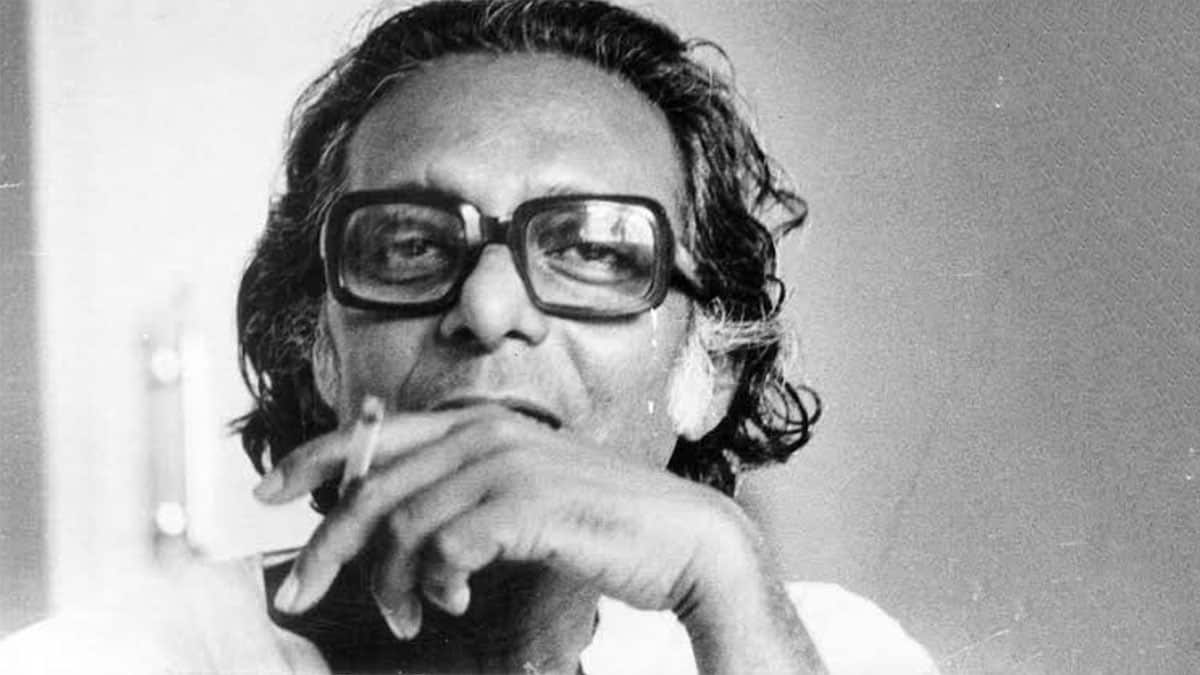
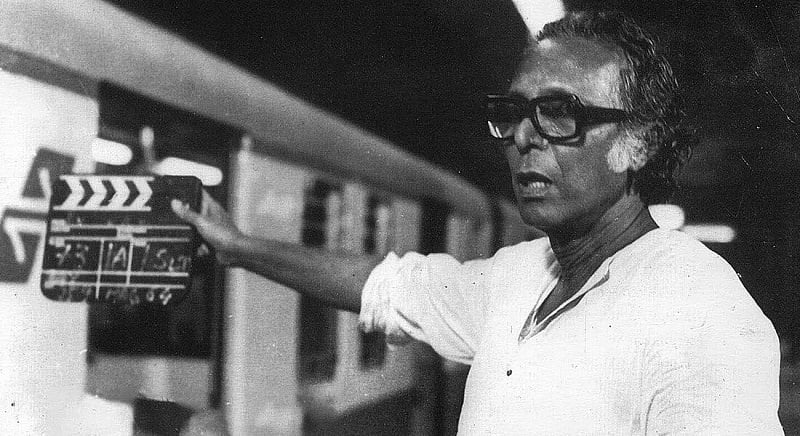
Post Chorus, Mrinal Sen turned inwards, creating memorable cinema that was deeply reflective and underlined his position as one of India’s finest filmmakers. These films included Kharji (1982), Khandahar (1983), Ek Din Achanak (1983), and Genesis (1986).
He never stopped experimenting with the medium, slowly moving away from the narrative structure and work on very thin storylines. His last film, Aamar Bhuban (2003) came after a long gap when he was 80 years old. In 2005 he was awarded the Dadasaheb Phalke Award, the highest honor given to a filmmaker in India.
In 2004, Mrinal Sen’s autobiography ‘Always Being Born’ was published, perhaps his last work before signing off from active public life.
The Cinema of Mrinal Sen
While the earlier films of Mrinal Sen were borne out of some of his earlier visceral experiences, most notably the death and cremation of Rabindranath Tagore, he slowly evolved into making cinema that was directly political. In what came to be known as the Calcutta trilogy, Sen used cinema to hold a mirror to the Bengal of that time, a faded shadow of its former glory, fraught with unemployment and restlessness. He portrayed the youth unrest, urban violence, and turbulence of the Naxal movement that was growing in Bengal, along with all its brutality.
In his later films, Sen decided to let go of any fondness for romanticism and chose the portrayal of stark reality, pushing the “syntax” of Indian Cinema further. Though his films were totally immersed in the politics of the era, they did not lose themselves in it. Sen never shied away from questioning the status quo, most vividly evident from Padatik. He reveled in being an iconoclastic rebel and refused to become the flagbearer of any ideology.
Mrinal Sen’s cinema occupies a distinctive position within the Indian artistic tradition in that it is simultaneously the most politically explicit and the most formally self-conscious body of work produced by the New Wave generation. Where Satyajit Ray approached cinema as a humanist art devoted to the illumination of individual consciousness within social circumstance, and where Ritwik Ghatak worked through myth and memory to access historical trauma, Sen addressed the political present with a directness that drew equally on Marxist critical analysis and the formal innovations of the European art cinema — particularly Jean-Luc Godard’s experiments with narrative fragmentation, didactic interruption, and the problematisation of cinematic illusion itself.
What distinguished Sen’s formal sensibility was his conviction that cinema must not merely represent reality but must also interrogate its own capacity to do so. This produced films in which the conventions of classical narrative are consistently disrupted: characters address the camera directly, historical argument is presented as text on screen, the relationship between image and sound is rendered self-conscious, and the documentary and the fictional are allowed to contaminate each other in ways that unsettle any stable sense of what kind of representation the film is offering. This approach is most fully realised in Akaler Sandhane, where the film’s meta-fictional structure becomes itself the argument: a cinema that pretends to reconstruct the past without implication in the present is a cinema of bad faith.
Sen’s political concerns were consistent across his career, even as his films grew progressively less agitational and more contemplative. His fundamental subject was the structure of indifference — the mechanisms by which middle-class Indian society organised itself to remain blind to the poverty, exploitation, and suffering that constituted the underside of its prosperity. This concern expressed itself across multiple registers: the bureaucratic pathology of Bhuvan Shome, the domestic cruelty of Kharij, the historical amnesia exposed in Akaler Sandhane, the ideological contradictions interrogated in Padatik. What unified these apparently disparate materials was Sen’s insistence that moral failure was not primarily personal but structural — that it was produced by social arrangements and could not be addressed through individual goodwill alone.
Key Themes
Political Urgency and Social Critique. Sen’s cinema was never politically neutral. From the bureaucratic satire of Bhuvan Shome to the class analysis embedded in Kharij and Akaler Sandhane, his films consistently exposed the mechanisms by which inequality is produced, normalised, and sustained within post-independence Indian society.
Formal Self-Consciousness. Drawing on Godard’s New Wave experiments and Brechtian theatrical techniques, Sen consistently interrupted narrative transparency to compel his audience into critical reflection. Jump cuts, direct address, intertitles, and meta-cinematic devices served not as stylistic affectation but as political instruments, designed to prevent passive spectatorship.
The Middle Class as Moral Subject. Across his career, Sen returned repeatedly to the Bengali middle class as both his audience and his critical subject — examining its complicities, its self-deceptions, its retreat from political responsibility, and its structural implication in the exploitation it professed to deplore.
Gender and Domestic Confinement. Films such as Ek Din Pratidin and Kharij place female experience at the centre of their social analyses. The household becomes the site where broader social contradictions — around class, labour, and patriarchal authority — are most acutely and personally experienced by those with the least power to resist them.
The Persistence of History. Sen was deeply preoccupied with the question of how the past inhabits the present. Akaler Sandhane most explicitly addresses this concern, but it animates the historical settings of Mrigayaa, the famine references of Calcutta 71, and the contemplative retrospection of his later work.
Poverty, Labour, and Institutional Violence. The structural conditions that produce and reproduce poverty — colonialism, caste, class, the indifference of the state — formed Sen’s consistent concern. He was drawn repeatedly to stories in which the most vulnerable — tribal communities, domestic servants, rural workers — were exposed to institutional and social violence that those with power could afford to overlook.
Selected Filmography
Bhuvan Shome (1969)
Sen’s breakthrough Hindi-language film and the acknowledged inauguration of the Indian New Wave. The story of a railway official whose rigid authoritarianism is confounded by an encounter with rural Gujarat, the film deployed formal innovations — animation, jump cuts, direct address — that entirely disrupted the conventions of popular Hindi cinema. Winner of the National Film Awards for Best Film and Best Direction.
Interview (1971)
The first film of the Calcutta Trilogy, following a young man’s comic-tragic quest for a Western suit required for a job interview. A precise and quietly damning exposure of colonial persistence within post-independence middle-class aspiration.
Calcutta 71 (1972)
A formally radical anthology film presenting four episodes set across different historical periods to argue for the structural permanence of poverty in Calcutta. One of the most explicitly Marxist formal experiments in the history of Indian cinema.
Padatik (1973)
The culmination of the Calcutta Trilogy, examining the contradictions of Naxalite revolutionary ideology through the encounter between a fugitive militant and a bourgeois woman. Winner of the National Film Award for Best Screenplay.
Mrigayaa (1976)
A colonial-era Hindi film set in a tribal community, examining the systematic exploitation of indigenous peoples by colonial administrators and local power structures. Winner of the National Film Awards for Best Film and Best Direction, and notable as the debut of Mithun Chakraborty.
Ek Din Pratidin (1979)
A masterwork of restrained social observation, concentrating the gendered pressures of middle-class Calcutta into a single night of domestic crisis when a breadwinning daughter fails to return home. Winner of the National Film Award for Best Direction.
Akaler Sandhane (1980)
A film-within-a-film examining the relationship between historical memory and cinematic representation in the context of Bengal’s 1943 famine. Winner of the Silver Bear — Special Jury Prize at the Berlin International Film Festival (1981) and the National Film Award for Best Direction.
Kharij (1982)
A quietly devastating examination of middle-class indifference to domestic labour, structured around the death of a child servant. Winner of the Special Jury Prize at the 1983 Cannes Film Festival and the National Film Award for Best Screenplay.
Khandhar (1984)
An elegiac Hindi-language film about ruined aspiration and the stasis of those whom history has left behind. Winner of the National Film Award for Best Direction; Shabana Azmi won the National Film Award for Best Actress.
Genesis (1986)
A spare and formally minimalist allegory, featuring Naseeruddin Shah, Om Puri, and Shabana Azmi, examining the mechanisms by which human communities reproduce structures of domination and conflict within a ruined village setting.
Antareen (1994)
A late work of unusual formal restraint, charting an intimacy conducted entirely by telephone between two isolated individuals in Calcutta. Winner of the National Film Award for Best Feature Film in Bengali.
Legacy
Mrinal Sen died on 30 December 2018 in Kolkata, at the age of ninety-five, leaving behind a body of work whose significance for Indian cinema is beyond dispute. His legacy operates at multiple levels: as a formal innovator who expanded the expressive vocabulary of Indian art cinema; as a political filmmaker whose work provided a sustained and uncompromising account of postcolonial Indian society; and as a cultural presence whose life — spanning the colonial period, independence, partition, the Naxalite insurgency, the Emergency, and beyond — was itself a record of the historical experiences that formed his artistic subject.
In the immediate genealogy of Indian parallel cinema, Sen’s influence was decisive. Bhuvan Shome provided a model — low-budget, location-shot, formally inventive, politically engaged — that was emulated by a generation of filmmakers who emerged through the Film Finance Corporation and the Film and Television Institute of India in the 1970s. His willingness to engage directly with political events — the Naxalite insurgency, the structural conditions of poverty, the moral complicities of the educated class — demonstrated that Indian art cinema could sustain a level of political commitment previously associated primarily with documentary practice.
Internationally, his recognition at Cannes and Berlin placed Indian parallel cinema on the map of world art cinema in ways that extended and complemented the recognition accorded to Satyajit Ray. Sen was among the very few Indian filmmakers to be honoured by both France and Russia — the Ordre des Arts et des Lettres and the Order of Friendship representing distinct traditions of engagement with cinema as a political and cultural form. His films received awards from major festivals including Berlin, Cannes, Venice, Moscow, Karlovy Vary, and Cairo, confirming his stature within the international art cinema canon.
Among the honours he received across his career were the Padma Bhushan (1981), eighteen National Film Awards across multiple categories spanning more than two decades, the Dadasaheb Phalke Award (conferred in 2005 for the year 2003), and the honours from France and Russia noted above. His autobiography, Always Being Born, published in 2004, offered a personal account of his intellectual formation and his understanding of cinema’s social responsibilities — a document that remains essential reading for anyone seeking to understand the cultural history of Indian art cinema. His son Kunal Sen’s memoir Bondhu, published by Seagull Books in 2023, further enriched the documentary record of his life and legacy. The Mrinal Sen Papers, held at the University of Chicago Library and spanning materials from 1959 to 2020, constitute a significant archive for future scholarship.
Mrinal Sen was, above all, a filmmaker who believed that cinema bore a responsibility to its social moment — that the act of making films was inseparable from the act of taking a position in the world. He refused the consolations of aestheticism and the evasions of entertainment, insisting instead that the camera,
Mrinal Sen on Art House Cinema
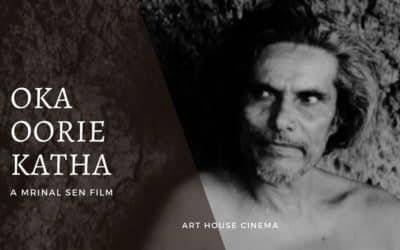
Oka Oorie Katha (1977)
Oka Oorie Katha (Eng: The Marginal Ones) is a 1977 Telugu film directed by Mrinal Sen. Based on an acclaimed story by Munshi Premchand, Kafan, the film is a scathing commentary on rural destitution and social injustice, projected powerfully through its protagonists and a sincere narrative.
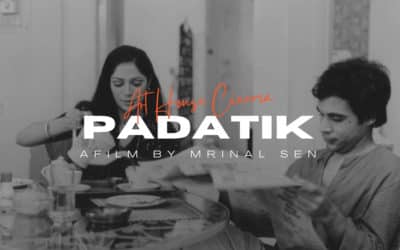
Padatik (1973)
Padatik (1973) is a Bengali film directed by Mrinal Sen, his third in the Calcutta trilogy. The film tracks the Naxalite movement of the 70s, following a young revolutionary (Dhritiman Chatterjee) who escapes police custody and takes shelter in a luxury apartment owned by a young woman (Simi Garewal). With time, he starts questioning his own ideology.
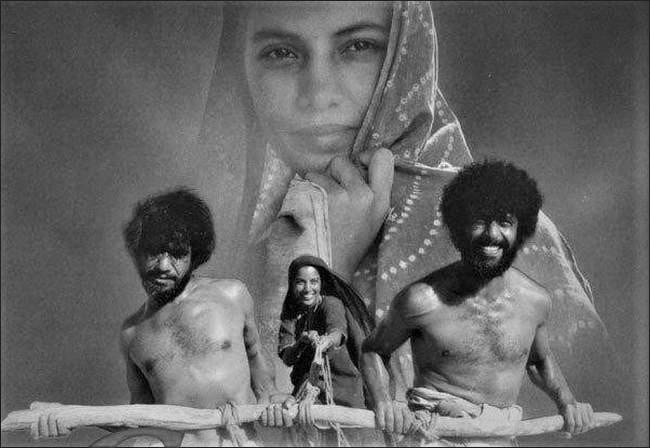
Genesis (1986)
Genesis is a 1986 Hindi film directed by Mrinal Sen that tells a minimalistic tale of the rise and fall of civilizations, miniaturized within the confines of a ruined village and inside the minds of the four protagonists.
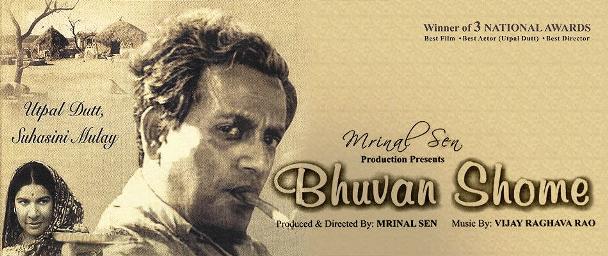
Bhuvan Shome (1969)
Bhuvan Shome is a 1969 Hindi film directed by Mrinal Sen. Based on a story by Balai Chandra Mukhopadhyay, this film is considered a landmark in the Modern Indian Cinema. This film is one of the earliest attempts at what came to be known as art house or new wave cinema in India.