Films with Pankaj Kapur on Art House Cinema



Pankaj Kapur was born on 29 May 1954 in Ludhiana, Punjab. He trained at the National School of Drama in Delhi and came to film through Shyam Benegal, who cast him as a village schoolteacher in Arohan (1982). In the forty years since, he has moved between the art cinema of Benegal, Mrinal Sen and Tapan Sinha, the satire of Kundan Shah and, from 2003, the films of Vishal Bhardwaj.

He has won three National Film Awards, two for Best Supporting Actor, for Raakh and Maqbool, and a Special Jury Award for Ek Doctor Ki Maut. Television made him famous twice. In the 1980s he was the carrot-chewing detective of Karamchand, and from 2001 he was Musaddi Lal, the ordinary citizen worn down by clerks in Office Office.
He also directs, and in 2019 he published a novella. His son from his first marriage, to the dancer Neelima Azeem, is the actor Shahid Kapoor.
Life and Early Work
Kapur's father was a college professor who later became a principal, and the son wanted to act from childhood. "But I started acting when I was five years old," he told Bulbul Sharma of The Sunday Guardian in 2018. His father made him finish his education first. He also asked, Kapur recalled to The Hitavada in 2026, whether his son wanted films for the glamour or for the work.
He joined the National School of Drama at 19, when Ebrahim Alkazi was its director. The school lists him among its graduates of 1976, and in the same Hitavada interview he described a small lesson from those years. He had picked up Stanislavski's An Actor Prepares to impress Alkazi. Alkazi told him not to read it yet. Kapur never went back to the book and credits that advice with leaving him to find his own method.
After the school he acted in plays, often as men far older than himself. Amborish Roychoudhury, writing in Outlook in 2022, notes that in his twenties he regularly went on stage with greyed hair.
On Stage and Screen
The first break came from abroad, when Richard Attenborough cast him in Gandhi (1982) as Pyarelal Nayyar, Gandhi's secretary, and Kapur also dubbed Ben Kingsley's lines into Hindi for the film's Hindi version. Roychoudhury writes that taking the job cost him his place in the NSD Repertory Company. His friend Om Puri then sent him to Benegal, and Arohan followed.
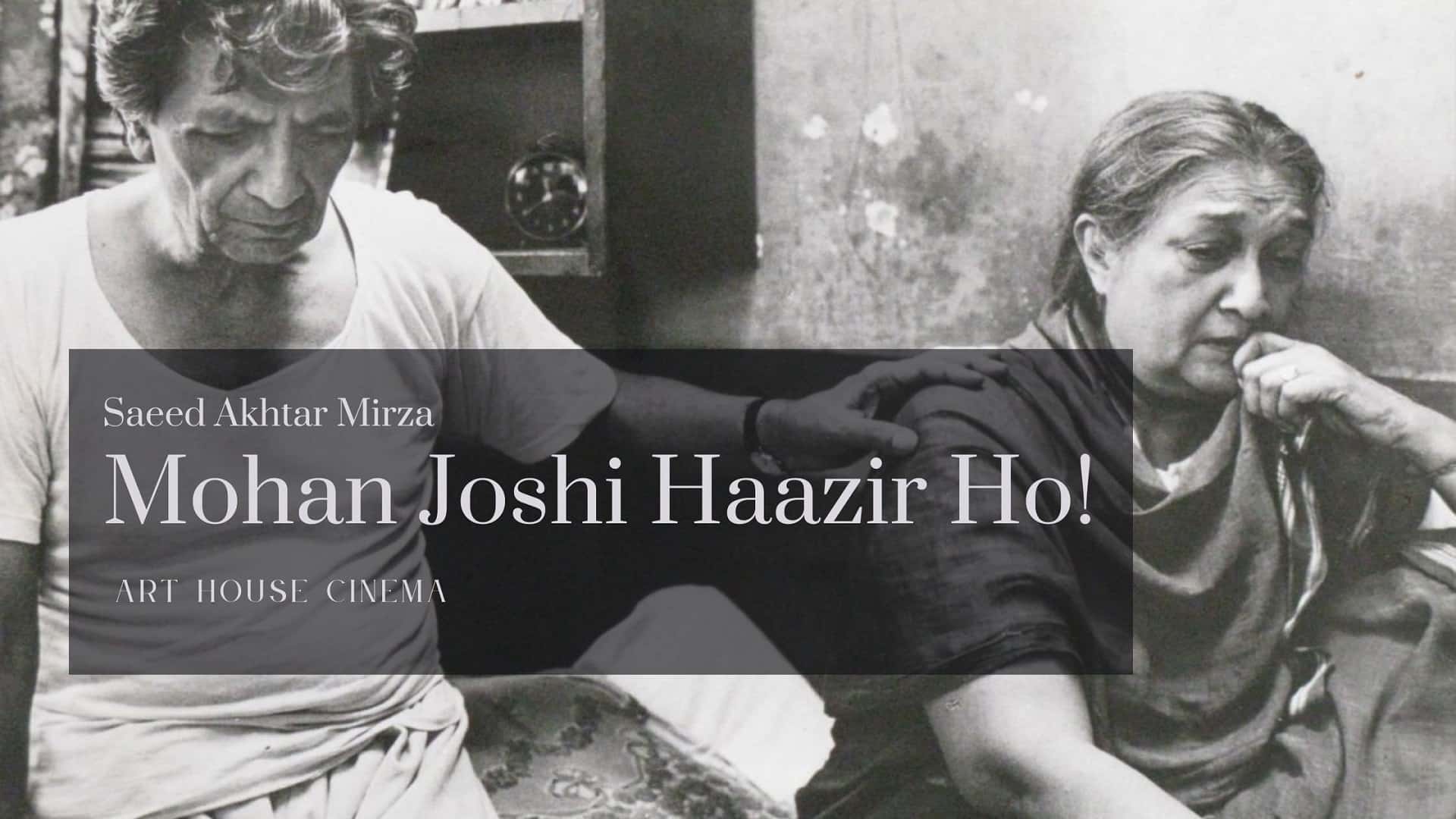
The early 1980s filled up quickly. He appeared in Benegal's Mandi (1983), Mrinal Sen's Khandhar (1984) and Saeed Akhtar Mirza's Mohan Joshi Hazir Ho! (1984). Kundan Shah's Jaane Bhi Do Yaaro (1983), made for the National Film Development Corporation on about eight or nine lakh rupees, gave him his first large comic part. Basu Chatterjee then used him twice in 1986, as a coal trader in Chameli Ki Shaadi and as one of the twelve jurors of Ek Ruka Hua Faisla.
Television arrived in 1985 with Pankaj Parashar's Karamchand, which ran on Doordarshan until 1988, with Sushmita Mukherjee as his assistant Kitty. The detective solved cases by observation, wore dark glasses and chewed carrots, and his "Shut up, Kitty" became a catchphrase. Parashar also cast him in Jalwa (1987).
Govind Nihalani's Tamas (1988) put him in a darker register. Then came Raakh (1989), opposite Aamir Khan and Supriya Pathak, whom Kapur married in 1988. His policeman in it won the National Film Award for Best Supporting Actor. A year later Tapan Sinha gave him the lead in Ek Doctor Ki Maut (1990).
The 1990s belonged mostly to television. He played the landless labourer Budhai Ram in Neem Ka Ped (1991), written by Rahi Masoom Raza. In Zabaan Sambhalke (1993) he was Mohan Bharti, an engineer reduced to teaching Hindi to foreigners. In 1998 he directed Mohandas B.A.L.L.B. and played its detective. Office Office followed on SAB TV in 2001.
Vishal Bhardwaj brought him back to the centre of Hindi film. Maqbool (2003), The Blue Umbrella (2005) and Matru Ki Bijlee Ka Mandola (2013) are three very different parts for the same director. In between, Kapur directed his first feature, Mausam (2011), with Shahid Kapoor in the lead. In 2019 he published Dopehri, a novella he had written in 1992 and had already performed on stage.
The Art of Pankaj Kapur
Signature Roles
Jaane Bhi Do Yaaro (1983). Tarneja is a corrupt building contractor who murders the municipal commissioner D'Mello, played by Satish Shah, and the hunt for the commissioner's body drives the rest of the story. Kapur played the villain for laughs. The chase ends in the film's climax, where the corpse turns up on stage in the middle of a production of the Mahabharata.
Raakh (1989). Inspector P. K. is the police officer in Aditya Bhattacharya's dark crime drama, which Aamir Khan shot before his first hit, Qayamat Se Qayamat Tak. Roychoudhury records that Bhattacharya chose Kapur after watching him in a Bombay staging of Woyzeck. It brought his first National Film Award, at the ceremony of 31 May 1989.
Ek Doctor Ki Maut (1990). Dr Dipankar Roy finds a vaccine for leprosy after years of work at heavy personal cost. Jealous colleagues and officials have him reprimanded and transferred to a remote village, and the credit goes to two American researchers. Shabana Azmi plays his wife, Seema. Sinha based the story on Ramapada Chowdhury's novel Abhimanyu and dedicated the film to Dr Subhash Mukhopadhyay. The jury of the 38th National Film Awards gave him a Special Jury Award for projecting "the in-built trauma of an aspiring, thinking, creative mind."
Maqbool (2003). Jahangir Khan, called Abbaji, is Bhardwaj's Duncan, a Bombay underworld boss who is murdered in his bed by his protege Maqbool, played by Irrfan Khan. Kapur has said that a single line, "Gilauri khaaya karo Ghulfaam," set the emotional tone of one scene. The film premiered at Toronto in September 2003. The National Film Award jury praised his "riveting yet understated performance as a mafia don," and he also won the Filmfare Critics Award for Best Actor.
The Blue Umbrella (2005). Nandkishore Khatri runs the only shop in a hill village and cannot stop wanting the blue umbrella owned by a young girl, Biniya. When he is caught with a stolen copy, the village turns its back on him. Kapur made the miser a figure of comedy and then of shame. The film, from Ruskin Bond's novella, won the National Film Award for Best Children's Film.
Craft
No borrowed method. Kapur rejects the label of method actor. Speaking to Shaikh Ayaz of Open magazine in 2013, he said acting was in some ways like making daal, where the spices go in early and a last seasoning finishes the pot. He added at once that acting is not that simple. "Can perfection be achieved in this imperfect world?" he asked in the same interview.
The director's actor. He calls himself a director's actor. Before filming he settles his reading of the part with the director, so that the argument is over before he reaches the set. His work, he told Ayaz in the same interview, starts with understanding the script as deeply as he can.
Range by contrast. His comic and tragic parts run side by side, sometimes in the same year. In 1986 he was the coal trader of Chameli Ki Shaadi and a juror far older than himself in Ek Ruka Hua Faisla. In 2024 he told the Press Trust of India that humour "makes me happy to make people happy."
Selected Filmography
Gandhi (1982)
As Pyarelal Nayyar. He played Gandhi's secretary in Attenborough's biography and dubbed Ben Kingsley into Hindi for its Hindi version.
Khandhar (1984)
As Dipu. In Mrinal Sen's film of Premendra Mitra's story, he is one of three city friends who visit a ruined mansion, opposite Naseeruddin Shah and Shabana Azmi.
Chameli Ki Shaadi (1986)
As Kallumal Koylewala. Basu Chatterjee's comedy cast him as Chameli's father, a grasping coal trader whose daughter falls for a wrestler.
Ek Ruka Hua Faisla (1986)
As Juror No. 3. In Chatterjee's version of 12 Angry Men he played a man of about sixty while he was in his early thirties.
Tamas (1988)
As the Thekedaar. Nihalani's Partition drama ran first on Doordarshan in six parts and was later shown as a four-hour film.
Dharm (2007)
As Pandit Chaturvedi. In Bhavna Talwar's first film he plays a Benares priest who raises a foundling and learns that the child was born Muslim. It was India's entry in the World Cinema section at Cannes in 2007.
Matru Ki Bijlee Ka Mandola (2013)
As Harry Mandola. Bhardwaj's satire has him as a rich industrialist who is ruthless when sober and generous to his villagers when drunk.
Legacy
Kapur's two television detectives and his harassed citizen of Office Office made him one of the best-known faces on Indian television. The Indian Television Academy named him best comic actor for Office Office more than once. That success never pulled him away from serious film. His three National Film Awards came between 1989 and 2005, for two supporting parts and one lead.
His work with Bhardwaj opened a second film career after fifty. The murdered don of Maqbool and the drunken industrialist of Mandola have little in common beyond the actor who played them. In his seventies he is still working, and his recent parts include one in the Netflix series IC 814: The Kandahar Hijack (2024).
He has said that he likes directing but not the business of convincing a producer to back a film. Mausam remains his only feature as director.