Smita Patil
- Role
- Actor
- Acted in
- Hindi, Marathi
- Born
- 17 October 1955Pune
- On Art House Cinema
- 10 films ↓


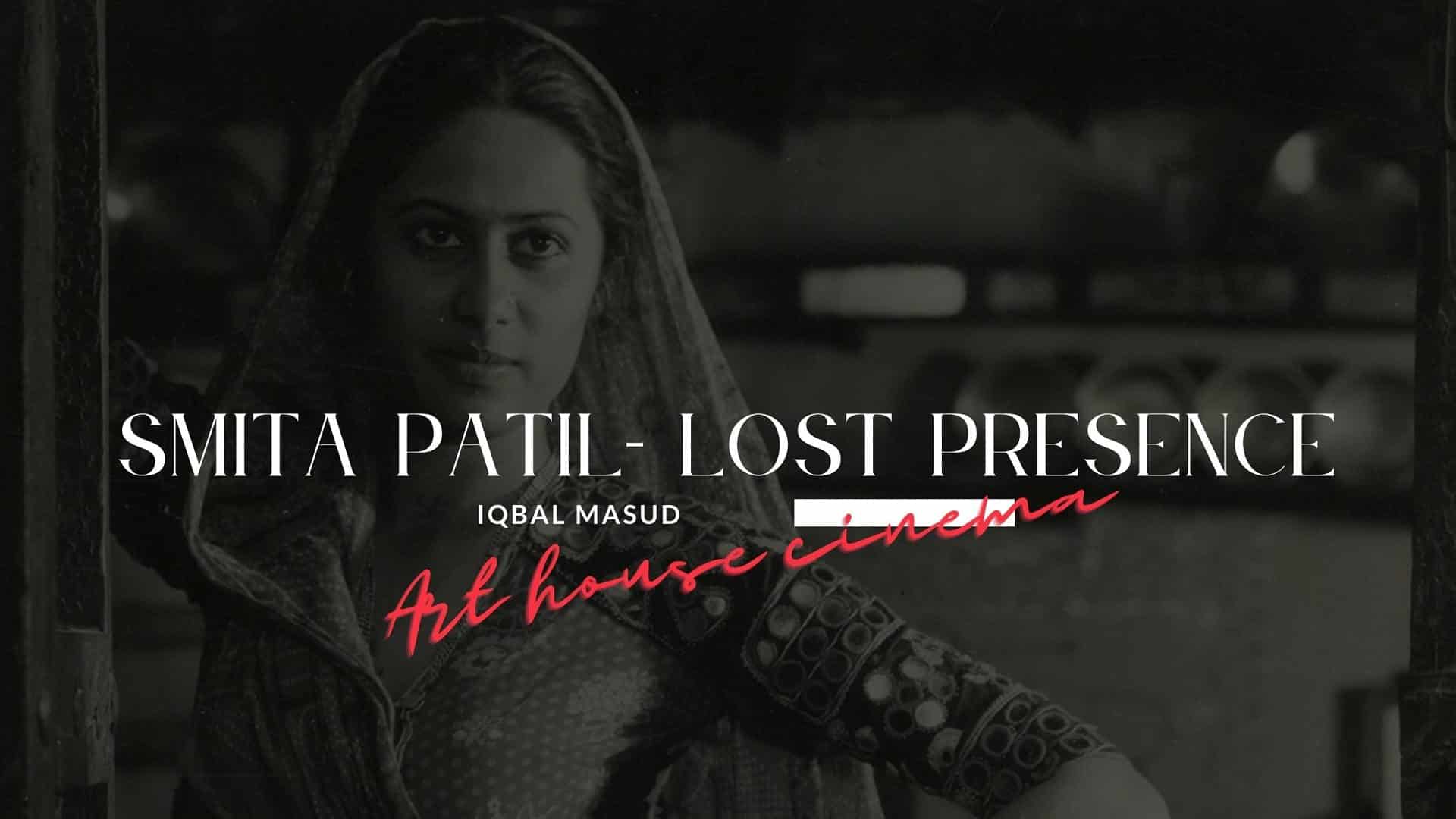


Smita Patil was born on 17 October 1955 in Pune and died on 13 December 1986 in Bombay, two weeks after the birth of her son. She was 31. Her film career lasted barely a decade, and she worked mostly in Hindi and Marathi, with films in Bengali and Malayalam as well.
Shyam Benegal gave her her first parts and went on casting her. She won the National Film Award for Best Actress twice, for Benegal's Bhumika (1977) and for Rabindra Dharmaraj's Chakra (1981), and Chakra also brought her the Filmfare award for Best Actress. Two Marathi films by Jabbar Patel, Jait Re Jait (1977) and Umbartha (1982), won her Filmfare's Best Actress award in Marathi. The Government of India gave her the Padma Shri in 1985.
Life and Early Work
Her father, Shivajirao Patil, was a politician in Maharashtra, and her mother, Vidyatai Patil, was a social worker from Shirpur in Khandesh. Smita was the second of three daughters. The eldest, Anita, became a neonatologist and the youngest, Manya, a costume designer. It was a political household, and the girls grew up watching their parents take up public causes.
She acted in plays as a child and later joined local theatre groups in Pune, and at the University of Bombay she read literature. She never enrolled at the Film and Television Institute of India, yet she spent so much time on its Pune campus that people took her for a student there. Her first screen part was in Teevra Madhyam, a student film by Arun Khopkar. The institute later made her an honorary graduate.
In the early 1970s she read the Marathi news on Doordarshan in Bombay. Accounts differ on how Benegal found her, since some say he saw her on the bulletin and others that a photograph caught his eye. ThePrint quotes his own explanation of how he picked actors: "I have a way, I don't know what it is... of being able to tell how people will photograph." He cast her as the princess in his children's film Charandas Chor (1975).
On Stage and Screen
That was a small part. The same year Benegal cast her as Rukmini in Nishant (1975), written by Vijay Tendulkar, as the wife of Vishwam, the shy youngest brother of a village landlord. The film competed for the Palme d'Or at Cannes in 1976, and she went to the festival with Benegal.
Manthan (1976) told the story of the milk co-operatives of Gujarat, and the dairy farmers of the co-operative federation paid for it, two rupees each. She played Bindu, the woman who leads the village women. Benegal then gave her the lead in Bhumika, drawn from Sangtye Aika, the memoir of the Marathi stage and screen actress Hansa Wadkar, and it won her the first of her two National Film Awards.
In Marathi she worked twice with Jabbar Patel. Jait Re Jait, from a novel by G. N. Dandekar about the Thakar people, cast her as Chindhi, who leaves a husband she thinks useless for Mohan Agashe's drummer Nagya. Umbartha, from Shanta Nisal's novel Beghar, was shot in Marathi and Hindi at the same time with one cast, and the Hindi version is called Subah.
The early 1980s were her busiest years. Govind Nihalani made his first film, Aakrosh (1980), with her as Nagi, a labourer's wife who is raped by a foreman and takes her own life. Chakra won the Golden Leopard at Locarno in 1981, and Satyajit Ray cast her as Jhuria in Sadgati (1981), his Premchand adaptation for Doordarshan. In 1982 alone she had Bazaar, Arth and Umbartha in cinemas, along with two mainstream pictures, Shakti and Namak Halaal.
The turn to the big studios was a choice. ThePrint dates it to 1977 and 1978, after she had been dropped from some projects, and quotes her: "If they want names I'll make a name for myself." Her biographer Maithili Rao, in Smita Patil: A Brief Incandescence (2015), asks why she signed so many weak commercial films, and does not think money was the main reason. Nihalani cast her as Jyotsna Gokhale in Ardh Satya (1983), and she also made Mandi (1983) with Benegal, Tarang (1984), and G. Aravindan's Malayalam film Chidambaram (1985).
While making Bheegi Palkein she began a relationship with the actor Raj Babbar, who was then married, and the press made much of it. They later married, and their son Prateik was born on 28 November 1986. She died of complications from the birth. Several of her films came out after her death, among them Mirch Masala (1987), the Bengali Debshishu and Waaris (1988), in which Rekha dubbed her voice.
The Art of Smita Patil
Signature Roles
Manthan (1976). Bindu leads the village women into the co-operative, and she is also the person its enemies use against it. Her husband is said to have left her, and a warm regard grows between her and Girish Karnad's Dr. Rao until the husband comes home. Bindu is then tricked into putting her thumbprint on papers that falsely accuse Rao of rape. Patil kept her proud through all of it, and at the end Bindu carries on the work with Naseeruddin Shah's Bhola.
Bhumika (1977). Usha, known on screen as Urvashi, is a Goan-born actress who marries Keshav Dalvi, played by Amol Palekar, and puts up with his cruelty. She moves through affairs with Sunil Verma (Naseeruddin Shah) and Vinayak Kale (Amrish Puri). The film ends with Usha alone in a hotel room, answering a call from Rajan (Anant Nag). It won Patil her first National Film Award.
Chakra (1981). Amma flees her village with her son Benwa after her husband kills a moneylender who tried to rape her. In a Bombay slum she takes two lovers, Naseeruddin Shah's petty criminal Lukka and Kulbhushan Kharbanda's Anna. Patil did not ask the audience to pity her. By the end Amma is pregnant and names Anna as the father, though nobody can be sure he is.
Arth (1982). Kavita Sanyal is the film star for whom Inder (Kulbhushan Kharbanda) leaves his wife Pooja (Shabana Azmi). Maithili Rao gives a long passage of her biography to one scene. Kavita sits with a small mirror, humming, and stays composed as Pooja comes in. Then she cracks, pacing in a black kaftan and accusing Pooja of coming to her house to cry, and she ends at Pooja's feet with folded hands, asking forgiveness. Patil was nominated for the Filmfare award for Best Supporting Actress.
Mirch Masala (1987). Sonbai refuses a subedar, a tax collector played by Naseeruddin Shah, who has taken over her village in the early 1940s. She hides in a spice factory, where the watchman Abu Mian (Om Puri) keeps the soldiers out. The panchayat presses her to give in. The factory women turn on her too. In the last scene the soldiers break in and kill Abu Mian, and the women blind the subedar with ground chilli.
Craft
Taking in people. Mahesh Bhatt described her to Rao as a "sponge" who absorbed the people around her. On Arth, he said, she lived Kavita's pain and came to the set tired in the mornings. By Bhatt's account the gesture at the centre of the breakdown scene came from Parveen Babi, but the force of it was Patil's own.
Women of the earth. Patil said she kept playing "earthy" women because they were close to who she was. She called the real Indian woman of the small films "zamin ki aurat", the woman of the soil, and Bindu, Chindhi and Amma are all of that kind.
Two kinds of film. She did not hold the commercial work at arm's length. Om Puri told Rao that she was working out a "technique of acting" for a different kind of mainstream picture, and Rao names Amrit and Thikana among them.
Selected Filmography
Nishant (1975)
As Rukmini. She plays the wife of the landlord's youngest brother, and in the uprising at the end the villagers kill her though she has done nothing.
Jait Re Jait (1977)
As Chindhi. She helps Nagya destroy the hives of the bees that attacked him, and she dies doing it.
Aakrosh (1980)
As Nagi. A foreman rapes her and her husband, played by Om Puri, is framed for a crime he did not commit.
Sadgati (1981)
As Jhuria. She is the wife of Om Puri's Dukhi, a poor Dalit man who works himself to death for a Brahmin priest.
Umbartha (1982)
As Sulabha Mahajan. Sulabha leaves her husband's home to run a women's reformatory in the small town of Sangamwadi, and the part also won her the Maharashtra State Film Award for Best Actress.
Mandi (1983)
As Zeenat. Benegal set the film in a brothel, and Patil played a singer living there, which brought her a Filmfare nomination for Best Supporting Actress.
Legacy
Off screen she was an active feminist. She belonged to the Women's Centre in Bombay. India Post put her on a stamp on 3 May 2013, one of 50 film people in its series for the centenary of Indian cinema. Pune holds a short film and documentary festival in her name, and in 2023 her son added her surname to his own, becoming Prateik Patil Babbar.
In May 2024 the Film Heritage Foundation's restoration of Manthan had its premiere in the Cannes Classics section, 48 years after she had gone to Cannes with Nishant. Prateik spoke from the stage. Her sisters Anita and Manya watched from the audience.